The Quirky Peripherals In Medical PC Setups

Modern hospitals use a lot of computers. Architecturally speaking, they’re pretty typical machines—running the same CPUs and operating systems as any other PCs out there. However, they do tend to have some quirks when it comes to accessories and peripherals, as [tzukima] explores in a recent video.

The video starts by looking at typical power cables used with hospital computers and related equipment. In particular, [tzukima] talks about the common NEMA 5-15P to IEC-320-C13 style cable, which less sophisticated users might refer to as a kettle cord. In hospital-grade form, these cables are often constructed with translucent plug housings, with large cylindrical grips that make them easier to grip.

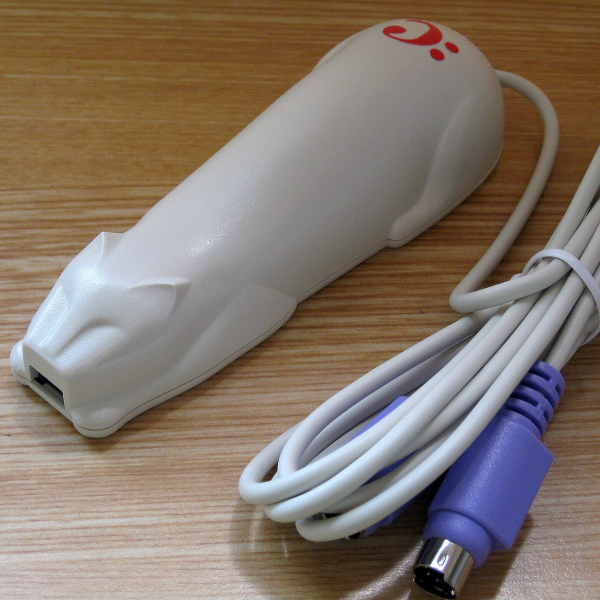
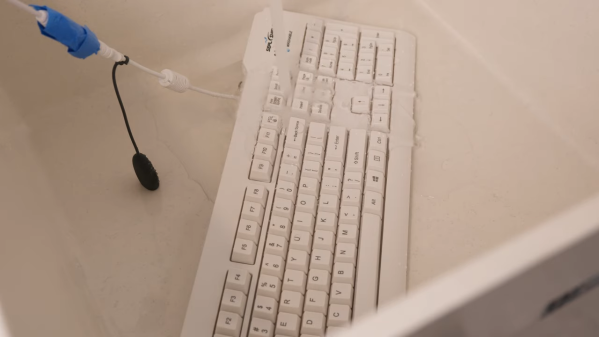
Digging further through business supply catalogs lead [tzukima] to discover further products aimed at hospital and medical users. In particular, there are a wide range of keyboards and mice that are designed for use in these environments. The most typical examples are regular peripherals that have simply been encased in silicone to make them easier to wash and disinfect where hygiene is paramount. Others, like the SealShield keyboard and mouse, use more advanced internally-sealed electronics to achieve their washable nature and IP68 ratings. These are peripherals that you can just throw in a dishwasher if you’re so inclined.

It’s a great look at weird hardware that most of us would never interact with.

Continue reading “The Quirky Peripherals In Medical PC Setups”
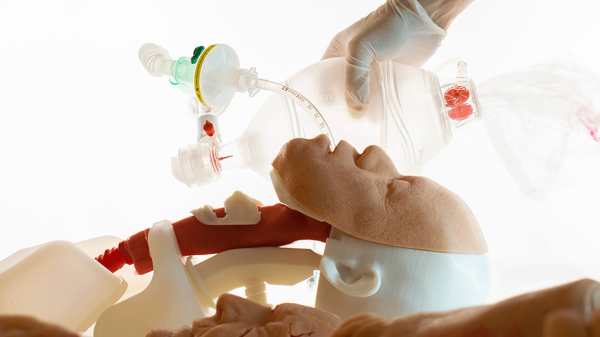
A profile view of a medical training mannequin with a tube down its "throat." A ventillation bag is in the gloved hand of a human trainee.

Making Medical Simulators Less Expensive With 3D Printing And Silicone

Medical training simulators are expensive, but important, pieces of equipment. [Decent Simulators] is designing simulators that can easily be replicated using Fused Deposition Modeling (FDM) printers and silicone molds to bring the costs down.

Each iteration of the simulators is sent out for testing by paramedics and doctors around the world, and feedback is integrated into the next revision. Because the trainers are designed to be easily replicated, parts can easily be replaced or repaired which can be critical to keep personnel trained, especially in remote areas.

While not open source, some models are freely available on the [Decent Simulators] website like wound packing trainers or wound prostheses which could be great if you’re trying to get a head start on next year’s Halloween costumes. More complicated models will be on sale starting in January as either just the design files or a kit containing the files and the printed and/or silicone parts.

Interested in more medical hacks? Check out this Cyberpunk Prosthetic Eye or this Arduino Hearing Test Device.

Inflatable Hospital Isolation Wards

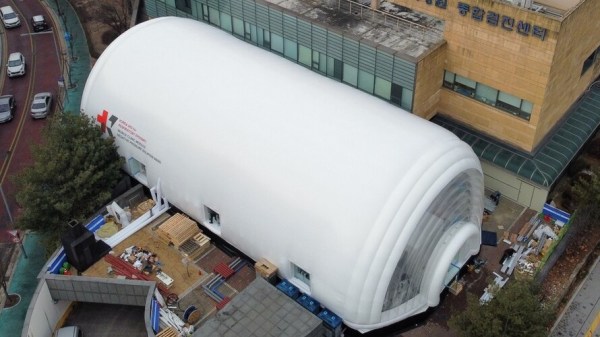
The continued spread of Covid-19 has resulted in a worldwide shortage of hospital beds. A temporary hospital isolation ward (translated) was co-developed by the Korea Advanced Institute of Science and Technology (KAIST) and the Korea Institute of Radiological and Medical Sciences (KIRAMS) to help alleviate this problem. We’re not familiar with the logistics and expense of installing traditional temporary hospital facilities, but the figures provided for this inflatable building approach to the problem seem impressive. It takes 14 days to produce one module, a process which presumably could be pipelined. Being 70% lighter and smaller than their rigidly-constructed counterparts, they can be more easily stored and shipped where needed, even by air.

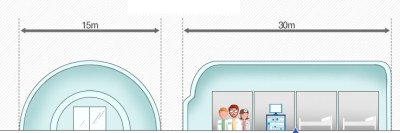
Once on-site, it takes one day to inflate and outfit it with utilities such as electricity, water, and communications. One of these modules, which look like really big inflatable Quonset huts, contains an intensive care unit, four negative-pressure rooms, a nursing station, staff area, changing and bathrooms, and storage. All this in a 450 m2 building 30 m long and 15 m wide. That works out to be almost 2-stories tall, which is confirmed by the photo above.

Now that the design is finished and a functional unit constructed, the goal is to put it into production as soon as possible. Of course, physical hospital facilities are not the only thing in short supply these days — doctors, nursing and support staff, medical supplies, not to mention the vaccinations themselves, are all needed. But hopefully the success of this project can contribute to the global effort of saving lives and getting control of the virus sooner rather than later. The video below is in Korean, but the automatic English subtitles aren’t too bad.

Continue reading “Inflatable Hospital Isolation Wards”

Hyundai Mini 45 EV Is A Small Car With Grand Ambitions

One of Hyundai’s recent concept cars was an electric vehicle named “45” in honor of its inspiration, another concept car from 45 years ago. When footage of a child-sized “Mini 45” surfaced, it was easy to conclude the car was a motorized toy for children. But Jalopnik got more information from Hyundai about this project, where we learned that was not nearly the whole picture.

The video (embedded below) explained this little vehicle is a concept car in its own right, and most of the video is a scripted performance illustrating their concept: using technology to help calm young patients in a hospital, reducing their anxiety as they faced treatment procedures. Mini 45 packs a lot more equipment than the toy cars available at our local store. The little driver’s heartbeat and breathing rate are monitored, and a camera analyzes facial expressions to gauge emotional stress. The onboard computer has an animated avatar who will try to connect with the patient, armed with tools like colorful animations, happy music, candy scent dispenser, and a bubble-blowing machine.

Continue reading “Hyundai Mini 45 EV Is A Small Car With Grand Ambitions”

Maker Therapy Joins The Fight Against COVID-19

We love talking about makerspaces here at Hackaday. We love hearing about the camaraderie, the hacks, the outreach, the innovation, everything. Even more, we love seeing all the varying forms that makerspaces take, either in the hacks they create, the communities they reach out to, and especially their unique environments.

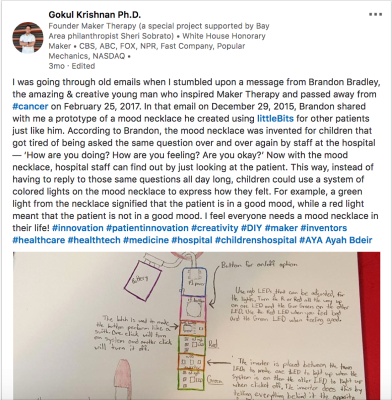
Recently, we came across Maker Therapy, a makerspace right inside a children’s hospital. Now, we’ve heard about hospital makerspaces here on Hackaday before, but what makes Maker Therapy particularly unique is it’s the first hospital makerspace that gives patients the opportunity to innovate right in the pediatric setting.

Inspired by patients and founded by Dr. Gokul Krishnan, Maker Therapy has been around for a few years now but recently popped up on our radar due to their unique position on the frontlines of the COVID-19 pandemic. As a makerspace located right inside a hospital, Maker Therapy is in the unique position to be the hospital’s very own rapid prototyping unit. Using 3D printing and other tools, Maker Therapy is able to make face shields and other important PPE right where they are needed the most.

Here at Hackaday, we salute and give our eternal gratitude to all the health care professionals fighting for our communities. Maybe some of your hacks and other designs could be used by initiatives like Maker Therapy? Until then, stay home and stay safe Hackaday. The only way we’ll get through this is together.

Anti-Bacterial Plastic Wrap Clings To Hope Of Stopping Superbugs’ Spread

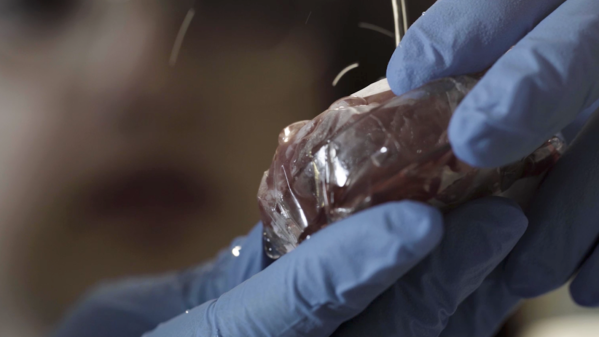
Researchers at McMaster University in Ontario have developed a plastic wrap that repels viruses and bacteria, including some of the scariest antibiotic-resistant superbugs known to science. With the help of a scanning electron microscope, the researchers were able to watch superbugs like MRSA and Pseudomonas bounce right off the surface.

The wrap can be applied to things temporarily, much like that stuff you wrestle from the box and stretch over your leftovers. It can also be shrink-wrapped to any compatible surface without losing effectiveness. The ability to cover surfaces with bacteria-shielding armor could have an incredible impact on superbug populations inside hospitals. It could be shrink-wrapped to all kinds of things, from door handles to railings to waiting room chair armrests to the pens that everyone uses to sign off on receiving care.

Continue reading “Anti-Bacterial Plastic Wrap Clings To Hope Of Stopping Superbugs’ Spread”

Turn Medical Imaging From 2D Into 3D With Just $10

One of the modern marvels in our medical toolkit is ultrasound imaging. One of its drawbacks, however, is that it displays 2D images. How expensive do you think it would be to retrofit an ultrasound machine to produce 3D images? Try a $10 chip and pennies worth of plastic.

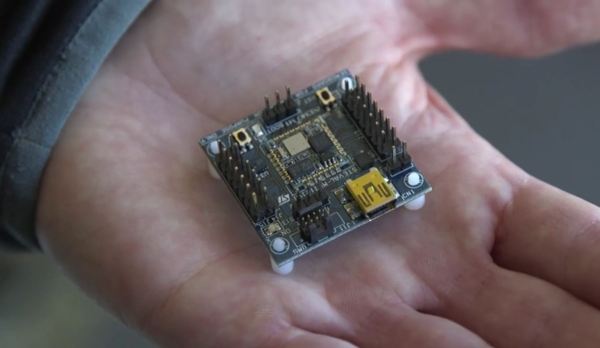
While — of all things — playing the Wii with his son, [Joshua Broder, M.D], an emergency physician and associate professor of surgery at [Duke Health], realized he could port the Wii’s gyroscopic sensor to ultrasound technology. He did just that with the help of [Matt Morgan, Carl Herickhoff and Jeremy Dahl] from [Duke’s Pratt School of Engineering] and [Stanford University]. The team mounted the sensor onto the side of the probe with a 3D printed collar. This relays the orientation data to the computer running software that sutures the images together into a complete 3D image in near real-time, turning a $50,000 ultrasound machine into its $250,000 equivalent.

Continue reading “Turn Medical Imaging From 2D Into 3D With Just $10”