DVD Drives Turned Into Microscopes

With the advent of streaming services, plenty of people are opting to forego the collection of physical media. In turn, there are now a lot of optical drives sitting unused in parts bins and old computers. If you’d like something useful to do with this now-obsolete technology, you can have a try at turning one into a laser microscope.

This build requires two DVD pickups. By scanning once horizontally and once vertically and measuring the returning light from the DVD laser, an image can be created. For this build, the second pickup is used to move the object itself. The entire device is controlled by an Analog Discovery 2, although this principle could be ported to other microcontroller platforms. Thanks to the extremely fine laser in a DVD and the precise movements of the motors found in the control machinery, the images obtained using this method have the potential to be more detailed than comparable visible light microscopes.

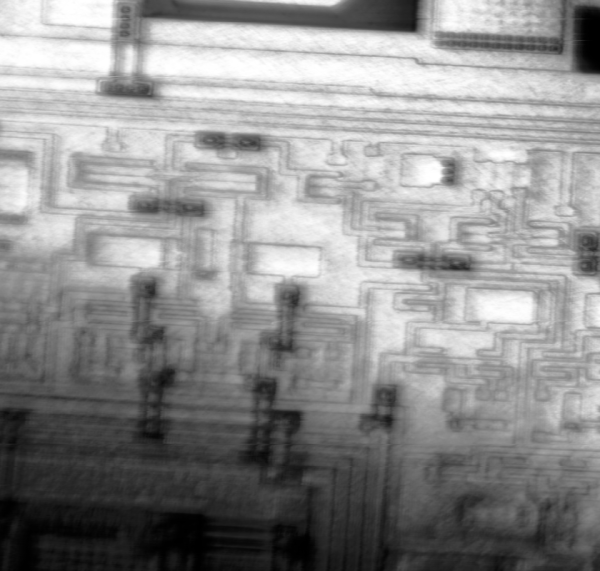
While this isn’t quite scanning electron microscope territory, it’s good enough to clearly image the internal workings of a de-capped integrated circuit. Something like this could be indispensable for reverse-engineering ICs or troubleshooting other comparably small electronics, with resolutions higher than can typically be obtained with visible light microscopes. We’ve even seen similar builds in the past which build microscopes like this as dedicated lab equipment.

Glass 3D Printing Via Laser

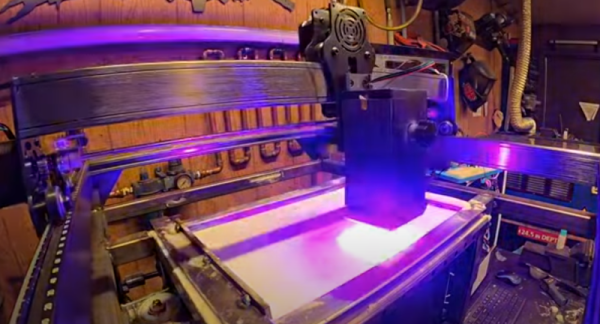
If you haven’t noticed, diode laser engraver/cutters have been getting more powerful lately. [Cranktown City] was playing with an Atomstack 20 watt laser and wondered if it would sinter sand into glass. His early experiments were not too promising, but with some work, he was able to make a crude form of glass with the laser as the source of power. However, using glass beads was more effective, so he decided to build his own glass 3D printer using the laser.

This isn’t for the faint of heart. Surfaces need to be flat and there’s aluminum casting and plasma cutting involved, although some of it may not have been necessary for the final construction. The idea was to make a system that would leave a layer of sand and then put down a new layer on command. This turned out to be surprisingly difficult.

Continue reading “Glass 3D Printing Via Laser”

Ask Hackaday: Stripping Wires With Lasers

Most of us strip the insulation off wires using some form of metal blade or blades. You can get many tools that do that, but you can also get by with skillfully using a pair of cutters, a razor blade or — in a pinch — a steak knife. However, modern assembly lines have another option: laser stripping. Now that many people have reasonable laser cutters, we wonder if anyone is using laser strippers either from the surplus market or of the do-it-yourself variety?

We are always surprised that thermal strippers are so uncommon since they are decidedly low-tech. Two hot blades and a spring make up the heart of them. Sure, they are usually expensive new, but you can usually pick them up used for a song. The technology for lasers doesn’t seem very difficult, although using the blue lasers most people use in cutters may not be optimal for the purpose. This commercial product, for example, uses infrared, but if you have a CO2 laser, that might be a possibility.

The technique has found use in large-scale production for a while. Of course, if you don’t care about potential mechanical damage, you can get automated stripping equipment with a big motor for a few hundred bucks.

We did find an old video about using a CO2 laser to strip ribbon cable, but nothing lately. Of course, zapping insulation creates fumes, but so does lasering everything, so we don’t think that’s what’s stopping people from this approach.

Continue reading “Ask Hackaday: Stripping Wires With Lasers”

Militaries Are Rushing To Get Anti-Drone Lasers Operational

Flying drones have been a part of modern warfare for a good few decades now. Initially, most of these drones were built by traditional military contractors and were primarily used by the world’s best-funded militaries. However, in recent conflicts in Syria, Ukraine, and elsewhere have changed all that. Small commercial drones and compact militarized models have become key tools on the battlefield, for offense, defence, and reconnaissance.

With so many of these tiny craft buzzing around, militaries are scrambling for practical ways to shoot them down. Lasers might be just the ticket to do exactly that. Continue reading “Militaries Are Rushing To Get Anti-Drone Lasers Operational”

Interesting Optics Make This Laser Engraver Fit In A Pocket

We’re going to start this post with a stern warning: building a laser engraver that can fit in your pocket is probably not a wise idea. Without any safety interlocks and made from lightweight components as it is, this thing could easily tip over and sear a retina before you’d even have time to react. You definitely should not build this, or even be in the same room with it. Got it?

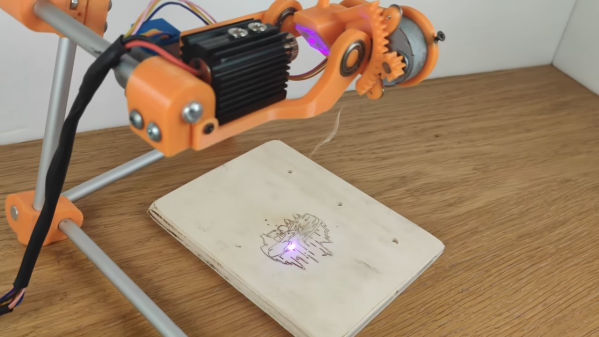
Safety concerns aside, [DAZ] has taken a pretty neat approach to making this engraver, eschewing the traditional X-Y gantry design in favor of something more like the galvanometers used for laser projectors, albeit completely homebrew and much, much slower than commercial galvos. Built mostly of 3D-printed parts, the scanning head of this engraver uses a single mirror riding on an angled block attached to gimbals with two degrees of freedom. The laser module and mirror gimbals are mounted on a stand made of light aluminum so that the whole thing is suspended directly over a workpiece; the steppers slew the mirror to raster the beam across the workpiece and burn a design.

The video below shows it at work, and again, we have to stress that this is about as close to this build as you should get. It shouldn’t be too hard to add some safety features, though — at a minimum, we’d like to see a tilt-switch that kills power if it’s knocked over, and maybe some kind of enclosure. Sure, that would probably spoil the pocketability of the engraver, but is that really a feature valuable enough to risk your eyesight for?

If there’s a laser build in your future, please read our handy guide to homebrew laser cutter safety — before you can’t.

Continue reading “Interesting Optics Make This Laser Engraver Fit In A Pocket”

Putting A Cheap Laser Rangefinder Through Its Paces

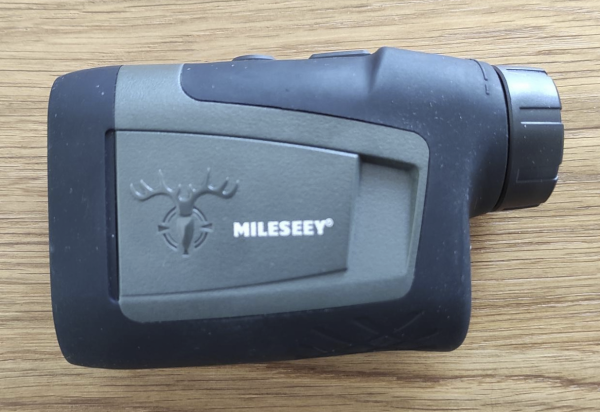
Sometimes a gizmo seems too cheap to be true. You know there’s just no way it’ll work as advertised — but sometimes it’s fun to find out. Thankfully, if that gadget happens to be a MILESEEY PF210 Hunting Laser Rangefinder, [Phil] has got you covered. He recently got his hands on one (for less than 100 euros, which is wild for a laser rangefinder) and decided to see just how useful it actually was.

The instrument in question measures distances via the time-of-flight method; it bounces a laser pulse off of some distant (or not-so-distant) object and measures how long the pulse takes to return. Using the speed of light, it can calculate the distance the pulse has traveled).

As it turns out, it worked surprisingly well. [Phil] decided to focus his analysis on accuracy and precision, arguably the most important features you’d look for while purchasing such an instrument. We won’t get into the statistical nitty-gritty here, but suffice it to say that [Phil] did his homework. To evaluate the instrument’s precision, he took ten measurements against each of ten different targets of various ranges between 2.9 m and 800 m. He found that it was incredibly precise (almost perfectly repeatable) at low distances, and still pretty darn good way out at 800 m (±1 m repeatability).

To test the accuracy, he took a series of measurements and compared them against their known values (pretty straightforward, right?). He found that the instrument was accurate to within a maximum of 3% (but was usually even better than that).

While this may not be groundbreaking science, it’s really nice to be reminded that sometimes a cheap instrument will do the job, and we love that there are dedicated folks like [Phil] out there who are willing to put the time in to prove it.

Collaborative Effort Gets Laser Galvos Talking G-Code

Everyone should know by now that we love to follow up on projects when they make progress. It’s great to be able to celebrate accomplishments and see how a project has changed over time. But it’s especially great to highlight a project that not only progresses, but also gives back a little to the community.

That’s what we’re seeing with [Les Wright]’s continuing work with a second-hand laser engraver. It was only a few weeks ago that we featured his initial experiments with the eBay find, a powerful CO2 laser originally used for industrial marking applications. It originally looked like [Les] was going to have to settle for a nice teardown and harvesting a few parts, but the eleven-year-old tube and the marking head’s galvanometers actually turned out to be working just fine.

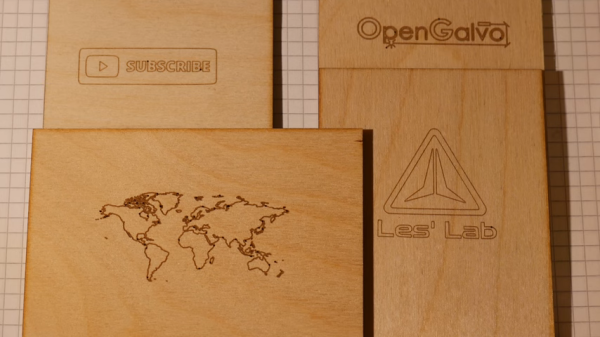
The current work, which is also featured in the video below, mainly concerns those galvos, specifically getting them working with G-code to turn the unit into a bit of an ad hoc laser engraver. Luckily, he stumbled upon the OPAL Open Galvo project on GitHub, which can turn G-code into the XY2-100 protocol used by his laser. While [Les] has nothing but praise for the software side of OPAL, he saw a hardware hole he could fill, and contributed his design for a PCB that hosts the Teensy the code runs on as well as the buffer and line driver needed to run the galvos and laser. The video shows the whole thing in use with simple designs on wood and acrylic, as well as interesting results on glass.

Of course, these were only tests — we’re sure [Les] would address the obvious safety concerns in a more complete engraver. But for now, we’ll just applaud the collaboration shown here and wait for more updates.

Continue reading “Collaborative Effort Gets Laser Galvos Talking G-Code”