Bionic Implants Can Go Obsolete And Unsupported, Too

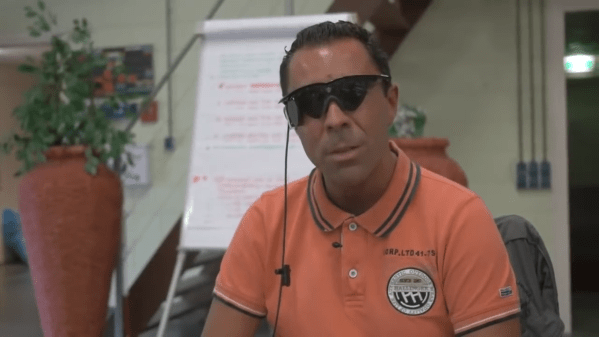
When a piece of hardware goes unsupported by a company, it can be frustrating. Bugs may no longer get fixed, or in the worst cases, perfectly good hardware can stop working entirely as software licences time out. Sadly, for a group reliant on retinal implants from company Second Sight, the company has since stopped producing and supporting the devices that give them a crude form of bionic sight.

The devices themselves consist of electrodes implanted into the retina, which can send signals to the nervous system which appear as spots of light to the user. A camera feed is used to capture images which are then translated into signals sent to the retinal electrodes. The results are low-resolution to say the least, and the vision supplied is crude, but it gives users that are blind a rudimentary sense that they never had before. It’s very much a visual equivalent to the cochlear implant technology.

The story is altogether too familiar; Second Sight Medical Products came out with a cutting-edge device, raised money and put it out into the world, only to go bankrupt down the road, leaving its users high and dry. Over 350 people have the implants fitted in one eye, while one Terry Byland is the sole person to have implants in both his left and right eyeballs. Performance of the device was mixed, with some users raving about the device while others questioned its utility.

Continue reading “Bionic Implants Can Go Obsolete And Unsupported, Too”

Regenerative Medicine: The Promise Of Undoing The Ravages Of Time

In many ways, the human body is like any other machine in that it requires constant refueling and maintenance to keep functioning. Much of this happens without our intervention beyond us selecting what to eat that day. There are however times when due to an accident, physical illness or aging the automatic repair mechanisms of our body become overwhelmed, fail to do their task correctly, or outright fall short in repairing damage.

Most of us know that lizards can regrow tails, some starfish regenerate into as many new starfish as the pieces which they were chopped into, and axolotl can regenerate limbs and even parts of their brain. Yet humans too have an amazing regenerating ability, although for us it is mostly contained within the liver, which can regenerate even when three-quarters are removed.

In the field of regenerative medicine, the goal is to either induce regeneration in damaged tissues, or to replace damaged organs and tissues with externally grown ones, using the patient’s own genetic material. This could offer us a future in which replacement organs are always available at demand, and many types of injuries are no longer permanent, including paralysis. Continue reading “Regenerative Medicine: The Promise Of Undoing The Ravages Of Time”

Open-Source Insulin: Biohackers Aiming For Distributed Production

When you’ve got a diabetic in your life, there are few moments in any day that are free from thoughts about insulin. Insulin is literally the first coherent thought I have every morning, when I check my daughter’s blood glucose level while she’s still asleep, and the last thought as I turn out the lights, making sure she has enough in her insulin pump to get through the night. And in between, with the constant need to calculate dosing, adjust levels, add corrections for an unexpected snack, or just looking in the fridge and counting up the number of backup vials we have on hand, insulin is a frequent if often unwanted intruder on my thoughts.

And now, as my daughter gets older and seeks like any teenager to become more independent, new thoughts about insulin have started to crop up. Insulin is expensive, and while we have excellent insurance, that can always change in a heartbeat. But even if it does, the insulin must flow — she has no choice in the matter. And so I thought it would be instructional to take a look at how insulin is made on a commercial scale, in the context of a growing movement of biohackers who are looking to build a more distributed system of insulin production. Their goal is to make insulin affordable, and with a vested interest, I want to know if they’ve got any chance of making that goal a reality.

Continue reading “Open-Source Insulin: Biohackers Aiming For Distributed Production”

Willem Kolff’s Artificial Organs

In my youth I worked for a paid ambulance service, and while we all lived for the emergency calls, the routine transports were the calls that paid the bills. Compared with the glamor and excitement of a lights-and-siren run to a car wreck or heart attack, transports were dull as dirt. And dullest of all were the daily runs from nursing homes to the dialysis center, where rows of comfy chairs sat, each before a refrigerator-sized machine designed to filter the blood of a patient in renal failure, giving them another few days of life.

Sadly, most of those patients were doomed; many were in need of a kidney transplant for which there was no suitable donor, while some were simply not candidates for transplantation. Dialysis was literally all that stood between them and a slow, painful death, and I could see that at least some of them were cheered by the sight of the waiting dialysis machine. The principles of how the kidneys work have been known since at least the 1800s, but it would take until 1945 for the efforts of a Dutch doctor, using used car parts and sausage casings, to make the predecessor of those machines: the first artificial kidney.

Continue reading “Willem Kolff’s Artificial Organs”

3D Printed Tourniquets Are Not A Cinch

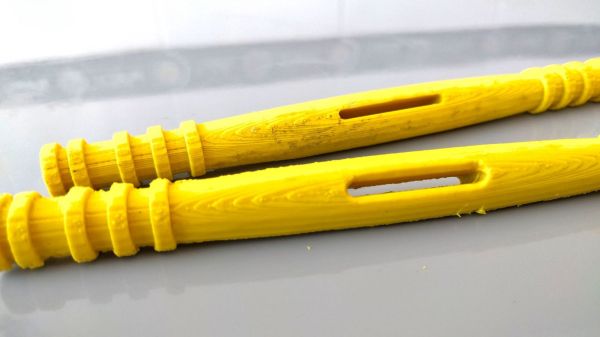
Saying that something is a cinch is a way of saying that it is easy. Modeling a thin handle with a hole through the middle seems like it would be a simple task accomplishable in a single afternoon and that includes the time to print a copy or two. We are here to tell you that is only the first task when making tourniquets for gunshot victims. Content warning: there are real pictures of severe trauma. Below, is a video of a training session with the tourniquets in Hayat Center in Gaza and has a simulated wound on a mannequin.

On the first pass, many things are done correctly: the handle is the correct length and diameter, the strap hole fit the strap, and the part is well oriented on the platen. As with many first iterations, it looks good on a screen, but in the real world, we all live under Murphy’s law. In practice, some of the strap holes had sharp edges that cut into the strap, and one of the printed buckles broke unexpectedly.

On the whole, the low cost and availability of the open-source tourniquets outweigh the danger of operating without them. Open-source medical devices are not just for use in the field, they can help with training too. This tourniquet is saving people and proving that modeling skills can be a big help in the real world.
Continue reading “3D Printed Tourniquets Are Not A Cinch”

Internal Power Pills

Arguably the biggest hurdle to implanted electronics is in the battery. A modern mobile phone can run for a day or two without a charge, but that only needs to fit into a pocket and were its battery to enter a dangerous state it can be quickly removed from the pocket. Implantable electronics are not so easy to toss on the floor. If the danger of explosion or poison isn’t enough, batteries for implantables and ingestibles are just too big.

Researchers at MIT are working on a new technology which could move the power source outside of the body and use a wireless power transfer system to energize things inside the body. RFID implants are already tried and tested, but they also seem to be the precursor to this technology. The new implants receive multiple signals from an array of antennas, but it is not until a couple of the antennas peak simultaneously that the device can harvest enough power to activate. With a handful of antennas all supplying power, this happens regularly enough to power a device 0.1m below the skin while the antenna array is 1m from the patient. Multiple implants can use those radio waves at the same time.

The limitations of these devices will become apparent, but they could be used for releasing drugs at prescribed times, sensing body chemistry, or giving signals to the body. At this point, just being able to get the devices to turn on so far under flesh is pretty amazing.

Recently, we asked what you thought of the future of implanted technology and the comment section of that article is a treasure trove of opinions. Maybe this changes your mind or solidifies your opinion.

Continue reading “Internal Power Pills”

Modular Blocks Help Fight Disease

When engineering a solution to a problem, an often-successful approach is to keep the design as simple as possible. Simple things are easier to produce, maintain, and use. Whether you’re building a robot, operating system, or automobile, this type of design can help in many different ways. Now, researchers at MIT’s Little Devices Lab have taken this philosophy to testing for various medical conditions, using a set of modular blocks.

Each block is designed for a specific purpose, and can be linked together with other blocks. For example, one block may be able to identify Zika virus, and another block could help determine blood sugar levels. By linking the blocks together, a healthcare worker can build a diagnosis system catered specifically for their needs. The price tag for these small, simple blocks is modest as well: about $0.015, or one and a half cents per block. They also don’t need to be refrigerated or handled specially, and some can be reused.

This is an impressive breakthrough that is poised to help not only low-income people around the world, but anyone with a need for quick, accurate medical diagnoses at a marginal cost. Keeping things simple and modular allows for all kinds of possibilities, as we recently covered in the world of robotics.

Continue reading “Modular Blocks Help Fight Disease”