I Am An Iconoscope

We’d never seen an iconoscope before. And that’s reason enough to watch the quirky Japanese, first-person video of a retired broadcast engineer’s loving restoration. (Embedded below.)

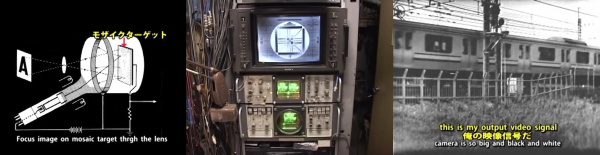
Quick iconoscope primer. It was the first video camera tube, invented in the mid-20s, and used from the mid-30s to mid-40s. It worked by charging up a plate with an array of photo-sensitive capacitors, taking an exposure by allowing the capacitors to discharge according to the light hitting them, and then reading out the values with another electron scanning beam.

The video chronicles [Ozaki Yoshio]’s epic rebuild in what looks like the most amazingly well-equipped basement lab we’ve ever seen. As mentioned above, it’s quirky: the iconoscope tube itself is doing the narrating, and “my father” is [Ozaki-san], and “my brother” is another tube — that [Ozaki] found wrapped up in paper in a hibachi grill! But you don’t even have to speak Japanese to enjoy the frame build and calibration of what is probably the only working iconoscope camera in existence. You’re literally watching an old master at work, and it shows.
Continue reading “I Am An Iconoscope”

Replicating A Victorian Era Console

[Dt99jay] lives in a historic Victorian-era district in the UK.  Most homes in the area have ornate exterior window dressings with stone consoles holding up heavy stone hood molding.

The window hood molding turned out to be wood — most likely the result of damage repaired after the blitzkrieg bombings of WWII. The 1940’s era work is now rotting away, so it was time for a repair. When the hood was pulled away from the window, disaster struck. One console completely crumbled, while the other lost large chunks of material. The They weren’t solid stone after all, but replacements most likely molded with Coade stone.

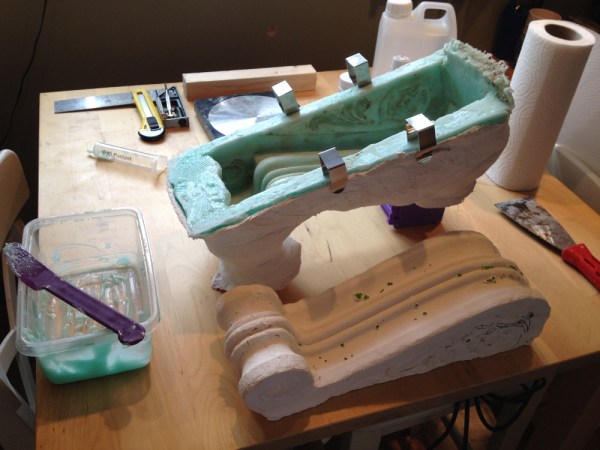
There are no ready replacements for consoles like this. [dt99jay] couldn’t just swap them out for modern looking replacements, so he set about replicating the consoles. The remaining console was much too delicate to remove from the building, so [dt99jay] glued the missing pieces back on. He then filled any missing parts and carefully scraped way all the loose paint. Then came the difficult part — making a mold while the console was still mounted on the house.

Room Temperature Vulcanizing (RTV) silicone rubber was carefully applied to the console. The RTV is thick enough to stay on while it dries. After several thick layers of RTV, the console was covered. [Dt99jay] then covered the mold with plaster of Paris bandages to support it. The finished mold was carefully removed from the house, and [dt99jay] filled all the low spots and air bubbles with RTV.

New castings were made using a mixture of cement and playground sand. Once painted, the results matched perfectly. The historic conservation committee was pleased, and the window was once again structurally sound.

Restoring The Groundbreaking Xerox Alto

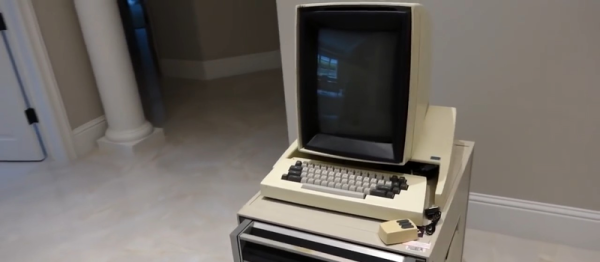
The Xerox Alto was a minicomputer that had a lot of firsts to its name: first GUI, first Ethernet connection, and first computer to use a laser printer. This is the computer that inspired Steve Jobs to build the Lisa. And this was built all back in 1973! So when [Ken Shirriff] and a team of other old-computer aficionados got their hands on one, you know they’d get to work.

[Ken]’s blog describes the start of what’s sure to be a long journey. It mostly describes the Alto system and locates its place in computer history, but there are some interesting sidelines as well — like how [Alan Kay] also basically outlined all of the functionality of the modern laptop / tablet along the way to the Alto; it was supposed to be an interim Dynabook.

Work on this grandfather-of-modern-computers is just getting started, and [Ken] and crew are dusting off the power supplies and cataloguing memory boards. You can be sure that we’ll follow along with this restoration project, and keep you informed.

Upcycle Old Speakers With C.H.I.P.

Sometimes you get a piece of hardware that’s so cool you can’t help but fix it back up. There are a lot of companies after that sweet, sweet Raspberry Pi money, and the $9 US Dollar C.H.I.P. is a very interesting contender for the space. We have been especially enjoying the stream of neat hacks and example projects they’ve been putting out.

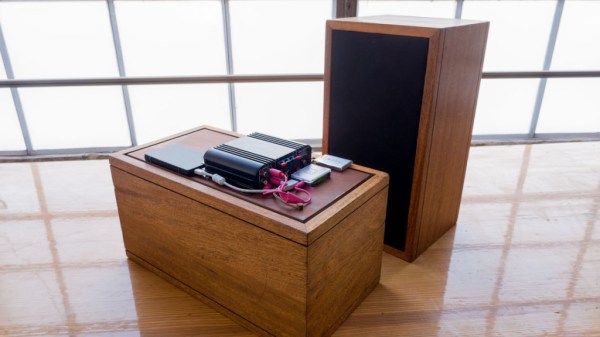
In this case, [Peter] wanted to get a pair of walnut speakers up to modern standards. Already suffering from a glut of audio equipment in his personal space, he decided to sweeten the deal by adding support for his library of music.

The first step was ordering a new set of drivers to replace the aged 40-year-old ones occupying the set. After he got them installed, he added C.H.I.P., a power supply, an amplifier, and a 500GB hard-drive. The controlling software behind the installation is the venerable mpd. This way he can control the speakers from any device in his house as long as he had an interface installed for the daemon.

We’re glad these speakers didn’t end up in the garbage behind a goodwill somewhere, and they do look good.

Welcome To The Old School: Restoring Antique Radios

Before the second world war Radio was a revolution in mass-communication much like the internet today. Fortunes were made and lost, empires built, epic patent battles ensued, all of which resulted in the world being more connected than ever before, which makes for a really great story (and a great Ken Burns documentary).

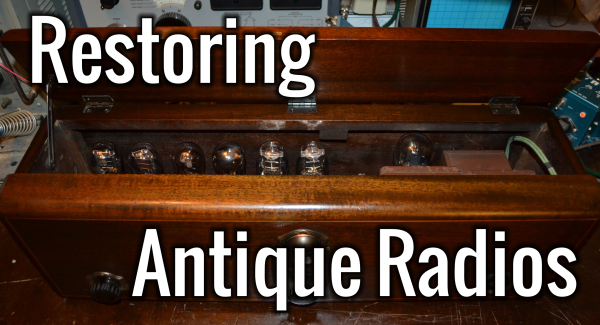
Last month we showed you how to modify a vintage radio to play your own audio source through it while re-using the existing electronics and maintaining its functionality. In this post we will show you how to restore any vacuum tube radio. You will learn basic repair/restoration procedures from a different era when it was actually worth repairing consumer electronics. Plug into history and get your hands on the most influential technology of the first-half of the 20th century!

Continue reading “Welcome To The Old School: Restoring Antique Radios”

Vintage Kegerator

Vintage Kegerator

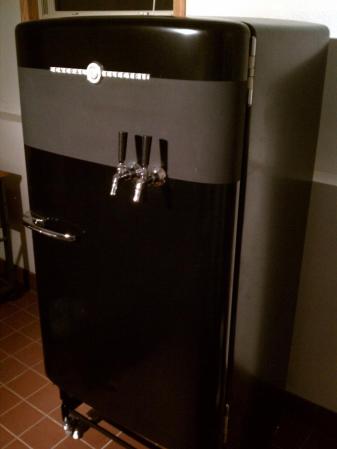
[Kerber] got his hands on a classic 1950’s General Electric fridge, and converted it into this classy vintage kegerator.

As his build log shows, it took an intensive restoration process to get this fridge back in shape. He completely stripped it down, scraping off the sixty year old insulation, fibreglass, and glue. Then the chassis was sanded down to a smooth finish and painted black. R-19 insulation was added to replace the old stuff.

Next up was electronics. An Arduino, DS18B20 temperature sensor, and a solid state relay were used to regulate the temperature and prevent frozen beer. There’s also a Guruplug server that reads data from the Arduino every minute. It makes this data accessible through a web page, so the temperature of the kegs can be monitored from anywhere. [Kerber] admits that this is overkill, but leaves room for future expansion.

The kegerator draws about 180 Watts, and runs for about 6 minutes per hour to keep the temperature regulated. This is pretty impressive considering the age of the fridge. The final restoration looks great, and serves up data along with the beer.

Neosporin…the Retrobright For Bench Equipment?

polishing-knobs

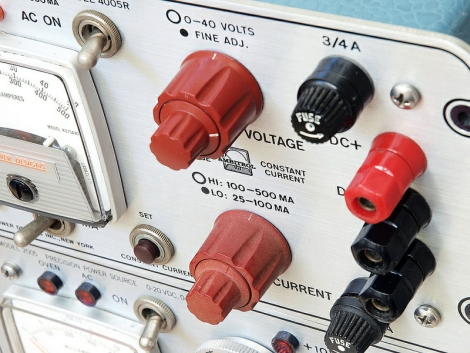
[linux-works] picked up an old power supply from eBay, and as it was built back in the 60’s or 70’s, it was in need of a little TLC. One thing that immediately caught his eye was the condition of the knobs, dials, and banana plug receptacles – they were dull and faded, showing off 40+ years of heavy usage.

He started off by simply removing the knobs from the power supply, giving them a thorough cleaning with soapy water before leaving them to air dry. They didn’t look any better afterward, so he decided to take a different approach and apply some triple antibiotic ointment to the knobs. As it turns out, letting the ointment sit for a few minutes then wiping the knobs with a soft cloth really made them shine, as you can see in the image above. [linux-works] attributes the effect to the white petrolatum base of the product rather than the antibiotics, likely making a wide array of products equally suitable for the job.

We know how well Retr0bright has worked for the vintage computer folks, so we’ll be interested to see how long the effects of the triple antibiotic treatment last. It certainly can’t hurt those readers who spend their time perusing flea markets in search of classic electronic equipment.