CPU As A Heat Sink

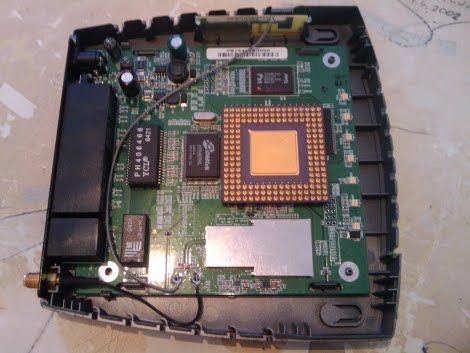
We’ve noticed that wireless routers pump out a bunch of heat. [Jernej Kranjec] wanted to make sure that he didn’t fry it once he started adding more load to his router using OpenWRT. What he came up with is the idea of using an old CPU as a passive heat sink. He applied a bit of thermal paste to the center and some super glue to the corners. You can see the finished product is an old AMD chip adhered “dead bug” style to the stock processor. We’d bet it’s not very efficient compared to an aluminum or copper heat sink, but it normally would have no help in shedding those extra degrees.

CNC Project Roundup

We asked for CNC projects, and wow did you guys deliver!

First up is [J-J Shortcut’s] MDF based CNC. He’s made three thus far, with the most recent costing about 180 euro and taking 2 months to build.

[Qwindelzorf] has also constructed a multitude of CNC machines including this industrial size router and this smaller miller.

Finally, [Mick’s] large steel CNC which just made its first cut only a week ago!

Keep up the great work guys, CNC machines are not easy to build and your accomplishments are ones for the record books.

CNC Circuit Board Fabrication

[Jonathan Ward’s] pcb mill is as impressive as it is inexpensive. Twenty-six plywood parts, labeled A-Z, are used to assemble the machine along with the customary precision rods, stepper motors, and router assembly. His bill of materials prices the unit at $458.18, a small price to pay in order to forgo a multi-step etching process.

His test board shows some fairly fine pitch that could turn out most home-project circuit boards. We’ve contacted [Jonathan] regarding the specifics of milling the plywood parts out of a 2 foot by 4 foot sheet of plywood. Watch for an update with any information he’s willing to share. We hope he’ll make the milling files for the plywood parts available so that you can build a copy of the device for your own use.

[Thanks Charles]

CNC Router On The Way

[vimeo http://vimeo.com/7019823%5D

We love CNC hacks, so when [Jonny] sent in his nearly complete CNC router we were ecstatic. There are only a couple of posts thus far, and it takes some digging, but its pretty easy to understand his mindset and overall plan while making the CNC. It currently has full 3 axis movement and he replaced the previously dinky Harbor Freight Dremel with a much more powerful DeWalt that even Tim Taylor would be proud of. Software side of things he uses a combination of EMC2 and their collection of open source CAM codes. The project is coming along nicely and more updates are promised. Check out some more videos after the break. Continue reading “CNC Router On The Way”

Add IR Control To Your WiFi Router

wrt54g_ir_receiver

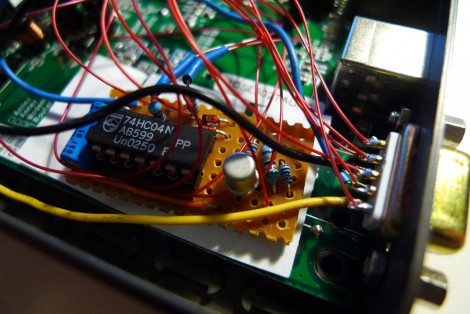
[Craig] wanted to use Boxee on his TV but his computer was in a different room. He rigged up a rather dubious method of delivering the A/V signal (this is a hack in the most guttural sense). More interesting to us is his solution for a remote control interface. We’re familiar with building USB connected infrared receivers but [Craig] decided to patch one into the serial connection on his Linksys WRT54G router. Continue reading “Add IR Control To Your WiFi Router”

Double The RAM On D-Link Router

d-link_double_ram

[Pelaca] upgraded the RAM on his D-Link DIR-320 router from 32MB to 64MB. This hack is simple enough: swap out the existing RAM chip for another one and change the bios to make use of the upgrade. The actual execution is not that simple because of the pitch of the TSOP II package; you’ll need to bring your mad soldering skills to pull this off.

This reminds us of when upgrading original Xbox RAM to 128MB was all the rage. It involved the same type of hack, adding four memory chips to unpopulated positions on the motherboard. The forums are thick with people complaining that their box not working after a failed upgrade attempt. Hopefully you’ll have better luck.

[Thanks Juan]

How To Replace A Netgear Router Antenna

rp-sma-adapter-installed

a.ntivir.us wanted to use a different antenna for their Netgear mbr624gu WiFi router. Unfortunately, this model comes with an antenna that is not removable. As with other antenna retrofits, this involves no soldering. But because there is already a mounting area for an antenna, no case altering is needed either. After opening the router with a Torx driver it was discovered that the non-removable antenna was connected to the board with a mini rf connector (U.FL). The antenna and its mounting bracket were removed and a U.FL to RP-SMA adapter was put in its place using a washer to secure it to the rear plate of the router. Now any external antenna can be used and the router still looks brand new.