Rebuilding An Extremely Rare Twin Mustang Fighter

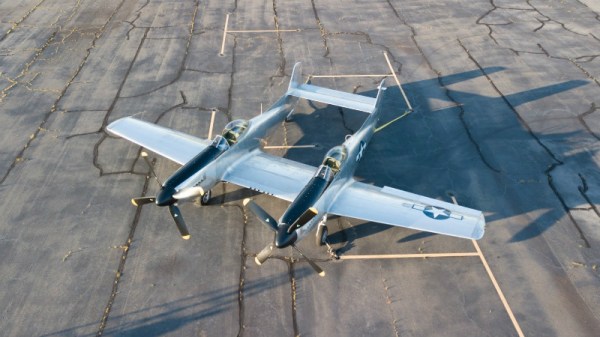
Towards the end of the Second World War, as the United States considered their options for a possible invasion of Japan, there was demand for a new fighter that could escort long range bombers on missions which could see them travel more than 3,200 kilometers (2,000 miles) without refueling. In response, North American Aviation created the F-82, which essentially took two of their immensely successful P-51 fighters and combined them on the same wing. The resulting plane, of which only 272 were built, ultimately set the world record for longest nonstop flight of a propeller-driven fighter at 8,129 km (5,051 mi) and ended up being the last piston engine fighter ordered by the United States Air Force.

Today, only five of these “Twin Mustangs” are known to exist. One of those, a prototype XP-82 variant, is currently in the final stages of an epic decade-long rebuilding process directed by warbird restoration expert [Tom Reilly]. At the end of this painstaking restoration, which makes use of not only original hardware but many newly produced components built with modern technology such as CNC milling and 3D printing, the vintage fighter will become the only flyable F-82 in the world.
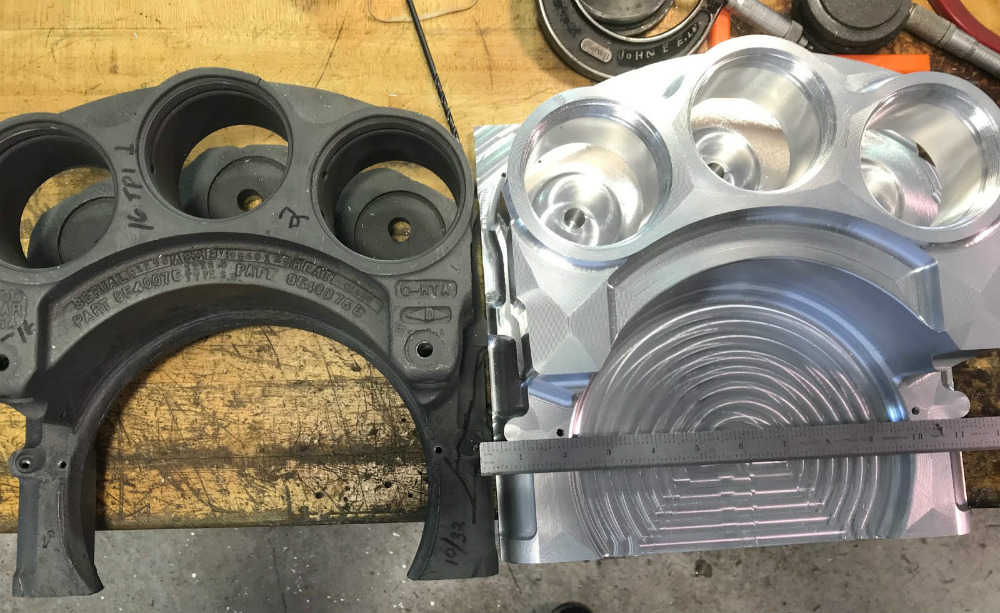
CNC milled replacement brake caliper

The project provides a fascinating look at what it takes to not only return a 70+ year old ultra-rare aircraft to fully functional status, but do it in a responsible and historically accurate way. With only four other intact F-82’s in the world, replacement parts are obviously an exceptional rarity. The original parts used to rebuild this particular aircraft were sourced from literally all over the planet, piece by piece, in a process that started before [Tom] even purchased the plane itself.

In a way, the search for parts was aided by the unusual nature of the F-82, which has the outward appearance of being two standard P-51 fighters, but in fact utilizes a vast number of modified components. [Tom] would keep an eye out for parts being sold on the open market which their owners mysteriously discovered wouldn’t fit on a standard P-51. In some cases these “defective” P-51 parts ended up being intended for the Twin Mustang project, and would get added to the collection of parts that would eventually go into the XP-82 restoration.

For the parts that [Tom] couldn’t find, modern manufacturing techniques were sometimes called in. The twin layout of the aircraft meant the team occasionally had one component but was missing its counterpart. In these cases, the original component could be carefully measured and then recreated with either a CNC mill or 3D printed to be used as a die for pressing the parts out of metal. In this way the team was able to reap the benefits of modern production methods while still maintaining historical accuracy; important on an aircraft where even the colors of the wires used in the original electrical system have been researched and faithfully recreated.

We’ve seen plenty of restorations here at Hackaday, but they tend to be of the vintage computer and occasionally Power Wheels variety. It’s interesting to see that the same sort of techniques we apply to our small scale projects are used by the pros to preserve pieces of history for future generations.

[Thanks to Daniel for the tip.]
Hacking When It Counts: The Magnetron Goes To War

In 1940, England was in a dangerous predicament. The Nazi war machine had been sweeping across Europe for almost two years, claiming countries in a crescent from Norway to France and cutting off the island from the Continent. The Battle of Britain was raging in the skies above the English Channel and southern coast of the country, while the Blitz ravaged London with a nightly rain of bombs and terror. The entire country was mobilized, prepared for Hitler’s inevitable invasion force to sweep across the Channel and claim another victim.

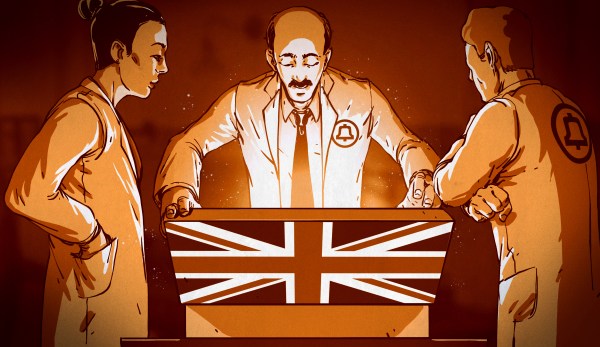
We’ve seen before that no idea that could possibly help turn the tide was considered too risky or too wild to take a chance on. Indeed, many of the ideas that sprang from the fertile and desperate minds of British inventors went on to influence the course of the war in ways they could never have been predicted. But there was one invention that not only influenced the war but has a solid claim on being its key invention, one without which the outcome of the war almost certainly would have been far worse, and one that would become a critical technology of the post-war era that would lead directly to innovations in communications, material science, and beyond. And the risks taken to develop this idea, the cavity magnetron, and field usable systems based on it are breathtaking in their scope and audacity. Here’s how the magnetron went to war.

Continue reading “Hacking When It Counts: The Magnetron Goes To War”

Beeping The Enemy Into Submission

In July 1940 the German airforce began bombing Britain. This was met with polite disagreement on the British side — and with high technology, ingenuity, and improvisation. The defeat of the Germans is associated with anti-aircraft guns and fighter planes, but a significant amount of potential damage had been averted by the use of radio.

Night bombing was a relatively new idea at that time and everybody agreed that it was hard. Navigating a plane in the dark while travelling at two hundred miles per hour and possibly being shot at just wasn’t effective with traditional means. So the Germans invented non-traditional means. This was the start of a technological competition where each side worked to implement new and novel radio technology to guide bombing runs, and to disrupt those guidance systems.

Continue reading “Beeping The Enemy Into Submission”

Hacking When It Counts: Pigeon-Guided Missiles

The image of the crackpot inventor, disheveled, disorganized, and surrounded by the remains of his failures, is an enduring Hollywood trope. While a simple look around one’s shop will probably reveal how such stereotypes get started, the image is largely not a fair characterization of the creative mind and how it works, and does not properly respect those who struggle daily to push the state of the art into uncharted territory.

That said, there are plenty of wacky ideas that have come down the pike, most of which mercifully fade away before attracting undue attention. In times of war, though, the need for new and better ways to blow each other up tends to bring out the really nutty ideas and lower the barrier to revealing them publically, or at least to military officials.

Of all the zany plans that came from the fertile minds on each side of World War II, few seem as out there as a plan to use birds to pilot bombs to their targets. And yet such a plan was not only actively developed, it came from the fertile mind of one of the 20th century’s most brilliant psychologists, and very nearly resulted in a fieldable weapon that would let fly the birds of war.

Continue reading “Hacking When It Counts: Pigeon-Guided Missiles”

Hacking When It Counts: Churchill’s Toy Shop

Nothing brings out the worst in humanity like war. Perversely, war also seems to exert an opposite if not equal force that leads to massive outbursts of creativity, the likes of which are not generally seen during times of peace. With inhibitions relaxed and national goals to meet, or in some cases where the very survival of a people is at stake, we always seem to find new and clever ways to blow each other to smithereens.

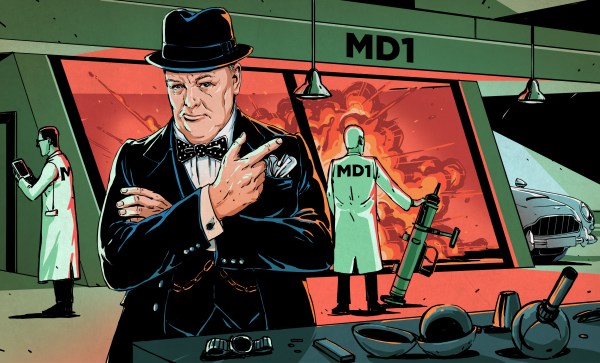
The run-up to World War II was a time where almost every nation was caught on its heels, and the rapidity of events unfolding across Europe and in Asia demanded immediate and decisive response. As young men and women mobilized and made ready for war, teams of engineers, scientists, and inventors were pressed into service to develop the weapons that would support them. For the British, these “boffins” would team up under a directorate called Ministry of Defence 1, or MD1. Informally, they’d be known as “Churchill’s Toy Shop,” and the devices they came up with were deviously clever hacks.

Continue reading “Hacking When It Counts: Churchill’s Toy Shop”

Miss Beatrice Shilling Saves The Spitfire

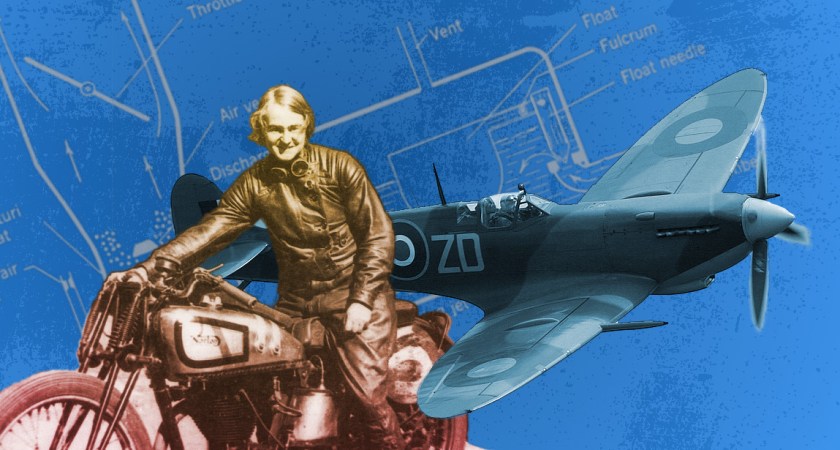
On a bright spring morning in 1940, the Royal Air Force pilot was in the fight of his life. Strapped into his brand new Supermarine Spitfire, he was locked in mortal combat with a Luftwaffe pilot over the English Channel in the opening days of the Battle of Britain. The Spitfire was behind the Messerschmitt and almost within range to unleash a deadly barrage of rounds from the four eight Browning machine guns in the leading edges of the elliptical wings. With the German plane just below the centerline of the gunsight’s crosshairs, the British pilot pushed the Spit’s lollipop stick forward to dive slightly and rake his rounds across the Bf-109. He felt the tug of the harness on his shoulders keeping him in his seat as the nimble fighter pulled a negative-g dive, and he lined up the fatal shot.

But the powerful V-12 Merlin engine sputtered, black smoke trailing along the fuselage as the engine cut out. Without power, the young pilot watched in horror as the three-bladed propeller wound to a stop. With the cold Channel waters looming in his windscreen, there was no time to restart the engine. The pilot bailed out in the nick of time, watching his beautiful plane cartwheel into the water as he floated down to join it, wondering what had just happened.

Continue reading “Miss Beatrice Shilling Saves The Spitfire”

Retrotechtacular: Hacking Wartime Mail

I’m guessing you got quite a few e-mails today. But have you ever had a v-mail? That sounds like some new term for video e-mail, but it actually dates back to World War II. If you are in Europe, the term was Airgraph — not much more descriptive.

If you make a study of war, you’ll find one thing. Over the long term, the winning side is almost always the side that can keep their troops supplied. Many historians think World War II was not won by weapons but won by manufacturing capability. That might not be totally true, but supplies are critical to a combat force. Other factors like tactics, doctrine, training, and sheer will come into play as well.

On the other hand, morale on the front line and the home front is important, too. Few things boost morale as much as a positive letter from home. But there’s a problem.

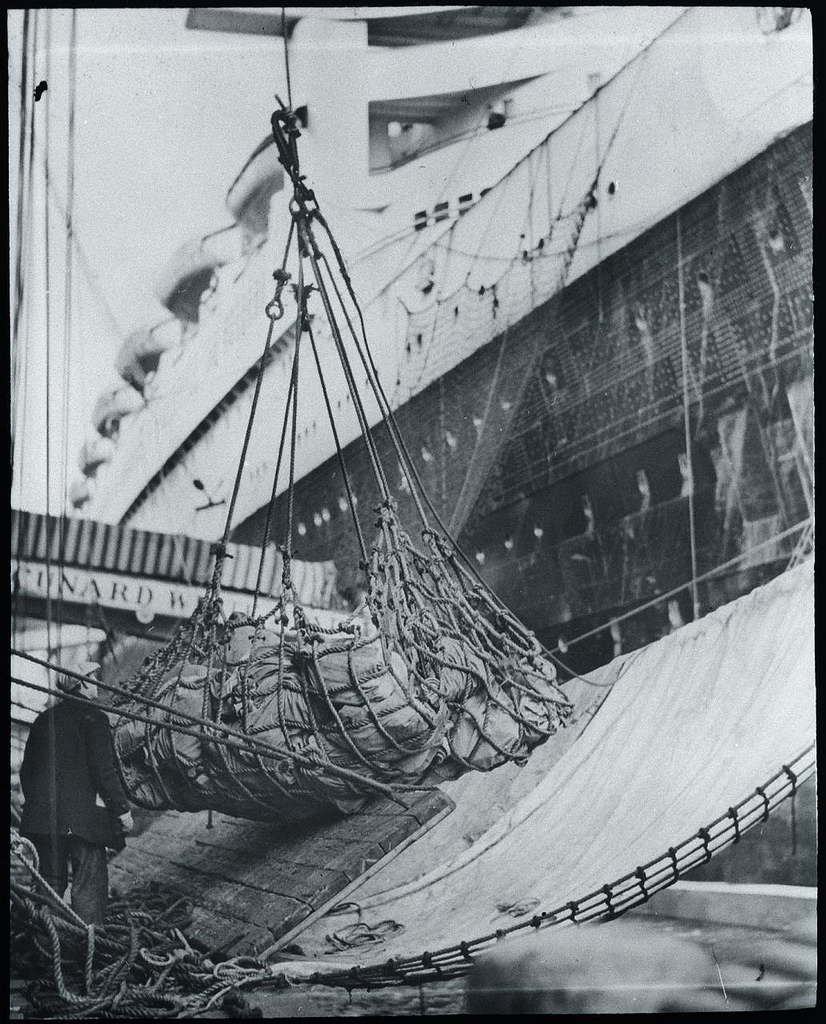
While today’s warfighter might have access to a variety of options to communicate with those back home, in World War II, communications typically meant written letters. The problem is ships going from the United States to Europe needed to be full of materials and soldiers, not mailbags. With almost two million U.S. soldiers in the European Theater of Operations, handling mail from home was a major concern.

British Mail Hack

The British already figured out the mail problem in the 1930s. Eastman Kodak and Imperial Airways (which would later become British Airways) developed the Airgraph system to save weight on mail-carrying aircraft.  Airgraph allowed people to write soldiers on a special form. The form was microfilmed and sent to the field. On the receiving end, the microfilm was printed and delivered as regular mail.

Continue reading “Retrotechtacular: Hacking Wartime Mail”