DIY circuit etching video tutorial

posted Nov 9th 2009 4:00pm by Phil Burgess
filed under: classic hacks, tool hacks

toner-paper

Circuit-bending blog GetLoFi has posted the best tutorial yet on home-made printed circuit boards using the toner transfer method.

We’ve covered homebrew PCB fabrication techniques about a billion times before. What sets this tutorial apart is that it collects many bits of knowledge otherwise scattered all about the web, and then depicts the entire process on video, from initial printing to cut PCB…because reading about it versus seeing it done are two different things entirely. They give a number of immensely useful tips throughout: choice of materials and where to get them, tools and techniques, and dispelling several myths about these methods (for example, they’re adamant about not using acetone to clean toner from the PCB). Well worth the 30 minutes to watch. If that’s too much and you’ve been stuck on just one part of the process, the tutorial is in three segments.

Trimming finished boards on a paper cutter? Who would’ve guessed?

[via Make]

well engineered diy Segway

posted Oct 20th 2009 2:00pm by Mike Szczys
filed under: arduino hacks, transportation hacks

diy-segway

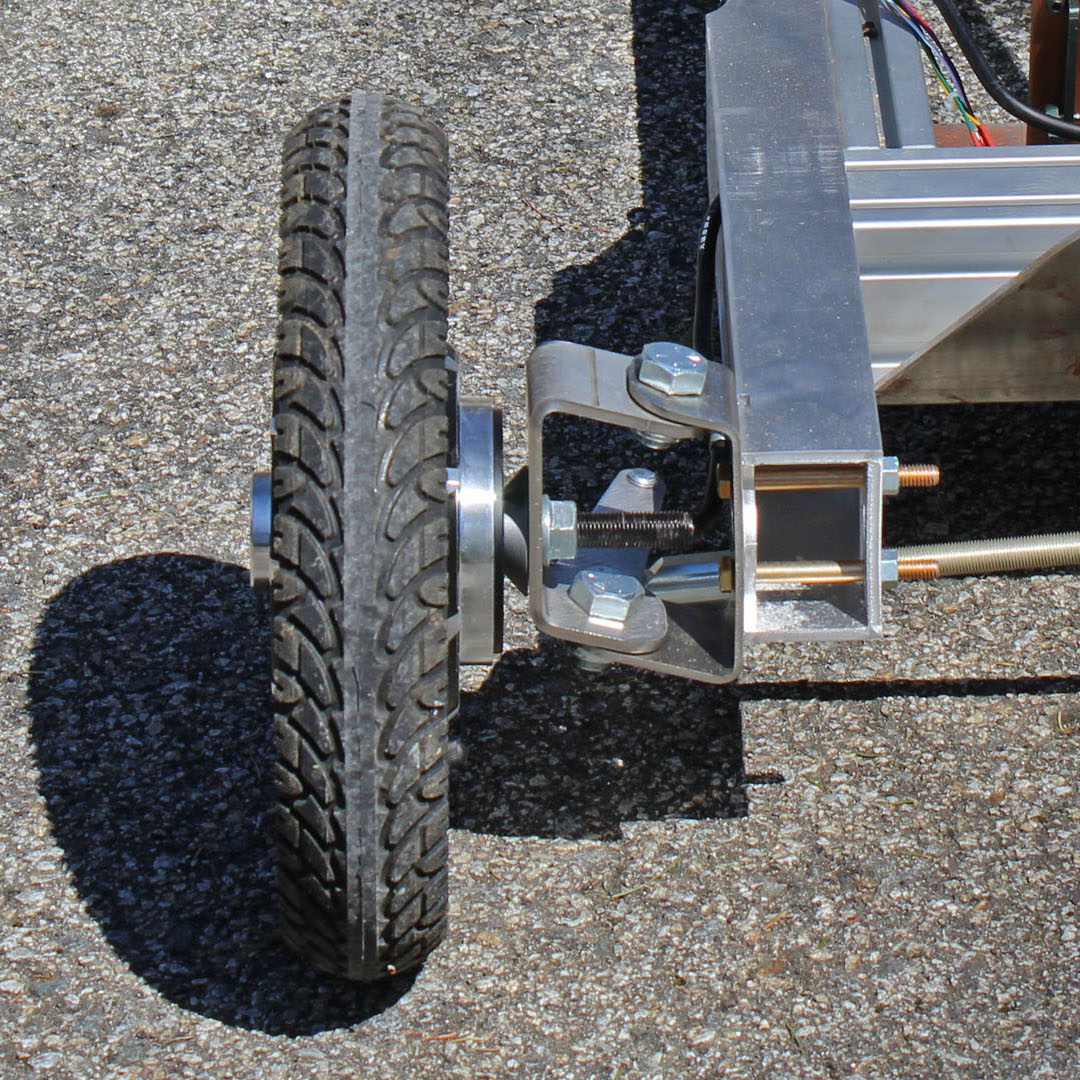
[Mark] wanted a Segway but why buy something if you can have more fun building it? His end product is an amazing homemade version of the self-balancing transportation package. We’ve seen several projects that include auto-balance, but this one is large enough to ride on and has a bit of an advantage in the design. The motors, batteries, and other components are mounted below the wheel hubs and are weight balanced. This means that the device wants to find balance naturally, even when the electronics are switched off.

The frame was modeled in CAD and then welded together. For propulsion [Mark] has installed two 750 Watt motors which will use sprockets and chains to turn the wheels. The machine balances based on data from both a gyroscope and an accelerometer, with the entire packaged tied together using an Arduino.

[Mark's] build log is well laid out and details each part of the build with a different post. His two most recent entries include video of the unit balancing and of him riding the 95% completed project. A big thanks to [Mark] for taking the time to document this so that we can share in the excitement of a well-executed project.


Snega2usb preorder now available

posted Oct 14th 2009 2:21pm by Gerrit Coetzee
filed under: home entertainment hacks, nintendo hacks

We’ve been watching the development of the snega2usb since it’s debut on Hackaday. Now it’s grown up and is ready to be manufactured. In the low quality video above [Matthias] shows some of the latest high quality additions to the board. It now has a case, shiny new firmware,  production made PCB, and game pad ports.  The snega2usb is shipping this December for those who preorder now.

snega2usb update: usb snes and sega cartridge reader

posted Sep 7th 2009 3:19pm by Gerrit Coetzee
filed under: home entertainment hacks, news, nintendo hacks

When we first posted [Matthias_H]’s USB reader for SNES game carts, it was met with enthusiasm. The snega2usb allows you to play SNES and Sega games on your pc right off the cartridge. The latest revision is even more amazing than the first.  [Matthias] has added the ability to read Sega Genesis/Mega Drive cartridges as well as the ability to save games directly to the cartridge. The board has also been updated from the rats nest it used to be to a smart looking dual sided PCB. So far [Matthias] hasn’t had any trouble reading cartridges, even ones with the SuperFX chips. [Matthias] also launched a site for the project where the lastest information on its development can be found.  [Matthias] is getting close to a production version which will feature better firmware, console quality connectors and a shiny case.

Arduino muon detector

posted Sep 3rd 2009 4:50pm by Zach Banks
filed under: arduino hacks

100_0627

[Sebastian Tomczak] was borrowing a homeade muon detector from his friend, and managed to hook it up to his computer through an Arduino. The detector itself uses 3 fluorescent tubes to detect radiation. Three separate tubes are used in order to filter out terrestrial radiation; cosmic radiation will fall in-line with the tubes and pass through at least two of them, whereas terrestrial radiation will only hit one. There is some basic circuitry to amplify the signal and then perform the OR operation.

[Tomczak]  used an Arduino to take the raw data and feed it into his computer. He then used Max/MSP to analyze the data and filter out background noise, leaving only the cosmic ray data. He didn’t mention what he was going to use the data for, though. Maybe he’ll hook it up to a synthesizer.

Related: Digital Geiger counter

[via @littlebirdceo]


Direct-to-PCB inkjet printing

posted Sep 2nd 2009 5:45pm by Phil Burgess
filed under: tool hacks

inkjet-pcb

Full Spectrum Engineering has offered up a tutorial for their inkjet direct PCB kits that repurpose direct-to-CD capable inkjet printers (such as the Epson R280) to print etch-resistant ink straight onto copper clad board. This is easier and less error prone than some iron-on methods, especially for two-sided boards. Just print (no need to reverse the design), dry on a hot plate or in a toaster oven for a couple minutes, and your board’s ready for etching!

Homebrew methods exist for all of this, but for those who would rather move ahead with their design than spend time scrounging for the required bits, the kits offer a pretty good value. They can also meet you halfway…say if you’re only lacking access to a laser cutter and just want the CD stencil…all of the parts are available individually or as a complete set: the resist ink cartridge, the stainless steel board-holding stencil, and a supply of double-sided copper clad boards precisely sized for the stencil (3.5 by 2.5 inches). The small board size is well within the limits of the freeware Eagle Light Edition software.

Concerned about gunking up your nice inkjet with non-OEM ink? You can dedicate hardware to the job without breaking the bank. Many of the compatible printers are of the “free printer after rebate” bundle variety that can now be found inexpensively on Craigslist or eBay.

USB gameboy cart

posted Aug 28th 2009 7:32am by Zach Banks
filed under: handhelds hacks, nintendo hacks, peripherals hacks

gamecart

[Jose Torres] sent in his latest attempt at creating a custom Gameboy game cartridge. We’ve featured his projects before, and he’s come a lot closer over the last 2 years. He’s aiming to create an easy interface for homebrewers that doesn’t require any other special equipment. In this revision, he’s using a PIC and a memory controller to interface between an SD card and the Gameboy. The cart also has USB support for uploading files to the SD card and reprogramming the PIC. Because it’s just USB mass storage, it will work on almost any modern OS. He’s currently testing the device, but hopes to be selling them soon for $40.

Collect and analyze ECG data

posted Aug 22nd 2009 12:00pm by Zach Banks
filed under: Medical hacks, downloads hacks, peripherals hacks

ecg

Although we’ve covered DIY ECGs before, [Scott Harden] sent in his version that gives an in-depth explanation of what to do with the collected data. He built a basic battery-powered op-amp-based ECG for under $1. The circuit just amplifies the signal from the chest leads and feeds it into a computer via the microphone port. He then used GoldWave to record, filter, and save the signal. From there, he used python to analyze the heartbeat and calculate his heart rate and further manipulate the data. His previous blog posts go into more detail on how the python code works and why he chose software over hardware filters.


Adafruit releases new TV-B-Gone kit

posted Aug 17th 2009 5:15pm by Nick Caiello
filed under: news

TV-B-Gone
Recently, our friends over at Adafruit released a new version of their popular TV-B-Gone kit. Built in cooperation with [Mitch Altman], the inventor of the TV-B-Gone, the new kit sports four high power IR LEDs, two wide beam and two narrow beam. The four LEDs give the new TV-B-Gone increased range, with a maximum distance of over 150ft. One of the most impressive features of the kit is the fact that the new TV-B-Gone is universal and can now work in Europe and Asia in addition to the US. Users are able to select which region they want to use during the build process by soldering a resistor into the board at their region’s corresponding spot as seen in the picture above. The new TV-B-Gone kit is now available in the Adafruit store for $19.95 plus shipping.

Serial hacking with an ATtiny2313

posted Aug 6th 2009 6:14am by Steve Watkins
filed under: home entertainment hacks, misc hacks, pcs hacks

board

[Sprite_tm] automated a portion of serial hacking by sniffing out the baud rate using an ATtiny2313 and FT232 breakout board. The firmware assumes 8 data bits, no parity, and 1 stop bit (8N1). This is pretty much defacto among serial ports so it should work well, though some devices do use different settings. The auto detection routine can sniff rates as low as 110 baud and supports non standard rates. Released under GPLv3, the software is also supplied in hex format.  [Sprite_tm] has provided great project in past such as Working with VFDsControllable bristlebot, and AVR boost converter. Additional information regarding serial hacking after the break.

Read the rest of this entry »

Hack a Day serves up fresh hacks each day, every day from around the web and a special How-To hack each week.

Send us your hacks