Computer-Designed Portraits, Knit By Hand!

Artist [Petros Vrellis] has done something that we’ve never seen before: his piece “A New Way to Knit” lives up to its name. What he’s done is to take the traditional circular loom, some black thread, and toss some computing at it. And then he loops the string around and around and around.

a-new-way-to-knit-175653201mp4-shot0009_thumbnail

The end result of following the computer’s instructions is a greyscale portrait. Where few black strings overlap, it’s light, and where more overlap, it’s darker. That’s the whole gimmick, but the effect is awesome. As you zoom in and out, it goes from a recognizable face to a tangle of wires and back. Check out his video embedded below.

Continue reading “Computer-Designed Portraits, Knit By Hand!”
All-terrain Hoverboard Junk Pile Build

If you’re anything like us, chances are pretty good you’ve got at least one underused piece of fitness gear cluttering up your place. Rather than admit defeat on that New Year’s Resolution purchase, why not harvest the guts and build an all-terrain hoverboard for a little outdoor fun?

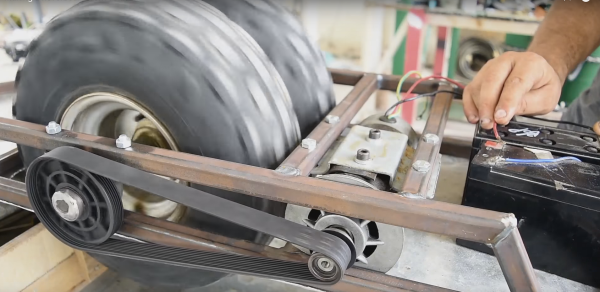
The fitness machine in question for [MakeItExtreme]’s build was a discarded Crazy Fit vibration platform. We’re not sure we see the fitness benefits of the original machine, but there’s no doubt it yielded plenty of goodies. The motor and drive belt look stout, and the control board eventually made it into the hoverboard too. The custom steel frame was fabricated using some of [MakeItExtreme]’s DIY tools, which is what we’re used to seeing them build — check out their sand blaster and spot welder for examples. A couple of knobby tires in the center of the board let the rider balance (there’s no gyro in this version) and power is provided by a couple of 12 volt AGM batteries. Sadly, the motor was a line voltage unit, so an inverter was needed. But it was the only part that had to be purchased, making this a pretty complete junk pile build.

See the video after the break for build details and a few test rides. Looks like it can do 20 mph or so – pretty impressive.

Continue reading “All-terrain Hoverboard Junk Pile Build”

Hackaday Prize Entry: A Suite Of Lab Instruments

For their Hackaday Prize entry, [Jithin], [Praveen], [Varunbluboy], and [Georges] are working on SEELablet, a device that will equip budding citizen scientists with control and measurement equipment.

One of the best ‘all-in-one’ lab devices is National Instruments’ VirtualBench, a device that’s an oscilloscope, logic analyzer, function generator, multimeter, and power supply, all crammed into one box. There’s a lot you can do with a device like this, but as you would expect, the name-brand version of this isn’t meant for middle school students.

In an effort to bring the cost of an all-in-one lab tool down to a price mere mortals can afford, the team behind the SEELablet have combined a single board computer with the capability of an oscilloscope, frequency counter, logic analyser, waveform generator, and a programmable power supply.

This has been a multi-year project for the team, beginning with a Python-powered instrumentation tool, and later a device running this code that’s also a versatile lab tool. If the latest iteration of the project turns out to be all it promises, we can’t wait to see the data this box will produce. There’s a lot you can measure in a fully stocked electronics lab, and this project makes the whole setup much easier to obtain.

FPGA Drives Old Laptop Screen

Every year, new models of laptops arrive on the shelves. This means that old laptops usually end up in landfills, which isn’t exactly ideal. If you don’t want to waste an old or obsolete laptop, though, there’s a way to reuse at least the screen out of one. Simply grab an FPGA off the shelf and get to work.

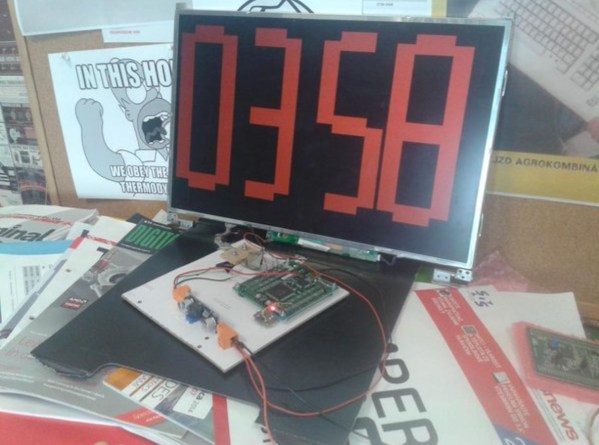
[Martin] shows us all how to perform this feat on our own, and goes into great detail about how all of the electronics involved work. Once everything was disassembled and the FPGA was wired up, it took him a substantial amount of time just to turn the display on. From there it was all downhill: [Martin] can now get any pattern to show up on the screen, within reason. The only limit to his display now seems to be the lack of external RAM. He currently uses the setup to drive an impressive-looking clock.

This is a big step from days passed where it was next to impossible to repurpose a laptop screen. Eventually someone discovered a way to drive these displays, and now there are cheap electronics from China that can usually get a screen like this running. It’s impressive to see it done from scratch, though, and the amount of detail in the videos are a great way to understand how everything is working.

Continue reading “FPGA Drives Old Laptop Screen”

Build A Foam Cutter Right Now

Cutting foam is difficult with traditional methods. The best way is with a hot wire. If you read Hackaday, it is a good bet you can figure out how to use electricity to make a wire hot without any help. However, there’s something  clever about [MrGear’s] minimal build.

As you can see in the video below, he uses a 9V battery, a clip, some popsicle sticks, and the wire from a ballpoint pen. He also used a switch, but we couldn’t help but think that was unnecessary  since you could just unclip the battery to turn the device on and off. Since he used hot glue to attach the switch to the battery, replacing the battery would be a pain.

Continue reading “Build A Foam Cutter Right Now”

DIY Smart Home Device Means No More Fumbling In The Dark

Smart home tech is on the rise, but cost or lack of specific functionality may give pause to prospective buyers. [Whiskey Tango Hotel] opted to design their own system using a Raspberry Pi and Bluetooth device connectivity. Combining two ubiquitous technologies provides a reliable proximity activation of handy functions upon one’s arrival home.

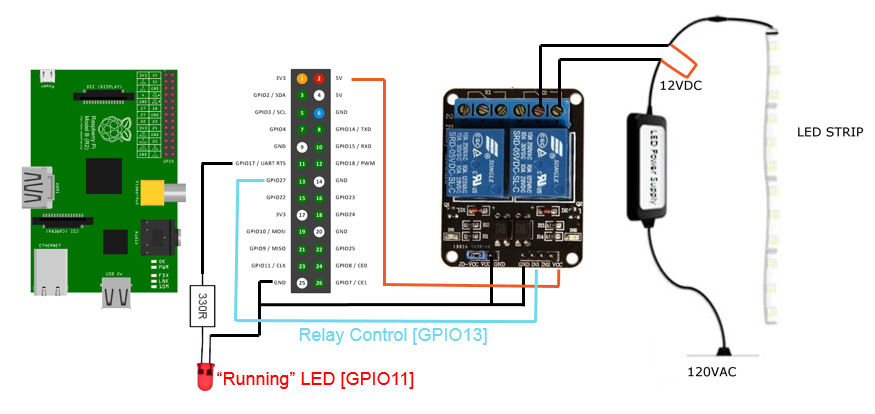
Electrical Wiring Diagram

The primary function is to turn on a strip of LEDs when [Whiskey Tango Hotel] gets home to avoid fumbling for the lights in the dark, and to turn them off after a set time. The Raspberry Pi and Bluetooth dongle detect when a specified discoverable Bluetooth device comes within range — in this case, an iPad — after some time away. This toggles the Pi’s GP10 outputs and connected switching relay while also logging the actions to the terminal and Google Drive via IFTTT.

Continue reading “DIY Smart Home Device Means No More Fumbling In The Dark”

Yes, You Should Be Hacking Your Car’s Data System

If you own a car, I would wager it’s the most complex device you own. Within you find locomotion, safety systems, and an entertainment system that may be using technology from several decades ago (but that’s a rant for a different article). Jalopy or Sweet Hotness, your ride has an underlying data network that is a ton of fun to hack, and something of a security dinosaur. Both were discussed by Craig Smith and Erik Evenchick during their talk on Car Hacking tools at Hope XI.

You should recognize both of these names. Eric Evenchick is a Hackaday contributor who has been traveling the world presenting talks and workshops on his open source car hacking hardware called CANtact. Craig Smith is founder of OpenGarages and author of the Car Hacker’s Handbook which we highly recommend. The pair made a great joint presentation; both were charismatic, using wit to navigate through the hardware, software, techniques, and goals you want to have in mind to jump into car hacking.

Continue reading “Yes, You Should Be Hacking Your Car’s Data System”