DIYing Huge BGA Packages

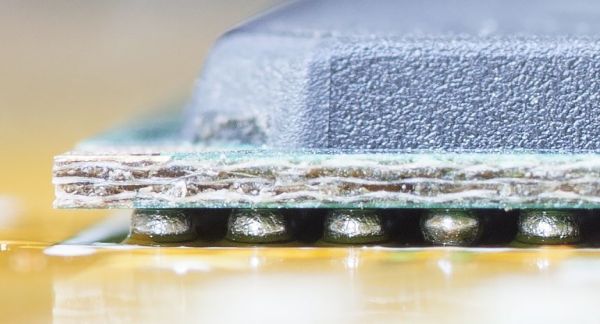
One day [Andy] was cruising around eBay and spotted something interesting. Forty Virtex-E FPGAs for two quid each. These are the big boys of the FPGA world, with 512 user IO pins, almost 200,000 logic gates, packed into a 676-ball BGA package. These are not chips designed for the hobbyist. These chips are not designed for boards with less than six layers. These chips aren’t even designed for boards with 6/6mil tolerances from the usual suspects in China. By any account, a 676-ball package is not like a big keep out sign for hobbyists. You don’t turn down a £2 class in advanced PCB design, though, leading to one of the most impressive ‘I just bought some crap on eBay’ projects we’ve seen.
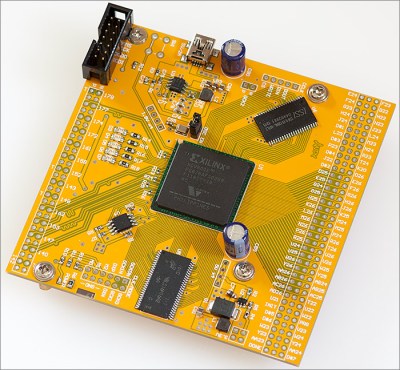
halfbuiltThe project [Andy] had in mind for these chips was a generic dev board, which meant breaking out the IO pins and connecting some SRAM, SDRAM, and Flash memory. The first issue with this project is escape routing all the balls. Xilinx published a handy application note that recommends specific design parameters for the traces of copper under the chip. Unfortunately, this was a six-layer board, and the design rules in the application note were for 5/5mil traces. [Andy]’s board house can’t do six-layer boards, and their design rules are for 6/6mil traces. To solve this problem, [Andy] just didn’t route the inner balls, and hoped the 5mil traces would work out.

With 676 tiny little pads on a PCB, the clocks routed, power supply implemented, too many decoupling caps on the back, differential pairs, static RAM, a few LEDs placed just for fun, [Andy] had to solder this thing up. Since the FPGA was oddly one of the less expensive items on the BOM, he soldered that first, just to see if it would work. It did, which meant it was time to place the RAM, Flash, and dozens of decoupling caps. Everything went relatively smoothly – the only problem was the tiny 0402 decoupling caps on the back of the board. This was, by far, the hardest part of the board to solder. [Andy] only managed to get most of the decoupling caps on with a hot air gun. That was good enough to bring the board up, but he’ll have to figure some other way of soldering those caps for the other 30 or so boards.


Continue reading “DIYing Huge BGA Packages”

Gremlins Are Air To Air Drones

If you are like most people, your drone flights start on the ground and end either on the ground or–in more cases than most of us want to admit–in a tree. Earlier this year, DARPA awarded initial contracts for the Gremlins program. The idea is to produce unmanned aircraft that can launch from another aircraft and then later have another aircraft recover it.

The idea is to allow a plane to launch an unmanned sensor, for example, while out of range of enemy fire. Later another aircraft can retrieve the drone where a ground crew would get it ready for another flight within 24 hours. An aircraft facing missile fire could unleash a swarm of drones, confusing attackers. The drones have a limited life of about twenty flights, allowing for inexpensive airframes that use existing technology. You can see a concept video from DARPA about how air-launched drones might play a role in future air combat below.

Continue reading “Gremlins Are Air To Air Drones”

Hackaday Prize Entry: Electronics Anywhere, Any Time

There has always been a need for electronic graph paper – a digital device that records ones and zeros, writes bits, and keeps track of analog voltages. Many moons ago, this sort of device was graph paper, wrapped around a drum, slowly spinning around once per day. With the advent of cheap, powerful microcontrollers and SD cards these devices have become even more capable.

For their entry to the Hackaday Prize, [Kuldeep] and [Sandeep] have built Box0. It’s a lab in a bag, an open source data acquisition unit, and a USB device that toggles pins, all in one simple device.

The hardware for this devices consists of an STM32F0 microcontroller, a USB port, and enough pins to offer up a few SPIs, an I2C bus, eight channels of digital output, two PWM channels, a UART, analog in, and analog out.

Of course, hardware is the easy part. If you want to do something useful with a device like this, you need some software. Here is where the project really shines. They have libraries for Python, Julia, C, Java, and JavaScript. That’s enough to make anyone happy, and makes this Box0 exceptionally capable. For a demonstration, they’ve built a curve tracer for transistors and red, green, and blue LEDs with the Box0. It works, and it looks like this actually is an exceptionally useful device.

Solar Powered Hydroponics

[Dan Bowen] describes the construction of a backyard hydroponics set-up in an angry third person tirade. While his friends assume more nefarious, breaking, and bad purposes behind [Dan]’s interest in hydroponics; he’d just like some herbs to mix into the occasional pasta sauce.

Feel particularly inspired one day after work, he stopped by the local hardware store and hydroponics supply. He purchases some PVC piping, hoses, fittings, pumps, accessories, and most importantly, a deck box to hide all the ugly stuff from his wife.

The design is pretty neat. He has an open vertical spot that gets a lot of light on his fence. So he placed three lengths of PVC on a slant. This way the water flows quickly and aerates as it goes. The top of the pipes have holes cut in them to accept net baskets.

The deck box contains a practically industrial array of sensors and equipment. The standard procedure for small-scale hydroponics is just to throw the water out on your garden and replace the nutrient solution every week or so. The hacker’s solution is to make a rubbermaid tote bristle with more sensors than the ISS.

We hope his hydroponics set-up approaches Hanging Gardens of Babylon soon.

Orbs Light To Billie Jean On This Huge Sequencer

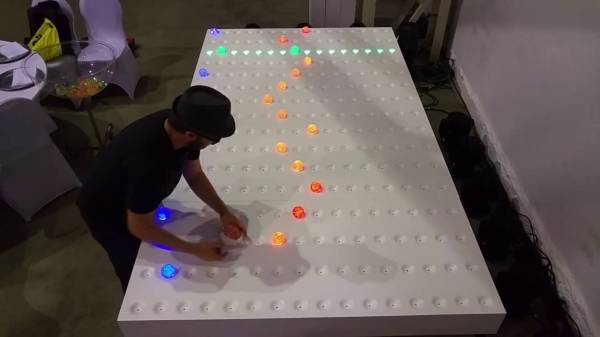
Sequencers allow you to compose a melody just by drawing the notes onto a 2D grid, virtually turning anyone with a moderate feel for pitch and rhythm into an electronic music producer. For  [Yuvi Gerstein’s] large-scale grid MIDI sequencer GRIDI makes music making even more accessible.

Instead of buttons, GRIDI uses balls to set the notes. Once they’re placed in one of the dents in the large board, they will play a note the next time the cursor bar passes by. 256 RGB LEDs in the 16 x 16 ball grid array illuminate the balls in a certain color depending on the instrument assigned to them: Drum sounds are blue, bass is orange and melodies are purple.

Underneath the 2.80 x 1.65 meters (9.2 x 4.5 foot) CNC machined, sanded and color coated surface of the GRIDI, an Arduino Uno controls all the WS2812 LEDs and reads back the switches that are used to detect the balls. A host computer running Max/MSP synthesizes the ensemble. The result is the impressive, interactive, musical art installation you’re about to see in the following video. What better tune to try out first than that of Billie Jean whose lighted sidewalk made such an impression on the original music video.

Continue reading “Orbs Light To Billie Jean On This Huge Sequencer”

Make Your Own Transparent Wood

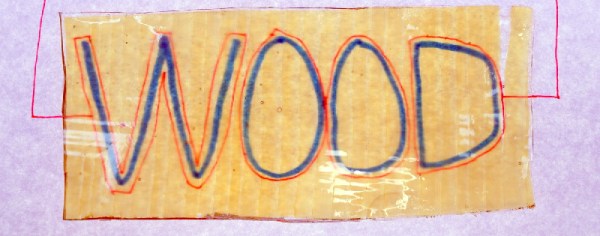
Want to bring your fine antique furniture into the 21st century? Make it clear with transparent wood. That’s what [blorggg] is doing over on Hackaday.io, and it looks cool enough to have a some interesting and novel applications besides small, clear test pieces.

The recipe for transparent wood is surprisingly simple, and all the ingredients are readily available from a drug store or home supply store. First, the wood is soaked in a bath containing lye and sodium sulfite for several hours. The wood is then bleached in a bath of hydrogen peroxide. After this, the wood is transparent, but very weak. Infusing the wood with epoxy resin strengthens the wood.

We first heard about this process back in May when the the paper [blorggg] based his recipe on came to light. the lye and sodium sulfite are frequently used in the paper industry to dissolve the lignin in wood. By removing the lignin, the microscopic structure of a piece of wood becomes just a series of tubes and thin cell walls. After bleaching, adding the epoxy shores up the now exceptionally weak structure of a block of wood.

While the original researchers only made two pieces of transparent wood – end grain and cross grain basswood, inexplicably referred to as R-wood and L-wood – [blorggg] is taking this much further. He’s using plywood to great effect, and the process is simple enough to expand to woods a bit weirder than basswood. If you have some scrap walnut, burl, or some exotic wood, this might be something to try out.

MIT Thinks It Can One-Up TOR With New Anonymity Network: Riffle

Tor is the household name in anonymous networks but the system has vulnerabilities, especially when it comes to an attacker finding out who is sending and receiving messages. Researchers at MIT and the École Polytechnique Fédérale de Lausanne think they have found a better way in a system called Riffle. You can dig into the whitepaper but the MIT news article does a great job of providing an overview.

The strength at the core of Tor is the Onion Routing that makes up the last two letters the network’s name. Riffle keeps that aspect, building upon it in a novel way. The onion analogy has to do with layers of skins — a sending computer encrypts the message multiple times and as it passes through each server, one layer of encryption is removed.

Riffle starts by sending the message to every server in the network. It then uses Mix Networking to route the message to its final destination in an unpredictable way. As long as at least one of the servers in the network is uncompromised, tampering will be discovered when verifying that initial message (or through subsequent authenticated encryption checks as the message passes each server).

The combination of Mix Networking with the message verification are what is novel here. The message was already safe because of the encryption used, but Riffle will also protect the anonymity of the sender and receiver.

[via Engadget]