Who says an old dog can’t do new tricks? The Atari ST has got to qualify as an “old dog” 41 years after launch, and if playing Full Motion Video (FMV) cutscenes– from DOS games of a decade later– doesn’t count as a new trick, we’re not sure what does. In this case, [Jonas Eschenburg] is the trainer and his fascinating write-up lets you know exactly how he did it.
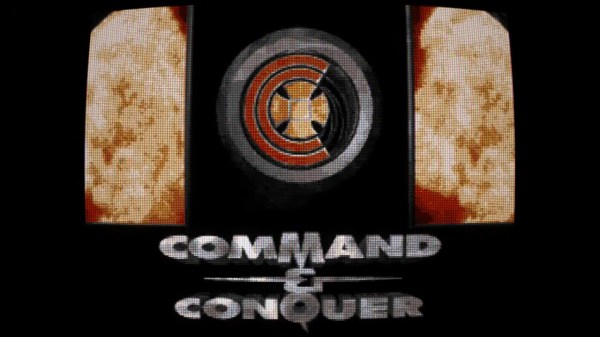
Unlike the contemporary and pricier Amiga, Atari’s 68000-based home computer didn’t have any fancy graphics chips; everything has to go through the Motorolla CPU at a blistering 8MHz. Just porting classic DOS games like [Jonas Eschenburg] is doing with Command and Conquer— a title 10 years newer than the ST– is an amazing tour de force. Bringing the cutscenes along for the ride is just bonus, but what a bonus it is.
Granted, [Jonas] has to work within the Atari’s limitations, so it doesn’t quite look the same. The biggest limitation is of course the 16 colour planar graphics on the Atari, compared with 256 colours of chunky goodness that VGA offered. [Jonas] admits that getting good palettes to minimize artifacting is a challenge. Interestingly he’s not showing quite so many blocking artifacts we would expect from the technique he is using: to take advantage of how the ST’s memory is laid out, he’s using a codebook-based codec that splits the image into easily-addressable blocks. Both the palette and the codebook must update continuously as the film plays but that’s still easier on the antique hardware than streaming raw pixel data, which you cannot do. The whole article is absolutely worth a read, and the demo videos generously sprinkled through it are worth a look, too. We’ve included a demo of C&C‘s intro below. If you’re itching to play, the port is on Itch.io.
Speaking of DOS games, did you know the Atari ST can run doom? Multiple versions, even.
Continue reading “A Full Motion Video Codec For The Atari ST”