Once you’ve mastered the near-magical ability of turning your ideas into a piece of hardware you can hold in your hand, it’s only natural that you’ll want to spread the joy. The holidays are a perfect time to produce a custom piece of electronics for friends and family, but there’s a catch: going from making one or two of something to making dozens of them can introduce some interesting challenges. Not only will you want to cost optimize your design, but to save yourself some aggravation, you’ll likely want to simplify the assembly process.
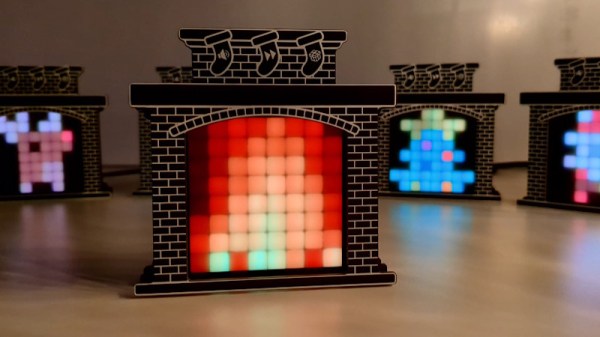
The fifty electronic fireplaces designed by built by [Adam Anderson], [Daniel Quach], and [Johan Wheeler] are a perfect example of both concepts, and while we’re coming across it a bit late for this year’s gift exchange, we wouldn’t be surprised if these MIT-licensed beauties end up under a few more trees in 2024.
You’ve likely heard of the “vomit comet” — an rather graphic nickname for the aircraft used to provide short bursts of near-weightlessness by flying along a parabolic trajectory. They’re used to train astronauts, perform zero-g experiments, and famously let director Ron Howard create the realistic spaceflight scenes for Apollo 13. But you might be surprised to find that, outside of the padding that lines their interior for when the occupants inevitably bump into the walls or ceiling, they aren’t quite as specialized as you might think.
With his software running, the pilot first puts the plane into a climb, and then noses over and attempts to keep the indicator on the phone’s display green for as long as possible. It’s not easy, but in the video after the break you can see they’re able to pull it off for long enough to get things floating around the cockpit.
A triboelectric nanogenerator (TENG) certainly sounds like the sort of thing you’d need to graduate from Starfleet Engineering to put together, but it actually operates on the same principle that’s at work when you rub a balloon your head. Put simply, when friction is applied to the proper materials, charges can build up enough to produce a short burst of electrical energy. Do it enough, and you’re on the way to producing useful power.
In a recent paper, [Leo N.Y. Cao], [Erming Su], [Zijie Xu], and [Zhong Lin Wang] describe how a functional TENG can be produced on a standard desktop 3D printer. What’s even more impressive is that the method doesn’t appear to require anything terribly exotic — just some commercially available filaments and a bunch of PTFE beads.
TENGs can be printed in any size or shape.
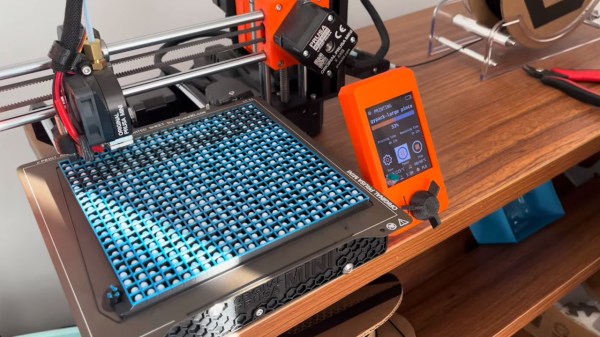
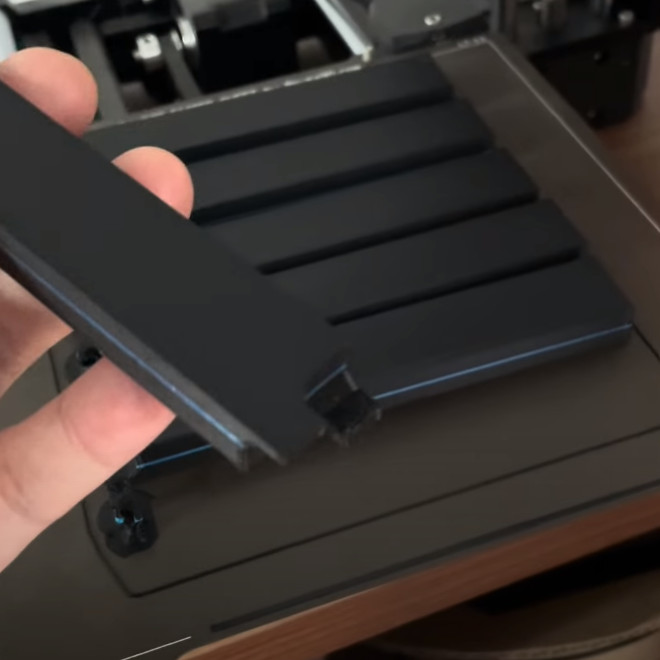
So how do your print your own TENG? First, you load up an electrically conductive PLA filament and lay down a base into which a series of channels has been designed. At around the half-way point, you pause the print to insert your PTFE beads, and then swap over to standard filament for a few layers to produce an insulator. Finally, you pause again and switch back over to the conductive filament for the rest of the print, encasing the beads inside the structure.
As [Leo N.Y. Cao] demonstrates in the video below, you then clip leads to the top and bottom of the print, and give it a good shake. If everything went right, LEDs wired up to your new high-tech maracas should flash as the PTFE beads move back and forth inside. But there’s a catch. Going back to the balloon-on-the-head example, the effect at play here produces high voltages but low current — the paper says a TENG containing 60 beads should be capable of producing pulses of up to 150 volts.
Naturally, you won’t get very far with just one of these. Like other energy harvesting concepts we’ve covered in the past, such as vibratory wind generators, it would take a bunch of these working together to generate a useful amount of power. But given how cheap and quickly these printable TENGs can be produced, that doesn’t seem like it would be too much of a challenge.
The Raspberry Pi is a popular choice if you’re looking to put together a simple emulation box — it’s relatively cheap, small enough to tuck into pretty much any entertainment center, and benefits from a large and vibrant development community. You can even get enclosures that will dress the Linux single-board computer up like a miniature version of your favorite retro console. But what about the old school PC gamers who want to relive their glory days in a palm-sized package?
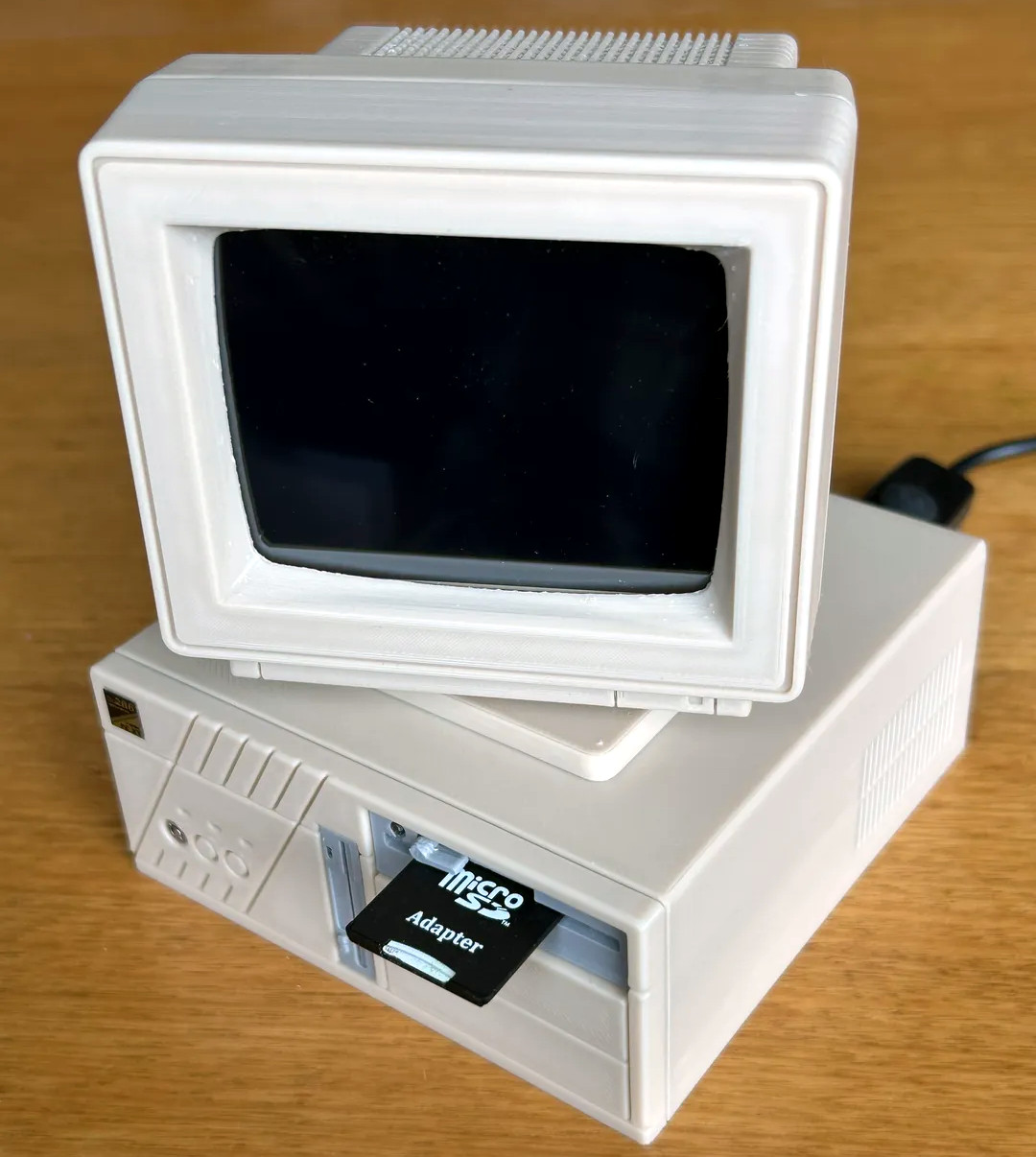
Well, if you’ve got a 3D printer, [fantasticmrdavid] might have just the solution for you. This second iteration of his printable Raspberry Pi enclosure is designed to look like the 286 desktop that he had in his youth, complete with a functional “floppy drive” in the front that takes an SD card. With a 3.5 inch MPI3508 LCD up in the “monitor” and a copy of DOSBox on the SD card, you’re well on your way to booting up a copy of Windows 3.11 or building some contraptions in The Incredible Machine.
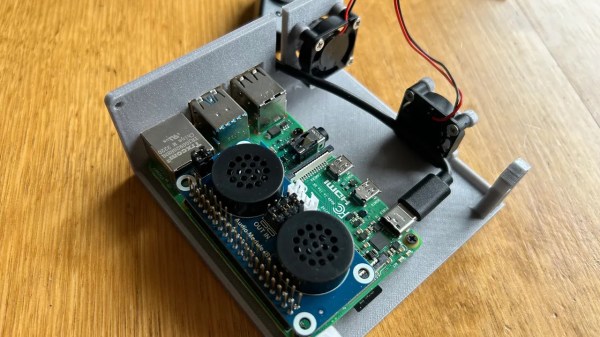
While the external aesthetics of the design are impeccable, we appreciate that [fantasticmrdavid] didn’t skimp on the internals. There’s mount points for dual 25 mm fans to keep the more powerful variants of the Raspberry Pi cool, and a speaker expansion board that plugs into the GPIO header to provide era-appropriate bloops and bleeps. The tiny details here really shine, like the fact that the face plates for the dual drives are designed as separate pieces so they can be printed in a different color than the main case.
If you’re not interested in the classics, don’t worry. We’ve seen the Raspberry Pi stand in foraa modern gaming PC, complete with the RGB LEDs you’d expect in a contemporary rig.
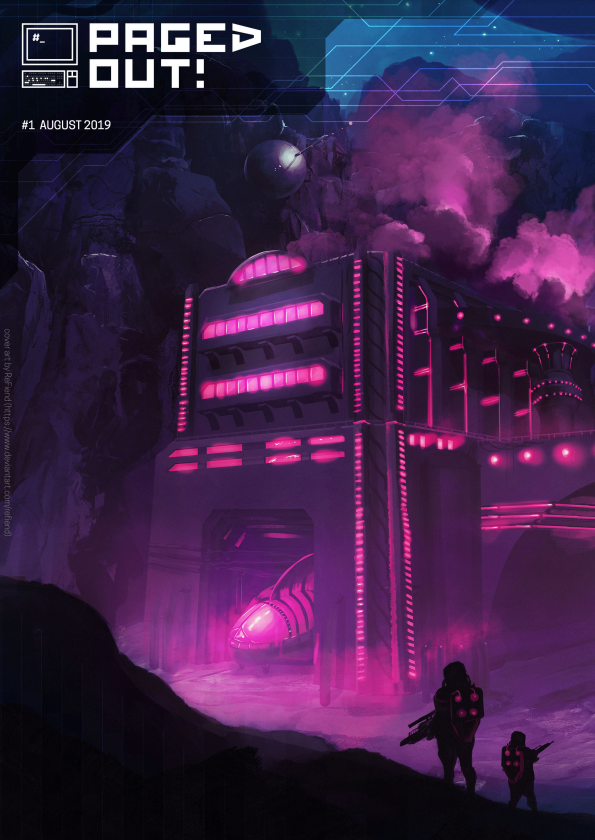
We’re happy to pass along word that Paged Out! has finally released Issue #3. This online zine covers a wide array of technical topics, from software development to hardware hacking, computer security, and electronics.
It’s distributed as a PDF, and is notable for its somewhat experimental format that limits each article to a single page. The first two issues were released back in 2019, but between a global pandemic and some administrative shuffling, progress on the current release was slowed considerably.
Among the 50 articles that make up the third Paged Out! there are a number of pieces focusing on hardware, such as the serial communications “cheat sheet” from [Jay Greco], and a pair of articles covering the state-of-the-art in custom keyboards. But overall the zine does lean hard into programming topics, and is probably best suited for those with an interest in software development and infosec.
Still, the line between hardware and software is getting blurrier all the time, so we’re sure you can find something in Paged Out! that should interest you no matter which side of the fence you’re on. Here’s hoping the time between releases can be reduced a bit for Issue #4.
With the notable exception of the now retired Space Shuttle orbiters, essentially every object humanity ever shot into space has been single-use only. But since December of 2015, SpaceX has been landing and refurbishing their Falcon 9 boosters, with the end goal of operating their rockets more like cargo aircraft. Today, while it might go unnoticed to those who aren’t closely following the space industry, the bulk of the company’s launches are performed with boosters that have already completed multiple flights.
This reuse campaign has been so successful these last few years that the recent announcement the company had lost B1058 (Nitter) came as quite a surprise. The 41 meter (134 foot) tall booster had just completed its 19th flight on December 23rd, and had made what appeared to be a perfect landing on the drone ship Just Read the Instructions. But sometime after the live stream ended, SpaceX says high winds and powerful waves caused the booster to topple over.
‘Twas the podcast before Christmas, and all through the house, the best hacks of the week are dancing around Elliot and Tom’s heads like sugar-plums. Whatever that means.
I’d just like to interject for a moment. What you’re referring to as Christmas is, in fact, Happy/Holidays.
Before settling their brains in for a long winter’s nap, they’ll talk about the open source software podcast that now calls Hackaday home, the latest firmware developments for Google’s Stadia controller, high-definition cat videos from space, and upgrades for the surprisingly old-school battery tech that powers the Toyota Prius.
Out on the lawn, expect a clatter about the the state-of-the-art in DIY camera technology, the acoustic properties of hot chocolate, and a storage media from the 1990s that even Al Williams had never heard of.
Finally, after tearing open the shutters and throwing up the sash, the episode wraps up with a discussion about wiring techniques that let you leave the soldering iron at home, and the newest chapter in the long history of transferring data via parachute. Miniature sleigh and eight tiny reindeer sold separately.