Linux Fu: The Linux Shuffle

Computers are known to be precise and — usually — repeatable. That’s why it is so hard to get something that seems random out of them. Yet random things are great for games, encryption, and multimedia. Who wants the same order of a playlist or slide show every time?

It is very hard to get truly random numbers, but for a lot of cases, it isn’t that important. Even better, if you programming or using a scripting language, there are lots of things that you can use to get some degree of randomness that is sufficient for many purposes. Continue reading “Linux Fu: The Linux Shuffle”


AVRO’s Project 1794: A Canadian Flying Saucer

If you ask those of us who grew up somewhere in the 1950s to 1970s what our car would be like in the year 2020, we might have described an Avrocar. This top secret vehicle from Canadian Avro was part hovercraft and part jet-powered vertical takeoff vehicle. There were two prototypes actually made and [Real Engineering] has a short video on how the prototypes worked, how the real design might have worked, and even has a lot of footage of the actual devices. You can see the video below.

The designer, [Jack Frost], experimented with ground effect and the Coanda effect. The Canadian branch of Avro, a British company, worked with the U.S. military and if you look at it, you wonder how many UFO sightings it caused. Nothing like a flying disk 18 feet in diameter going over your backyard to make you call the newspapers. On second thought, it probably never got enough altitude for that to happen.

Continue reading “AVRO’s Project 1794: A Canadian Flying Saucer”

Lego Space Station Designed By Fan

It is no secret that most people like to play with Lego, but some people really like it to an extreme degree. Lego’s Idea platform lets people submit designs for review and also lets users vote on these designs. If accepted, the company works with the designer to put a kit in production and they share in the profits. [Christophe Ruge] submitted his design for the International Space Station and three years later, you can buy it on the Lego website.

The kit has 864 parts and the finished model is 12″ x 19″ x 7″ — probably will take longer than a coffee break to finish it. The model even includes the two rotating Solar Alpha Rotary Joints that allow the solar panels to align with the sun. You can see [Scott] building his on a recorded live stream below if you have 3 hours to kill.

Continue reading “Lego Space Station Designed By Fan”

Art Imitates DNA

It has recently been possible to pay a service a little bit of money and learn more about your own DNA. You might find out you really aren’t Italian after all or that you are more or less susceptible to some ailments. [Paul Klinger] had his DNA mapped and decided to make a sculpture representing his unique genetic code. The pictures are good, but the video below is even better.

The project requires a DNA sequencing, a 3D printer, and a Raspberry Pi Zero. Oh, you can probably guess you need a lot of RGB LEDs, too. Of course, the display doesn’t show the whole thing at one time — your DNA pattern scrolls across the double helix.

Continue reading “Art Imitates DNA”

A 60 GHz Phased Array

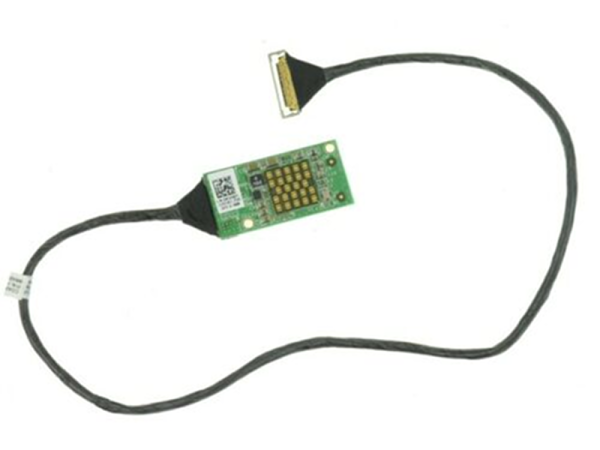
Our friend [Hunter Scott] gave a talk at a past Supercon about phased array antennas. He mentioned he was looking for collaborators to create an antenna with the SiBeam SB9210 chip. This is a specialized chip for WirelessHD, a more or less failed video streaming protocol, and it’s essentially an entire 60 GHz phased array on a chip with both transmit and receive capabilities. For $15, it seems like quite the bargain, and [Hunter] still wants to put the device to work.

The downside is that Lattice bought SiBeam and killed this chip — not surprising considering WirelessHD never really took off. However, [Hunter] says the chip was in some old smart TVs and laptops. If you can find replacement boards for those devices on the surplus market, you can get the chip and the supporting circuitry for a song.

Continue reading “A 60 GHz Phased Array”

The Internet Of Football

While football in the United States means something totally different from what it means in the rest of the world, fans everywhere take it pretty seriously. This Sunday is the peak of U.S. football frenzy, the Super Bowl, and it is surprisingly high-tech. The NFL has invested in a lot of technology and today’s football stats are nothing like those of the last century thanks to some very modern devices.

It is kind of interesting since, at the core, the sport doesn’t really need a lot of high tech. A pigskin ball, some handkerchiefs, and a field marked off with some lime and a yardstick will suffice. However, we’ve seen a long arc of technology in scoreboards, cameras — like instant replay — and in the evolution of protective gear. But the last few years have seen the rise of data collection. It’s being driven by RFID tags in the player’s shoulder pads.

These aren’t the RFID chips in your credit card. These are long-range devices and in the right stadium, a computer can track not only the player’s position, but also his speed, acceleration, and a host of other statistics.

Continue reading “The Internet Of Football”

The Multiyear Hunt For A Gameboy Game’s Bug

[Enddrift] had a real problem trying to run a classic game, Hello Kitty Collection: Miracle Fashion Maker, into a GBA (Gameboy Advance) emulator. During startup, the game would hit an endless loop waiting for a read from a non-existent memory location and thus wouldn’t start under the emulator. The problem is, the game works on real hardware even though that memory doesn’t exist there, either.

To further complicate things, a similar bug exists when loading a saved game under Sonic Pinball Party. Then a hack for Pokemon Emerald surfaced that helped break the case. The story is pretty interesting.

Continue reading “The Multiyear Hunt For A Gameboy Game’s Bug”