Buck Converter Efficiency

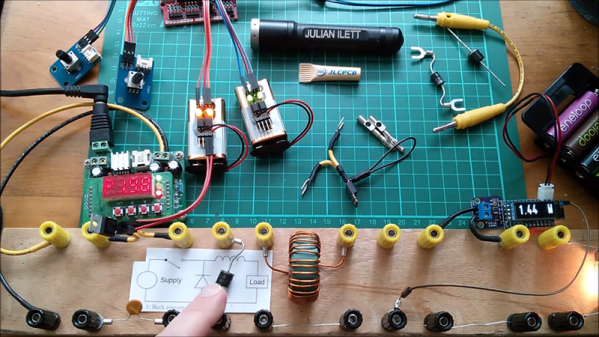
We always appreciate when someone takes the time to build something and then demonstrates what different design choices impact using the real hardware. Sure, you can work out the math and do simulations, but there’s something about having real hardware that makes it tangible. [Julian Ilett] recently posted two videos that fit this description. He built a buck converter and made measurements about its efficiency using different configurations.

The test setup is simple. He monitors the drive PWM with a scope and has power meters on the input and output. That makes it easy to measure the efficiency since it is just the ratio of the power output to input. You can see the two videos, below.

Continue reading “Buck Converter Efficiency”

Print Your Own Filament

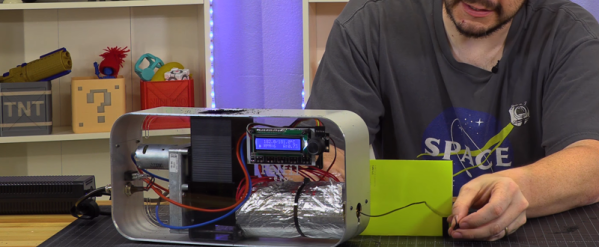
Ask anyone with a 3D printer what they make the most. They’ll probably say “trash.” There are extra pieces, stuff that oozes out of the extruder, support material, parts that didn’t stick to the bed, or just parts that needed a little tweaking to get right. No matter what you do, you are going to wind up with a lot of scraps. It would be great if you could recycle all this, and [3D Printing Nerd] looks at the FelFil Evo Filament extruder that promises it can do just that. You can see the video below.

As you’d expect, the device is a motorized auger that extrudes filament through a hot end not dissimilar to your printer’s hot end. You have to run a bag of special material through it first to clean out the plastic path. After that, you can create filament from standard pellets or pieces of old plastic.

Continue reading “Print Your Own Filament”

Linux Fu: Counter Rotate Keys!

If you’ve done anything with a modern Linux system — including most variants for the Raspberry Pi — you probably know about sudo. This typically allows an authorized user to elevate themselves to superuser status to do things.

However, there is a problem. If you have sudo access, you can do anything — at least, anything the sudoers file allows you to do. But what about extremely critical operations? We’ve all seen the movies where launching the nuclear missile requires two keys counter-rotated at the same time and third firing key. Is there an equivalent for Linux systems?

It isn’t exactly a counter-rotating key, but the sudo_pair project — a prelease open-source project from Square — gives you something similar. The project is a plugin for sudo that allows you to have another user authorize a sudo request. Not only do they authorize it, but they get to see what is happening, and even abort it if something bad is happening.

Continue reading “Linux Fu: Counter Rotate Keys!”

Hacking A Fitness Tracker

When [rbaron] started a new job, he got a goodie bag. The contents included a cheap fitness tracker bracelet that used Bluetooth LE. Since this is Hackaday, you can probably guess what happened next: hacking ensued.

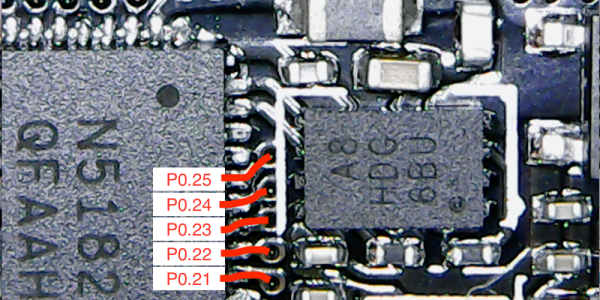
For something cheap enough to give away, [rbaron] claims it cost $10, the device has quite a bit in it. In the very tiny package, there is an OLED display, a battery, a vibration motor, and a Nordic 32-bit ARM with BLE. The FCC ID was key to identifying the device. Opening the case, which was glued down, was pretty difficult, but doable with a hair dryer and a knife.

Continue reading “Hacking A Fitness Tracker”

Ham Radio On $100 Or Less

There are a lot of reasons to get a ham radio license, and if you are one of those that think ham radio is dead you can probably skip this post. However, if you have been interested, but didn’t want to drop a lot of money on a station, [KE6MT] has got some great advice for you. He says you can have a rewarding time in ham radio for about $100 of spending.

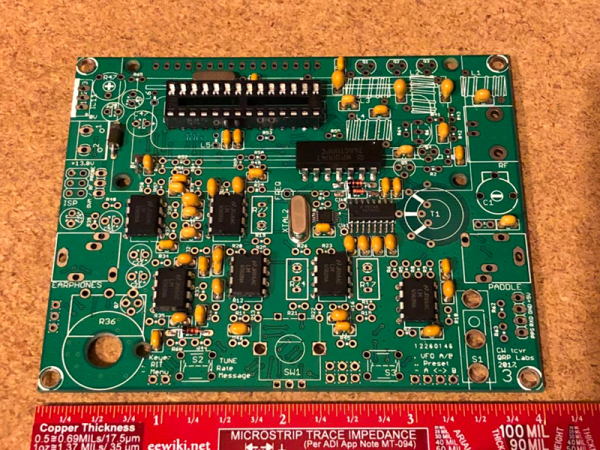
The post is the advice he wished he had been given in 2015 when he got his license. It turns out you can get on the air very inexpensively these days, especially if you aren’t afraid to build gear from kits.

Continue reading “Ham Radio On $100 Or Less”

Muscle Your Way Into Music

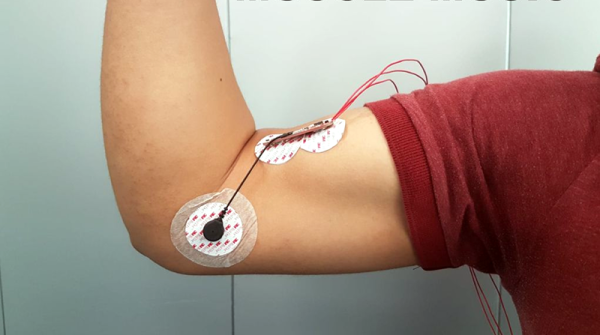
Inspired by an old Old Spice commercial, [Juliodb96] decided he too wanted to make music by flexing his muscles. An Arduino and a MyoWare sensor did the trick. However, he also tells you how to make your own sensors, if you are so inclined. You can see the instrument in action in the video below.

If you use the ready-made MyoWare sensors, this is a pretty easy project. You just respond to sensor input by playing some notes. If you decide to roll your own, you’ll have some circuit building ahead of you.

In particular, the signal conditioning for the sensors involves filtering to eliminate signals not in the 20 Hz to 300 Hz passband, several amplifiers, a rectifier, and a clipper. This requires 3 IC packages and a handful of discrete components.

Unlike the original commercial (see the second video, below), there are no moving parts for actuating actual instruments. However, that wouldn’t be hard to add with some servo motors, air pumps, and the like. This may seem frivolous, but we had to wonder if it could be used to allow musical expression for people who could not otherwise play an instrument.

This isn’t the first time we’ve seen the MyoWare in action. We’ve even talked about signal processing that is useful for this kind of application.

The Robots Were Coming! The Robots Were Coming!

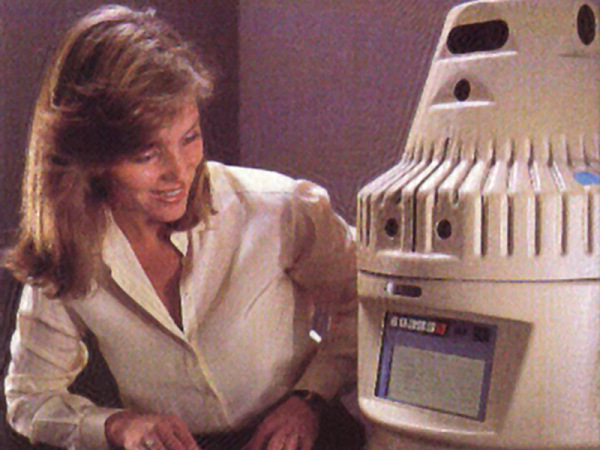
The recent influx of home assistants proves that everything old is new again. If we told you about a life-sized robot that was self-charging, had a map of your home for navigation, and responded to voice commands, you’d assume we were going to point you to a Kickstarter or a new product release. Instead, we will point you to this post about a robot marketed in 1985.

You have to put all this in context. In 1985 the personal computer was practically a solution in search of a problem. Back then it was wildly popular to predict that every home would one day have a computer. But we weren’t quite sure what they were going to be doing with it. Home finance, games, and storing recipes were all popular guesses. A few far-sighted folks realized that music, photos, and even video might one day be major selling points. Everyone wanted a piece of this market but no one really understood what the market would look like.

Continue reading “The Robots Were Coming! The Robots Were Coming!”