See If Today’s Air Quality Will Conch You Out

Air quality is one of those problems that is rather invisible and hard to grasp until it gets bad enough to be undeniable. By then, it may be too late to do much about it. But if more people were interested in the problem enough to monitor the air around them, there would be more innovators bringing more ideas to the table. And more attention to a problem usually means more accountability and eventual action.

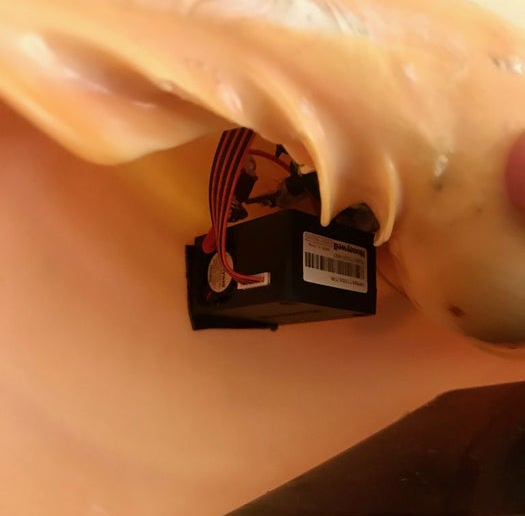
This solar-powered particulate analyzer made by [rabbitcreek] is a friendly way to take the problem out of the stratosphere of ‘someday’ and bring it down to the average person’s backyard. Its modular nature makes it fairly simple to build, and the conch shell enclosure gives it a natural look. That shell also cleverly hides the electronics, while at the same time allowing air and particulates to reach the sensor. If you don’t like the shell enclosure, we think the right type of bird feeder could protect the electronics while allowing airflow.

[rabbitcreek] attached a sizeable solar panel to the shell on a GoPro mount so it can be adjusted to face the sun. The panel charges a Li-Po battery that gets boosted to 5V. Every two hours, a low-power breakout circuit wakes up the Feather ESP32 and takes a reading from the particulate sensor. [rabbitcreek] can easily see the data on his phone thanks to the Blynk app he created.

Why limit this to your yard? Bare ESP32s are cheap enough that it’s feasible to build a whole network of air quality sensors.

Tessellations And Modular Origami From Fabric And Paper

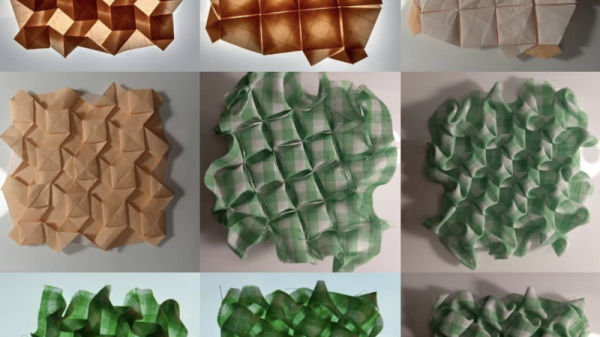
You may be familiar with origami, the Japanese art of paper folding, but chances are you haven’t come across smocking. This technique refers to the way fabric can be bunched by stitches, often made in a grid-like pattern to create more organized designs. Often, smocking is done with soft fabrics, and you may have even noticed it done on silk blouses and cotton shirts. There are plenty of examples of 18th and 19th century paintings depicting smocking in fashion.

[Madonna Yoder], an origami enthusiast, has documented her explorations in origami tessellations and smocking, including geometric shapes folded from a single sheet of paper and fabric smocked weave patterns. Apart from flat patterns, she has also made chain-linked smocked scarves stitched into a circular pattern and several examples of origami tessellations transferred to fabric smocking. Similar to folds in origami, the stitches used aren’t complex. Rather, the crease pattern defines the final shape once the stitches and fabric are properly gathered together.

Continue reading “Tessellations And Modular Origami From Fabric And Paper”

TRS-80 Clone Uses Modern Parts

Before RadioShack decided the best business model for an electronics store was to harass its customers into buying overpriced batteries and cellphones, it was a great one-stop shop for most discrete components, knobs, resistors, radio equipment, and even a popular computer. That computer, the TRS-80, is a popular one in the retrocomputing world and if you can’t get original parts to restore one, you can always build your own clone.

This build comes to us from [Glen] aka [glenk] who is known for retrocomputing builds like this classic PET we featured a little over a year ago, and this TRS-80 is his latest project. He really gets into the weeds on the hardware, too. This isn’t an FPGA or Raspberry Pi running a TRS-80 on lookalike hardware. [Glen] has completely redesigned the computer from the ground up using modern CMOS components in order to make a modern, perfectly functional replica of the RadioShack classic.

Because of the level of detail [Glen] goes into, this one is a must-read for anyone interested in computing hardware (as opposed to the software, which you could learn about through a more simple emulator) and retrocomputing in general, and also brings most of us back to a more nostalgic, simpler time where a trip to RadioShack was fun and interesting.

Continue reading “TRS-80 Clone Uses Modern Parts”

RasterCarve Converts Images To CNC

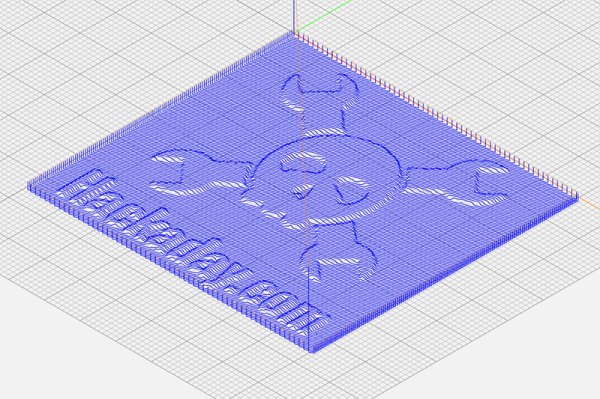
CNC machines are an essential part of the hacker’s toolset. These computer-controlled cutters of wood, metal and other materials can translate a design into a prototype in short order, making the process of iterating a project much easier. However, the software to create these designs can be expensive, so [Franklin Wei] decided to write his own. In particular, he decided to write his own program to engrave images, converting a photo into a toolpath that can be cut. The result is RasterCarve, a web app that converts an image into a GCode that can be fed into a CNC machine.

Continue reading “RasterCarve Converts Images To CNC”

Hackaday Links Column Banner

Hackaday Links: January 19, 2020

We’ve seen some interesting pitches in personal ads before, but this one takes the cake. Japanese billionaire Yusaku Maezawa is looking for a date to go along with him on his paid trip to the Moon, with the hope of finding a life partner. Maezawa is slated to be SpaceX’s first commercial lunar flyby customer, and will make the trip no earlier than 2023. That should give him plenty of time to go through the 20,000 applications he received from single women 20 and older with bright personalities and positive attitudes. And he should have plenty of time to make an awesome mixtape for the ride.

Imagine snooping through your kid’s garbage can only to find a used syringe lying in there. Most of us would likely be able to tell that the syringe once contained thermal compound or solder paste and be suitably proud of the little chip off the block, but apparently Cooler Master has fielded enough calls from panicked normie parents that they decided to change the design of their applicators. Given the design of the new applicator we doubt that’s really the reason, but it’s a good marketing story, and we can totally see how someone could mistake the old applicator for something illicit.

It looks as though SpaceX could be getting itself into legal trouble with its Starlink launches. Or more correctly, the FCC might, having apparently violated the National Environmental Policy Act, a Nixon-era law that requires government agencies to consider the environmental impact of any projects they approve. The Federal Communications Commission has been using a loophole in the law to claim a “categorical exemption” from these reviews when approving communications projects, particularly space-based projects. It’s not clear whether space is legally considered part of the environment, so the lawyers are hashing that out. If the FCC gets sued and loses, it’s not clear what happens to the existing Starlink satellites or future launches. Stay tuned for details.

Don’t forget that theĀ Open Hardware Summit is coming soon. The 2020 meeting is the 10th anniversary of the confab, to be held on March 13 in New York. Hackaday is, of course, a proud sponsor of the conference, and our own Sophi Kravtiz will be the keynote speaker! Get your tickets soon.

Tired of off-loading data manipulation and analysis tasks to R in your Python programs? Then you’re probably already aware of Pandas, the Python library that converts data into dataframe objects for easier manipulation. Pandas has (have?) been in pre-release for years, but there’s now a legit 1.0.0 release candidate available. Now might be the time for you Python data mungers to get onboard the Pandas Express.

And finally, the Consumer Electronics Show is a yearly gift to anyone in the tech media, providing as it does so many examples of outrageous uses for the latest technology. To wit, we have LuluPet, the world’s first feces-analyzing cat litter box. LuluPet uses a built-in camera along with IR sensors and an “AI chip” to monitor your cat’s dookie and provide an alert if anything looks awry. On the one hand, inspecting cat poop is a job we’d love to outsource, but on the other hand, most cats we know are quick to cover the evidence of their excretions with kitty litter, leaving a clay-encrusted blob rather than the turds with defined borders that would seem to be needed for image recognition to do its job. We’ll reserve judgment on this one until we see a review.


Be Still, My Animatronic Heart

Fair warning for the squeamish: some versions of [Will Cogley]’s animatronic heart are realistic enough that you might not want to watch the video below. That’d be a shame though, because he really put a lot of effort into the build, and the results have a lot to teach about mimicking the movements of living things.

As for why one would need an animatronic heart, we’re not sure. [Will] mentions no specific use case for it, although we can think of a few. With the Day of Compulsory Romance fast approaching, the fabric-wrapped version would make a great gift for the one who stole your heart, while the silicone-enrobed one could be used as a movie prop or an awesome prank. Whatever the reason, [Will]’s build is a case study in incremental development. He started with a design using a single continuous-rotation servo, which powered four 3D-printed paddles from a common crank. The four paddles somewhat mimicked the movements of the four chambers of the heart, but the effect wasn’t quite convincing. The next design used two servos and complex parallelogram linkages to expand each side of the heart in turn. It was closer, but still not quite right.

After carefully watching footage of a beating heart, [Will] decided that his mechanism needed to imitate the rapid systolic contraction and slow diastolic expansion characteristic of a real heart. To achieve this, his final design has three servos plus an Arduino for motion control. Slipped into a detailed silicone jacket, the look is very realistic. Check out the video below if you dare.

We’ve seen plenty of animatronic body parts before, from eyes to hands to entire faces. This might be the first time we’ve seen an animatronic version of an internal organ, though.

Continue reading “Be Still, My Animatronic Heart”

Binary Advent Calendar Does More With Fewer Doors

[John] sent this one in to us a little bit after Christmas, but we’ll give him a pass because it’s so beautiful. Think of it this way: now you have almost a full year to make a binary advent calendar of your own before December 1st rolls around again.

Normal advent calendars are pretty cool, especially when there is chocolate behind all 24 doors. But is it really a representational ramp-up if you never get more than one chocolate each day? [John] doesn’t think so. The economics of his binary advent calendar are a bit magical, much like the holiday season itself. Most days you’ll get two pieces of chocolate instead of one, and many days you’ll get three. That is, as long as you opened the right doors.

A momentary switch hidden behind the hinge of each door tells the Arduino clone when it’s been opened. The Arduino checks your binary counting abilities, and if you’re right, a servo moves a gate forward and dispenses one chocolate ball per opened door. We love the simplicity of the dispensing mechanism — the doors are designed with a ceiling that keeps non-qualifying chocolates in their channels until their flag comes up.

[John] is working out the kinks before he releases this into the wild. For now, you can get a taste in the demo video featuring a bite-sized explanation. If you don’t like chocolate, maybe this blinky advent calendar will light you up inside.

Continue reading “Binary Advent Calendar Does More With Fewer Doors”