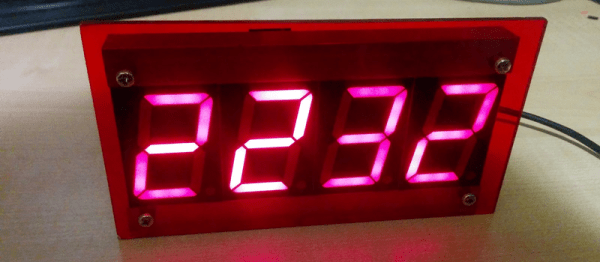
If you haven’t jumped on the ESP8266 bandwagon yet, it might be a good time to get started. If you can program an Arduino you have pretty much all of the skills you’ll need to get an ESP8266 up and running. And, if you need a good idea for a project to build with one of these WiFi miracle chips, look no further than [Ben Buxton]’s dated, but awesome, NTP clock.
A Motorcycle Lift From A Trailer Jack
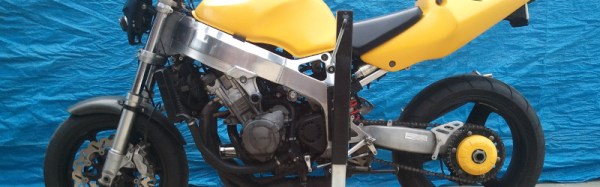
If you have ever worked on a motorcycle on a regular basis with a limited workshop, you’ll know the challenge of taking off one or other of the wheels. You’ll probably have plenty of tales of bikes balanced precariously on blocks or suspended from the ceiling on a web of cargo straps, and if you are really unlucky you’ll have the Dented Tank Of Shame from the whole edifice tumbling down.
SNES Micro Is A Pi Z Of Art
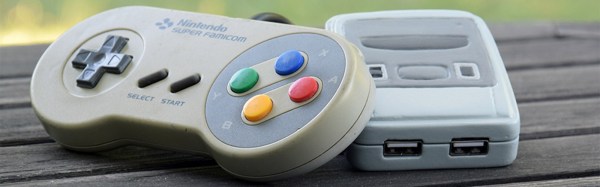
Clay is a shapeless raw material that’s waiting to be turned into awesomeness by your creativity. So is the Raspberry Pi. [Dorison Hugo] brought the two together in his artfully crafted SNES micro – a tiny retro gaming console sculpted from clay.
Hackaday Prize Entry: Autonomous Kayaks
[Barry] has an expedition planned. He’s going to be exploring coastlines, inlets, and other shallow waters where even small ROVs are too big. [Barry] wants an autonomous vehicle on this expedition, though, and that means he must build his own. This led to The Julius Project, repurposed kayaks, and all the techniques that go into making proper maritime electronics.
The first question [Barry] gets is, ‘why kayaks?’ A quick cruise around Craigslist is enough to answer that – they’re cheap, and they’re available in almost infinite variety from big touring kayaks to small play boats, all built for different conditions and expeditions. With a few motors and modular parts to this build, [Barry] has an autonomous aquatic vessel built for every condition imaginable.
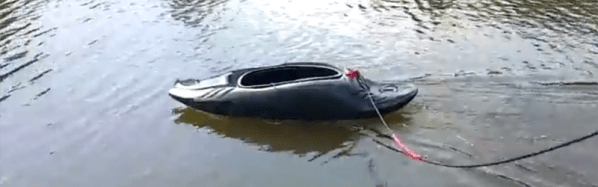
Right now, [Barry]’s focus is getting the propulsion working. This comes in the form of a few brushless motors bolted to the underside of the kayak. A tethered test was very successful, demonstrating this tiny boat can turn on a dime. Integration with an autopilot is coming, but until then [Barry] has a neat little boat puttering around a river. You can check out a video of that below.
3D Printing School Of Knocks
Unless you are under age 20, there are probably things you know now that you wish you knew growing up. Even on hacker projects, it isn’t unusual to do better on your second whatchamacallit than on your first one. After all, you learn something each time and apply it to subsequent builds.
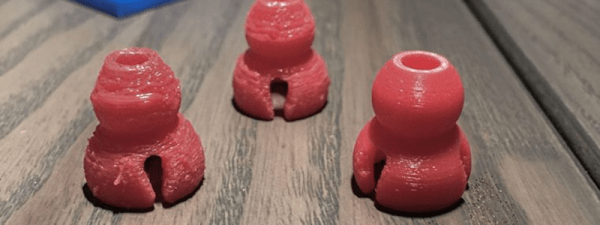
[James Lewis] (sometimes known as the [Bald Engineer]) has spent a couple of years with a 3D printer. He says that as of March this year, he had used the machine for about 75 hours. Since then his usage went up to 300 hours because he’s finally learned his lessons about how to get good prints.
If you are experienced, you might not be surprised at the first tip: level the bed. Don’t let that fool you, though. [James] has some good tips on advanced bed materials and print filament, too.
Raspberry Pi Plays All That Jazz
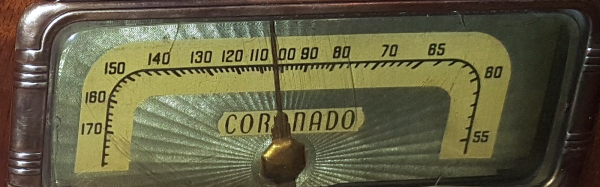
[James Bellafaire] wanted a good looking old radio with a modern sound. Granted, you could hollow the case out and replace it with an iPod. Or you could convert the thing to an Internet radio. But where’s the fun in that?
[James] took a different approach. Part woodworking project, part Raspberry Pi project, and part microcontroller project, he wound up with a hard drive-based music player in a 1930’s case with knobs that control the playback.
A 3D Printed Camera (Including The Lens)
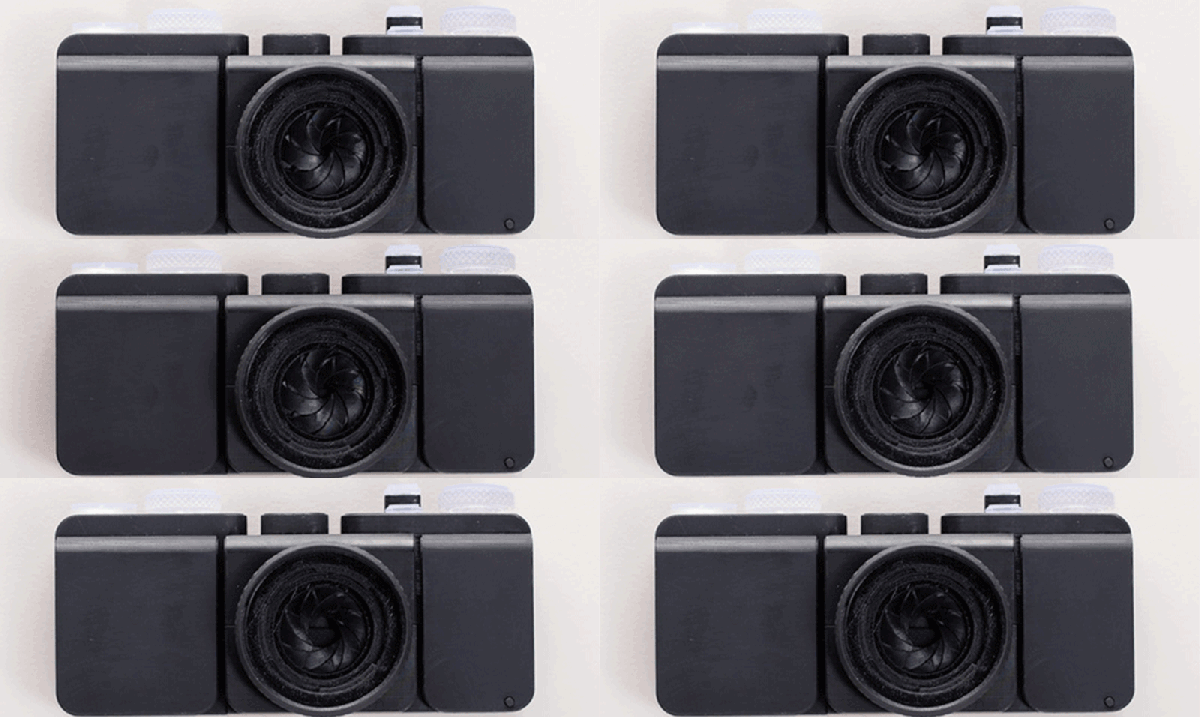
Barring the RepRap project, we usually see 3D printers make either replacement parts or small assemblies, not an entire finished product. [Amos] is the exception to this rule with his entirely 3D-printed camera. Everything in this camera is 3D printed, from the shutter to the lightproof box to the lens itself. It’s an amazing piece of engineering, and a testament to how far 3D printing has come in just a few short years.
35mm film is the most common film by far, and the only one that’s still easy to get and have developed at a reasonable price. This 3D-printed camera is based on that standard, making most of the guts extremely similar to the millions of film cameras that have been produced over the years. There’s a film cartridge, a few gears, a film takeup spool, and a lightproof box. So far, this really isn’t a challenge for any 3D printer.
The fun starts with the lens. We’ve seen 3D printers used for lens making before, starting with a 3D print used to create a silicone mold where a lens is cast in clear acrylic, 3D printed tools used to grind glass, and an experiment from FormLabs to 3D print a lens. All of these techniques require some surface finishing, and [Amos]’ lens is no different. He printed a lens on his Form 2 printer, and started polishing with 400 grit sandpaper. After working up to 12000 grit, the image was still a bit blurry, revealing microscopic grooves that wouldn’t polish out. This led him to build a tool to mechanically polish the lens. This tool was, of course, 3D printed. After polishing, the lens was ‘dip polished’ in a vat of uncured resin.
The shutter was the next challenge, and for this [Amos] couldn’t rely on the usual mechanisms found in film cameras. he did find a shutter mechanism from 1885 that didn’t take up a lot of depth, and after modeling the movement in Blender, designed a reasonable shutter system.
Building an entire camera in a 3D printer is a challenge, but how are the pictures? Not bad, actually. There’s a weird vignetting, and everything’s a little bit blurry. It’s hip, trendy, and lomo, and basically amazing that it works at all.