Building The Slimmest Raspi

slim_pi

[Colin], AKA [Domipheus], was working on a project to monitor a thermostat with a wall mounted Raspberry Pi and a touchscreen. Simple enough, but the Pi has a problem: The plugs are all around the perimeter of the board, and with a TFT touch screen shield, it’s a bit too thick to be wall mounted. What followed is a hack in the purest sense: [Domipheus] removed and relocated components on the Pi until the entire Pi/display stack was just a hair over 10mm tall.

A Raspberry Pi Model A was used for this build, meaning the Ethernet jack was gone, and there was only a single USB port to deal with. Still, the highest components – the RCA and audio jacks – were too tall and needed to be removed; they weren’t going to be used anyway.

After these components were gone, [Domipheus] turned his attention to the next tallest parts on the board: fuses, caps, and the HDMI port. For fear of damaging the surrounding components when removing the HDMI connector the right way, this part was simply hacked off. The large tantalum cap near the USB power connector was removed (it’s just a filter cap) and the large protection diode was moved elsewhere.

Slimming down a Pi is no good without a display, and for that [Domipheus] used this touchscreen thing from Adafruit. Things got a little complicated when the project required the ability to remove the LCD, but you can do amazing things with a DIP socket and a file.

The end result is a Raspberry Pi with touchscreen display that’s just a smidgen thicker than a CD case. It’ll fit right up against a wall in its repurposed enclosure, and the end result looks very professional.

[Thanks Luke via reddit]
THP Hacker Bio: Hackersbench


hackersbench-contestant-bio-banner

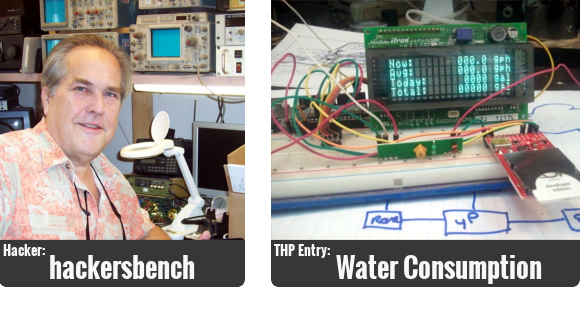
Remote sensing applications that make sense and cents? (sorry, couldn’t help ourselves) That’s what [hackersbench], aka [John Schuch], aka [@JohnS_AZ] is working on as his entry for The Hackaday Prize.

He received a multi-thousand-dollar water bill after having an underground pipe break and leak without knowing it. His idea will help you notice problems like this sooner. But if you actually have a way to capture data about your own water use you also have a tool to help encourage less wasteful water use habits. We wanted to learn more about the hacker who is working on this project. [John’s] answers to our slate of questions are after the break.

Continue reading “THP Hacker Bio: Hackersbench”

Developed On Hackaday: Discovering Shenzhen And Its Companies

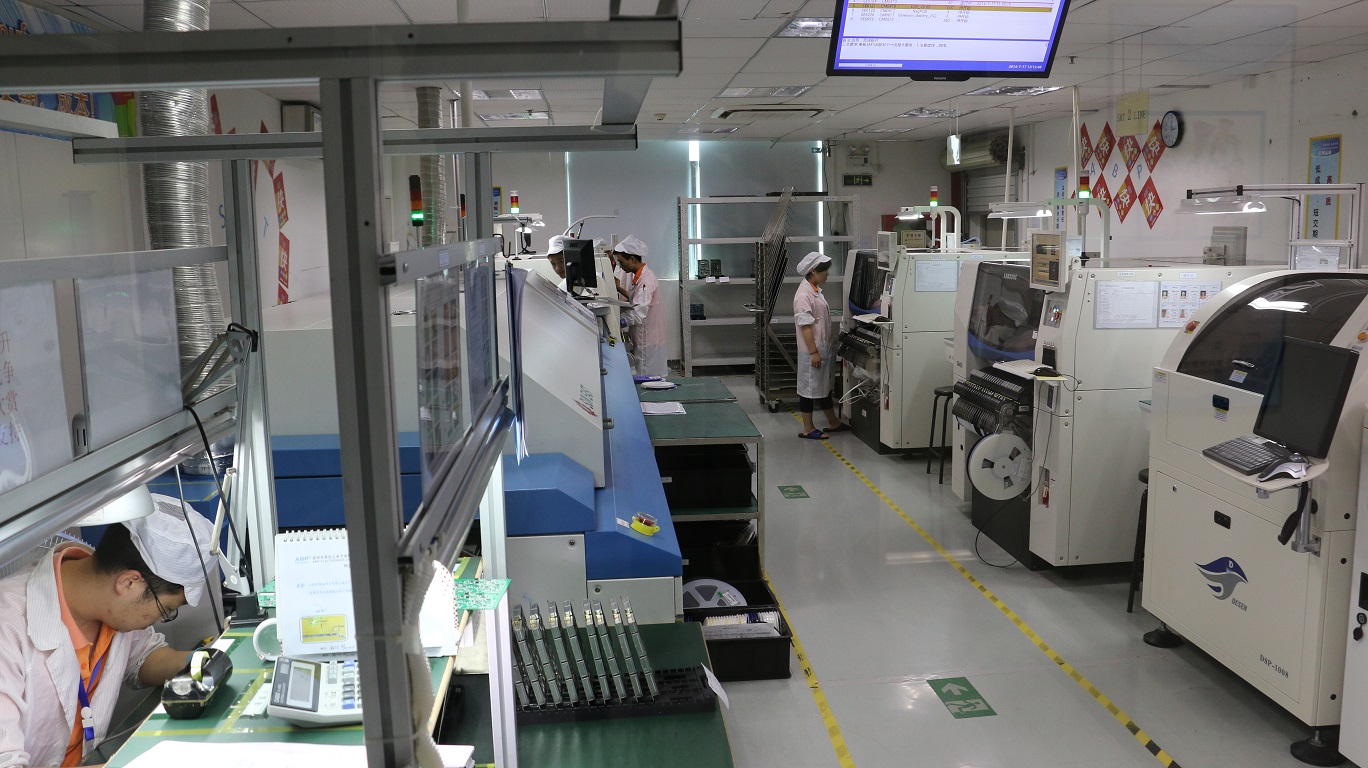
Assembly line in shenzhen

Two weeks ago we showed a first demonstration video of the offline password keeper (aka Mooltipass) the Hackaday community had been working on for the last 6 months. We received lots of interesting feedback from our dear readers and around a thousand of them let us know they were interested in purchasing the device. We agreed that preferential pricing should be offered to them, as they have been supporting this community driven project for so long.

For the next few days I will be touring Shenzhen and finally meeting the persons who have been assembling my electronics projects for the last 2 years, including the Mooltipass beta testers’ batch. I’ll also meet with Ian from Dangerous Prototypes, talk with the people behind the Haxlr8r program, visit Seeedstudio offices and a CNC shop. If everything goes well with the camera I just purchased in Hong Kong I should have nice things to show you. In the meantime, don’t hesitate to leave a comment below in case you’re in the area…

Red Bull Creation: A Giant Daisy Wheel Printer

While most of the teams in this year’s Red Bull Creation didn’t really pay attention to the theme of ‘reinventing the wheel’, 1.21 Jiggawatts did. Their creation, a giant typewriter that can be suspended along the side of a building, takes its inspiration directly from 1970s typewriters and printers. Yes, it’s a giant daisy wheel typewriter.

The basic idea of a daisy wheel typewriter is a wheel with a few dozen petals, on the end of which is a single letter. To print a letter, the wheel spins around, and a solenoid mechanism strikes the letter against a piece of paper. This was cutting edge tech in the 70s, and was a fast (and cheap) way for computers to print out letter-quality reports.

1.21 Jiggawatts used a ladder as the rail to move down a line of text. The movement from line to line was supposed to be done by dangling the ladder off a chain with a few sprockets attached to motors. Unfortunately, the team couldn’t quite get the machine working for the competition and live event, but the build does show an amazing amount of creativity and respect for classic, forgotten technology.


Print Tasty Treats With MIT’s Ice Cream Printer

Ice Cream Printer

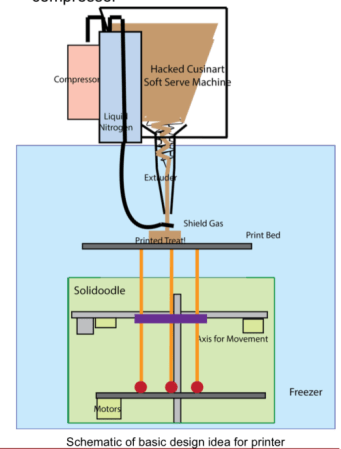
Three MIT students decided that 3D printers just aren’t interesting enough on their own any more. They wanted to design a new type of printer that would really get young kids engaged. What’s more engaging to children than sugary treats? The team got together to develop a new 3d printer that prints ice cream.

The machine is built around a Solidoodle. The Solidoodle is a manufacturer of “accessible” 3d printers. The printer is enclosed inside of a small freezer to keep things cold during the printing process. On top of the machine is a hacked Cuisinart ice cream maker. The machine also contains a canister of liquid nitrogen. The nitrogen is used to blast the cream as it leaves the print head, keeping it frozen for the 15 minute duration of the print.

It sounds like the team ran into trouble with the ice cream melting, even with the liquid nitrogen added. For a single semester project, this isn’t a bad start. Be sure to watch the clip of the machine running below.

Continue reading “Print Tasty Treats With MIT’s Ice Cream Printer”

Solar Powered DIY Plant Watering System

Solar Powered Watering System

It’s great having fresh vegetables just a few steps away from the kitchen, but it takes work to keep those plants healthy. [Pierre] found this out the hard way after returning from vacation to find his tomato plant withering away. He decided to put an end to this problem by building his own solar-powered plant watering system (page in French, Google translation).

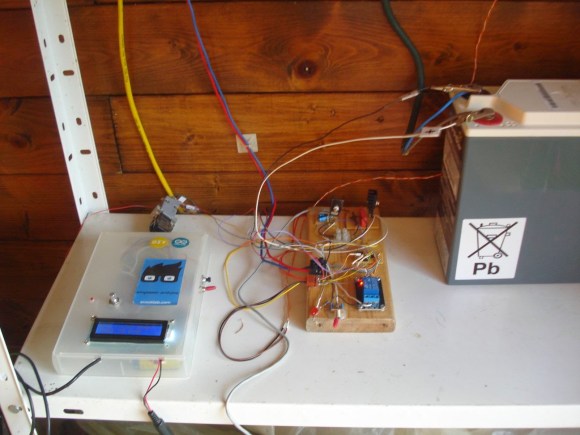
An Arduino serves as the brain of the system. It’s programmed to check a photo resistor every ten minutes. At 8:30PM, the Arduino will decide how much to water the plants based on the amount of sunlight it detected throughout the day. This allows the system to water the plants just the right amount. The watering is performed by triggering a 5V relay, which switches on a swimming pool pump.

[Pierre] obviously wanted a “green” green house, so he is powering the system using sunlight. A 55 watt solar panel recharges a 12V lead acid battery. The power from the battery is stepped down to the appropriate 5V required for the Arduino. Now [Pierre] can power his watering system from the very same energy source that his plants use to grow.

Self-Balancing Robot Uses Android And Lego NXT

LEGO NXT + Android = Self Balancing Robot

Self-balancing robots are pretty cool, but sometimes a bit too complex to make. [HippoDevices] shows us that it’s really not that hard, and you can even do it with Lego NXT and an Android device!

First step is to build your two-wheeled robot – go nuts! As long as the Lego NXT motors are strong enough you’ll be able to make most different shaped robots easy to balance. You’re going to need an Android ADK board to provide communication between the Lego motors and your Android device. [HippoDevices] is using their own design, called the Hippo-ADK which is on Kickstarter currently.

This allows your Android device to read the status and control the Lego Motors — from there it’s just a matter of programming it to balance according to the device’s gyroscope.

Continue reading “Self-Balancing Robot Uses Android And Lego NXT”