NYC Resistor Takes On The Machine

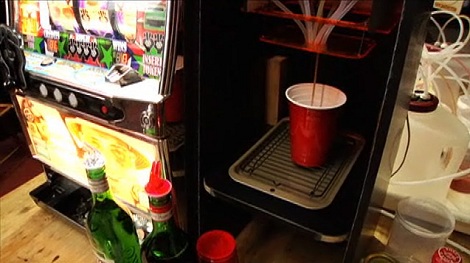
Here we are with Episodes two and three (aka, NYC Resistor part one and two) completing the Take on the Machine Hackerspace challenge we mentioned a while back. For the challenge NYC Resistor took an old style slot machine and converted it into a drink mixing deviant; even making the device post a Tweet for every drink. However, it seems to be lacking refrigeration of some kind, could this be the downfall of a potential winner for the challenge? Up next is the Hackerspace Pumping Station: One: do you think they can compete? Is there a particular Hackerspace you can’t wait to see? Let us know!

[Thanks Deven]
Upgrading The Freetronics Twentyten With A Real-time Clock

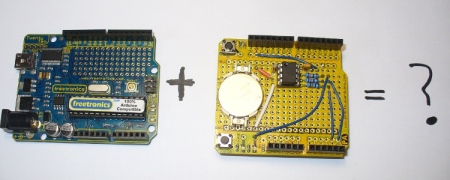
[John Boxall] finds himself doing a fair amount of projects that require a realtime clock. He does fast and frequent prototyping, usually using the Freetronics twentyten which is an Arduino alternative that boasts a few features like a nice prototyping area, edge visible LEDs, and Mini USB. What is lacking, however, is a real-time clock. Instead of making another shield type system, he just wanted to permanently add this feature to his board. He shares the whole process is photographed and explained quite well for anyone who would want to follow along.

Cheap Robotic Hand

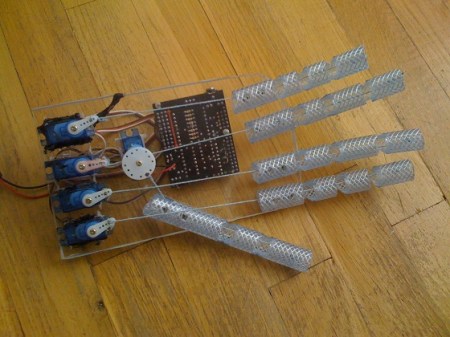
[Mazvydas] shares with us, his cheap robot hand. He was inspired by this project, where someone used an Arduino and a glove with some flex sensors to control a pre-made hand. He wanted to go a little more DIY though. He chose a picaxe microcontroller and constructed the hand himself out of twine, some plexi-glass, and some rubber hose. He does ultimately plan on adding glove control as well.

Unfortunately there’s no schematic or source code. Maybe if we ask really nicely he’ll share.


Continue reading “Cheap Robotic Hand” →

Arduino, RFID, And You

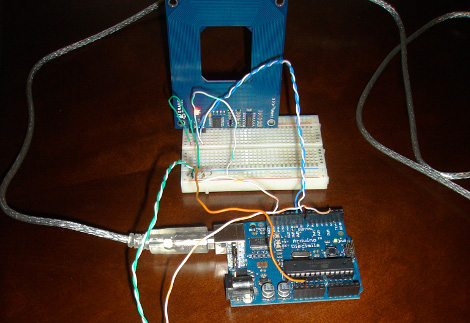
[Matt] has mixed up a batch of two RFID reading door lock systems. While the “door lock” part of the setup has yet to come into existence, the “RFID reading” section is up and running. By using the Parallax RFID readers (for cheap, remember?) and an Arduino, [Matt] is able to parse an RFID tag, look its number up in a database, and then have a computer announce “Access Denied” in a creamy “Douglas Adam’s sliding door of Hitchiker’s Guide” kind of way with Python.

Good books aside, catch a not as exciting as you’re thinking video after the jump.

Continue reading “Arduino, RFID, And You” →

Pyrosphere At Burning Man 2010

What’s thirty-seven feet tall, has ninety-one flamethrowers, and is controlled by an Arduino? Why it’s Pyrosphere, an interactive art piece at this year’s Burning Man. It lights up the night along to the music in a way that makes us want to set up a lawn-chair and watch the show. You can see for yourself in the video after the break, but you really should have thrown on the LED fur coat and gone to see it in person.

Continue reading “Pyrosphere At Burning Man 2010” →

Solar Powered WiFi Repeater

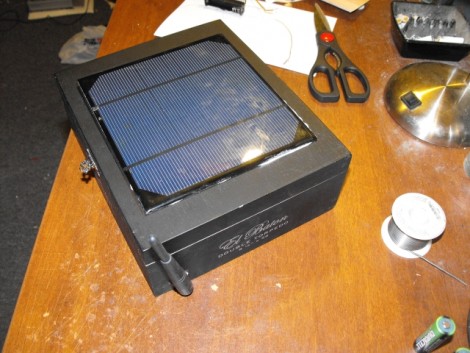
For all those times you need to broadcast your own access point where there’s no outlet [Larry] shows us how to make a solar-powered hotspot. He started by slapping a solar panel on the lid of a cigar box and attaching it to five rechargeable AA batteries inside. These power the mainboard from a router which is the perfect size to friction fit in the opening. It has been flashed with a copy of DD-WRT, and set to scan for open WiFi connections. When it finds one it connects and rebroadcasts its own WiFi signal to the surrounding area. He leaves it in the back window of his car and uses it to get on the net during lunch.

Mini Pinball Is All-pixels

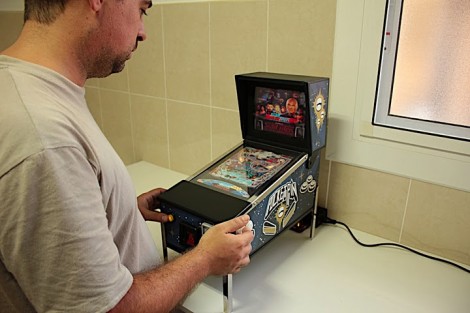
You won’t find those familiar steel balls inside this mini-pinball cabinet. That’s because [Luis’] latest creation is a fun way to play virtual pinball. The playing field is a 10″ LCD screen with an accompanying 8″ screen in the marquee. Inside the well-crafted case you’ll find a mini-ITX motherboard running HyperPin, a frontend software suite for LCD-based virtual pinball. He’s also using PinMame for the score board that was often provided by a gas plasma display on newer mechanical machines. There’s video after the break, and take a moment to check out [Luis’] other mini-cabinet builds.

What’s that you say? No substitute for the real thing? That’s exactly what [Ben Heck] thinks too.

Continue reading “Mini Pinball Is All-pixels” →