Unless you’ve got your ear on the launch pad so to speak, you might not be aware that humanity just launched a new envoy towards the Red Planet. Estimated to touch down in Elysium Planitia on November 26th, the InSight lander is relatively low-key as far as interplanetary missions go. Part of the NASA’s “Discovery Program”, it operates on a considerably lower budget than Flagship missions such as the Curiosity rover; meaning niceties like a big advertising and social media campaign to get the public excited doesn’t get a line item.
Which is a shame, because not only are there much worse things to do with tax money than increase public awareness of scientific endeavours, but because InSight frankly deserves a bit more respect than that. Featuring a number of firsts, the engineers and scientists behind InSight might have been short on dollars, but ambition was in ample supply.
So in honor of the successful launch, let’s take a look at the InSight mission, the unique technology onboard, and the answers scientists hope it will be able to find out there in the black.
At this point, you’ve almost certainly heard the tale of Eric Lundgren, the electronics recycler who is now looking at spending 15 months in prison because he was duplicating freely available Windows restore discs. Of no use to anyone who doesn’t already have a licensed copy of Windows, these restore discs have little to no monetary value. In fact, as an individual, you couldn’t buy one at retail if you wanted to. The duplication of these discs would therefore seem to be a victimless crime.
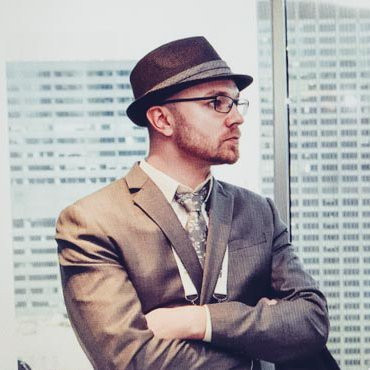
Eric Lundgren
Especially when you hear what Eric wanted to do with these discs. To help extend the functional lifespan of older computers, he intended on providing these discs at low cost to those looking to refurbish Windows computers. After each machine had its operating system reinstalled, the disc would go along with the computer in hopes the new owner would be able to utilize it themselves down the road.
It all sounds innocent enough, even honorable. But a quick glance at Microsoft’s licensing arrangement is all you need to know the whole scheme runs afoul of how the Redmond giant wants their operating system installed and maintained. It may be a hard pill to swallow, but when Eric Lundgren decided to use Microsoft’s product he agreed to play by their rules. Unfortunately for him, he lost.
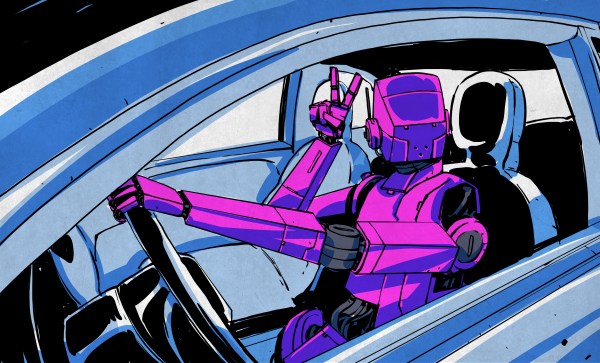
Self-driving cars have been in the news a lot in the past two weeks. Uber’s self-driving taxi hit and killed a pedestrian on March 18, and just a few days later a Tesla running in “autopilot” mode slammed into a road barrier at full speed, killing the driver. In both cases, there was a human driver who was supposed to be watching over the shoulder of the machine, but in the Uber case the driver appears to have been distracted and in the Tesla case, the driver had hands off the steering wheel for six seconds prior to the crash. How safe are self-driving cars?
Trick question! Neither of these cars were “self-driving” in at least one sense: both had a person behind the wheel who was ultimately responsible for piloting the vehicle. The Uber and Tesla driving systems aren’t even comparable. The Uber taxi does routing and planning, knows the speed limit, and should be able to see red traffic lights and stop at them (more on this below!). The Tesla “Autopilot” system is really just the combination of adaptive cruise control and lane-holding subsystems, which isn’t even enough to get it classified as autonomous in the state of California. Indeed, it’s a failure of the people behind the wheels, and the failure to properly train those people, that make the pilot-and-self-driving-car combination more dangerous than a human driver alone would be.
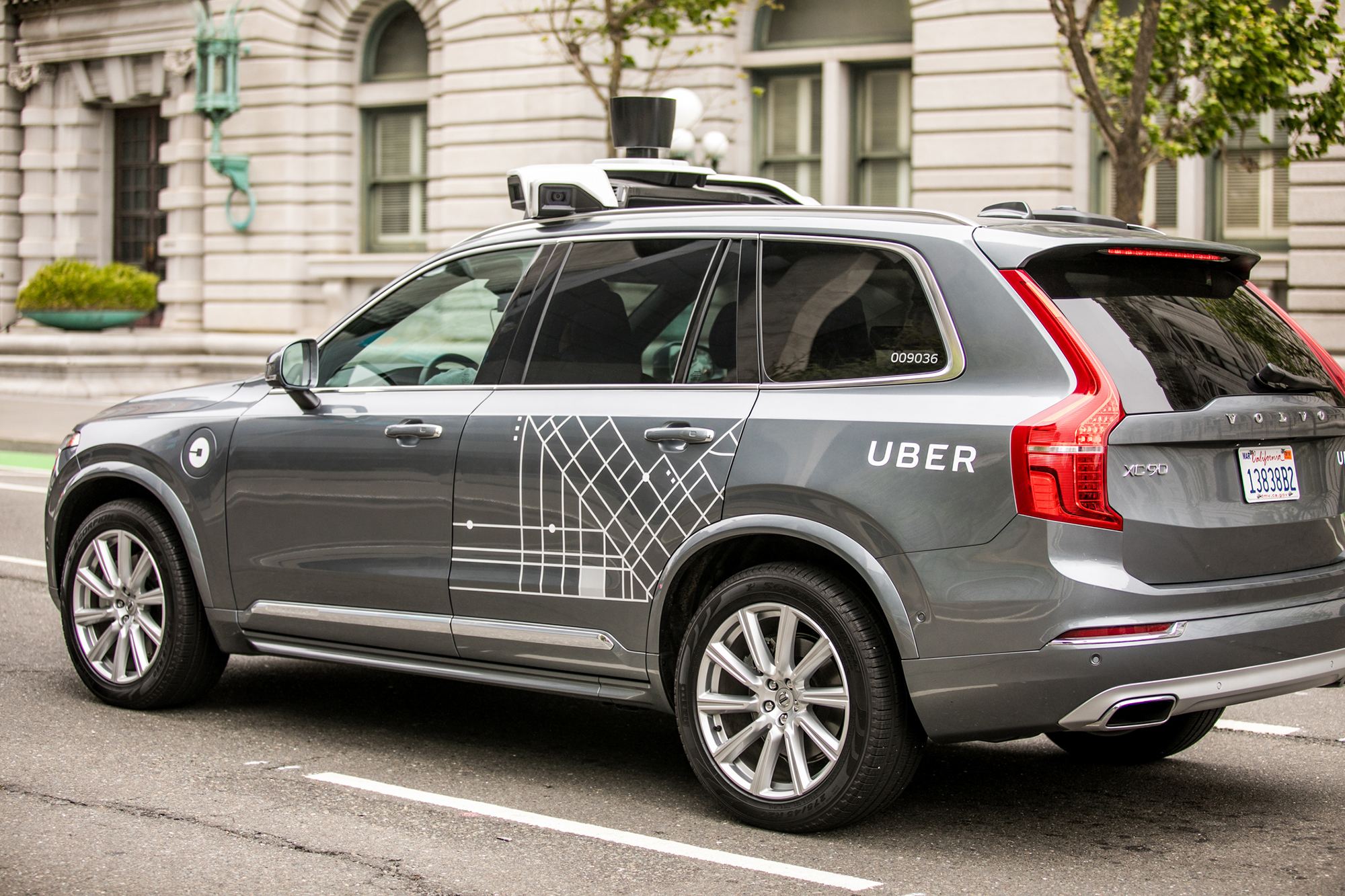
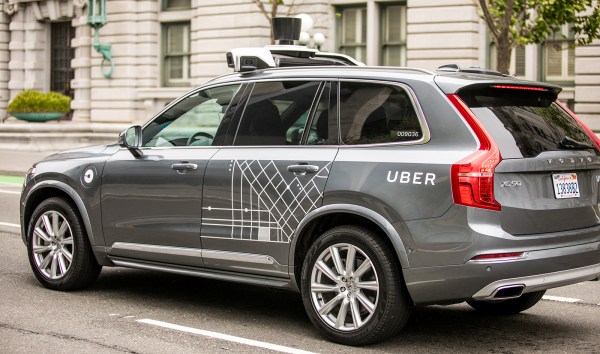
A self-driving Uber Volvo XC90, San Francisco.
You could still imagine wanting to dig into the numbers for self-driving cars’ safety records, even though they’re heterogeneous and have people playing the mechanical turk. If you did, you’d be sorely disappointed. None of the manufacturers publish any of their data publicly when they don’t have to. Indeed, our glimpses into data on autonomous vehicles from these companies come from two sources: internal documents that get leaked to the press and carefully selected statistics from the firms’ PR departments. The state of California, which requires the most rigorous documentation of autonomous vehicles anywhere, is another source, but because Tesla’s car isn’t autonomous, and because Uber refused to admit that its car is autonomous to the California DMV, we have no extra insight into these two vehicle platforms.
Nonetheless, Tesla’s Autopilot has three fatalities now, and all have one thing in common — all three drivers trusted the lane-holding feature well enough to not take control of the wheel in the last few seconds of their lives. With Uber, there’s very little autonomous vehicle performance history, but there are leaked documents and a pattern that makes Uber look like a risk-taking scofflaw with sub-par technology that has a vested interest to make it look better than it is. That these vehicles are being let loose on public roads, without extra oversight and with other traffic participants as safety guinea pigs, is giving the self-driving car industry and ideal a black eye.
If Tesla’s and Uber’s car technologies are very dissimilar, the companies have something in common. They are both “disruptive” companies with mavericks at the helm that see their fates hinging on getting to a widespread deployment of self-driving technology. But what differentiates Uber and Tesla from Google and GM most is, ironically, their use of essentially untrained test pilots in their vehicles: Tesla’s in the form of consumers, and Uber’s in the form of taxi drivers with very little specific autonomous-vehicle training. What caused the Tesla and Uber accidents may have a lot more to do with human factors than self-driving technology per se.
You can see we’ve got a lot of ground to cover. Read on!
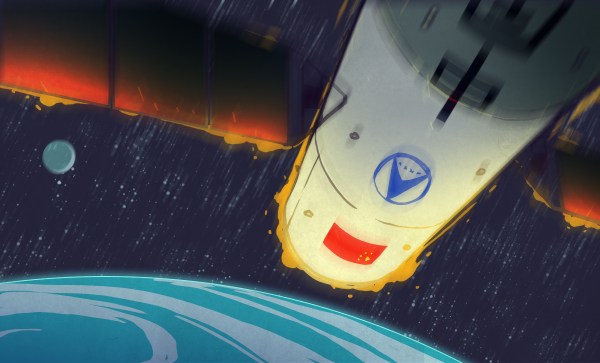
China’s first space station, Tiangong-1, is expected to do an uncontrolled re-entry on April 1st, +/- 4 days, though the error bars vary depending on the source. And no, it’s not the grandest of all April fools jokes. Tiangong means “heavenly palace”, and this portion of the palace is just one step of a larger, permanent installation.
But before detailing just who’ll have to duck when the time comes, as well as how to find it in the night sky while you still can, let’s catch up on China’s space station program and Tiangong-1 in particular.
You have doubtlessly heard the news. A robotic Uber car in Arizona struck and killed [Elaine Herzberg] as she crossed the street. Details are sketchy, but preliminary reports indicate that the accident was unavoidable as the woman crossed the street suddenly from the shadows at night.
If and when more technical details emerge, we’ll cover them. But you can bet this is going to spark a lot of conversation about autonomous vehicles. Given that Hackaday readers are at the top of the technical ladder, it is likely that your thoughts on the matter will influence your friends, coworkers, and even your politicians. So what do you think?
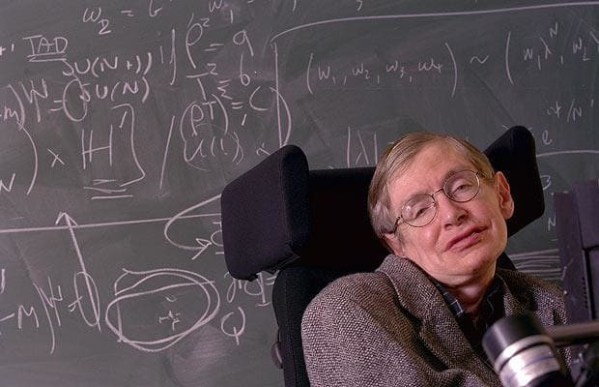
We are saddened by the passing of physicist Stephen Hawking. One of the great minds of our time, Hawking’s work to apply quantum theory to black holes launched his career and led to his best known theoretical discovery that black holes emit radiation, aptly known as Hawking radiation.
Thinking back on Stephen Hawking’s contributions to humanity, it strikes us that one of his most important is his embrace of pop culture. While his scientific discoveries and writings are what will stand the test of time, in our own age it is remarkable that Stephen Hawking is a household name around the world.
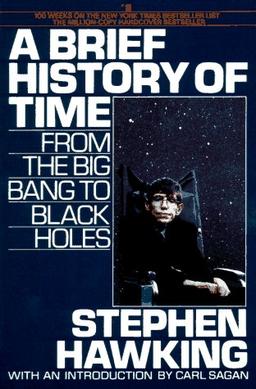
Hawking’s first book, A Brief History of Time, has sold more than 10 million copies and for many readers was their introduction into the way physicists view space and time. It was written for general consumption and not reserved for those who were already bathed in the jargon of theoretical physics. It sent the message that contemplating science is something that is fun to do in your spare time. This work continued with his more recent mini-series Into the Universe with Stephen Hawking created for the Discovery Channel.
A fan of the series, Hawking appeared in an episode of Star Trek: The Next Generation in 1993 and made subsequent, often repeat, appearances on The Simpsons, Futurama, and The Big Bang Theory. This was great fun for all science geeks who knew of his work, but it has a far more profound effect of normalizing interaction with a world-class scientist. Appearing on these shows told the story that the pursuit of knowledge is cool.
Having scientists in the public light is crucial to research and advancement. It lets the general public know what kind of frontiers are being pursued, and why that matters. This trickles both up and down, inspiring the next generation of scientists by introducing deep topics at an early age, and ensuring funding and opportunities for this upcoming wave of researchers has widespread support.
Stephen Hawking showed us some incredibly complicated secrets of the cosmos both through his discovery, and through his ambassadorship of scientific knowledge. He will be greatly missed but leaves behind an admirable legacy which we can all strive to live up to.
Today is March 14th, or Pi Day because 3.14 is March 14th rendered in month.day date format. A very slightly better way to celebrate the ratio of a circle’s circumference to its diameter is July 22nd, or 22/7 written in day/month order, a fractional approximation of pi that’s been used for thousands of years and is a better fit than 3.14. Celebrating Pi Day on July 22nd also has the advantage of eschewing middle-endian date formatting.
But Pi Day is completely wrong. We should be celebrating Tau Day, to celebrate the ratio of the circumference to the radius instead of the diameter. That’s June 28th, or 6.283185…. Nonetheless, today is Pi Day and in the absence of something truly new and insightful — we’re still waiting for someone to implement a spigot algorithm in 6502 assembly, by the way — this is a fantastic opportunity to discuss something tangentially related to pi, the history of mathematics, and the idea that human knowledge builds upon itself in an immense genealogy stretching back to the beginning of history.
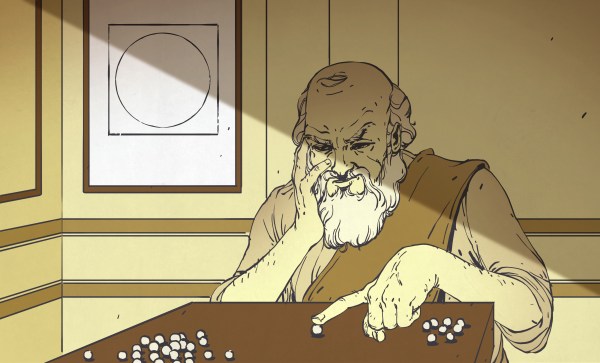
This is our Pi Day article, but instead of complaining about date formats, or Tau, we’re going to do something different. This is how you approximate pi with the Monte Carlo method, and how anyone who can count to a million can get a better approximation of one the fundamental constants of the Universe than Archimedes.

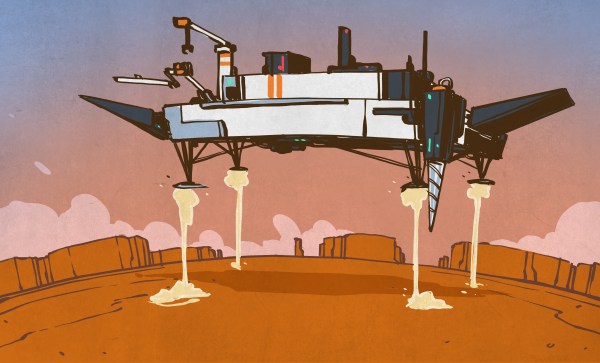
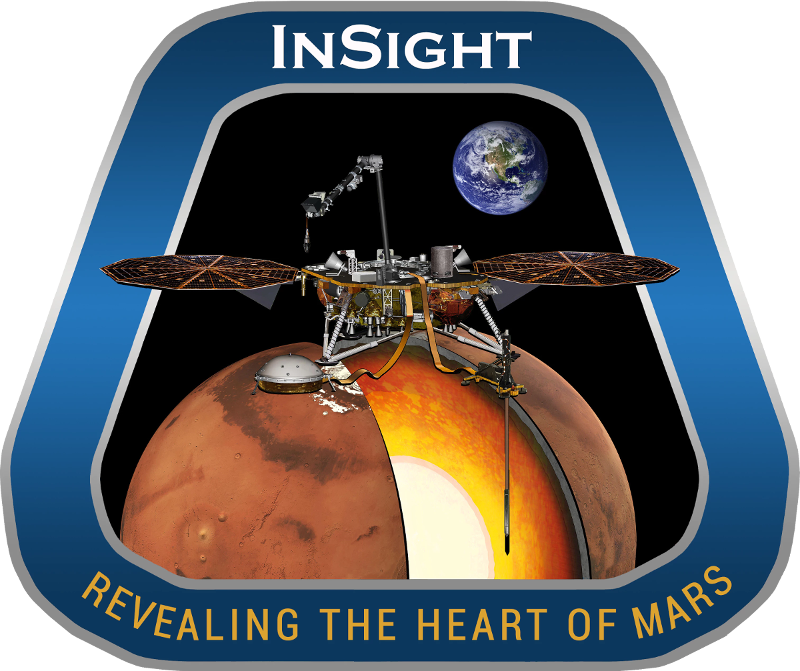 Unless you’ve got your ear on the launch pad so to speak, you might not be aware that humanity just launched a new envoy towards the Red Planet. Estimated to touch down in Elysium Planitia on November 26th, the InSight lander is relatively low-key as far as interplanetary missions go. Part of the NASA’s “Discovery Program”, it operates on a considerably lower budget than Flagship missions such as the Curiosity rover; meaning niceties like a big advertising and social media campaign to get the public excited doesn’t get a line item.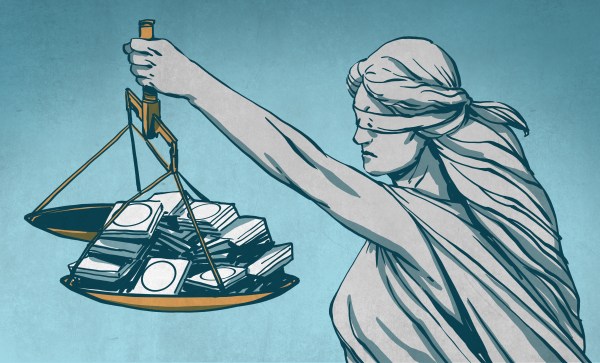
 Hawking’s first book, A Brief History of Time, has sold more than 10 million copies and for many readers was their introduction into the way physicists view space and time. It was written for general consumption and not reserved for those who were already bathed in the jargon of theoretical physics. It sent the message that contemplating science is something that is fun to do in your spare time. This work continued with his more recent mini-series Into the Universe with Stephen Hawking created for the Discovery Channel.