Retrotechtacular: Social Hacking Is Nothing New

If you watch enough mainstream TV and movies, you might think that hacking into someone’s account requires a huge monitor, special software, and intricate hand gestures. The reality is way more boring. Because people tend to choose bad passwords, if you have time, you can task a computer with quietly brute-forcing the password. Then again, not everyone has a bad password and many systems will enforce a timeout after failed attempts or require two-factor authentication, so the brute force approach isn’t what it used to be.

Turns out the easiest way to get someone’s password is to ask them for it. Sure, a lot of people will say no, but you’d be surprised how many people will tell you. That number goes up dramatically when you make them think you are with the IT department or their Internet provider. That’s an example of social engineering. You can define that many ways, but in this case it boils down to getting people to give you what you want based on making them believe you are something you aren’t.

Everything Old…

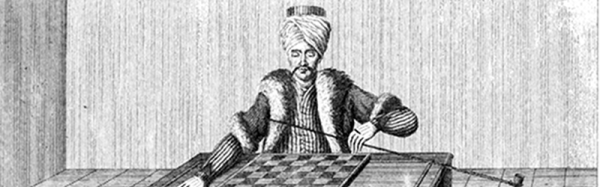
We think of social engineering as something new, but really–like most cybercrime–it is just the movement of old-fashioned crime to the digital world. What got me thinking about this is a service from Amazon called “Mechanical Turk.”

That struck me as odd when I first heard it because for product marketing it is pretty bad unless you are selling turkey jerky or something. If you tell me “Amazon Simple Storage Service” I can probably guess what that might be. But what’s Mechanical Turk?

Mechanical Turk

Continue reading “Retrotechtacular: Social Hacking Is Nothing New”

Sophi Kravitz: State Of The IO

At the Hackaday SuperConference in November, Sophi Kravitz had the chance to look back on the past year of Hackaday.io, and what a great year it has been. Hackaday.io now has over 178k members who have published 12.6k projects with about 10% of those being collaborative team projects. But the numbers tell just a small story of the vibrant community Hackaday has.

Continue reading “Sophi Kravitz: State Of The IO”

Hack A Whiteboard And Never Lose Screws Again

If you are reading this, it is a fair bet you like to take things apart. Sometimes, you even put them back together. There are two bad moments that can occur when you do this. First, when you get done and there is some stuff left over. That’s usually not good. The other problem is when you are trying to find some little tiny bolt and a washer and you can’t find it. SMD parts are especially easy to lose.

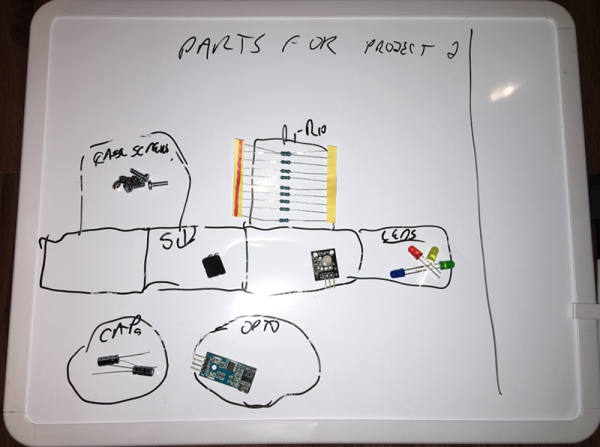
A few months ago, I was browsing through a local store and I saw a  neat idea. It was basically a small whiteboard with lines dividing it into cells. It was magnetic and the idea is you’d put your small loose (and ferrous) parts like screws, bolts, nuts, and resistors on the board. Since it was a marker board, you could make notes about what each cell contained. Great idea! But the thing was about $20 and I thought I could do better than that. As you might guess from the picture, I was successful. I spent about $5, although I had some rare-earth magnets hanging around. If you don’t, strong magnets aren’t that expensive and you can often raid them out of hard drives.

Continue reading “Hack A Whiteboard And Never Lose Screws Again”

Bring Your Palm VII To ShmooCon This Weekend

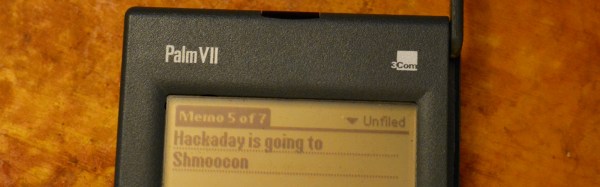
We’re not even halfway through January, and already the conference season is upon us. This weekend, Hackaday will be attending Shmoocon at the Hilton in Washington, DC. I’ll be there getting the full report on Russian hackers, reverse engineering, and what the beltway looks like with an ice storm during morning rush hour.

What’s in store for Shmoocon attendees? The schedule looks really cool with talks on something like inline assembly in Python, tools for RF reverse engineering, manufacturing and selling a U2F token, emulating ARM firmware, and so much more. Want to attend Shmoocon? Too bad! Tickets sold out in less than 10 seconds, and we’re totally not going to talk about the BOTS Act at all. If you’re clever you can still pick up a barcode on Craigslist for $300-400, but I wouldn’t recommend that.

As we did last year, Hackaday is going to have a lobbycon with Dunkin Saturday morning at 08:30, although which lobby is still up in the air. Check out the Hackaday Twitter for a few real-time updates. This is a bring-a-hack event, and I’ll be showing off how to add 18dBi of gain to a standard ESP8266 module. Show off what you’re working on and get a donut.

Fail Of The Week: NASA Edition

There’s a reason we often use the phrase “It ain’t Rocket Science”. Because real rocket science IS difficult. It is dangerous and complicated, and a lot of things can and do go wrong, often with disastrous consequences. It is imperative that the lessons learned from past failures must be documented and disseminated to prevent future mishaps. This is much easier said than done. There’s a large number of agencies and laboratories working on multiple projects over long periods of time. Which is why NASA has set up NASA Lessons Learned — a central, online database of issues documented by contributors from within NASA as well as other organizations.

The system is managed by a steering committee consisting of members from all NASA centers. Public access is limited to a summary of the original driving event, lessons learned and recommendations. But even this information can be quite useful for common folks. For example, this lesson on Guidance for NASA Selection & Application of DC-DC Converters contains several bits of useful wisdom. Or this one about IC’s being damaged due to capacitor residual discharge during assembly. If you ever need to add a conformal coating to your hardware, check how Glass Cased Components Fractured as a Result of Shrinkage in Coating/Bonding Materials Applied in Excessive Amounts. Finally, something we have all experienced when working with polarized components — Reverse Polarity Concerns With Tantalum Capacitors. Here is a more specific Technical Note on polarized capacitors (pdf): Preventing Incorrect Installation of Polarized Capacitors.

Unfortunately, all of this body of past knowledge is sometimes still not enough to prevent problems. Case in point is a recently discovered issue on the ISS — a completely avoidable power supply mistake. Science payloads attach to the ISS via holders called the ExPRESS logistics carriers. These provide mechanical anchoring, electrical power and data links. Inside the carriers, the power supply meant to supply 28V to the payloads was found to have a few capacitors mounted the other way around. This has forced the payloads to use the 120V supply instead, requiring them to have an additional 120V to 28V converter retrofit. This means modifying the existing hardware and factoring in additional weight, volume, heat, cost and other issues when adding the extra converter. If you’d like to dig into the details, check out this article about NASA’s power supply fail.

Thanks to [Jarek] for tipping us about this.

Encoders Spin Us Right Round

Rotary encoders are great devices. Monitoring just a few pins you can easily and quickly read in rotation and direction of a user input (as well as many other applications). But as with anything, there are caveats. I recently had the chance to dive into some of the benefits and drawbacks of rotary encoders and how to work with them.

I often work with students on different levels of electronic projects. One student project needed a rotary encoder. These come in mechanical and optical variants. In a way, they are very simple devices. In another way, they have some complex nuances. The target board was an ST Nucleo. This particular board has a small ARM processor and can use mbed environment for development and programming. The board itself can take Arduino daughter boards and have additional pins for ST morpho boards (whatever those are).

The mbed system is the ARM’s answer to Arduino. A web-based IDE lets you write C++ code with tons of support libraries. The board looks like a USB drive, so you download the program to this ersatz drive, and the board is programmed. I posted an intro to mbed awhile back with a similar board, so if you want a refresher on that, you might like to read that first.

Reading the Encoder

The encoder we had was on a little PCB that you get when you buy one of those Chinese Arduino 37 sensor kits. (By the way, if you are looking for documentation on those kinds of boards, look here.; in particular, this was a KY-040 module.) The board has power and ground pins, along with three pins. One of the pins is a switch closure to ground when you depress the shaft of the encoder. The other two encode the direction and speed of the shaft rotation. There are three pull-up resistors, one for each output.

I expected to explain how the device worked, and then assist in writing some code with a good example of having to debounce, use pin change interrupts, and obviously throw in some other arcane lore. Turns out that was wholly unnecessary. Well… sort of.

Continue reading “Encoders Spin Us Right Round”

What Makes The Perfect Hardware Badge

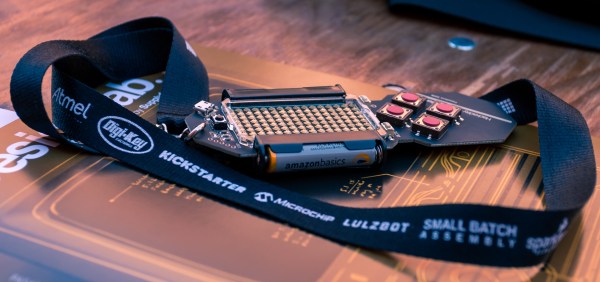
There are only a handful of people who can say they’ve built several successful electronic badges for conferences. Voja Antonic is not just on that list, he’s among the leaders in the field. There are a lot of pressures in this type of design challenge: aesthetics, functionality, and of course manufacturability. If you want to know how to make an exposed-PCB product that will be loved by the user, you need to study Voja’s work on the 2016 Hackaday SuperConference Badge. The badge is completely open, with all the design files, firmware, and a manual on the badge project page.

Between travelling from Belgrade to Pasadena and guiding production of 300 badges across the finish line before the conference deadline Voja took ill. He made it to the conference but without a voice he asked me to give his badge design talk for him. You can check that talk out below but let’s touch briefly on why Voja’s design is so spectacular.

Continue reading “What Makes The Perfect Hardware Badge”