Accident Forgiveness Comes To GPLv2

Years ago, while the GPLv3 was still being drafted, I got a chance to attend a presentation by Richard Stallman. He did his whole routine as St IGNUcius, and then at the end said he would be answering questions in a separate room off to the side. While the more causal nerds shuffled out of the presentation room, I went along with a small group of free software aficionados that followed our patron saint into the inner sanctum.

When my turn came to address the free software maestro, I asked what advantages the GPLv3 would have to a lowly hacker like myself? I was familiar with the clause about “Tivoization“, the idea that any device running GPLv3 code from the manufacturer should allow the user to be able to install their own software on it, but this didn’t seem like the kind of thing most individuals would ever need to worry about. Was there something in the new version of the GPL that would make it worth adopting in personal or hobby projects?

Yes, he really dresses up like this.

Interestingly, a few years after this a GPLv2 program of mine was picked up by a manufacturer and included in one of their products (never underestimate yourself, folks). So the Tivoization clause was actually something that did apply to me in the end, but that’s not the point of this story.

Mr. Stallman responded that he believed the biggest improvement GPLv3 made over v2 for the hobbyist programmer was the idea of “forgiveness” in terms of licensing compliance. Rather than take a hard line approach like the existing version of the GPL, the new version would have grace periods for license compliance. In this way, legitimate mistakes or misunderstandings of the requirements of the GPL could be resolved more easily.

So when I read the recent announcement from Red Hat that said they would be honoring the grace period for GPLv2 projects, I was immediately interested. Will the rest of the community follow Red Hat’s lead? Will this change anyone’s mind when deciding between the GPL v2 and v3? Is this even a good idea? Join me below as I walk through these questions.

Continue reading “Accident Forgiveness Comes To GPLv2”

We Need To Have A Chat About Something Important

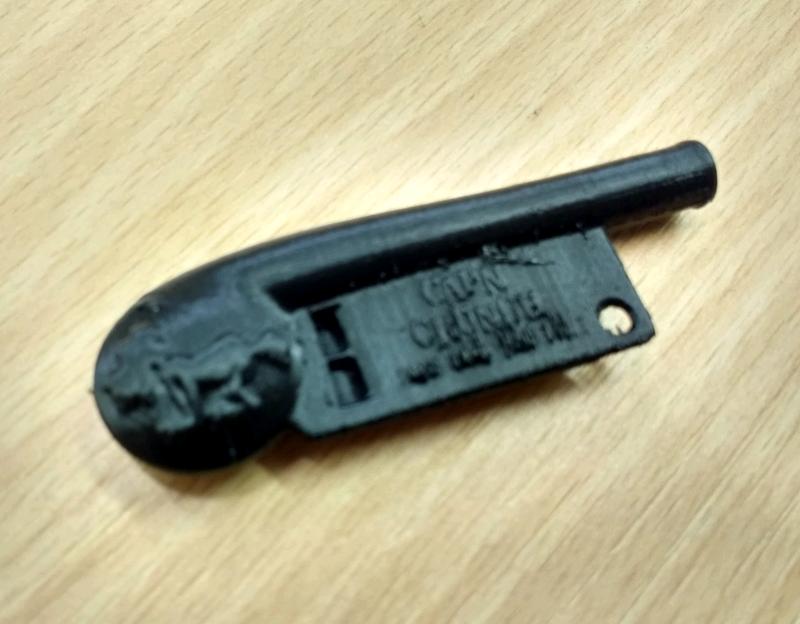
Yes, I really did print this the day before the story broke.

With hindsight, I picked the wrong day to 3D print a Cap’n Crunch whistle downloaded from Thingiverse. I was covering the hackspace textile evening, so I set the Ultimaker going and headed off to spend my evening making a laptop pouch. My whistle, a reasonable reproduction of the famous cereal packet novelty whose 2600 Hz tone allowed special access to American telephone networks, was ready for me to take away as I headed home.

The next day, there it was. The legendary phreaker [John Draper], also known as [Captain Crunch] after his use of that free whistle, was exposed as having a history of inappropriate conduct towards teenage boys and young men who he encountered in his tours of the hacker community as a celebrity speaker.

My whistle will no longer go on a lanyard as a piece of cool ephemera, it’s sitting forlornly on my bench. The constant procession of harassment allegations that have been in the news of late have arrived at our doorstep. Continue reading “We Need To Have A Chat About Something Important”

Peer Review In The Age Of Viral Video

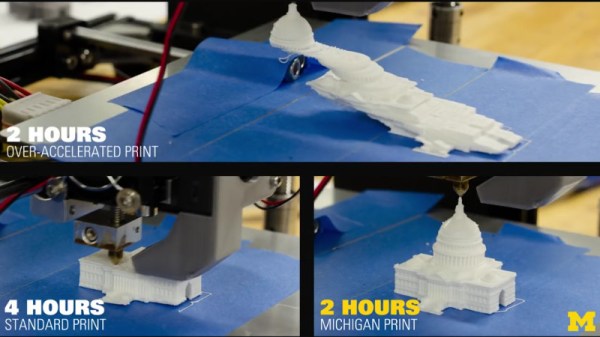
Recently, a YouTube video has been making the rounds online which shows a rather astounding comparison between two printed models of the US Capitol. Starting with the line “3-D PRINTERS CAN NOW PRINT TWICE AS FAST”, the video shows that one print took four hours to complete, and the other finished in just two hours by virtue of vibration reducing algorithms developed at the University of Michigan. The excitement around this video is understandable; one of the biggest limitations of current 3D printer technology is how long it takes to produce a model of acceptable quality, and if improvements to the software that drives these machines could cut total print time in half, the ramifications would be immense.

In only a few weeks the video racked up tens of thousands of views, and glowing articles popped up with headlines such as: “How to cut 3D print times in half by the University of Michigan” and “University of Michigan professor doubles 3D printing speeds using vibration-mitigating algorithm“. Predictably, our tips line lit up with 3D printer owners who wanted to hear more about the incredible research that promised to double their print speed with nothing more than a firmware update.

The only problem is, the video shows nothing of the sort. What’s more, when pushed for details, the creators of the video are now claiming the same thing.

Continue reading “Peer Review In The Age Of Viral Video”

Goodbye, TechShop

The CEO of TechShop, [Dan Woods], has hit the legal E-stop and declared Chapter-7 bankruptcy for the business. All ten US locations were shuttered on Wednesday with absolutely no advance warning. You can read the full statement from [Dan] here.

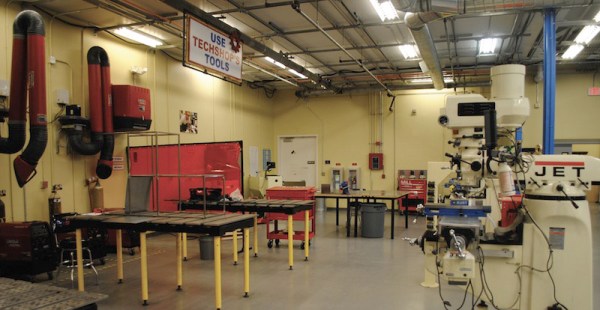
We are deeply saddened to hear of TechShop’s closing, and while it wasn’t implausible that this might happen someday, the abrupt shuttering must come as a painful shock to many for whom TechShop was an important part of their personal and professional lives. We owe a lot to the work and effort they put forth; they led the way as a pioneering makerspace and for more than ten years, TechShop provided access to tools, taught classes, and created opportunities for the DIY world that are still as important today as they were in the mid-aughts.

Leading the Way

Jim Newton, founder of TechShop, originally wanted a space to tinker with his pet projects. “I’m a frustrated inventor who needs to have access to this kind of stuff. And people always say that the best companies are the ones where the founders are passionate about what they are creating, which is exactly what I am,” Jim said in an interview in 2007, at the beginnings of TechShop.

It turned out that there were a lot of other tinkerers who wanted to work their pet projects too.

TechShop took a risk. All new business ventures are risky and most fail quite quickly, but in 2006, this whole movement, this idea that people could build things and take advantage of new technologies, personal fabrication, ad-hoc manufacturing, and rapid prototyping outside of universities and commercial R&D labs, was just a dream.

Adafruit was incubating in Limor’s dorm room. Arduino was just the name of some pub in Italy. Eben Upton was wiring prototype Raspberry Pi’s by hand. Nathan Seidle was still reflowing Sparkfun’s boards with a toaster oven. Maker Faire, “The World’s Largest Show and Tell,” wouldn’t even launch until the following year.

In the fading light of high school shop classes, people often were shown the ways of woodworking, light metalwork, and maybe how to fix a car or two. Filling a business with a smorgasbord of advanced machinery and teaching people how to use it, was, and still is, a relatively new concept. TechShop had a dream and made it real with the dedication of hardworking support staff and instructors around the country. Continue reading “Goodbye, TechShop”

The Hacker Village Of Supercon

I’m utterly exhausted and still in a state of awe. The Hackaday Superconference has grown in so many ways, but one thing remains the same: the spirit of the Hacker Village — an intangible feeling that grows up around all who attend — is bliss to take part in.

There’s really no substitute for having been there in person. I’ll go into detail below and try to share the experience as best I can. But the gist of the atmosphere is this: everyone at Supercon is the type of person you’d want to be stuck in a rowboat with, or partnered with on an engineering project, or to have next to you while trying to save the world. There are no looky-loos at Supercon. It turns out we are all stuck in a rowboat together, we are all working on engineering projects, and we are all trying to save the world. And when we all get together it feels like a drug our pragmatic minds never knew existed. This is the recharge for that sense of urgency that keeps you going all year long.

So yes, you really missed it. But start now. Become friends with all of these people over the next year. Begin building your Supercon community now and it’ll feel like a reunion when it rolls around again next November.

Continue reading “The Hacker Village Of Supercon”

Artificial Intelligence At The Top Of A Professional Sport

The lights dim and the music swells as an elite competitor in a silk robe passes through a cheering crowd to take the ring. It’s a blueprint familiar to boxing, only this pugilist won’t be throwing punches.

OpenAI created an AI bot that has beaten the best players in the world at this year’s International championship. The International is an esports competition held annually for Dota 2, one of the most competitive multiplayer online battle arena (MOBA) games.

Each match of the International consists of two 5-player teams competing against each other for 35-45 minutes. In layman’s terms, it is an online version of capture the flag. While the premise may sound simple, it is actually one of the most complicated and detailed competitive games out there. The top teams are required to practice together daily, but this level of play is nothing new to them. To reach a professional level, individual players would practice obscenely late, go to sleep, and then repeat the process. For years. So how long did the AI bot have to prepare for this competition compared to these seasoned pros? A couple of months.

Continue reading “Artificial Intelligence At The Top Of A Professional Sport”

Who Owns Arduino?

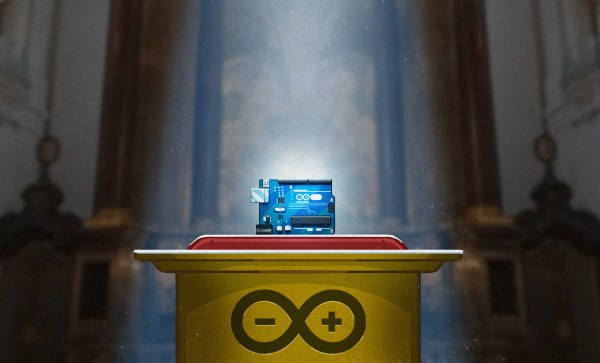
Who owns Arduino? We don’t mean metaphorically — we’d say that’s the community of users and developers who’ve all contributed to this amazing hardware/software ecosystem. We mean literally. Whose chips are on the table? Whose money talks? It looks like ARM could have a stake!

The Arduino vs Arduino saga “ended” just under a year ago with an out-of-court settlement that created a private holding company part-owned by both parties in the prior dispute over the trademark. And then, [Banzi] and the original founders bought out [Musto]’s shares and took over. That much is known fact.

The murky thing about privately held companies and out-of-court settlements is that all of the details remain private, so we can only guess from outside. We can speculate, however, that buying out half of the Arduino AG wasn’t cheap, and that even pooling all of their resources together, the original founders just didn’t have the scratch to buy [Musto] out. Or as the Arduino website puts it, “In order to make [t]his a reality, we needed a partner that would provide us with the resources to regain full ownership of Arduino as a company… and Arm graciously agreed to support us to complete the operation.” That, and the rest of the Arduino blog post, sure looks like ARM provided some funds to buy back Arduino.

We reached out to [Massimo Banzi] for clarification and he replied:

“Hi arm did not buy nor invest in arduino. The founders + Fabio Violante still own the company. As I wrote in the blog post we are still independent, open source and cross platform.”

We frankly can’t make sense of these conflicting statements, at least regarding whether ARM did or didn’t contribute monetary resources to the deal. ARM has no press release on the deal as we write this. Continue reading “Who Owns Arduino?”