Taking It To Another Level: Making 3.3V Speak With 5V

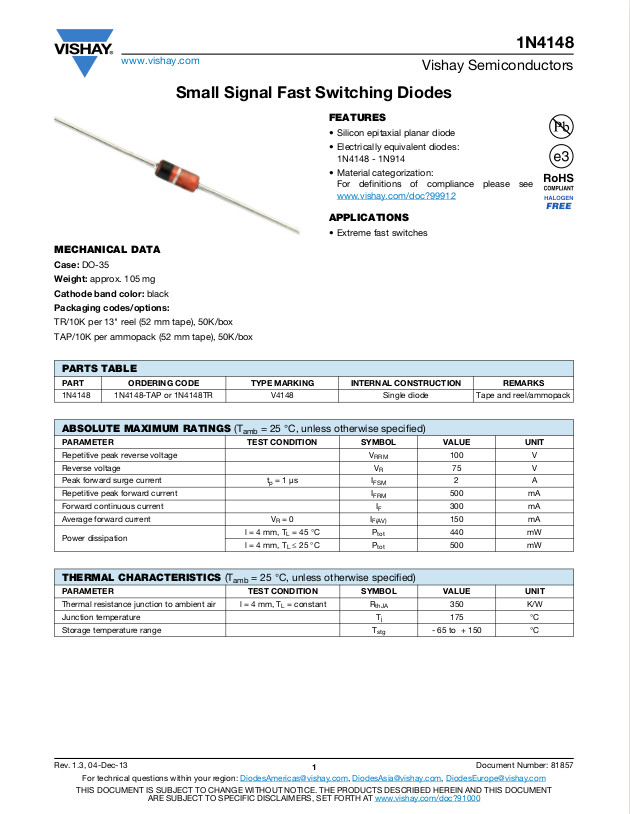
If your introduction to digital electronics came more years ago than you’d care to mention, the chances are you did so with 5V TTL logic. Above 2V but usually pretty close to 5V is a logic 1, below 0.8V is a logic 0. If you were a keen reader of electronic text books you might have read about different voltage levels tolerated by 4000 series CMOS gates, but the chances are even with them you’d have still used the familiar 5 volts.

This happy state of never encountering anything but 5V logic as a hobbyist has not persisted. In recent decades the demands of higher speed and lower power have given us successive families of lower voltage devices, and we will now commonly also encounter 3.3V or even sometimes lower voltage devices. When these different families need to coexist as for example when interfacing to the current crop of microcontroller boards, care has to be taken to avoid damage to your silicon. Some means of managing the transition between voltages is required, so we’re going to take a look at the world of level shifters, the circuits we use when interfacing these different voltage logic families.

Continue reading “Taking It To Another Level: Making 3.3V Speak With 5V”

Glues You Can Use: Adhesives For The Home Shop

A while back I looked at lubricants for the home shop, with an eye to the physics and chemistry behind lubrication. Talking about how to keep parts moving got me thinking about the other side of the equation – what’s the science behind sticking stuff together? Home shops have a lot of applications for adhesives, so it probably pays to know how they work so you can choose the right glue for the job. We’ll also take a look at a couple of broad classes of adhesives that are handy to have around the home shop. Continue reading “Glues You Can Use: Adhesives For The Home Shop”

Squoze Your Data

I have a confession to make. I enjoy the challenge of squeezing software into a tiny space or trying to cut a few more cycles out of a loop. It is like an intricate puzzle. Today, of course, there isn’t nearly as much call for that as there used to be. Today even a “small” microcontroller has a ton of memory and resources.

Even so, there’s still a few cases where you need to squeeze those last few bytes out of memory. Maybe you are trying to maximize memory available for some purpose. Maybe you are anticipating mass production and you are using the smallest microcontroller you can find. Or maybe you’re doing the 1 kB Challenge and just want some advice.

One way to find techniques to maximize resources is to look at what people did “in the old days.” Digital Equipment computers once had a special character set called Squoze (or sometimes DEC Radix-50). This technique can be useful when you need to get a lot of strings into memory. The good news is that you can reliably get 3 characters into 2 bytes (or, as DEC did, 6 characters into 4 bytes). The bad news is that you have to pick a limited character set that you can use. However, that’s not always a big problem.

Continue reading “Squoze Your Data”

The Little Mechanism That Made Precise Time-keeping Possible

There are few things to which we pay as much attention as the passage of time. We don’t want to be late for work, or a date. Even more importantly, we don’t want to age and die. Good time keeping is an all important human activity, and we started to worry about it as soon as we abandoned our hunter-gatherer lifestyle and agriculture and commerce emerged.

By de:Benutzer:Flyout - own work, http://de.wikipedia.org/wiki/Bild:Kerzenuhr.jpg, CC BY-SA 3.0, https://commons.wikimedia.org/w/index.php?curid=1783765
A candle clock

Measuring time needs two things: a repetitive process to mark equal increments of time, and a way of tracking and displaying the result. The first timekeeping devices relied of course on the movement of the sun. Ancient Egyptians, around 3500 BC, built obelisks that, by casting a shadow on the ground at different positions, gave an approximate idea of the time. Next came the use of some medium that was consumed at a regular pace: candle, incense, water and sand clocks are examples. A great advancement came with the advent of the mechanical clock, and here is where the escapement mechanism appears.

Continue reading “The Little Mechanism That Made Precise Time-keeping Possible”

Path To Craftsmanship: Don’t Buy Awful Safety Gear

A while back I tried to make a case for good safety disciple as a habit that, when proactively pursued, can actually increase the quality of your work as a side effect. In those comments and in other comments since then I’ve noticed that some people really hate safety gear. Now some of them hated them for a philosophical reason, “Ma granpap didn’t need ’em, an’ I don’t neither”, or ,”Safety gear be contributin’ to the wuss’ness of the modern personage an’ the decline o’ society.” However, others really just found them terribly uncomfortable and restricting.

In this regard I can help a little. I’ve spent thousands of terrible long hours in safety gear working in the chemical industry. I was also fortunate to have a company who frequently searched for the best safety equipment as part of their regular program. I got to try out a lot.

Continue reading “Path To Craftsmanship: Don’t Buy Awful Safety Gear”

My Life In The Connector Zoo

“The great thing about standards is that there are so many to choose from.” Truer words were never spoken, and this goes double for the hobbyist world of hardware hacking. It seems that every module, every company, and every individual hacker has a favorite way of putting the same pins in a row.

We have an entire drawer full of adapters that just go from one pinout to another, or one programmer to many different target boards. We’ll be the first to admit that it’s often our own darn fault — we decided to swap the reset and ground lines because it was convenient for one design, and now we have two adapters. But imagine a world where there was only a handful of distinct pinouts — that drawer would be only half full and many projects would simply snap together. “You may say I’m a dreamer…”

This article is about connectors and standards. We’ll try not to whine and complain, although we will editorialize. We’re going to work through some of the design tradeoffs and requirements, and maybe you’ll even find that there’s already a standard pinout that’s “close enough” for your next project. And if you’ve got a frequently used pinout or use case that we’ve missed, we encourage you to share the connector pinouts in the comments, along with its pros and cons. Let’s see if we can’t make sense of this mess.

Continue reading “My Life In The Connector Zoo”