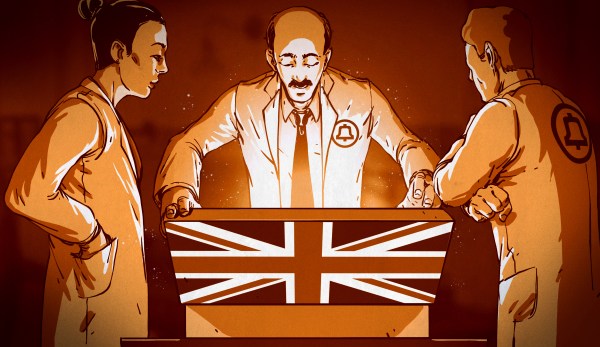
You All Know Reginald Fessenden. Who?

Quick, name someone influential in the history of radio. Who do did you think of? Marconi? Tesla? Armstrong? Hertz? Perhaps Sarnoff? We bet only a handful would have said Reginald Fessenden. That’s a shame because he was the first to do something that most of us do every day.

Few know this Canadian inventor’s name even though he developed quite a few innovations. Unlike Colpitts and Hartley we don’t have anything named after him. However, Fessenden was the first man to make a two-way transatlantic radio contact (Marconi’s was one way) and he was a pioneer in using voice over the radio.

He did even more than that. He patented transmitting with a continuous wave instead of a spark, which made modern radio practical. This was unpopular at the time because most thought the spark was necessary to generate enough energy. In 1906, John Fleming (who gave us tubes that are sometimes still called Fleming valves) wrote that “a simple sine-curve would not be likely to produce the required effect.” That was in 1906, five years after Fessenden’s patent.

Continue reading “You All Know Reginald Fessenden. Who?”

Hovercraft Of The Future

We think of hovercraft as a modern conveyance. After all, any vision of the future usually includes hovercraft or flying cars along with all the other things we imagine in the future. So when do you think the hovercraft first appeared? The 1960s? The 1950s? Maybe it was a World War II development from the 1940s? Turns out, a human-powered hovercraft was dreamed up (but not built) in 1716 by [Emanuel Swedenborg]. You can see a sketch from his notebook below. OK, that’s not fair, though. Imagining it and building one are two different things.

[Swedenborg] realized a human couldn’t keep up the work to put his craft on an air cushion for any length of time. Throughout the 1800s, though, engineers kept thinking about the problem. Around 1870, [Sir John Thornycroft] built several test models of ship’s hulls that could trap air to reduce drag — an idea called air lubrication, that had been kicked around since 1865. However, with no practical internal combustion engine to power it, [Thornycroft’s] patents didn’t come to much. In America, around 1876 [John Ward] proposed a lightweight platform using rotary fans for lift but used wheels to get forward motion. Others built on the idea, but they still lacked the engines to make it completely practical.

But even 1940 is way too late for a working hovercraft. [Dagobert Müller] managed that in 1915. With five engines, the craft was like a wing that generated lift in motion. It was a warship with weapons and a top speed of around 32 knots, although it never saw actual combat. Because of its physical limitations it could only operate over water, unlike more modern craft.

Continue reading “Hovercraft Of The Future”

Mary Somerville: The First Scientist

Science, as a concept, is relatively new. Benjamin Franklin wasn’t a scientist probing the mysteries of amber and wool and electricity and ‘air baths’; he was a natural philosopher. Antonie van Leeuwenhoek was simply a man with a proclivity towards creating new and novel instruments. Robert Hooke was a naturalist and polymath, and Newton was simply a ‘man of science’. None of these men were ever called ‘scientists’ in their time; the term hadn’t even been coined yet.

The word ‘scientist’ wouldn’t come into vogue until the 1830s. The word itself was created by William Whewell, reviewing The Connexion of the Physical Sciences by Mary Somerville. The term used at the time, ‘a man of science’, didn’t apply to Mrs. Somerville, and, truth be told, the men of science of the day each filled a particular niche; Faraday was interested in electricity, Darwin was a naturalist. Mary Somerville was a woman and an interdisciplinarian, and the word ‘scientist’ was created for her.

Continue reading “Mary Somerville: The First Scientist”

Salyut: How We Learned To Make Space Stations

When you think about space stations, which ones come to mind first? You might think Skylab, the International Space Station (ISS), or maybe Russia’s Mir. But before any of those took to the heavens, there was Salyut.

Russia’s Salyut 1 was humankind’s first space station. The ensuing Salyut program lasted fifteen years, from 1971 to 1986, and the lessons learned from this remarkable series of experiments are still in use today in the International Space Station (ISS). The program was so successful at a time when the US manned space program was dormant that one could say that the Russians lost the Moon but won the space race.

Continue reading “Salyut: How We Learned To Make Space Stations”

Hacking When It Counts: Churchill’s Toy Shop

Nothing brings out the worst in humanity like war. Perversely, war also seems to exert an opposite if not equal force that leads to massive outbursts of creativity, the likes of which are not generally seen during times of peace. With inhibitions relaxed and national goals to meet, or in some cases where the very survival of a people is at stake, we always seem to find new and clever ways to blow each other to smithereens.

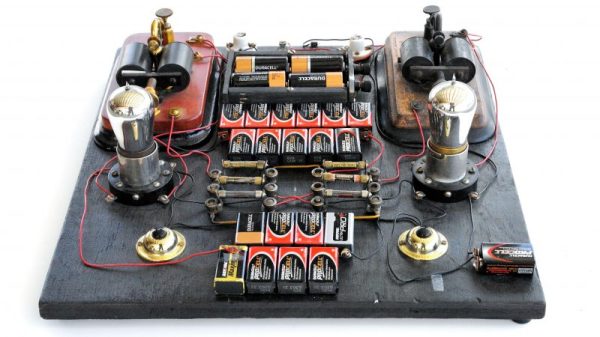
The run-up to World War II was a time where almost every nation was caught on its heels, and the rapidity of events unfolding across Europe and in Asia demanded immediate and decisive response. As young men and women mobilized and made ready for war, teams of engineers, scientists, and inventors were pressed into service to develop the weapons that would support them. For the British, these “boffins” would team up under a directorate called Ministry of Defence 1, or MD1. Informally, they’d be known as “Churchill’s Toy Shop,” and the devices they came up with were deviously clever hacks.

Continue reading “Hacking When It Counts: Churchill’s Toy Shop”

Mae Jemison And The Final Frontier

From the time Mae Jemison was a little girl, she was convinced that she would go to space. No one could tell her otherwise. She was sure that space travel would be as common as air travel by the time she was an adult. That prediction didn’t pan out, but that confidence combined with her intellect, curiosity, and the above-average encouragement of her parents drove Mae to do everything she wanted, including space travel.

Some people might become a doctor or a researcher, a dancer or an astronaut. But Mae became all of these things. Not everyone supported her non-traditional path—many people just pick a career and stick with it. Her path is impressive and through it all she gained a really interesting perspective on how education is approached, and what effects that approach has on society. After practicing medicine, joining a shuttle mission, appearing in Star Trek, and retiring from NASA, she became a voice for minority students and an advocate for integrating the arts and sciences in the standard curriculum.

Continue reading “Mae Jemison And The Final Frontier”

Black Holes And The Elusive Mystery That Lies Within An Equation

“If I have seen further than others, it is by standing upon the shoulders of giants.” This famous quote by Isaac Newton points to an axiom that lies at the heart of The Sciences — knowledge precedes knowledge.

What we know today is entirely based upon what we learned in the past. This general pattern is echoed throughout recorded history by the revelation of one scientific mystery leading to other mysteries… other more compounding questions. In the vast majority of cases these mysteries and other questions are sprung from the source of an experiment with an unexpected outcome sparking the question: “why the hell did it do that?” This leads to more experiments which creates even more questions and next thing you know we go from moving around on horse-drawn carriages to landing drones on Mars in a few generations.

The observant of you will have noticed that I preceded a statement above with “the vast majority of cases.” Apart from particle physics, almost all scientific discovery throughout recorded history has been made via experiment and observation. There are a few, however, that have been discovered hidden within the confines of an equation, only later to be confirmed with observation. One such discovery is the Black Hole, and how it was stumbled upon on a dusty chalkboard in the early 1900s will be the focal point of today’s article.

Continue reading “Black Holes And The Elusive Mystery That Lies Within An Equation”