Building Bridges In This Week’s Hack Chat

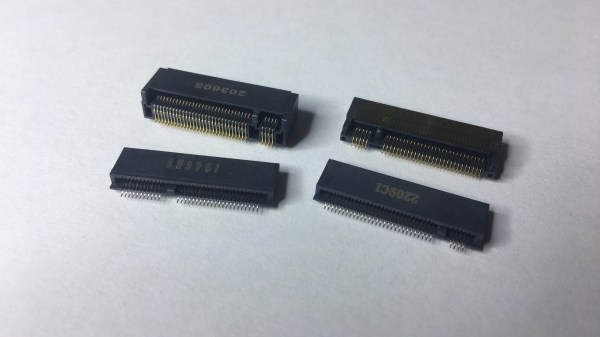
In the electronics world, even for the hobbyists, things have only gotten smaller over the years. We went from through-hole components to surface mount, and now we’re at the point where the experienced DIYers are coming around to the idea of using ball grid array (BGA) components in their designs. We’d wonder what things are going to look like in another couple decades, but frankly, it gives us the heebie-jeebies.

So while we’re pretty well versed these days in the hows and whys of tiny things, we see comparatively little large-scale engineering projects. Which is why we were excited to have Andy Oliver stop by this week for the Heavy Engineering Hack Chat. His day job sees him designing and inspecting the control systems for movable bridges — or what many would colloquially refer to as drawbridges.

Now you might think there’s not a lot of demand for this particular skill set, but we’re willing to bet there’s a lot more of these bridges out there than you realized. Andy kicked things off with the revelation that just between the states of Florida and Louisiana, there are about 200 movable bridges of various sizes. On a larger scale, he points out that BridgeHunter.com lists an incredible 3,166 movable bridges in their database, though admittedly many of those are historical and no longer standing. (There really is a site for everything!)

Andy Oliver

There’s also a huge incentive to keep the existing bridges functioning for as long as possible —  building a new one these days could cost hundreds of millions of dollars. Instead, repairs and upgrades are the name of the game. Andy says that if it’s properly maintained, you should get about a century out of a good bridge.

It will probably come as little surprise to find that keeping things as simple as possible is key to making sure a movable bridge can withstand the test of time. While we might imagine that all sorts of high-tech automation systems are at work, and they probably would be if any of us were in charge, Andy says that most of the time it’s old school relay logic.

Even controlling the speed of motors is often down to using beefy relays to switch some additional resistance into the circuit. But when reliability and ease of repair are top priorities, who’s to argue against a classic? Andy recalled a time when a government client made it clear that the only tool you should need to maintain a particular bridge’s control system was a hammer.

Of course, when moving around a million pounds of steel, there’s more than just electrical considerations at play. You’ve also got to take into account things like wind forces on the bridge, specifically that your gears and motors can handle the extra load without tearing themselves apart. The bridge also needs an emergency stop system that can arrest movement at a moment’s notice, but not damage anything in the process.

A lot of fascinating details about these motorized behemoths were covered in the Chat, so we’d invite anyone who’s ever watched a bridge slowly reconfigure itself to peruse through the full transcript. Special thanks to Andy Oliver for stopping by and sharing some of the details about his unique career with the community, and remember that if you’ve got your own engineering stories to tell, we’d love to hear them.


The Hack Chat is a weekly online chat session hosted by leading experts from all corners of the hardware hacking universe. It’s a great way for hackers connect in a fun and informal way, but if you can’t make it live, these overview posts as well as the transcripts posted to Hackaday.io make sure you don’t miss out.

New Parkinson’s Test Smells Success

Parkinson’s disease affects millions of people all over the world. The degenerative condition causes characteristic tremors, trouble walking, and often comes with complications including dementia, depression, and anxiety.

One of the major challenges around Parkinson’s disease involves diagnosis. There’s no single, commonly-available test that can confirm or rule out the disease. It’s can cause particular frustration as the disease is most treatable in its early stages.

That may soon change, however. One woman identified that she seemingly had the ability to “smell” the disease in those affected, and is now working with scientists to develop a test for the condition.

Follow Your Nose

The human sense of smell, by and large, isn’t particularly impressive. It helps us enjoy the scent of fresh bread baking in an oven, or the aroma of freshly cut grass. However, as a tool for inspecting and learning about the world around us, it really comes up short.

Some of us, though, are more capable in the olfactory department than others. Joy Milne from Perth, Scotland, is one such person. She happened to detected a change in her partner’s characteristic smell, one day, and twelve years later, they were diagnosed with Parkinson’s disease.

The idea that someone could “smell” a difference with people with Parkinson’s disease is an easy one to test. When Milne eventually put the idea together that the different smell she noticed was perhaps related to her husbands condition, she quickly drew the interest of scientists. With the aid of her partner, a former doctor, she teamed up with researchers Dr. Tilo Kunath and Professor Perdita Barran to investigate further. Continue reading “New Parkinson’s Test Smells Success”

Floppy Disk Sings: I’m Big In Japan

The other day, a medical office needed my insurance card. I asked them where to e-mail it and they acted like I had offered them human flesh as an appetizer. “We don’t have e-mail! You have to bring it to us in person!” They finally admitted that they could take a fax and I then had to go figure out how to get a free one page fax sent over the Internet. Keep in mind, that I live in the fourth largest city in the United States — firmly in the top 100 largest cities in the world. I’m not out in the wilderness dealing with a country doctor.

I understand HIPAA and other legal and regulatory concerns probably inhibit them from taking e-mail, but other doctors and health care providers have apparently figured it out. But it turns out that the more regulations are involved in something, the more behind-the-times it is likely to be.

Continue reading “Floppy Disk Sings: I’m Big In Japan”

Robotic Surgeons Are Showing Hints Of One Day Outperforming Humans

When it comes to fields that are considered the most complex of human endeavours, the most typically cited are those of rocket science and brain surgery. Indeed, to become a surgeon is to qualify in a complex, ever-changing, and high-performance field, with a pay scale and respect to match.

The tools of surgery have changed over time, with robotic assistants becoming commonplace in recent decades. Now the latest robots are starting to outperform human surgeons in some ways. Let’s look at how that’s been achieved, and what it means for the future of medicine. Continue reading “Robotic Surgeons Are Showing Hints Of One Day Outperforming Humans”

Don’t Be Salty: How To Make Desalination Work In Tomorrow’s World

Although water is often scarce for human consumption and agriculture, this planet is three-quarters covered by the stuff. The problem is getting the salt out, and this is normally done by the Earth’s water cycle, which produces rain and similar phenomena that replenish the amount of fresh water. Roughly 3% of the water on Earth is fresh water, of which a fraction is potable water.

Over the past decades, the use of desalination has increased year over year, particularly in nations like Saudi Arabia, Israel and the United Arab Emirates, but parched United States states such as California are increasingly looking into desalination technologies. The obvious obstacles that desalination faces – regardless of the exact technology used – involve the energy required to run these systems, and the final cost of the produced potable water relative to importing it from elsewhere.

Other issues that crop up with desalination include the environmental impact, especially from the brine waste and conceivably marine life sucked into the intake pipes. As the need for desalination increases, what are the available options to reduce the power needs and environmental impact?

Continue reading “Don’t Be Salty: How To Make Desalination Work In Tomorrow’s World”

Agrivoltaics Is A Land Usage Hack For Maximum Productivity

Land tends to be a valuable thing. Outside of some weird projects in Dubai, by and large, they aren’t making any more of it. That means as we try to feed and power the ever-growing population of humanity, we need to think carefully about how we use the land we have.

The field of agrivoltaics concerns itself with the dual-use of land for both food production and power generation. It’s all about getting the most out of the the available land and available sunlight we have.

Continue reading “Agrivoltaics Is A Land Usage Hack For Maximum Productivity”

Iron Nitrides: Powerful Magnets Without The Rare Earth Elements

Since their relatively recent appearance on the commercial scene, rare-earth magnets have made quite a splash in the public imagination. The amount of magnetic energy packed into these tiny, shiny objects has led to technological leaps that weren’t possible before they came along, like the vibration motors in cell phones, or the tiny speakers in earbuds and hearing aids. And that’s not to mention the motors in electric vehicles and the generators in wind turbines, along with countless medical, military, and scientific uses.

These advances come at a cost, though, as the rare earth elements needed to make them are getting harder to come by. It’s not that rare earth elements like neodymium are all that rare geologically; rather, deposits are unevenly distributed, making it easy for the metals to become pawns in a neverending geopolitical chess game. What’s more, extracting them from their ores is a tricky business in an era of increased sensitivity to environmental considerations.

Luckily, there’s more than one way to make a magnet, and it may soon be possible to build permanent magnets as strong as neodymium magnets, but without any rare earth metals. In fact, the only thing needed to make them is iron and nitrogen, plus an understanding of crystal structure and some engineering ingenuity.

Continue reading “Iron Nitrides: Powerful Magnets Without The Rare Earth Elements”