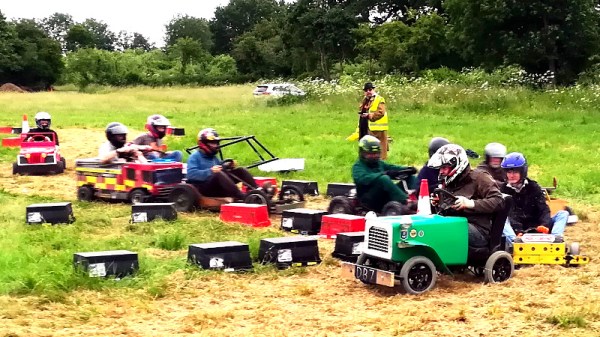
Four years ago when the idea of a pandemic was something which only worried a few epidemiologists, a group of British hardware hackers and robotic combat enthusiasts came up with an idea. They would take inspiration from the American Power Racing Series to create their own small electric racing formula. Hacky Racers became a rougher version of its transatlantic cousin racing on mixed surfaces rather than tarmac, and as an inaugural meeting that first group of racers convened on a cider farm in Somerset to give it a try. Last weekend they were back at the same farm after four years of Hacky Racer development with racing having been interrupted by the pandemic, and Hackaday came along once more to see how the cars had evolved. Continue reading “How Far Can You Push A £500 Small Electric Car; Four Years Of The Hacky Racer”→
“With the power of edge AI in the palm of your hand, your business will be unstoppable.”
That’s what the marketing seems to read like for artificial intelligence companies. Everyone seems to have cloud-scale AI-powered business intelligence analytics at the edge. While sounding impressive, we’re not convinced that marketing mumbo jumbo means anything. But what does AI on edge devices look like these days?
Being on the edge just means that the actual AI evaluation and maybe even fine-tuning runs locally on a user’s device rather than in some cloud environment. This is a double win, both for the business and for the user. Privacy can more easily be preserved as less information is transmitted back to a central location. Additionally, the AI can work in scenarios where a server somewhere might not be accessible or provide a response quickly enough.
Google and Apple have their own AI libraries, ML Kit and Core ML, respectively. There are tools to convert Tensorflow, PyTorch, XGBoost, and LibSVM models into formats that CoreML and ML Kit understand. But other solutions try to provide a platform-agnostic layer for training and evaluation. We’ve also previously covered Tensorflow Lite (TFL), a trimmed-down version of Tensorflow, which has matured considerably since 2017.
For this article, we’ll be looking at PyTorch Live (PTL), a slimmed-down framework for adding PyTorch models to smartphones. Unlike TFL (which can run on RPi and in a browser), PTL is focused entirely on Android and iOS and offers tight integration. It uses a react-native backed environment which means that it is heavily geared towards the node.js world.
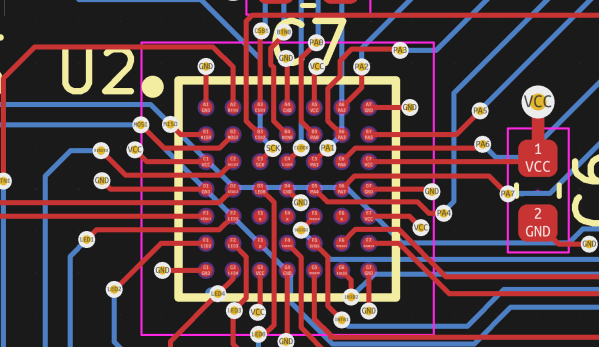
The Ball Grid Array, or BGA package is no longer the exclusive preserve of large, complex chips on computer motherboards: today even simple microcontrollers are available with those little solder balls. Still, many hobbyists prefer to stay with QFP and QFN packages because they’re easier to solder. While that is a fair point, BGA packages can offer significant space savings, and are sometimes the only choice: with the ongoing chip shortage, some other package versions might simply be unavailable. Even soldering doesn’t have to be complicated: if you’re already comfortable with solder paste and reflow profiles, adding a BGA or two into the mix is pretty easy.
In this article we’ll show that working with BGA chips is not as difficult as it may seem. The focus will be on printed circuit board design: how to draw proper footprints, how to route lots of signals and what capabilities your PCB manufacturer should have. We’ll cover soldering and rework techniques in a future article, but first let’s take a look at why BGAs are used at all.
When Astra’s diminutive Rocket 3.3 lifted off from its pad at the Cape Canaveral Space Force Station on June 12th, everything seemed to be going well. In fact, the mission was progressing exactly to plan right up until the end — the booster’s second stage Aether engine appeared to be operating normally until it abruptly shut down roughly a minute ahead of schedule. Unfortunately, orbital mechanics are nothing if not exacting, and an engine burn that ends a minute early might as well never have happened at all.
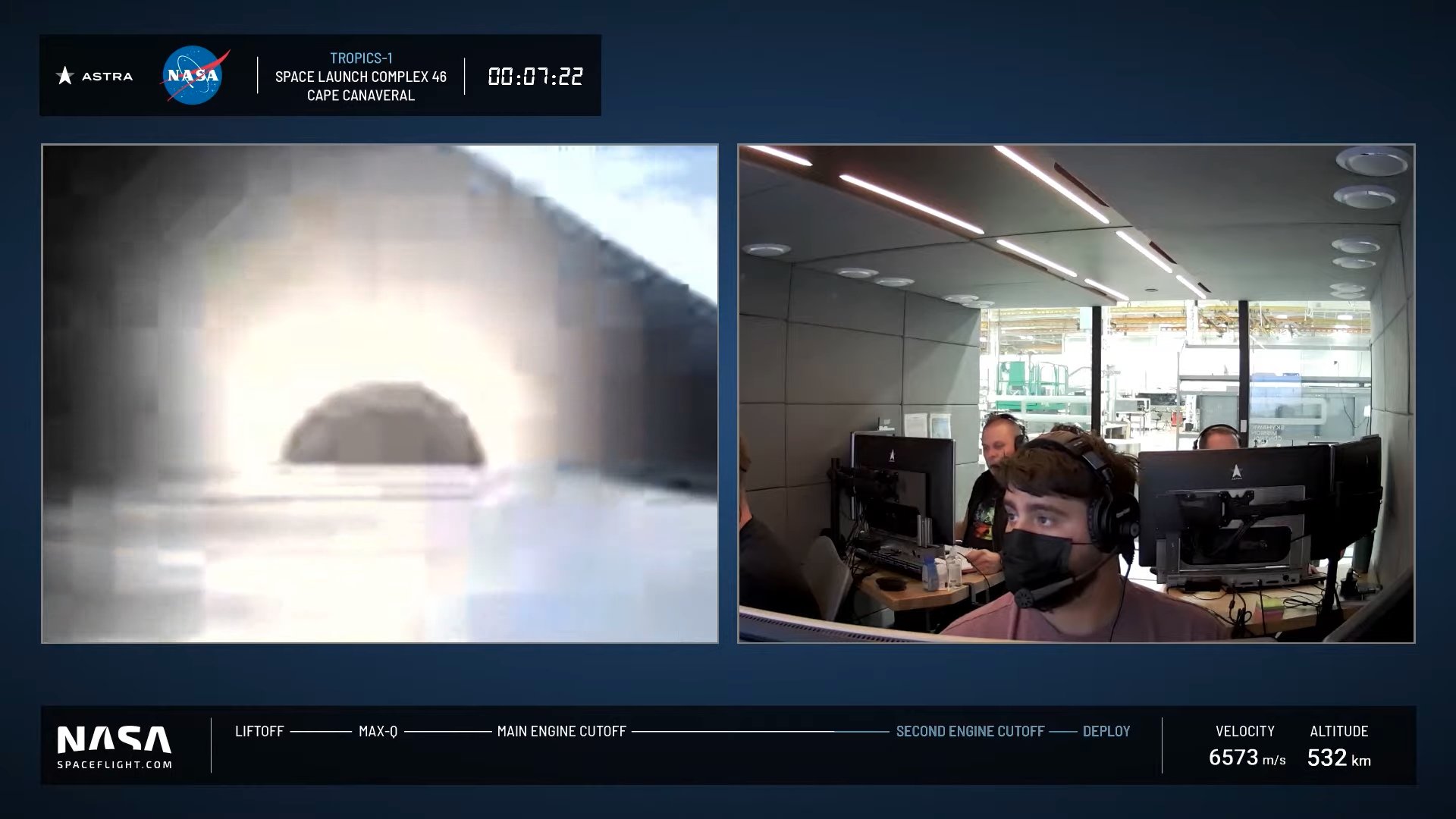
According to the telemetry values shown on-screen during the live coverage of the launch, the booster’s upper stage topped out at a velocity of 6.573 kilometers per second, well short of the 7.8 km/s required to attain a stable low Earth orbit. While the video feed was cut as soon as it was clear something had gone wrong, the rigid physics of spaceflight means there’s little question about the sequence of events that followed. Without the necessary energy to stay in orbit, the upper stage of the rocket would have been left in a sub-orbital trajectory, eventually reentering the atmosphere and burning up a few thousand kilometers downrange from where it started.
An unusual white plume is seen from the engine as it shuts down abruptly.
Of course, it’s no secret that spaceflight is difficult. Doubly so for startup that only has a few successful flights under their belt. There’s no doubt that Astra will determine why their engine shutdown early and make whatever changes are necessary to ensure it doesn’t happen again, and if their history is any indication, they’re likely to be flying again in short order. Designed for a Defense Advanced Research Projects Agency (DARPA) competition that sought to spur the development of cheap and small rockets capable of launching payloads on short notice, Astra’s family of rockets have already demonstrated unusually high operational agility.
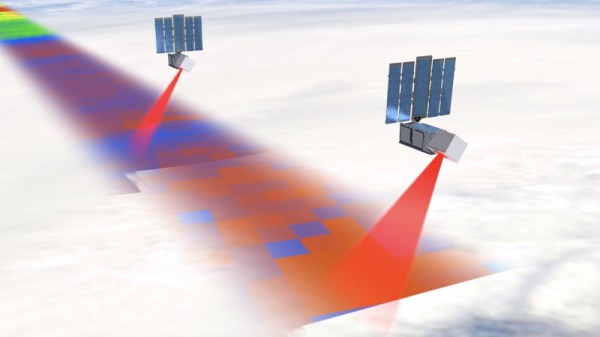
Astra, and the Rocket 3.3 design, will live to fly again. But what of the payload the booster was due to put into orbit? That’s a bit more complicated. This was the first of three flights that were planned to assemble a constellation of small CubeSats as part of NASA’s TROPICS mission. The space agency has already released a statement saying the mission can still achieve its scientific goals, albeit with reduced coverage, assuming the remaining satellites safely reach orbit. But should one of the next launches fail, both of which are currently scheduled to fly on Astra’s rockets, it seems unlikely the TROPICS program will be able to achieve its primary goal.
So what exactly is TROPICS, and why has NASA pinned its success on the ability for a small and relatively immature launch vehicle to make multiple flights with their hardware onboard? Let’s take a look.
While pundits routinely predict the end of e-mail, we still get a ton of it and we bet you do too. E-mail has been around for a very long time and back in the day, it was pretty high-tech to be able to shoot off a note asking everyone where they wanted to go to lunch. What we had on our computers back then was a lot different, too. Consider that the first e-mail over ARPANET was in 1971. Back then some people had hardcopy terminals. Graphics were unusual and your main storage was probably a fraction of the smallest flash drive you currently have on your desk. No one was sending photographs, videos, or giant PDF files.
Today, things are different. Our computers have gigabytes of RAM and terabytes of storage. We produce and consume richly formatted documents, photographs at high resolutions, and even video. Naturally, we want to share those files with others, yet e-mail has turned up woefully short. Sure, some systems will offer to stash your large file in the cloud and send a link, but e-mailing a multi-megabyte video to your friend across town is more likely to simply fail. Why?
While most of us have been content with swing and sliding doors for the vast majority of our needs around the home, the revolving door remains popular in a wide variety of contexts.
It’s a confounding contraption that always feels ready to snatch and ensnare the unwary user. However, these doors do have certain benefits that have allowed them to retain popularity in many public buildings around the world. Let’s dive in to why below.
When NASA astronauts aboard the International Space Station have to clamber around on the outside of the orbiting facility for maintenance or repairs, they don a spacesuit known as the Extravehicular Mobility Unit (EMU). Essentially a small self-contained spacecraft in its own right, the bulky garment was introduced in 1981 to allow Space Shuttle crews to exit the Orbiter and work in the craft’s cavernous cargo bay. While the suits did get a minor upgrade in the late 90s, they remain largely the product of 1970s technology.
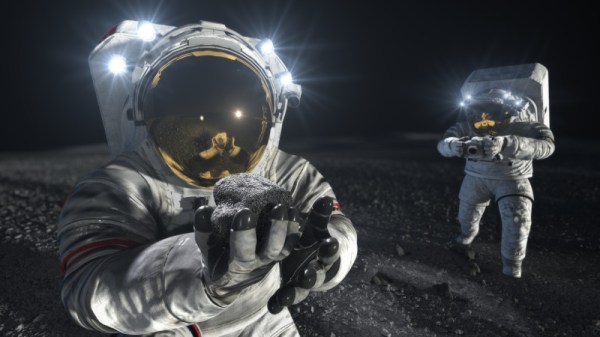
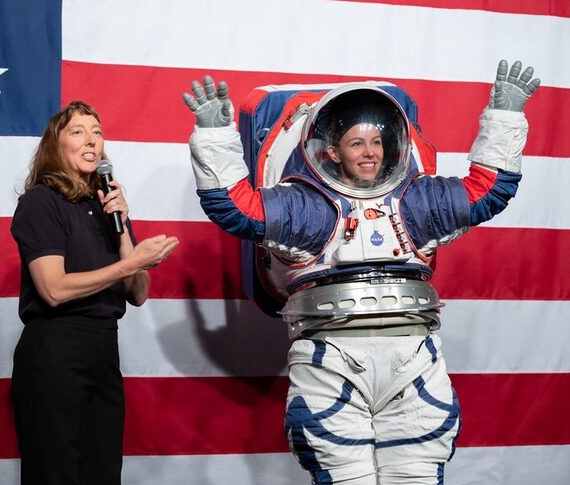
Not only are the existing EMUs outdated, but they were only designed to be use in space — not on the surface. With NASA’s eyes on the Moon, and eventually Mars, it was no secret that the agency would need to outfit their astronauts with upgraded and modernized suits before moving beyond the ISS. As such, development of what would eventually be the Exploration Extravehicular Mobility Unit (xEMU) dates back to at least 2005 when it was part of the ultimately canceled Constellation program.
NASA’s own xEMU suit won’t be ready by 2025.
Unfortunately, after more than a decade of development and reportedly $420 million in development costs, the xEMU still isn’t ready. With a crewed landing on the Moon still tentatively scheduled for 2025, NASA has decided to let their commercial partners take a swing at the problem, and has recently awarded contracts to two companies for a spacesuit that can both work on the Moon and replace the aging EMU for orbital use on the ISS.
As part of the Exploration Extravehicular Activity Services (xEVAS) contract, both companies will be given the data collected during the development of the xEMU, though they are expected to create new designs rather than a copy of what NASA’s already been working on. Inspired by the success of the Commercial Crew program that gave birth to SpaceX’s Crew Dragon, the contract also stipulates that the companies will retain complete ownership and control over the spacesuits developed during the program. In fact, NASA is even encouraging the companies to seek out additional commercial customers for the finished suits in hopes a competitive market will help drive down costs.
There’s no denying that NASA’s partnerships with commercial providers has paid off for cargo and crew, so it stands to reason that they’d go back to the well for their next-generation spacesuit needs. There’s also plenty of incentive for the companies to deliver a viable product, as the contact has a potential maximum value of $3.5 billion. But with 2025 quickly approaching, and the contact requiring a orbital shakedown test before the suits are sent to the Moon, the big question is whether or not there’s still enough time for either company to make it across the finish line.