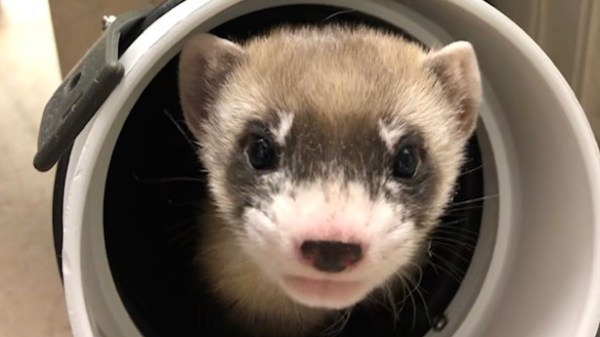
Swine Of The Times: Pig-to-Human Organ Transplants On Track For 2021

Every day in the US, seventeen people die because they couldn’t get a organ transplant in time. An American biotech company called United Therapeutics is looking to pick up the lifesaving slack by producing a line of genetically-modified pigs for the purpose of harvesting their organs, among other therapeutic uses. United Therapeutics’ pig-farming subsidiary Revivicor is a spin-off of PPL Therapeutics, the company that gave us Dolly the cloned sheep back in 1996. They intend to start transplanting pig organs into humans as early as this year.

Baby Fae after transplant surgery. Image by Duane Miller-AP via Time Magazine

Although it sounds like science fiction, the idea of transplanting animal cells, organs, and tissue into humans has been around for over a hundred years. The main problem with xenotransplantation is that it usually triggers severe immune system reactions in the recipient’s body. In one of the more noteworthy cases, a baby girl received a baboon heart in 1984, but died a few weeks later because her body rejected the organ.

The leading cause of xenotransplant rejection is a sugar called alpha-gal. This sugar appears on the cell surfaces of all non-primate mammals. Alpha-gal is problematic for other reasons, too: a condition called alpha-gal syndrome usually begins when a Lone Star tick bites a person and transmits alpha-gal cells from the blood of animals they have bitten. From that point on, the person will experience an allergic reaction when eating red meat such as beef, pork, and lamb.

Continue reading “Swine Of The Times: Pig-to-Human Organ Transplants On Track For 2021”

Google Loon’s Internet Balloons Come Back To Earth After A Decade In The Stratosphere

After a journey of a decade, what started as Project Loon by Google is no more. Promoted as a way to bring communications to the most remote parts of the globe, it used gigantic, high-altitude balloons equipped with communication hardware for air to ground, as well as air to air communication, between individual balloons. Based around LTE technology, it would bring multiple megabit per second data links to both remote areas and disaster zones.

Seven years into its development, Loon became its own company (Loon LLC), and would provide communications to some areas of Kenya, in addition to Sri Lanka in 2015 and Puerto Rico in 2017 after Hurricane Maria. Three years later, in January of 2021, it was announced that Loon LLC would be shutting down operations. By that point it had become apparent that the technology would not be commercially viable, with alternatives including wired internet access having reduced the target market.

While the idea behind Loon sounds simple in theory, it turns out that it was more complicated than just floating up some weather balloon with LTE base stations strapped to them.

Continue reading “Google Loon’s Internet Balloons Come Back To Earth After A Decade In The Stratosphere”

Sony’s Electric Car Now Road Testing In Austria

The Consumer Electronics Show was not typically a place for concept cars, and Sony aren’t known as a major automaker. However, times change, and the electric transport revolution has changed much. At the famous trade show, Sony shocked many by revealing its Vision-S concept — a running, driving, prototype electric car.

Far from a simple mockup to show off in-car entertainment or new fancy cameras, Sony’s entry into the automotive world is surprisingly complete. Recently, the Japanese tech giant has been spotted testing the vehicle on the road in Austria, raising questions about the future of the project. Let’s dive in to what Sony has shown off, and what it means for the potential of the Vision-S.

Continue reading “Sony’s Electric Car Now Road Testing In Austria”

Cable Mechanism Maths: Designing Against The Capstan Equation

I fell in love with cable driven mechanisms a few years ago and put together some of my first mechanical tentacles to celebrate. But only after playing with them did I start to understand the principles that made them work. Today I want to share one of the most important equations to keep in mind when designing any device that involves cables, the capstan equation. Let some caffeine kick in and stick with me over the next few minutes to get a sense of how it works, how it affects the overall friction in your system, and how you can put it to work for you in special cases.

A Quick Refresher: Push-Pull Cable Driven Mechanisms

But first: just what exactly are cable driven mechanisms? It turns out that this term refers to a huge class of mechanisms, so we’ll limit our scope just to push-pull cable actuation systems.

These are devices where cables are used as actuators. By sending these cables through a flexible conduit, they serve a similar function to the tendons in our body that actuate our fingers. When designing these, we generally assume that the cables are both flexible and do not stretch when put in tension. Continue reading “Cable Mechanism Maths: Designing Against The Capstan Equation”

What’s The Deal With Chromium On Linux? Google At Odds With Package Maintainers

Linux users are more likely than most to be familiar with Chromium, Google’s the free and open source web project that serves as the basis for their wildly popular Chrome. Since the project’s inception over a decade ago, users have been able to compile the BSD licensed code into a browser that’s almost the same as the closed-source Chrome. As such, most distributions offer their own package for the browser and some even include it in the base install. Unfortunately, that may be changing soon.

A post made earlier this month to the official Chromium Blog explained that an audit had determined “third-party Chromium based browsers” were using APIs that were intended only for Google’s internal use. In response, any browser attempting to access features such as Chrome Sync with an unofficial API key would be prevented from doing so after March 15th.

To the average Chromium user, this doesn’t sound like much of a problem. In fact, you might even assume it doesn’t apply to you. The language used in the post makes it sound like Google is referring to browsers which are spun off of the Chromium codebase, and at least in part, they are. But the search giant is also using this opportunity to codify their belief that the only official Chromium builds are the ones that they provide themselves. With that simple change, anyone using a distribution-specific build of Chromium just became persona non grata.

Unhappy with the idea of giving users a semi-functional browser, the Chromium maintainers for several distributions such as Arch Linux and Fedora have said they’re considering pulling the package from their respective repositories altogether. With a Google representative confirming the change is coming regardless of community feedback, it seems likely more distributions will follow suit.

Continue reading “What’s The Deal With Chromium On Linux? Google At Odds With Package Maintainers”

The Politics Of Supersonic Flight: The Concord(e)

Every nation has icons of national pride: a sports star, a space mission, or a piece of architecture. Usually they encapsulate a country’s spirit, so citizens can look up from their dreary lives and say “Now there‘s something I can take pride in!”  Concorde, the supersonic airliner beloved by the late 20th century elite for their Atlantic crossings, was a genuine bona-fide British engineering icon.

But this icon is unique as symbols of national pride go, because we share it with the French. For every British Airways Concorde that plied the Atlantic from London, there was another doing the same from Paris, and for every British designed or built Concorde component there was another with a French pedigree. This unexpected international collaboration gave us the world’s most successful supersonic airliner, and given the political manoeuverings that surrounded its gestation, the fact that it made it to the skies at all is something of a minor miracle. Continue reading “The Politics Of Supersonic Flight: The Concord(e)”

Failed Test Could Further Delay NASA’s Troubled SLS Rocket

The January 16th “Green Run” test of NASA’s Space Launch System (SLS) was intended to be the final milestone before the super heavy-lift booster would be moved to Cape Canaveral ahead of its inaugural Artemis I mission in November 2021. The full duration static fire test was designed to simulate a typical launch, with the rocket’s main engines burning for approximately eight minutes at maximum power. But despite a thunderous start start, the vehicle’s onboard systems triggered an automatic abort after just 67 seconds; making it the latest in a long line of disappointments surrounding the controversial booster.

When it was proposed in 2011, the SLS seemed so simple. Rather than spending the time and money required to develop a completely new rocket, the super heavy-lift booster would be based on lightly modified versions of Space Shuttle components. All engineers had to do was attach four of the Orbiter’s RS-25 engines to the bottom of an enlarged External Tank and strap on a pair of similarly elongated Solid Rocket Boosters. In place of the complex winged Orbiter, crew and cargo would ride atop the rocket using an upper stage and capsule not unlike what was used in the Apollo program.

The SLS core stage is rolled out for testing.

There’s very little that could be called “easy” when it comes to spaceflight, but the SLS was certainly designed to take the path of least resistance. By using flight-proven components assembled in existing production facilities, NASA estimated that the first SLS could be ready for a test flight in 2016.

If everything went according to schedule, the agency expected it would be ready to send astronauts beyond low Earth orbit by the early 2020s. Just in time to meet the aspirational goals laid out by President Obama in a 2010 speech at Kennedy Space Center, including the crewed exploitation of a nearby asteroid by 2025 and a potential mission to Mars in the 2030s.

But of course, none of that ever happened. By the time SLS was expected to make its first flight in 2016, with nearly $10 billion already spent on the program, only a few structural test articles had actually been assembled. Each year NASA pushed back the date for the booster’s first shakedown flight, as the project sailed past deadlines in 2017, 2018, 2019, and 2020. After the recent engine test ended before engineers were able to collect the data necessary to ensure the vehicle could safely perform a full-duration burn, outgoing NASA Administrator Jim Bridenstine said it was too early to tell if the booster would still fly this year.

What went wrong? As commercial entities like SpaceX and Blue Origin move in leaps and bounds, NASA seems stuck in the past. How did such a comparatively simple project get so far behind schedule and over budget?

Continue reading “Failed Test Could Further Delay NASA’s Troubled SLS Rocket”