The White House’s proposed budget for 2020 is out, and with it comes cuts to NASA. The most important item of note in the proposed budget is a delay of the Space Launch System, the SLS, a super-heavy lifting launch vehicle designed for single use. The proposed delay would defer work on the enhanced version of the SLS, the Block 1B with the Exploration Upper Stage.
The current plans for the Space Launch System include a flight using NASA’s Orion spacecraft in June 2020 for a flight around the moon. This uncrewed flight, Exploration Mission 1, or EM-1, would use the SLS Block 1 Crew rocket. A later flight, EM-2, would fly a crewed Orion capsule around the moon in 2022. A third proposed flight in 2023 would send the Europa Clipper to Jupiter. The proposed 2020 budget puts these flights in jeopardy.
The past few days have been busy if you’re trying to keep up with the pace of computer security news. Between a serious Chromium bug that’s actively being exploited on Windows 7 systems, the NSA releasing one of their tools as an open source project, and a new Spectre-like speculative execution flaw in Intel processors, there’s a lot to digest. Continue reading “Spoiler, Use-After-Free, And Ghidra: This Week In Computer Security”→
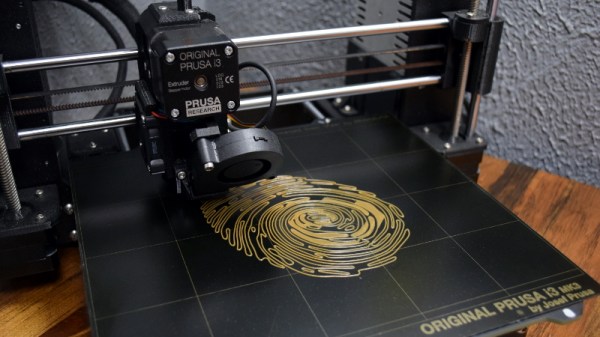
Hackers and makers see the desktop 3D printer as something close to a dream come true, a device that enables automated small-scale manufacturing for a few hundred dollars. But it’s not unreasonable to say that most of us are idealists; we see the rise of 3D printing as a positive development because we have positive intentions for the technology. But what of those who would use 3D printers to produce objects of more questionable intent?
We’ve already seen 3D printed credit card skimmers in the wild, and if you have a clear enough picture of a key its been demonstrated that you can print a functional copy. Following this logic, it’s reasonable to conclude that the forensic identification of 3D printed objects could one day become a valuable tool for law enforcement. If a printed credit card skimmer is recovered by authorities, being able to tell how and when it was printed could provide valuable clues as to who put it there.
This precise line of thinking is how the paper “PrinTracker: Fingerprinting 3D Printers using Commodity Scanners” (PDF link) came to be. This research, led by the University at Buffalo, aims to develop a system which would allow investigators to scan a 3D printed object recovered from a crime scene and identify which printer was used to produce it. The document claims that microscopic inconsistencies in the object are distinctive enough that they’re analogous to the human fingerprint.
But like many of you, I had considerable doubts about this proposal when it was recently featured here on Hackaday. Those of us who use 3D printers on a regular basis know how many variables are involved in getting consistent prints, and how introducing even the smallest change can have a huge impact on the final product. The idea that a visual inspection could make any useful identification with all of these parameters in play was exceptionally difficult to believe.
In light of my own doubts, and some of the excellent points brought up by reader comments, I thought a closer examination of the PrinTracker concept was in order. How exactly is this identification system supposed to work? How well does it adapt to the highly dynamic nature of 3D printing? But perhaps most importantly, could these techniques really be trusted in a criminal investigation?
“Don’t Be Evil” was the mantra of Google from years before even Gmail was created. While certainly less vague than their replacement slogan “Do the Right Thing”, there has been a lot of criticism directed at Google over the past decade and a half for repeatedly being at odds with one of their key values. It seems as though they took this criticism to heart (or found it easier to make money without the slogan), and subsequently dropped it in 2018. Nothing at Google changed, though, as the company has continued with several practices which at best could be considered shady.
The popular press was recently abuzz with sad news from the planet Mars: Opportunity, the little rover that could, could do no more. It took an astonishing 15 years for it to give up the ghost, and it took a planet-wide dust storm that blotted out the sun and plunged the rover into apocalyptically dark and cold conditions to finally kill the machine. It lived 37 times longer than its 90-sol design life, producing mountains of data that will take another 15 years or more to fully digest.
Entire careers were unexpectedly built around Opportunity – officially but bloodlessly dubbed “Mars Exploration Rover-B”, or MER-B – as it stubbornly extended its mission and overcame obstacles both figurative and literal. But “Oppy” is far from the only long-duration success that NASA can boast about. Now that Opportunity has sent its last data, it seems only fitting to celebrate the achievement with a look at exactly how machines and missions can survive and thrive so long in the harshest possible conditions.
Super glue, or cyanoacrylate as it is formally known, is one heck of a useful adhesive. Developed in the 20th century as a result of a program to create plastic gun sights, it is loved for its ability to bond all manner of materials quickly and effectively. Wood, metal, a wide variety of plastics — super glue will stick ’em all together in a flash.
It’s also particularly good at sticking to human skin, and therein lies a problem. It’s bad enough when it gets on your fingers. What happens when you get super glue in your eyes?
Today, we’ll answer that. First, with the story of how I caught an eyeful of glue. Following that, I’ll share some general tips for when you find yourself in a sticky situation.
Blacksmiths were the high technologists of fabrication up until the industrial revolution gained momentum. At its core, this is the art and science of making any needed tool or mechanism out of metal. Are you using the correct metal? Is the tool strong where it needs to be? And how can you finish a project quickly, efficiently, and beautifully? These are lessons Blacksmiths feel in their bones and it’s well worth exploring the field yourself to appreciate the knowledge base that exists at any well-used forge.
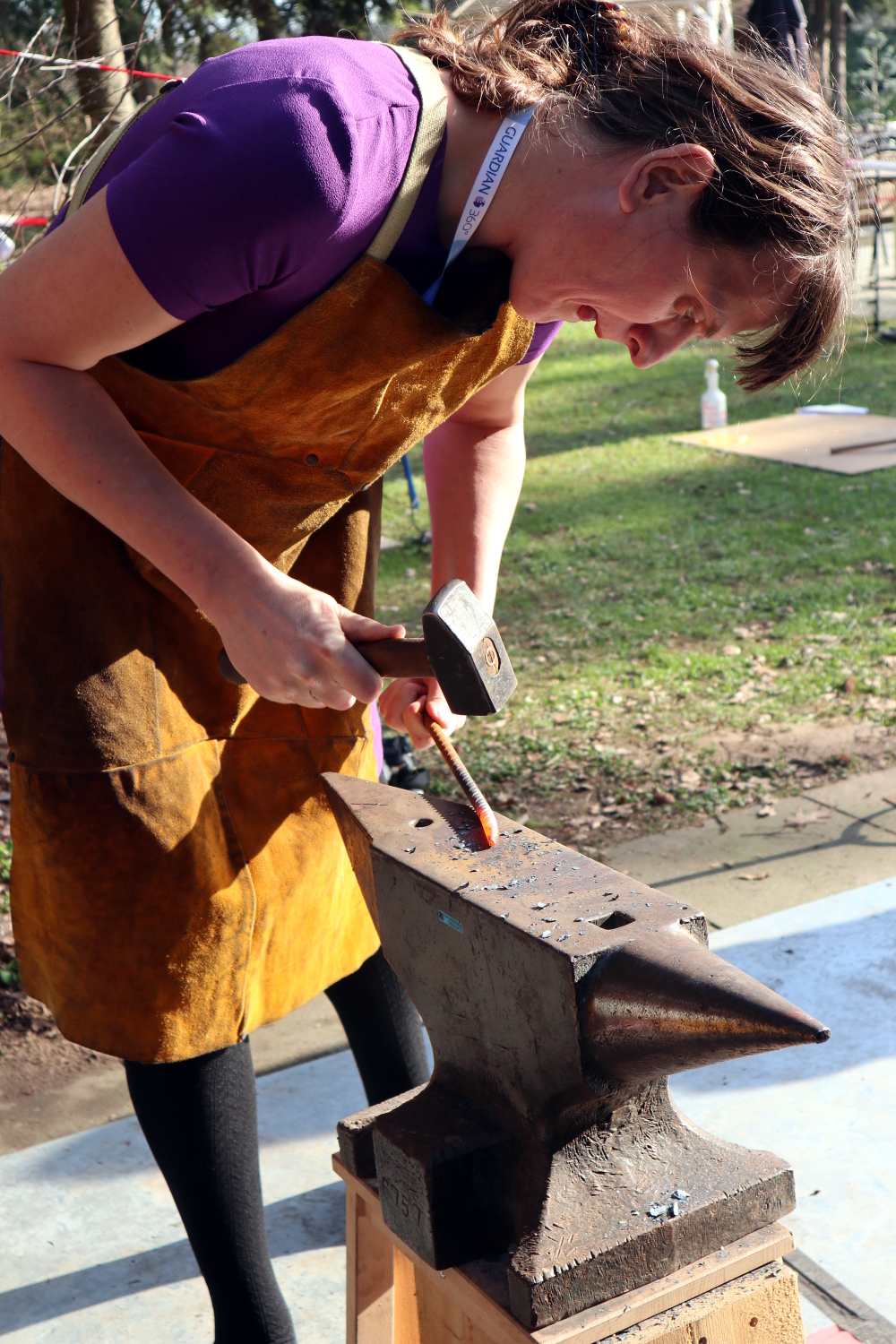
I had an unexpected experience a few days ago at the Hacker Hotel weekend hacker camp in the Netherlands. At the side of the hotel our friends at RevSpace in The Hague had set up a portable forge. There was the evocative coal fire smell of burning coke from the hearth, an anvil, and the sound of hammering. This is intensely familiar to me, because I grew up around it. He may be retired now, but my dad is a blacksmith whose work lay mostly in high-end architectural ironwork.
Working the RevSpace forge at Hacker Hotel, in not the most appropriate clothing for the job.
The trouble is, despite all that upbringing, I don’t consider myself to be a blacksmith. Sure, I am very familiar with forge work and can bash metal with the best of them, but I know blacksmiths. I can’t do everything my dad could, and there are people we’d encounter who are artists with metal. They can bend and shape it to their will in the way I can mould words or casually solder a tiny surface-mount component, and produce beautiful things in doing so. My enthusiastic metal-bashing may bear the mark of some experience at the anvil but I am not one of them.
It was a bit of a surprise then to see the RevSpace forge, and I found myself borrowing a blacksmith’s apron to protect my smart officewear and grabbing a bit of rebar. I set to and made a pretty simple standard of the dilletante blacksmith, a poker with a ring on one end. Hammer one end of the rebar down to a point, square off the other end for just over 3 times the diameter of the ring, then bend a right angle and form the ring on the pointy end of the anvil. Ten minutes or so of fun in the Dutch sunshine. Working a forge unexpectedly brought with it a bit of a revelation. I may not be a smith of a high standard, but I have a set of skills by virtue of my upbringing that I had to some extent ignored.
Where others might have put effort into learning them, they’re things I just know. It had perhaps never occurred to me that maybe all my friends in this community didn’t learn how to do this by hanging round the forge next to the house they grew up in. If I have this knowledge merely by virtue of my upbringing, perhaps I should share some of it in a series of articles for those in our community who’ve always fancied a go at a forge but have no idea where to start.