
Getting The Lead Out Of Lithium Battery Recycling

When that fateful morning comes that your car no longer roars to life with a quick twist of the key, but rather groans its displeasure at the sad state of your ride’s electrical system, your course is clear: you need a new battery. Whether you do it yourself or – perish the thought – farm out the job to someone else, the end result is the same. You get a spanking new lead-acid battery, and the old one is whisked away to be ground up and turned into a new battery in a nearly perfect closed loop system.

Contrast this to what happens to the battery in your laptop when it finally gives up the ghost. Some of us will pop the pack open, find the likely one bad cell, and either fix the pack or repurpose the good cells. But most dead lithium-based battery packs are dropped in the regular trash, or placed in blue recycling bins with the best of intentions but generally end up in the landfill anyway.

Why the difference between lead and lithium batteries? What about these two seemingly similar technologies dictates why one battery can have 98% of its material recycled, while the other is cheaper to just toss? And what are the implications down the road, when battery packs from electric vehicles start to enter the waste stream in bulk?

Continue reading “Getting The Lead Out Of Lithium Battery Recycling”

The Bad Old Days Of Telephone Answering Machines

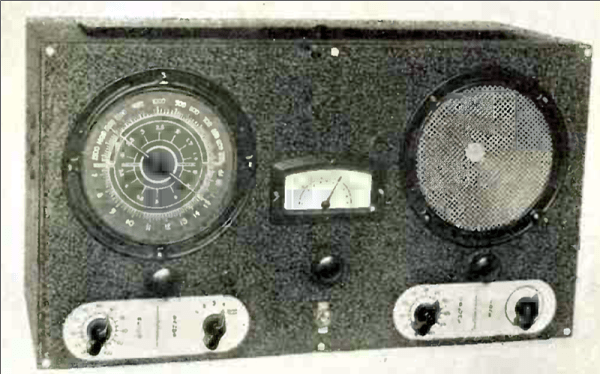
Telephone answering machines were almost a fad. They were hindered for years by not being allowed to connect to the phone lines. Then a mix of cell phones and the phone company offering voicemail made the machines all but obsolete. Unless you are really young, you probably had one at some point though. Some had digital outgoing messages and a tape to record. Some had two tapes. But did you ever have one that didn’t connect to the phone line at all? Remember, there was a time when they couldn’t. My family had one of these growing up and after doing enough research to find it in an old catalog, I decided you might like to know how it really worked.

Even if you grew up in the 1960s and 1970s, it is hard to imagine how little technology there was in an average person’s home at that time. You probably had one TV and one wired telephone. You probably had a radio or two and maybe even a record or tape player. If you were very fancy, you had a big piece of furniture that had a TV, a turntable, a radio, and a tape player in it. No cell phones, no computers, no digital assistant, and appliances were electro-mechanical and didn’t have displays. So when you saw a new piece of tech — especially if you were a kid who didn’t know what a hacker was, but still wanted to be one — it made an impression.

I still remember the first time I even saw a tape recorder. I was amazed! But a tape recorder is a far cry from a telephone answering machine.

A Bit of Background

My Dad always had a regular job and his side business. He had a lot of different side businesses at one time or another, but he was always concerned about missing a phone call from a customer. We had two phones: the old wall mount phone with a dial and another desk phone in the “store” (the front room of the house) which also had a dial — we were way too cheap to pay for TouchTone service.

Remember, there was no call waiting and getting a second phone line was out of the question for my frugal parents. So they were always nervous about keeping the phone line clear during the day. But if you had to leave, you might miss a call. What do you do about that?

Continue reading “The Bad Old Days Of Telephone Answering Machines”

Teardown Of USB Fan Reveals Journalists’ Lack Of Opsec

Last month, Singapore hosted a summit between the leaders of North Korea and the United States. Accredited journalists invited to the event were given a press kit containing a bottle of water, various paper goods, and a fan that plugs into a USB port.

Understandably, the computer security crowd on Twitter had a great laugh. You shouldn’t plug random USB devices into a computer, especially if you’re a journalist, especially if you’re in a foreign country, and especially if you’re reporting on the highest profile international summit in recent memory. Doing so is just foolhardy.

This is not a story about a USB fan, the teardown thereof, or of spy agencies around the world hacking journalists’ computers. This a story of the need for higher awareness on what we plug into our computers. In this case nothing came of it — the majority of USB devices are merely that and nothing more. One of the fans was recently torn down (PDF) and the data lines are not even connected. (I’ll dive into that later on in this article). But the anecdote provides an opportunity to talk about USB security and how the compulsion to plug every USB device into a computer should be interrupted by a few seconds of thoughtfulness first.

Continue reading “Teardown Of USB Fan Reveals Journalists’ Lack Of Opsec”

Profiles In Science: Jack Kilby And The Integrated Circuit

Sixty years ago this month, an unassuming but gifted engineer sitting in a lonely lab at Texas Instruments penned a few lines in his notebook about his ideas for building complete circuits on a single slab of semiconductor. He had no way of knowing if his idea would even work; the idea that it would become one of the key technologies of the 20th century that would rapidly change everything about the world would have seemed like a fantasy to him.

We’ve covered the story of how the integrated circuit came to be, and the ensuing patent battle that would eventually award priority to someone else. But we’ve never taken a close look at the quiet man in the quiet lab who actually thought it up: Jack Kilby.

Continue reading “Profiles In Science: Jack Kilby And The Integrated Circuit”

Hackaday guide to Lathes

The Machinists’ Mantra: Level Thy Lathe

Let’s say you’ve gone and bought yourself a sweet sweet metal lathe. Maybe it’s one of the new price-conscious Asian models, or maybe it’s a lovely old cast iron beast that you found behind a foreclosed machine shop. You followed all the advice for setting it up, and now you’re ready to make chips, right? Well, not so fast. Unlike other big power tools, such as band saws or whatever people use to modify dead trees, machine tools need to be properly level. Not, “Hurr hurr my carpenter’s level says the bubble is in the middle”, but like really level.

This is especially true for lathes, but leveling is actually a proxy for something else. What you’re really doing is getting the entire machine in one plane. Leveling is a primitive way of removing twist from the structure. It may not seem like a huge piece of cast iron could possibly twist, but at very small scales it does! Everything is a spring, and imperceptible twist in the machine will show up as your lathe turning a couple thousandths of taper (cone) when it should be making perfect cylinders. All this is to say, before making chips, level your lathe. Let me show you the way. Continue reading “The Machinists’ Mantra: Level Thy Lathe”

Rocket Bullets: The Flame And Fizzle Of The Gyrojet

In the 1950’s and 60’s, the world had rocket fever. Humankind was taking its first steps into space and had sights on the moon. Kids could build rockets at the kitchen table and launch them in the schoolyard. On the darker side, the arms race was well underway with the US and USSR trying to close the fictional missile gap.

All around the world, engineers were trying to do new things with rockets. Among these were Robert Mainhardt and Arthur T. Biehl, who thought rockets could be useful as small arms. Together they formed MBA (short for Mainhardt and Biehl Associates), with an eye toward future weapons – – specifically rocket bullets.

Continue reading “Rocket Bullets: The Flame And Fizzle Of The Gyrojet”

Open Source DIY Printers Are Alive And Well: What We Saw At ERRF 18

If you follow the desktop 3D printer market, it probably won’t surprise you to hear that nearly every 3D printer on display at the inaugural East Coast RepRap Festival (ERRF) was made in China. Even Printrbot CEO Brook Drumm had to admit that this was the year his company may finally bite the bullet and begin selling a branded and customized printer built overseas.

When you can get a decent (but let’s be clear, not great) 3D printer for $200 USD, it’s no surprise that American and European manufacturers are having a hard time staying competitive. But not everyone is seduced by low-cost printers. They know they could buy a decent printer for a couple hundred bucks, but for them that’s not the point. Some hackers are just as (if not more) interested in designing and building the machines than they are churning out little plastic boats with the finished product.

Luckily for us, these are also the type of folks who document their builds and make all their collected information and design files available for others under an open source license. Such builders exemplify the true spirit of the RepRap movement, and we’re happy to report that in a sea of imported printers, there were several interesting home built open source printers.

Whether you want to build your own copy of one of these machines, or simply get inspired by some of the ideas their creators had, these machines are physical proof that just because you can order a cheap 3D printer on eBay right now doesn’t mean you have to.

Continue reading “Open Source DIY Printers Are Alive And Well: What We Saw At ERRF 18”