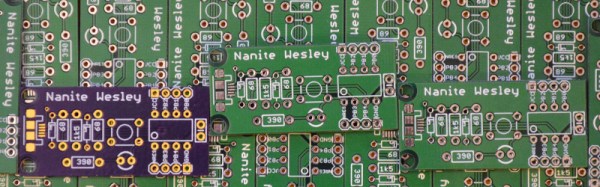
A How-To In Homebrew Design, Fab, And Assembly With Structural Framing Systems

At this point, the internet is crawling with butt-kicking homebrew 3D printers made with extruded profiles, but it’s easy to underestimate the difficulty in getting there. Sure, most vendors sell a suite of interlocking connectors, but how well do these structural framing systems actually fare when put to the task of handling a build with sub-millimeter tolerances?

I’ve been playing around with these parts for about two years. What I’ve found is that, yes, precise and accurate results are possible. Nevertheless, those results came to me after I failed and–dry, rinse, repeat–failed again! Only after I understood the limits of both the materials and assembly processes was I able to deliver square, dimensionally accurate gantries that could carry a laser beam around a half-square-meter workbed. That said, I wrote a quick guide to taming these beasts. Who are they? What flavors do they come in? How do we achieve those precision results? Dear reader, read on.

Continue reading “A How-To In Homebrew Design, Fab, And Assembly With Structural Framing Systems”
Set Your Clocks To Decimal Time

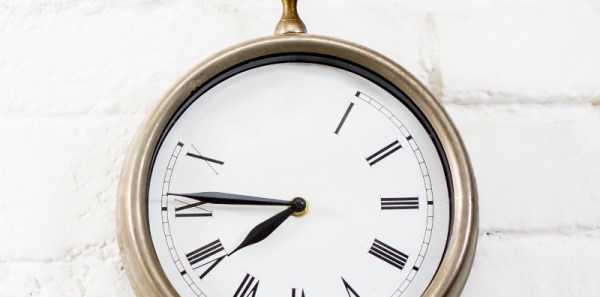
Many stop lights at street intersections display a countdown of the remaining seconds before the light changes. If you’re like me, you count this time in your head and then check how in sync you are. But did you know that if the French had their way back in the 1890s when they tried to introduce decimal time, you’d be counting to a different beat? Did you know the Chinese have used decimal time for millennia? And did you know that you may have unknowingly used it already if you’ve programmed in Linux? Read on to see what decimal time is along with the answers to these questions.

Continue reading “Set Your Clocks To Decimal Time”

Compiling A $22 Logic Analyzer

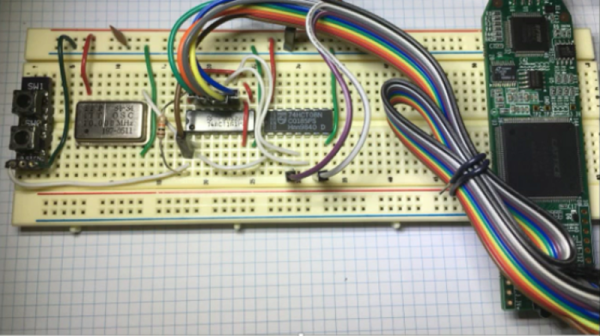
On my way to this year’s Hackaday SuperConference I saw an article on EE Times about someone taking the $22 Lattice iCEstick and turning it into a logic analyzer complete with a Python app to display the waveforms. This jumped out as pretty cool to me given that there really isn’t a ton of RAM on the stick, basically none that isn’t contained in the FPGA itself.

[Jenny List] has also written about the this application as created by [Kevin Hubbard] of Black Mesa Labs and [Al Williams] has a great set of posts about using this same $22 evaluation board doing ground up Verilog design using open source tools. Even if you don’t end up using the stick as a logic analyzer over the long haul, it’ll be very easy to find many other projects where you can recompile to invent a new purpose for it.

Continue reading “Compiling A $22 Logic Analyzer”

Ask Hackaday: Dude, Where’s My MOSFET?

(Bipolar Junction) Transistors versus MOSFETs: both have their obvious niches. FETs are great for relatively high power applications because they have such a low on-resistance, but transistors are often easier to drive from low voltage microcontrollers because all they require is a current. It’s uncanny, though, how often we find ourselves in the middle between these extremes. What we’d really love is a part that has the virtues of both.

The ask in today’s Ask Hackaday is for your favorite part that fills a particular gap: a MOSFET device that’s able to move a handful of amps of low-voltage current without losing too much to heat, that is still drivable from a 3.3 V microcontroller, with bonus points for PWM ability at a frequency above human hearing. Imagine driving a moderately robust small DC robot motor forwards with a microcontroller, all running on a LiPo — a simple application that doesn’t need a full motor driver IC, but requires a high-efficiency, moderate current, and low-voltage-logic compatible transistor. If you’ve been here and done that, what did you use?

Continue reading “Ask Hackaday: Dude, Where’s My MOSFET?”

My Beef With Ham Radio

My amateur radio journey began back in the mid-1970s. I was about 12 at the time, with an interest in electronics that baffled my parents. With little to guide me and fear for my life as I routinely explored the innards of the TVs and radios in the house, they turned to the kindly older gentleman across the street from us, Mr. Brown. He had the traditional calling card of the suburban ham — a gigantic beam antenna on a 60′ mast in the backyard – so they figured he could act as a mentor to me.

Mr. Brown taught me a lot about electronics, and very nearly got me far enough along to take the test for my Novice class license. But I lost interest, probably because I was an adolescent male and didn’t figure a ham ticket would improve my chances with the young ladies. My ham ambitions remained well below the surface as life happened over the next 40 or so years. But as my circumstances changed, the idea of working the airwaves resurfaced, and in 2015 I finally took the plunge and earned my General class license.

The next part of my ham story is all-too-familiar these days: I haven’t done a damn thing with my license. Oh, sure, I bought a couple of Baofeng and Wouxun handy-talkies and lurked on the local repeaters. I even bought a good, solid HF rig and built some antennas, but I’ve made a grand total of one QSO — a brief chat with a ham in Texas from my old home in Connecticut on the 10-meter band. That’s it.

Continue reading “My Beef With Ham Radio”

The Many Uses Of The Neon Lamp

Neon lights are that kind of nostalgic item that everybody seems to love. The neon lamp is a type of gas discharge lamp, they generate light when an electrical discharge travels through an ionized gas, or plasma. When the voltage between the electrodes exceeds certain threshold, the gas ionizes and begins conducting electricity. The basic process that generates light is the return of the ions to the ground energy state, with the emission of a photon of light. The light color depends on the emission spectra of the atoms in the gas, and also  on the gas pressure, among other variables.  Gas discharge lamps can be classified by the pressure of the gas:

  • Low pressure: includes the neon lamp, fluorescent lamps and low pressure sodium lamps.
  • High pressure: such as the metal halide, high pressure sodium and mercury vapor lamps.

Another classification comes from the heating method of the cathode:

  • Hot cathode lamps: the electric arc between the electrodes is created via thermionic emission, where electrons are expelled from the electrodes because of the high temperature.
  • Cold cathode lamps: In these, the electric arc results from the high voltage applied between the electrons, that ionizes the gas and conduction can take place.

High intensity lamps are another type of gas discharge lamp where a high power arc is formed between tungsten electrodes. Power levels of several kilowatts can be easily produced this type of lamp. Of course we can’t forget to mention nixie tubes, which are a type of cold cathode neon lamp, popular for building retro clocks. Fortunately, they are now in production again.

Continue reading “The Many Uses Of The Neon Lamp”

Creating A PCB In Everything: KiCad, Part 2

This is the continuation of a series where I create a PCB in every software suite imaginable. Last week, I took a look at KiCad, made the schematic representation for a component, and made a schematic for the standard reference PCB I’ve been using for these tutorials. Now it’s time to take that schematic, assign footprints to parts, and design a circuit board.

Continue reading “Creating A PCB In Everything: KiCad, Part 2”