Military officials and civilian security researchers have been warning us for years: cyberattacks are becoming a very real part of modern warfare. Far from being limited to military targets, cyberattacks can take out everything from vital public infrastructure to commercial and industrial operations, too.
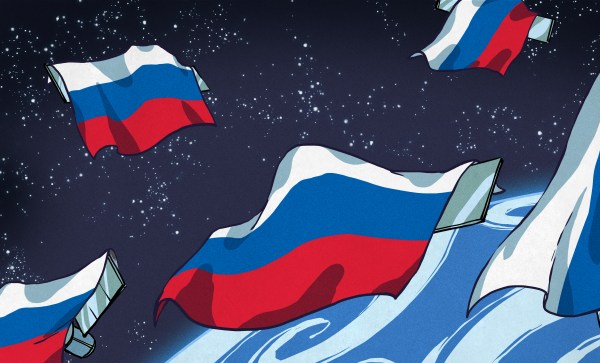
In the early hours of February 24, as the Russian invasion force began raining missiles on Ukrainian cities, another attack was in progress in the digital realm. Suddenly, satellite terminals across Europe were going offline, with many suffering permanent damage from the attack.
Details remain hazy, but researchers and military analysts have pieced together a picture of what happened that night. The Great Euro Sat Hack prove to be the latest example of how vulnerable our digital infrastructure can be in wartime.
Stand by the shore and watch the waves roll in, and you’ll notice that most come in at roughly the same size. There’s a little variation, but the overwhelming majority don’t stand out from the crowd. On all but the stormiest of days, they have an almost soothing regularity about them.
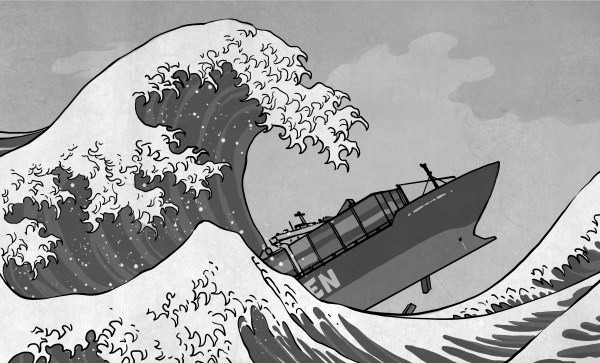
Every so often though, out on the high seas, a rogue wave comes along. These abnormally large waves can strike with surprise, and are dangerous to even the largest of ships. Research is ongoing as to what creates these waves, and how they might be identified and tracked ahead of time.
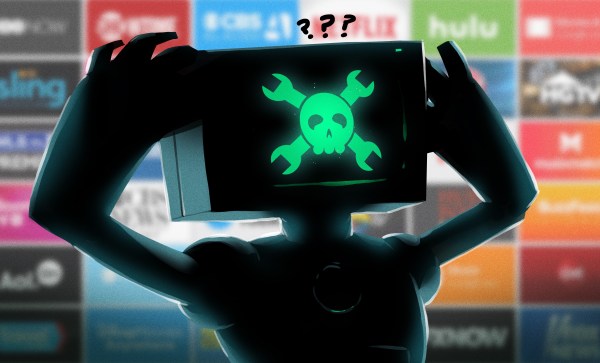
The rise of streaming services on the Internet was a revolutionary shift when it came to the world of media. No more would content be pumped in to homes in a one-way fashion, broadcast by major conglomerates and government-run organizations. Instead, individuals would be free to hunt for content suiting their own desires on an all-you-can-watch basis.
It’s led to a paradigm shift in the way we consume media. However, it’s also led to immense frustration thanks to the overwhelming amount of content on offer. Let’s take a look at why that is, and some creative ways you can get around the problem.
The Paradox of Choice
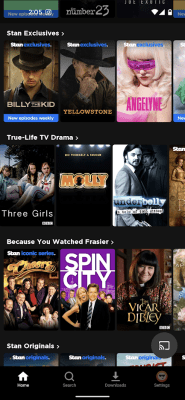
Many find the masses of content on streaming services to be overwhelming to choose from. Credit: author screenshot
Traditionally, when it came to media, there were two major arms of delivery: broadcast, and home media. One might listen to the radio, or flick on the TV, or alternatively, spin up a record, or select a movie to watch on tape. If none of those options sufficed, one might take a walk down to the local video store to rent something more appealing.
Fundamentally, it was an era in which choices were limited. There were a handful of TV stations to choose from, and if nothing good was on, you could go as far as finding something watchable on tape or going without. Many will remember afternoons and evenings spent watching reruns or a Friday night movie that had been on a million times before. Some shows went as far as becoming legends for their seemingly endless replay, from The Simpsons to M*A*S*H.
As the Internet grew, though, the game started to change. Torrent websites and streaming services came along, offering up the sum total of the world’s cultural output for free, or for a nominal cost for those averse to piracy. Suddenly when it came to choosing a movie to watch, one wasn’t limited to the five or so films on at the local cinema, nor what was left on the shelves at the local video rental. Instead, virtually any movie, from the invention of the format, could be yours to watch at a moment’s notice.
With so many options on the table, many of us find it harder to choose. It’s an idea popularly known as the Paradox of Choice, a term popularized by US psychologist Barry Schwartz in 2004. When our options are limited to a select few, choice is easy. They can quickly be compared and ranked and an ideal option chosen.
Add thousands of choices to the pile, and the job escalates in complexity to the point of becoming overwhelming. With so many different choices to contrast and compare, finding the mythical right choice becomes practically impossible. Continue reading “The Joy Of Broadcast Media Vs. The Paradox Of Choice”→
Bulk material is stuff handled ‘in bulk’. One LEGO piece is a brick but 1,000 poured into a bag is bulk material. Corn starch, sand, flour, powder-coat powder, gravel, cat food, Cap’n Crunch, coins, screws, Styrofoam beads, lead shot, and gummy worms are bulk materials.
Applications abound where you need to move stuff in bulk. Selective sintering 3D printers, animal feeders, DIY injection molders, toner based PCB makers, home powder coating, automatic LEGO/domino/whatever sorters or assemblers, automated gardeners, airsoft accessories – handling bulk material is part of hacking. College science classes cover solids and liquids, but rarely bulk materials.
Most hackers just pray it works and tap the bin when it doesn’t. Industry does better, but the slang term “bin rash”, the long term result of tapping a 300 ton bin with sledgehammers (video), shows they don’t get it right all the time either. At the same time, it’s a fun area you can experiment with using kitchen items. So come along with us for a short series on the basics of bulk material handling. Continue reading “Handling Bulk Material: Why Does My Cat Food Get Stuck?”→
Want your next project to trash talk? Dynamically rewrite boring log messages as sci-fi technobabble? Happily (or grudgingly) answer questions? Doing that sort of thing and more can be done with OpenAI’s GPT-3, a natural language prediction model with an API that is probably a lot easier to use than you might think.
In fact, if you have basic Python coding skills, or even just the ability to craft a curl statement, you have just about everything you need to add this ability to your next project. It’s not free in the long run, although initial use is free on signup, but for personal projects the costs will be very small.
Basic Concepts
OpenAI has an API that provides access to GPT-3, a machine learning model with the ability to perform just about any task that involves understanding or generating natural-sounding language.
OpenAI provides some excellent documentation as well as a web tool through which one can experiment interactively. First, however, one must create an account and receive an API key. After that is done, the doors are open.
Creating an account also gives one a number of free credits that can be used to experiment with ideas. Once the free trial is used up or expires, using the API will cost money. How much? Not a lot, frankly. Everything sent to (and received from) the API is broken into tokens, and pricing is from $0.0008 to $0.06 per thousand tokens. A thousand tokens is roughly 750 words, so small projects are really not a big financial commitment. My free trial came with 18 USD of credits, of which I have so far barely managed to spend 5%.
Let’s take a closer look at how it works, and what can be done with it!
Last last month, a post from the relatively obscure Good e-Reader claimed that Amazon would finally allow the Kindle to read EPUB files. The story was picked up by all the major tech sites, and for a time, there was much rejoicing. After all, it was a feature that owners have been asking for since the Kindle was first released in 2007. But rather than supporting the open eBook format, Amazon had always insisted in coming up with their own proprietary formats to use on their readers. Accordingly, many users have turned to third party programs which can reliably convert their personal libraries over to whatever Amazon format their particular Kindle is most compatible with.
Native support for EPUB would make using the Kindle a lot less of a hassle for many folks, but alas, it was not to be. It wasn’t long before the original post was updated to clarify that Amazon had simply added support for EPUB to their Send to Kindle service. Granted this is still an improvement, as it represents a relatively low-effort way to get the open format files on your personal device; but in sending the files through the service they would be converted to Amazon’s KF8/AZW3 format, the result of which may not always be what you expected. At the same time the Send to Kindledocumentation noted that support for AZW and MOBI files would be removed later on this year, as the older formats weren’t compatible with all the features of the latest Kindle models.
If you think this is a lot of unnecessary confusion just to get plain-text files to display on the world’s most popular ereader, you aren’t alone. Users shouldn’t have to wade through an alphabet soup of oddball file formats when there’s already an accepted industry standard in EPUB. But given that it’s the reality when using one of Amazon’s readers, this seems a good a time as any for a brief rundown of the different ebook formats, and a look at how we got into this mess in the first place.
On October 23rd of 2001, the first Apple iPod was launched. It wasn’t the first Personal Media Player (PMP), but as with many things Apple the iPod would go on to provide the benchmark for what a PMP should do, as well as what they should look like. While few today remember the PMP trailblazers like Diamond’s Rio devices, it’s hard to find anyone who doesn’t know what an ‘iPod’ is.
Even as Microsoft, Sony and others tried to steal the PMP crown, the iPod remained the irrefutable market leader, all the while gaining more and more features such as video playback and a touch display. Yet despite this success, in 2017 Apple discontinued its audio-only iPods (Nano and Shuffle), and as of May 10th, 2022, the Apple iPod Touch was discontinued. This marks the end of Apple’s foray into the PMP market, and makes one wonder whether the PMP market of the late 90s is gone, or maybe just has transformed into something else.
After all, with everyone and their pet hamster having a smartphone nowadays, what need is there for a portable device that can ‘only’ play back audio and perhaps video?