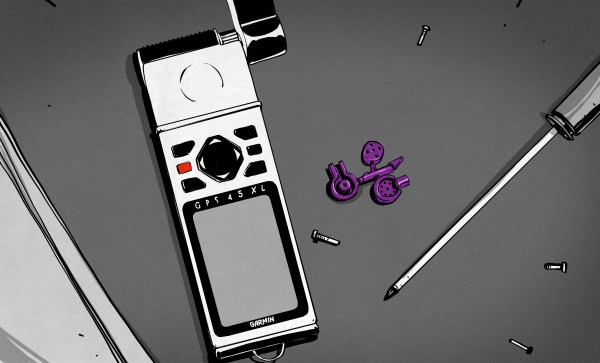
Video: Exploring The Abandoned Birthplace Of The 6502 And Commodore 64

I miss my friend Dave DiOrio. He was a chip designer in the 1980’s, which made him one of the true wizards back then. We met my first day when I started at Commodore Business Machines, though my paycheck said MOS Technology on it.

MOS Technology was the birthplace of the venerable 6502 microprocessor, the VIC video chip, and the SID sound chip to name the really famous ones. It also brought us the TED Text Display chip, a whole boatload of Amiga chips, and several other chips that almost did what we wanted them to do.

I worked with magicians whose stock and trade were comprised of half-part quantum tunneling effect and half-part straight-up logic implementation. These magicians weren’t bound by the number of pins available for TTL logic, not like us lowly hardware engineers who had to string 14 and 16 pin chips together to do any real lifting.

Below the spartan offices where the designs were drawn lived the dragon otherwise known as a chip fab, short for integrated circuit fabrication plant. This beast ate sand and made wafers; slices of almost pure silicon in crystalline form with all kinds of intricate things craftily grown on top of them.

Memory Lane: Touring the Abandoned MOS Headquarters

MOS Technology was started in 1969 by Allen Bradley but only became the MOS that I think of when I talk about the good old days when Chuck Peddle and a bunch of cohorts from Motorola, including Bill Mensch, swept in and produced the 6502 microprocessor, which resembled a particular Motorola processor quite a bit, in fact a lot. Lawsuits followed.

Meanwhile the 6502 was taking over several industries as the go-to processor for everything from medical equipment to microwave ovens to home computers. It was while designing home computers that I met Dave while standing above a chip fab. I can still remember the smell of that dragon farting below our feet… its an understatement to say I miss those times.

A couple of years ago I had a chance to return to the old stomping ground as it were, and set foot (legally) inside of MOS headquarters in Norristown, PA — which had become CSG (Commodore Semiconductor Group) by the end. The basement was dirty and flooded and yet we found wafers, one from one of the computers I worked on.

The ground floor was dark and quiet, I stood at the dirty glass entrance doors looking out at a drab street and I quickly moved on before I got hit by some sort of self evident metaphor for life that would have been annoying.

The second floor was where our offices had been. The hot press of design deadlines has long since left this space, now all there is to see is the golf course out the window and a little camp fire someone had made. I got to show this video to Dave, including the view looking out his old office window, and we both smiled at the thought that it was now 35 years later.

Dave has since passed away, the world has one less wizard and as the video shows, the dragon has long since gone quiet.

A Good, Hard Look At Pre-Stressed Concrete

From the looks of the average driveway or sidewalk, it may seem as though concrete is just destined to crack. But if concrete is so prone to cracking, how are we able to use it in so many high-stress applications like bridges and skyscrapers? This question came about while I was researching 3D-printed thermite for an article. Thermite is often used in welding railroad tracks, and I linked a video of fresh tracks being welded that had concrete ties. I knew I had to find out how concrete could be made to withstand the pressure of freight trains.

On its own, concrete is brittle and has no give to it at all. But that doesn’t mean it isn’t strong. Although concrete has good compression strength, the tensile strength is quite poor. Around the late 1800s, someone thought to fortify spans of concrete with steel reinforcing bars, better known as rebar. Steel can stretch, adding steel bars gives the concrete some tensile strength to go along with its compressive strength. Rebar also allows for thinner slabs and other members.

Rebar Only Goes So Far

Parking blocks are meant to be replaced occasionally. Image via Checkers Safety

Rebar or mesh-enforced concrete is good for things like parking lot blocks and roads, but it still fails before it ought to. In fact, it usually has to crack before the rebar can chip in any of its tensile strength.

In high-stress concrete applications like bridges and skyscrapers, it’s terrifically important to avoid deflection — that’s when a concrete member flexes and bends under load. Deflection can cause the modern glass skins to pop off of skyscrapers, among other problems.

A solid, rigid bridge is much nicer to walk, drive, and bicycle on than a bridge that sways in the breeze. But how do you do make a rigid bridge? One solution is to apply stresses to the concrete before it ever bears the load of cars and trucks or a steady schedule of freight trains.

Pre-stressed concrete is like rebar-enforced concrete, but with the added power of tension baked in. By adding stress to the concrete before it goes into service, deflection will be reduced or perhaps eliminated altogether. With the addition of tensile strength, more of the concrete’s own strength is able to come into play.

Continue reading “A Good, Hard Look At Pre-Stressed Concrete”

All The Workshops, And The SMD Challenge Happening At Hackaday Remoticon

Last week we announced the first fifteen workshops happening at Hackaday Remoticon, November 6-8, 2020. The weekend really is packed full of these hands-on events, and you’re invited to participate from anywhere in the world. Today we’re excited to announce the rest of the workshops, all of which are currently open for registration.

Can we get a few hundred people to show off their soldering skills (or amusing lack of skills) from their own workbench during the event? We think we can, so we’re running the SMD Challenge virtually this year. All of this, plus keynote talks, demos, a show-and-tell, and more make for one wild weekend. Read on!
Continue reading “All The Workshops, And The SMD Challenge Happening At Hackaday Remoticon”

PC Cases Are Still Stuck In The Dark Ages, But We Can Fix This

In the dawning of the IBM PC era, the computer case was a heavy, stout thing. These were industrial machines, built with beefy paddle power switches, and weighing as much as a ton of bricks. Painted in only the ugliest beige, they set the tone for PC design for the next couple of decades.

At the turn of the millennium, the winds of change swept through. The Apple iMac redefined the computer as a hip, cool device, and other manufacturers began to reconsider their product aesthetics. Around the same time, the casemodding scene took off in earnest, with adherents building ever wilder battle stations for internet clout and glory.

With all the development that has gone in the last 40 years of the PC platform, we’ve seen great change and improvement in almost every area. But in building a new rig this past month, this writer discovered there’s one element of the modern PC that’s still trapped in the past.

Continue reading “PC Cases Are Still Stuck In The Dark Ages, But We Can Fix This”

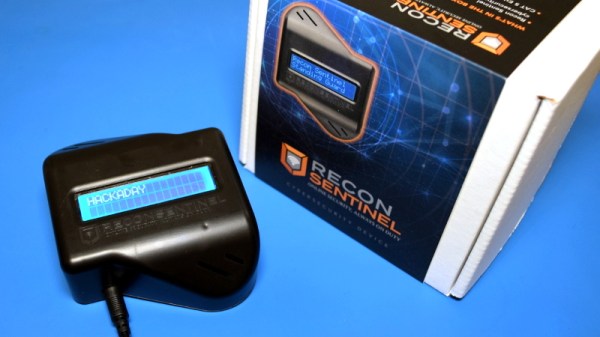
Teardown: BlackBerry Smart Card Reader

Years before Steve Jobs showed off the first iPhone, the BlackBerry was already the must-have accessory for mobile professionals. Back then, nobody was worried about watching movies or playing the latest games on their mobile devices, they just wanted a secure and fast way to send and receive email on the go. For that, the BlackBerry was king.

Fast forward to today, and the company is just a shell of what it once was. They don’t even bother making their own hardware anymore. Over the last several years they’ve opted to partner with a series of increasingly obscure manufacturers to produce a handful of lackluster Android phones so they still have something to sell to their dwindling userbase. Anyone excited about the new 5G BlackBerry being built by Texas start-up OnwardMobility? Did you even know it was in the works before now?

A DoD Common Access Card

But this article isn’t about BlackBerry phones. It’s about something that’s even more irrelevant to consumers: the BlackBerry Smart Card Reader. Technically, this little device isn’t dependent on the phones of the same name, but it makes sense that Research In Motion (which eventually just renamed itself to BlackBerry Limited) would market the gadget under the brand of their most popular product. Though as you might expect, software was available to allow it to work with the BlackBerry phone that you almost certainly owned if you needed a dedicated smart card reader.

For those who might not be aware, a smart card in this context is a two-factor authentication token contained in an ID card. These are used extensively by organizations such as the Department of Defense, where they’re known as Common Access Cards, that require you to insert your ID card into a reader before you can log into a secure computer system. This sleek device was marketed as a portable reader that could connect to computers over USB or Bluetooth. Worn around your neck with the included lanyard, the battery-powered reader allowed the card itself to remain on the user’s body while still being readable by nearby devices.

Civilians will recognize the basic technology from modern “Chip and PIN” debit and credit cards, but we’ve never had to stick one of those into our laptop just to log in. To be sure, the BlackBerry Smart Card Reader was never intended for the average home computer user, it was sold to companies and organizations that had tight security requirements; which just so happened to be the same places that would likely already be using BlackBerry mobile devices.

Of course, times and technology change. These devices once cost $200 apiece and were purchased in vast quantities for distribution to trusted personnel, but are now all but worthless. Even in new and unopened condition, they can be had for as little as $10 USD on eBay. For that price, it’s certainly worth taking a peek inside. Perhaps the hacker community can even find new applications for these once cutting-edge devices.

Continue reading “Teardown: BlackBerry Smart Card Reader”

Dynamic Soaring: 545 MPH RC Planes Have No Motor

The fastest remote-controlled airplane flight ever recorded took place in 2018, with a top speed of 545 miles/hour. That’s 877 km/h, or Mach 0.77!

What was the limiting factor, preventing the pilot-and-designer Spencer Lisenby’s plane from going any faster? The airstream over parts of the wing hitting the sound barrier, and the resulting mini sonic booms wreaking havoc on the aerodynamics. What kind of supercharged jet motor can propel a model plane faster than its wings can carry it? Absolutely none; the fastest RC planes are, surprisingly, gliders.

Dynamic soaring (DS) was first harnessed to propel model planes sometime in the mid 1990s. Since then, an informal international competition among pilots has pushed the state of the art further and further, and in just 20 years the top measured speed has more than tripled. But dynamic soaring is anything but new. Indeed, it’s been possible ever since there has been wind and slopes on the earth. Albatrosses, the long-distance champs of the animal kingdom, have been “DSing” forever, and we’ve known about it for a century.

DS is the highest-tech frontier in model flight, and is full of interesting physical phenomena and engineering challenges. Until now, the planes have all been piloted remotely by people, but reaching new high speeds might require the fast reaction times of onboard silicon, in addition to a new generation of aircraft designs. The “free” speed boost that gliders can get from dynamic soaring could extend the range of unmanned aerial vehicles, when the conditions are right. In short, DS is at a turning point, and things are just about to get very interesting. It’s time you got to know dynamic soaring.

Continue reading “Dynamic Soaring: 545 MPH RC Planes Have No Motor”

Community Testing Suggests Bias In Twitter’s Cropping Algorithm

With social media and online services are now huge parts of daily life to the point that our entire world is being shaped by algorithms. Arcane in their workings, they are responsible for the content we see and the adverts we’re shown. Just as importantly, they decide what is hidden from view as well.

Important: Much of this post discusses the performance of a live website algorithm. Some of the links in this post may not perform as reported if viewed at a later date. 

The initial Zoom problem that brought Twitter’s issues to light.

Recently, [Colin Madland] posted some screenshots of a Zoom meeting to Twitter, pointing out how Zoom’s background detection algorithm had improperly erased the head of a colleague with darker skin. In doing so, [Colin] noticed a strange effect — although the screenshot he submitted shows both of their faces, Twitter would always crop the image to show just his light-skinned face, no matter the image orientation. The Twitter community raced to explore the problem, and the fallout was swift.

Continue reading “Community Testing Suggests Bias In Twitter’s Cropping Algorithm”