On an October night in 1847, a telescope on the roof of the Pacific National Bank building on Nantucket Island was trained onto the deep black sky. At the eyepiece was an accomplished amateur astronomer on the verge of a major discovery — a new comet, one not recorded in any almanac. The comet, which we today know by the dry designator C/1847 T1, is more popularly known as “Miss Mitchell’s Comet,” named after its discoverer, a 29-year old woman named Maria Mitchell. The discovery of the comet would, after a fashion, secure her reputation as a scholar and a scientist, but it was hardly her first success, and it wouldn’t be her last by a long shot.
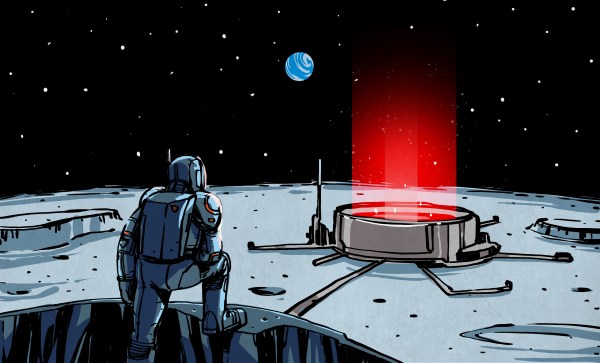
Invariably when we write about living on Mars, some ask why not go to the Moon instead? It’s much closer and has a generous selection of minerals. But its lack of an atmosphere adds to or exacerbates the problems we’d experience on Mars. Here, therefore, is a fun thought experiment about that age-old dream of living on the Moon.
Inhabiting Lava Tubes
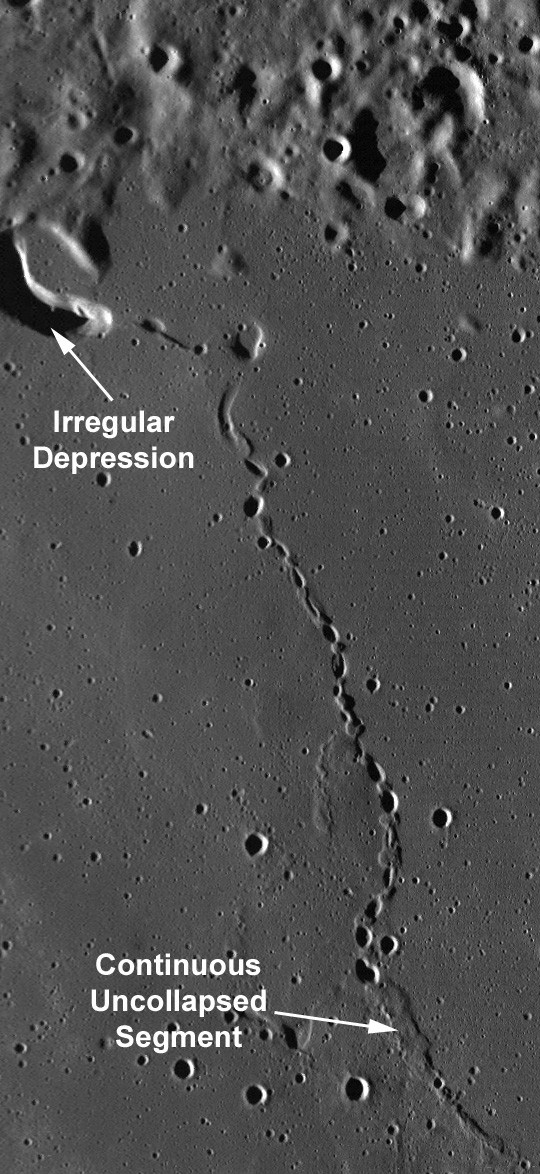
Lava tube with collapsed pits near Gruithuisen crater
The Moon has even less radiation protection than Mars, having practically no atmosphere. The lack of atmosphere also means that more micrometeorites make it to ground level. One way to handle these issues is to bury structures under meters of lunar regolith — loose soil. Another is to build the structures in lava tubes.
A lava tube is a tunnel created by lava. As the lava flows, the outer crust cools, forming a tube for more lava to flow through. After the lava has been exhausted, a tunnel is left behind. Visual evidence on the Moon can be a long bulge, sometimes punctuated by holes where the roof has collapsed, as is shown here of a lava tube northwest from Gruithuisen crater. If the tube is far enough underground, there may be no visible bulge, just a large circular hole in the ground. Some tubes are known to be more than 300 meters (980 feet) in diameter.
Lava tubes as much as 40 meters (130 feet) underground can also provide thermal stability with a temperature of around -20°C (-4°F). Having this stable, relatively warm temperature makes building structures and equipment easier. A single lunar day is on average 29.5 Earth days long, meaning that we’ll get around 2 weeks with sunlight followed by 2 weeks without. During those times the average temperatures on the surface at the equator range from 106°C (224°F) to -183°C (-298°F), which makes it difficult to find materials to withstand that range for those lengths of time.
It was the dawn of the personal computer age, a time when Apple IIs, Tandy TRS-80s, Commodore PETs, the Atari 400 and 800, and others had made significant inroads into schools and people’s homes. But IBM, whose name was synonymous with computers, was nowhere to be seen. And yet within a few years, the IBM PC would be the dominant player.
Those of us who were around at the time cherished one of those early non-IBM computers, and as the IBM PC came out, either respected it, looked down on it, or did both. But now, unless your desktop machine is a Mac, you probably own a computer that owes its basic design to the first IBM PC.
The Slow Moving Elephant
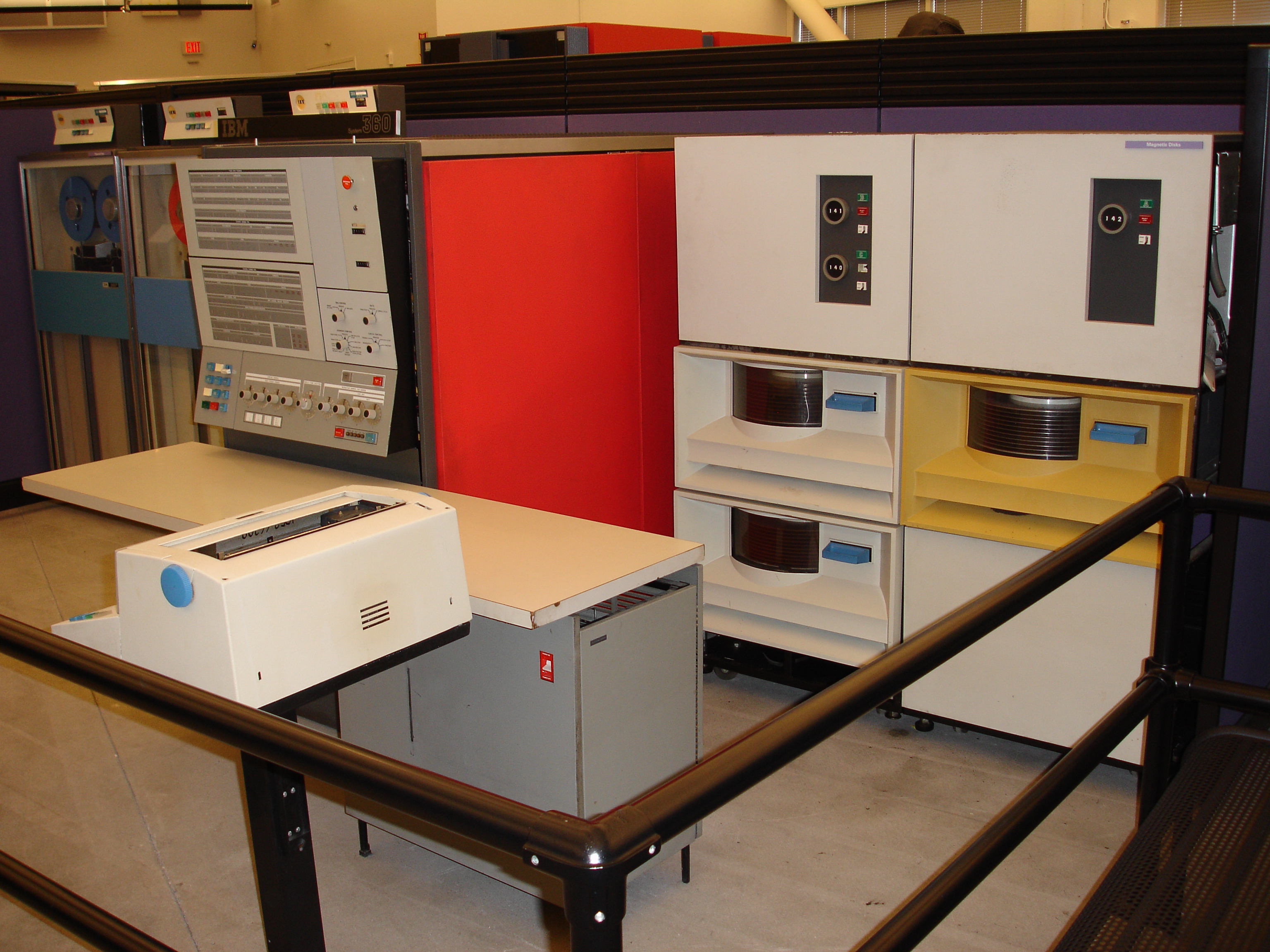
IBM System/360 Model 30 mainframe by Dave Ross CC BY 2.0
In the 1960s and 1970s, the room-filling mainframe was the leading computing platform and the IBM System/360 held a strong position in that field. But sales in 1979 in the personal computer market were $150 million and were projected to increase 40% in 1980. That was enough for IBM to take notice. And they’d have to come up with something fast.
Fast, however, wasn’t something people felt IBM could do. Decisions were made through committees, resulting in such a slow decision process that one employee observed, “that it would take at least nine months to ship an empty box.” And one analyst famously said, “IBM bringing out a personal computer would be like teaching an elephant to tap dance.”
And yet, in just a few short years, IBM PCs dominated the personal computer market and the majority of today’s desktops can trace their design back to the first IBM PC. With even more built-in barriers which we cover below, how did the slow-moving elephant make this happen?
While working on a project recently, I required a capacitor of around 1000 μF and went rummaging through my collection of parts. No luck there. At that point I’d usually go through my collection of junk electronics and computer motherboards, but I had recently gone through and tossed the stuff that had been laying around for as long as I could remember. No matter, I thought. I’ll just head over to RadioShack and…
Now, I have been accused of many things over the years, but “deep” is certainly not one of them. Yet, at this moment I had what could only be described as an existential crisis. There is no RadioShack, not in my state at least. I don’t live in an area that’s blessed with a maker “scene”, so no independent shop or even a hackerspace within reasonable driving distance of me either. I could order it online of course, but everyone’s trying to sell them in bulk and shipping will take a few days at least. A few days? Who knows where my interests will be in a few days. How can I get anything done under these conditions?
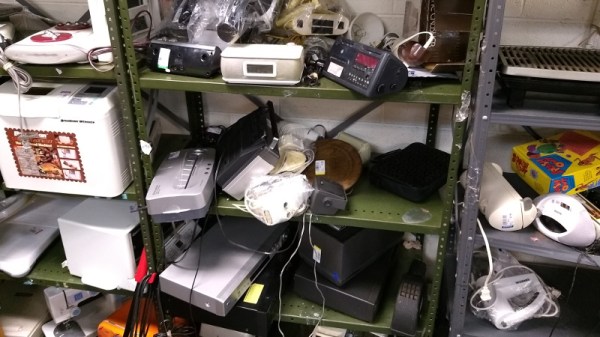
Desperate times call for desperate measures, so I got in the car and took a ride to the only place I knew where I could by electronic components for cheap: Goodwill. Continue reading “My Kingdom For A Capacitor”→
The feature of being easier to write than assembly is often seen as the biggest advantage of high-level programming languages. The other benefit that comes with them is portability. With high-level languages, algorithms can be developed independently from the underlying hardware. This allows software to live on once the hardware becomes obsolete.
The compiler was a concept that was met with resistance when it was first introduced. This was at a time when computers were custom-built machines bearing individual names like ENIAC, UNIVAC and Mark I. A time when the global demand for computers was estimated to be around five units by the CEO of IBM. In this scenario, it took a visionary to foresee a future where the number of computers would outgrow the number of programmers and hardware would evolve so much faster than software that a compiler would make sense. One visionary was [Grace Hopper].
A previous post discussed the creation of the V-2 rocket, the first man-made object to reach space. Designed and built at the Peenemünde Army Research Center during World War II, the V-2 was intended to be a weapon of mass destruction, but ended up being far more effective as a tool of discovery than it ever did on the battlefield. In fact, historians now estimate that more people died during the development and construction of the V-2 than did in the actual attacks carried out with it. But even though it failed to win the war for Germany, it still managed to change the world in another way: as it served as the basic blueprint for all subsequent rockets right up to modern-day vehicles.
But the V-2 wasn’t the only rocket-powered vehicle that the Germans were working on, a whole series of follow-up vehicles were in the design phase when the Allies took Berlin in 1945. Some were weapons, but not all. Pioneers like Walter Dornberger and Wernher von Braun saw that rocketry had more to offer mankind than a new way to deliver warheads to the enemy, and the team at Peenemünde had begun laying the groundwork for a series of rockets that could have put mankind into space years before the Soviets.
Few days are worse than a day when you hear the words, “I’m sorry, you have cancer.” Fear of the unknown, fear of pain, and fear of death all attend the moment when you learn the news, and nothing can prepare you for the shock of learning that your body has betrayed you. It can be difficult to know there’s something growing inside you that shouldn’t be there, and the urge to get it out can be overwhelming.
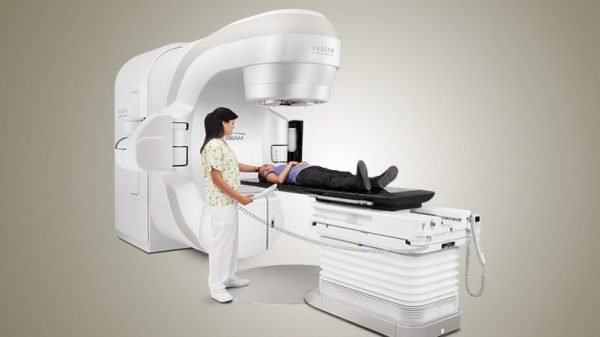
Sometimes there are surgical options, other times not. But eradicating the tumor is not always the job of a surgeon. Up to 60% of cancer patients will be candidates for some sort of radiation therapy, often in concert with surgery and chemotherapy. Radiation therapy can be confusing to some people — after all, doesn’t radiation cause cancer? But modern radiation therapy is a remarkably precise process that can selectively kill tumor cells while leaving normal tissue unharmed, and the machines we’ve built to accomplish the job are fascinating tools that combine biology and engineering to help people deal with a dreaded diagnosis.