PCIe For Hackers: Extracting The Most

So, you now know the basics of approaching PCIe, and perhaps you have a PCIe-related goal in mind. Maybe you want to equip a single-board computer of yours with a bunch of cheap yet powerful PCIe WiFi cards for wardriving, perhaps add a second NVMe SSD to your laptop instead of that Ethernet controller you never use, or maybe, add a full-size GPU to your Raspberry Pi 4 through a nifty adapter. Whatever you want to do – let’s make sure there isn’t an area of PCIe that you aren’t familiar of.

Splitting A PCIe Port
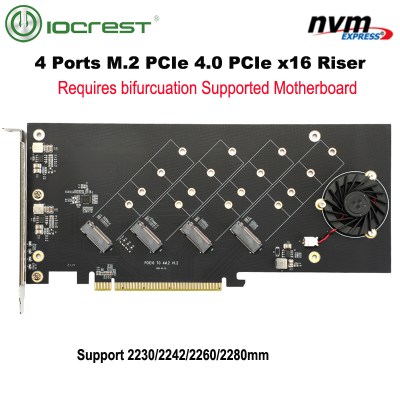
You might have heard the term “bifurcation” if you’ve been around PCIe, especially in mining or PC tinkering communities. This is splitting a PCIe slot into multiple PCIe links, and as you can imagine, it’s quite tasty of a feature for hackers; you don’t need any extra hardware, really, all you need is to add a buffer for REFCLK. See, it’s still needed by every single extra port you get – but you can’t physically just pull the same clock diffpair to all the slots at once, since that will result in stubs and, consequently, signal reflections; a REFCLK buffer chip takes the clock from the host and produces a number of identical copies of the REFCLK signal that you then pull standalone. You might have seen x16 to four NVMe slot cards online – invariably, somewhere in the corner of the card, you can spot the REFCLK buffer chip. In a perfect scenario, this is all you need to get more PCIe out of your PCIe.

Continue reading “PCIe For Hackers: Extracting The Most”

Hackaday Links Column Banner

Hackaday Links: March 26, 2023

Sad news in the tech world this week as Intel co-founder Gordon Moore passed away in Hawaii at the age of 94. Along with Robert Noyce in 1968, Moore founded NM Electronics, the company that would later go on to become Intel Corporation and give the world the first commercially available microprocessor, the 4004, in 1971. The four-bit microprocessor would be joined a few years later by the 8008 and 8080, chips that paved the way for the PC revolution to come. Surprisingly, Moore was not an electrical engineer but a chemist, earning his Ph.D. from the California Institute of Technology in 1954 before his postdoctoral research at the prestigious Applied Physics Lab at Johns Hopkins. He briefly worked alongside Nobel laureate and transistor co-inventor William Shockley before jumping ship with Noyce and others to found Fairchild Semiconductor, which is where he made the observation that integrated circuit component density doubled roughly every two years. This calculation would go on to be known as “Moore’s Law.”

Continue reading “Hackaday Links: March 26, 2023”

Plan To Jam Mobile Phones In Schools Is Madness

Mobile phones in schools. If you’re a teacher, school staffer, or a parent, you’ve likely got six hundred opinions about this very topic, and you will have had six hundred arguments about it this week. In Australia, push has come to shove, and several states have banned the use of mobile phones during school hours entirely. Others are contemplating doing the same.

In the state of New South Wales, the current opposition party has made it clear it will implement a ban if elected. Wildly, the party wants to use mobile phone jamming technology to enforce this ban whether students intend to comply or not. Let’s take a look at how jammers work in theory, and explore why using them in schools would be madness in practice.

Continue reading “Plan To Jam Mobile Phones In Schools Is Madness”

Hackaday Podcast 211: Pocket Sundial, Origami Llama, PCB Spacemouse

This week, Editor-in-Chief Elliot Williams and Contributor Emeritus Kristina Panos chewed the fat about the coolest hacks of the previous week. But first, a bit of news — our Low Power Challenge fizzled out this week, and boy did we have a lot of entries at the last minute. We love to see it though, and we’re going to get judging ASAP.

Don’t forget, this weekend is Hackaday Berlin! Livestreaming for this one may be iffy, but we’ll have the talks up for you eventually, so don’t fret too much if you can’t make it in the flesh this time.

Kristina definitely got What’s That Sound this week, but her answer will of course be bleeped out. Then it’s on to the hacks, beginning with a 6-DoF controller that does everything in interesting ways and a printed shredder that eats like a goat. From there we cover bolt dispensers, coffee grinders with Bluetooth weighing, camera calibration, and a $50 pen plotter that’s definitely a hack. Finally, we discuss the virtues of physicality when it comes to SIM cards and recorded music.

Check out the links below if you want to follow along, and as always, tell us what you think about this episode inĀ  the comments!

And/or download it and listen offline.

Continue reading “Hackaday Podcast 211: Pocket Sundial, Origami Llama, PCB Spacemouse”

This Week In Security: USB Boom! Acropalypse, And A Bitcoin Heist

We’ve covered a lot of sketchy USB devices over the years. And surely you know by now, if you find a USB drive, don’t plug it in to your computer. There’s more that could go wrong than just a malicious executable. We’ve covered creative and destructive ideas here on Hackaday, from creative firmware to capacitors that fry a machine when plugged in. But what happened to a handful of Ecuadorian journalists was quite the surprise. These drives went out with a bang.

That is, they literally exploded. The drives each reportedly contained a pellet of RDX, a popular explosive in use by militaries since the second World War. There have been five of these hyperactive USB devices located so far, and only one actually detonated. It seems that one only managed to trigger half of its RDX payload. Because of this, and the small overall size of a USB drive, the explosion was more comparable to a firecracker than a bomb. Continue reading “This Week In Security: USB Boom! Acropalypse, And A Bitcoin Heist”

PCIe For Hackers: Link Anatomy

Last time, we looked over diffpairs, their basics, routing rules and the notorious tolerances of PCIe when it comes to diffpairs. Now, let’s take a look at the exact signals that make PCIe tick, as well as give you an overview of which sockets you can get PCIe on.

I separate PCIe sockets into two categories – desktop sockets, which are the usual 1x, 16x, or perhaps x4 PCIe sockets we see on desktop motherboards — and mobile sockets: mPCIe and M.2. There are also sockets like ExpressCard that are still found on some older laptops, but they have definitely fallen out of relevance. On mobile, M.2 is the way forward when it comes to PCIe – if you’re interested, I’ve written a short series talking about everything M.2 before.

On these sockets, most signals will be optional and some signals will be socket-specific, but there are some signals required in any PCIe device. Of course, the first group of required signals is the PCIe diffpairs themselves.

Continue reading “PCIe For Hackers: Link Anatomy”

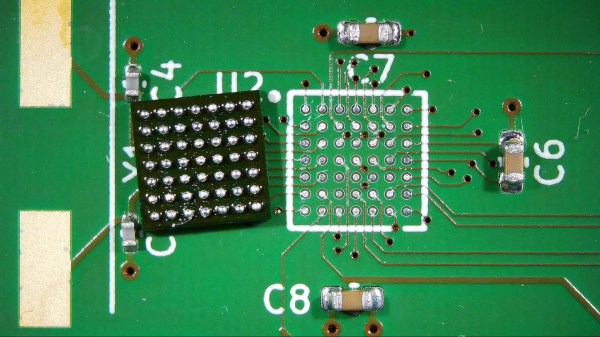
A freshly reballed BGA chip next to a clean PCB footprint

Working With BGAs: Soldering, Reballing, And Rework

In our previous article on Ball Grid Arrays (BGAs), we explored how to design circuit boards and how to route the signals coming out of a BGA package. But designing a board is one thing – soldering those chips onto the board is quite another. If you’ve got some experience with SMD soldering, you’ll find that any SOIC, TQFP or even QFN package can be soldered with a fine-tipped iron and a bit of practice. Not so for BGAs: we’ll need to bring out some specialized tools to solder them correctly. Today, we’ll explore how to get those chips on our board, and how to take them off again, without spending a fortune on equipment.

Tools of the Trade

For large-scale production, whether for BGA-based designs or any other kind of SMD work, reflow ovens are the tool of choice. While you can buy reflow ovens small enough to place in your workshop (or even build them yourself), they will always take up quite a bit of space. Reflow ovens are great for small-scale series production, but not so much for repairs or rework. Continue reading “Working With BGAs: Soldering, Reballing, And Rework”