New Parkinson’s Test Smells Success

Parkinson’s disease affects millions of people all over the world. The degenerative condition causes characteristic tremors, trouble walking, and often comes with complications including dementia, depression, and anxiety.

One of the major challenges around Parkinson’s disease involves diagnosis. There’s no single, commonly-available test that can confirm or rule out the disease. It’s can cause particular frustration as the disease is most treatable in its early stages.

That may soon change, however. One woman identified that she seemingly had the ability to “smell” the disease in those affected, and is now working with scientists to develop a test for the condition.

Follow Your Nose

The human sense of smell, by and large, isn’t particularly impressive. It helps us enjoy the scent of fresh bread baking in an oven, or the aroma of freshly cut grass. However, as a tool for inspecting and learning about the world around us, it really comes up short.

Some of us, though, are more capable in the olfactory department than others. Joy Milne from Perth, Scotland, is one such person. She happened to detected a change in her partner’s characteristic smell, one day, and twelve years later, they were diagnosed with Parkinson’s disease.

The idea that someone could “smell” a difference with people with Parkinson’s disease is an easy one to test. When Milne eventually put the idea together that the different smell she noticed was perhaps related to her husbands condition, she quickly drew the interest of scientists. With the aid of her partner, a former doctor, she teamed up with researchers Dr. Tilo Kunath and Professor Perdita Barran to investigate further. Continue reading “New Parkinson’s Test Smells Success”

Git Intro For Hardware Hackers

Git is a wonderful tool that can multiply your project’s impact, or make your project easier to manage by an order of magnitude. Some of us hackers don’t yet know how to use command-line Git, but a relatable example of why a certain tool would be useful might be a good start. Today, I’d like to give you a Git crash course – showing you why and how to put a KiCad PCB into a Git repository, later to be shared with the world.

KiCad works wonderfully with Git. The schematic and PCB files of KiCad are human-readable, especially when compared to other PCB file formats. KiCad creates different files for different purposes, each of them with a well-defined role, and you can make sense of every file in your project folder. What’s more, you can even modify KiCad files in a text editor! This is exactly the kind of use case that Git fits like a glove.

Not Just For Software Developers

What’s Git about, then? Fundamentally, Git is a tool that helps you keep track of code changes in a project, and share these changes with each other. Intended for Linux kernel development as its first target, this is what it’s been designed for, but it’s flexibility extends far beyond software projects. We hardware hackers can make use of it in a variety of ways – we can store PCB and other design software files, blog articles, project documentation, personal notes, configuration files and whatever else that even vaguely fits the Git modus operandi. Continue reading “Git Intro For Hardware Hackers”

Robotic Surgeons Are Showing Hints Of One Day Outperforming Humans

When it comes to fields that are considered the most complex of human endeavours, the most typically cited are those of rocket science and brain surgery. Indeed, to become a surgeon is to qualify in a complex, ever-changing, and high-performance field, with a pay scale and respect to match.

The tools of surgery have changed over time, with robotic assistants becoming commonplace in recent decades. Now the latest robots are starting to outperform human surgeons in some ways. Let’s look at how that’s been achieved, and what it means for the future of medicine. Continue reading “Robotic Surgeons Are Showing Hints Of One Day Outperforming Humans”

Hackaday Links Column Banner

Hackaday Links: September 11, 2022

Good news out of Mars from the little lunchbox that could — in the seven times that MOXIE has run since it arrived in February 2021, it has reached its target production of six grams of oxygen per hour, which is in line with the output of a modest tree here on Earth. The research team which includes MOXIE engineers report that although the solid oxide electrolysis machine has shown it can produce oxygen at almost any time or day of the Martian scale, they have not shown what MOXIE can do at dawn or dusk, when the temperature changes are substantial, but they say they have ‘an ace up (their) sleeve’ that will let them do that. We can’t wait to see what they mean.

In other, somewhat funnier space news — early last Sunday morning, the ESA’s Solar Orbiter was cruising by Venus as part of a gravity-assist maneuver to get the Orbiter closer to the Sun. Two days before the Orbiter was to reach its closest point to the spacious star, it spat a coronal mass ejection in the general direction of both Venus and the Orbiter (dibs on that band name), as if to say ‘boo’. Fortunately, the spacecraft is designed to withstand such slights, but the same cannot be said for Venus — these events have their way with Venus’ atmosphere, depleting it of gasses.

Continue reading “Hackaday Links: September 11, 2022”

Who Is Responsible For Your Safety?

We recently posted a video where some ingenious metal-shop hackers made a simple jig to create zig-zag oil grooves on the inside of a cylinder, and the comment section went wild. What ensued was a flood of complaints that the video displayed unsafe shop practices, from lack of safety glasses to wearing flip-flops while operating a lathe.

Where the comments went off the rails were people asking Hackaday to remove our discussion of the video, because the commenters thought that we were somehow implicitly encouraging open-toed footwear in the presence of machine tools. We certainly weren’t! We wanted you all to see the clever machining hack, and be inspired to build your own. We figure that you’ve got the safety angle covered.

Now don’t get me wrong – there were safety choices made in the video that I would not personally make. But it also wasn’t my shop and I wasn’t operating the machines. And you know who is ultimately responsible for the safety in my basement shop? Me! And guess who is responsible for safety in your shop.

But of course, none of us know everything about every possible hazard. (Heck, I wrote just that a few weeks ago!) So while we’re sympathetic with the “that’s not safe!” crew, we’re not going to censor inspiring hacks just because something done along the way wasn’t done in the way we would do it. Instead, it’s our job, in the comment section as in Real Life™, to help each other out and share our good safety tips when we can.

You’ll see some crazy stuff in videos, and none of it is to be repeated without thinking. And if you do see something dodgy, by all means point it out, and mention how you would do it better. Turn the negative example around for good, rather than calling for its removal. Use the opportunity to help, rather than hide.

But also remember that when the chips are flying toward your personal eyeballs, it’s up to you to have glasses on. We all do potentially hazardous things all the time, and it’s best to be thinking about the risks and their mitigation. So stay safe out there. Keep on learning and keep on hacking!

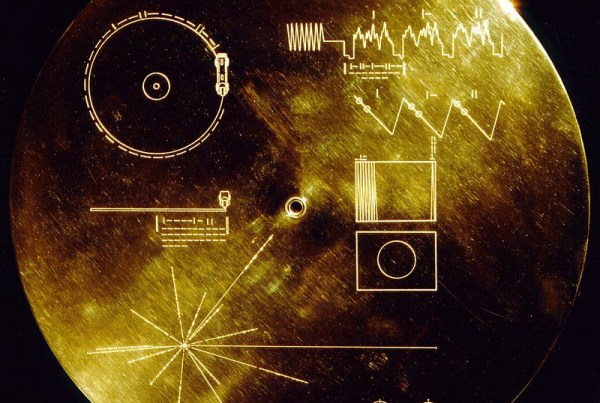
Frank Drake’s Legacy, Or: Are We All Alone In The Universe?

When Frank Drake began his astronomy career in the late 1950s, this was an incredibly exciting time for the field. Humanity was beginning to unlock the secrets of the Universe using ever more powerful radio frequency and optical telescopes, including the tantalizing prospect of space-based telescopes. Amidst the ramping up Space Race between the US and USSR, there was an ever-growing excitement about humankind’s future among the stars.

As concrete plans for landings and colonies on the Moon, Venus and Mars were proposed and put into action, it also brought to the forefront many existing and new questions about humanity’s place in the Universe. During Frank Drake’s 92 years on planet Earth – until his passing on September 2nd of this year – he was one of the driving forces behind the search for extraterrestrial intelligence (SETI), along with other legends like Carl Sagan.

Although to the average person the acronym SETI is most likely to bring to mind popcorn movies about little grey – or green – men, Drake’s Project Ozma, as well as the SETI Institution and the ongoing Breakthrough Listen project are just some of the attempts made by Drake and his colleagues over the decades to answer that one question that may affect the very course of humankind’s future: are we alone in the Universe?

Continue reading “Frank Drake’s Legacy, Or: Are We All Alone In The Universe?”

Hackaday Podcast 184: What Is Art, Bulk Tape Eraser Go Brr, And The Death Of Email

This week, Editor-in-Chief Elliot Williams and Assignments Editor Kristina Panos had a lot of fun discussing the best of the previous week’s hacks in spite of Elliot’s microphone connectivity troubles. News-wise, we busted out the wine and cheese to briefly debate whether a Colorado man should have won an art competition by entering an image created by AI. Afterward, we went around a bit about floppies, which are being outlawed in Japan.

Then it’s on to the What’s That Sound Results Show, but since Elliot can’t find a 14-sided die, he pulled on the Internet for our random number needs. Congratulations to our big winner [D Rex], who will receive one our coveted Hackaday Podcast t-shirts (Ed. note: Heck, I don’t even have one! That’s how special these babies are).

Is the food-safety-of-3D-printing debate over once and for all? It is as far as Elliot’s concerned. You know what else is over? The era of distributed, independent email servers. Bah! We’re not kidding about that last one — and we discuss a lie-detecting app that may or may not prove our innocence.

Finally, we talk active foot cooling, heat barriers for hot shops, and big, strong magnets. What are they for? Fixing floppies, fool!


Direct download.

Check out the links below if you want to follow along, and as always, tell us what you think about this episode in the comments!

Continue reading “Hackaday Podcast 184: What Is Art, Bulk Tape Eraser Go Brr, And The Death Of Email”