Electronics For Aliens

We are surrounded by displays with “millions” of colors and hundreds of pixels per inch. With super “high fidelity” sound producing what we perceive to be realistic replicas of the real world.

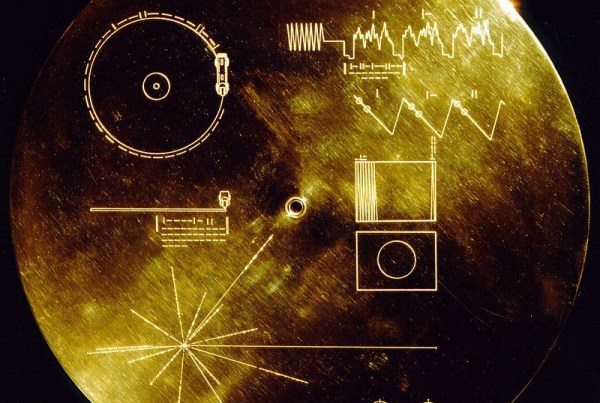
Of course this is not the case, we rarely stop and think how our electronic systems have been crafted around the limitations of human perception. So to explore this issue, in this article we ask the question: “What might an alien think of human technology?”. We will assume a lifeform which senses the world around it much as we do. But has massively improved sensing abilities. In light of these abilities we will dub it the Oculako.

Let’s begin with the now mostly defunct CRT display and see what our hypothetical alien thinks of it. The video below shows a TV screen shot at 10,000 frames per second.

Continue reading “Electronics For Aliens” →

Georgia Tech Pumps Water Through Silicon For Chip Cooling

One of the things that stops electronic devices from going faster is heat. That’s why enthusiasts go as far as using liquid nitrogen to cool CPU chips to maximize their overclocking potential. Researchers at Georgia Tech have been working on cutting fluid channels directly into the back of commercial silicon die (an Altera FPGA, to be exact). The tiny channels measure about 100 micron and are resealed with another layer of silicon. Water is pumped into the channels to cool the device efficiently.

A comparable air-cooled device would operate at about 60 degrees Celsius. With the water cooling channels cut into the die and 20 degree water pumped at 147 ml/minute, the researchers kept the chip operating about less than 24 degrees Celsius.

Continue reading “Georgia Tech Pumps Water Through Silicon For Chip Cooling” →

Deuterium Powered Homes And The Return Of Cold Fusion Hype

We’ve been sent this press release claiming a new kind of fusion reaction that works at small scales using an incredibly exotic fuel material: ultra-dense deuterium. We looked into it with an open mind, and if we’re being kind we’ll conclude that there’s a ten-year long research project being undertaken by [Leif Holmlid], a single scientist whose claims would win him one or two Nobel prizes if any of it were true.

If we drop the kindness and approach it rationally, this doesn’t smell right and can’t be believed until it has been reliably reproduced by someone not associated with the original research. Let’s delve into the claim of Deuterium powered reactions, and circle around on the cold-fusion hype we found so sadly entertaining back in the ’90s.

Continue reading “Deuterium Powered Homes And The Return Of Cold Fusion Hype” →

Sensor Net Makes Life Easier For Rice Farmers

Rice is cultivated all over the world in fields known as rice paddies and it is one of the most maintenance intensive crops to grow. The rice paddy itself requires a large part of that maintenance. It is flooded with water that must be kept at a constant level, just below the height that would keep rice seedlings from growing but high enough to drown any weeds that would compete with the rice stalks for nutrients. This technique is called continuous flooding and a big part of the job of a rice farmer is to inspect the rice paddy every day to make sure the water levels are normal and there are no cracks or holes that could lead to water leakage.

This process is labor intensive, and the technology in use hasn’t changed much over the centuries. Most of the rice farmers in my area are elders with the approximate age of 65-70 years. For these hard working people a little bit of technology can make a big difference in their lives. This is the idea behind TechRice.

Continue reading “Sensor Net Makes Life Easier For Rice Farmers” →

Radial Solenoid Engine Is Undeniably Cool

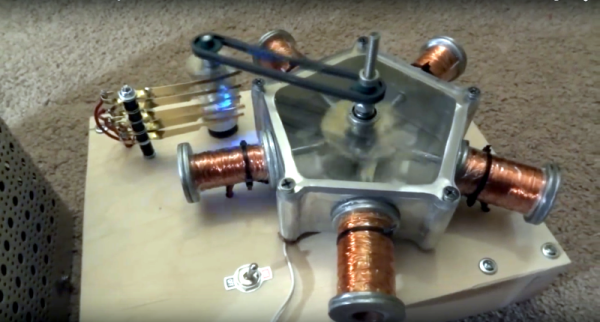
Radial engines are just plain cool – it’s inarguable that any tech that originated with early aviation is inherently awesome. But, what do you do when you want to build a radial engine in your dorm where a combustion engine would be inadvisable? For University of Washington students [Jeffrey Weng] and [Connor Lee] the answer was to power it with solenoids in place of the pistons.

The easiest way to approach a project like this would have been to use a microcontroller. A simple program running on an Arduino could have easily provided the timing to switch power to each solenoid in succession. [Jeffrey Weng] and [Connor Lee], however, took a much more interesting approach by controlling timing via a simple distributor. This works in the same way a spark distributor on a combustion engine would have worked, except it’s actually providing the power to actuate the solenoids instead of providing just an ignition spark.

Also impressive is what they were able to accomplish with such basic tools. Those of us who are lazy and have access to more expensive tools would have just 3D printed or CNC cut most of the parts. Either [Jeffrey Weng] and [Connor Lee] didn’t have access to these, or they wanted to increase their machining street cred, because they created all of the parts with simple tools like a band saw and drill press. We’ve seen some beautiful engine projects before, but what this build lacks in objective beauty it makes up for in ingenuity.

Continue reading “Radial Solenoid Engine Is Undeniably Cool” →

Hackaday SuperConference Call For Proposal

We’ve been keeping pretty quiet about the Hackaday SuperConference, but rest assured a full-blown announcement is on the way soon. For now we need your help getting the word out to presenters. Do you have a favorite hardware designer, hacker, or project? Get to work convincing them to Submit a Talk or Workshop proposal for the Hackaday SuperConference. Of course if you yourself fall into one of these categories, consider this your invitation to submit! Proposals are due October 10th.

The Hackaday SuperConference is the hardware con you’ve been waiting for. The two-day event will be held in San Francisco on November 14th and 15th. It features workshops and talks on hardware creation with topics like hardware engineering, creativity in technical design, product design, and prototyping. The winner of the 2015 Hackaday Prize, Best Product, and runners-up will be announced at the SuperCon.

The 2015 Hackaday Prize is sponsored by:

The Square Inch Project Challenges Your Layout Skills

577901443070423938[alpha_ninja] proves that Hackaday.io is not just about great projects, but about an awesome community. Over this past week [alpha_ninja] has created The Square Inch Project, which is a grass-roots contest. The contest rules are pretty simple: The project PCB must fit in a 1″ x 1″ square. That’s 2.54 cm for those that don’t use freedom units. Smaller than a square inch is fine. If the project has multiple PCBs like a cordwood module, ALL the PCBs must still fit within the 1″ x 1″ square. Hackaday.io users coming up with cool contest ideas and inviting everyone to take a shot at winning? Awesome!

Of course a contest has to have prizes. [Alpha_ninja] has already lined up $100 in gift certificates to OSHPark. Many thanks to [Laen] and the rest of the OSHPark crew for sponsoring this contest. Hackaday loves the idea so we’re also kicking in eight $50 gift certificates to the Hackaday store, as well as four more $25 gift certificates to OSHPark.

Though the contest has been up for less than a week, the square inch project already has some great entries.
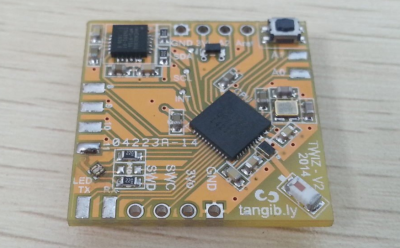
twiz[Drix] has entered Twiz, a 9 degree of freedom Inertial Measurement Unit (IMU) with Bluetooth Low Energy (BLE) connectivity. Twiz senses its environment with a MPU9150 IMU chip. A nRF51822 provides the Bluetooth connection and ARM Cortex-M0 processor. Put all this together, and you’ve got a great way to determine where an object is in space. [Drix] has used Twiz to control everything from holographic projectors to room lights. Contests aren’t new to [Drix], he’s already entered Twiz in the 2015 Hackaday Prize.
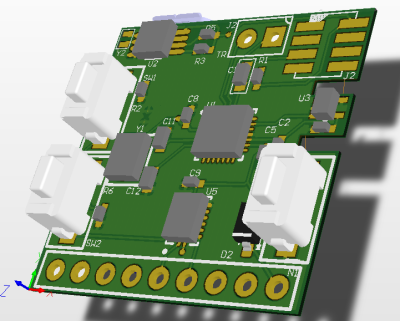
 

numi[WeisTekEng] has entered Micro DIY Lipo retro NumiTron clock. [WeisTekEng]  loves the classic IV-9 Russian numitron tubes. His plan here is to build a numitron clock driven by an ATmega328 microcontroller. The timebase for this clock is also a classic — The Dallas Semiconductor (now Maxim)  DS1307 I2C real-time clock chip. Everything is going to run on a single LiPo cell. Fitting within the project constraints, the board will be only 1″ square. This is [WeisTekEng’s] first big project on Hackaday.io, so we’re happy to see him join the community. He’s also just getting started, so the PCB’s only exist in the virtual word of his EDA software for now. We’re looking forward to reading the numitron clock!
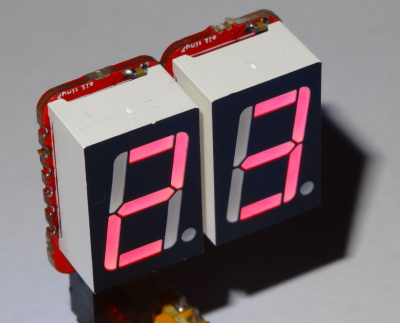
 

tiny7[Al1] has entered tiny7, a 7 segment display which is compatible with Atmel ISP headers. Ever notice those 6 pin headers on the Arduino? That’s the ISP connector, used to program the ATmega328 micro. In many designs these valuable IO pins spend most of their time unused. [Al1] decided to give them a purpose – displaying data! He’s connected a 75HC595 shift register to the SPI pins of the ISP header. Data clocked into the ‘595 is displayed on a 7 segment display. [Al1] designed the boards with castellated connections on the sides. Some careful soldering allows the boards to be daisy chained. Several 7 segment displays to be driven from a single ISP header.

 

nyan[Radomir Dopieralski] is using The Square Inch Project as a learning platform as well. He’s entering Nyan Board, a tiny PCB shaped like everyone’s favorite rainbow pooping cat. [Radomir] is using nyan board to learn how to work with ATtiny microcontrollers. Due to memory constraints, these little controllers can be a bit harder to program than their bigger brothers. [Radomir’s] early goals for Nyan are humble ones – he will be happy to have the cat’s eyes flash while it plays the Nyan Cat tune. Once that task is complete, the RAM and Flash of the ATtiny microcontroller will be his only constraints.

The contest deadline isn’t until November 28, 2015, so there is still plenty of time to enter. If you want to see more of the entrants, check out The Square Inch Project page, or the entrant list. Want to know more? Ask a question on the project page, or drop [Alpha_Ninja] a message!

That’s it for this week’s Hacklet, As always, see you next week. Same hack time, same hack channel, bringing you the best of Hackaday.io!