DIY Bread Slice Paper Goes Against The Grain

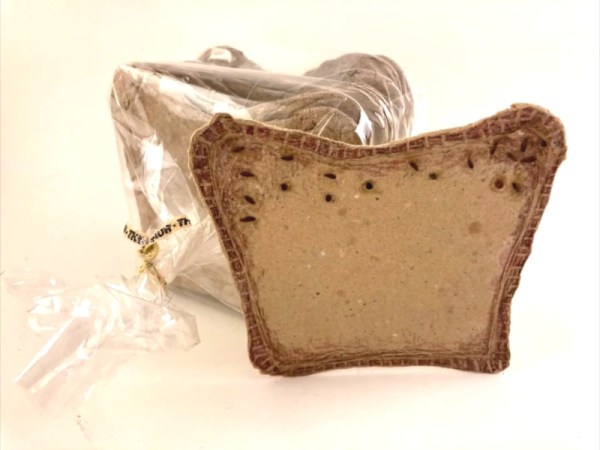
It’s the dead of winter here in the northern hemisphere, and between the pandemic and the polar vortex, we’re getting pretty tired of staring at the same four walls and eating incessantly. It’s the perfect recipe for trying something new and low-calorie, like baking a loaf of bread-shaped note paper from the stuff in the recycling bin.

[SusanLand] likes to make paper out of whatever discarded things she has on hand, including old jeans. When she tried making paper out of nothing but toilet paper tubes, it didn’t work so well, but it gave her an idea for cooking up some offbeat stationery.  She beefed up the pulp with shredded office paper and corn starch, and dialed in the whole wheat hue with a pinch of yellow and orange paper. Once the pulp was ready, she poured it into bread-shaped molds made from a plastic milk jug.

This tidy introduction to making your own paper covers everything from pulping techniques to drying methods. Once the slices are dry, [SusanLand] embellishes them with a scoring tool, colored pencils, and a handful of seeds to complete the look. Check out that process in the videos after the break.

Don’t want to make paper out of your paper? Use it to weigh your car, or fold up a fleet of airplanes.

Continue reading “DIY Bread Slice Paper Goes Against The Grain”
Spinach Photo Prints

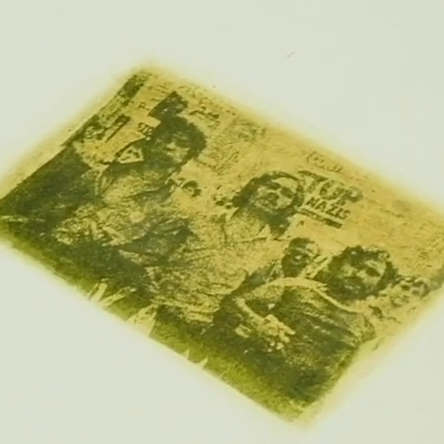
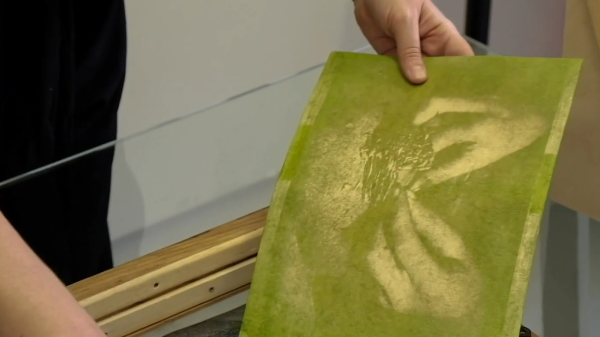
Some people like spinach in their salads. Others would prefer it if it never gets near their fork. Still, other folks, like [Almudena Romero], use it for printing pictures, and they’re the folks we’ll focus on today.

Anthotypes are positive images made from plant dyes that fade from light exposure. Imagine you stain your shirt at a picnic and leave it in the sun with a fork covering part of the stain. When you come back, the stain not sheltered by cutlery is gone, but now you have a permanent fork shape logo made from aunt Bev’s BBQ sauce. The science behind this type of printmaking is beautifully covered in the video below the break. You see, some plant dyes are not suitable for light bleaching, and fewer still if you are not patient since stains like blueberry can take a month in the sun.

The video shows how to make your own plant dye, which has possibilities outside of anthotype printing. Since the dye fades in sunlight, it can be a temporary paint, or you could use samples all over your garden to find which parts get lots of sunlight since the most exposed swatches will be faded the most. Think of a low-tech UV meter with logging, but it runs on spinach.

If the science doesn’t intrigue you, the artistic possibilities are equally cool. All the pictures have a one-of-a-kind, wabi-sabi flare. You take your favorite photo, make it monochrome, print it on a transparent plastic sheet, and the ink will shield the dye and expose the rest. We just gave you a tip about finding the sunniest spot outdoors, so get staining.

Anthotype printing shares some similarities with etch-resist in circuit board printing processes, but maybe someone can remix spinach prints with laser exposure!

Continue reading “Spinach Photo Prints”

Would You Like Fries With Your Insect Burger, Ma’am?

A trip to a supermarket is a rare luxury in a pandemic lockdown, but were I to cruise the aisles with my basket today I’d probably come away with a healthy pile of fruit and veg, a bit of meat and fish, and maybe some cheese. My shopping basket in 2031 though might have a few extras, and perhaps surprisingly some of them might be derived from insects. That’s a future made a little closer, by EU scientists declaring that farmed insect products are safe for humans and animals to eat.

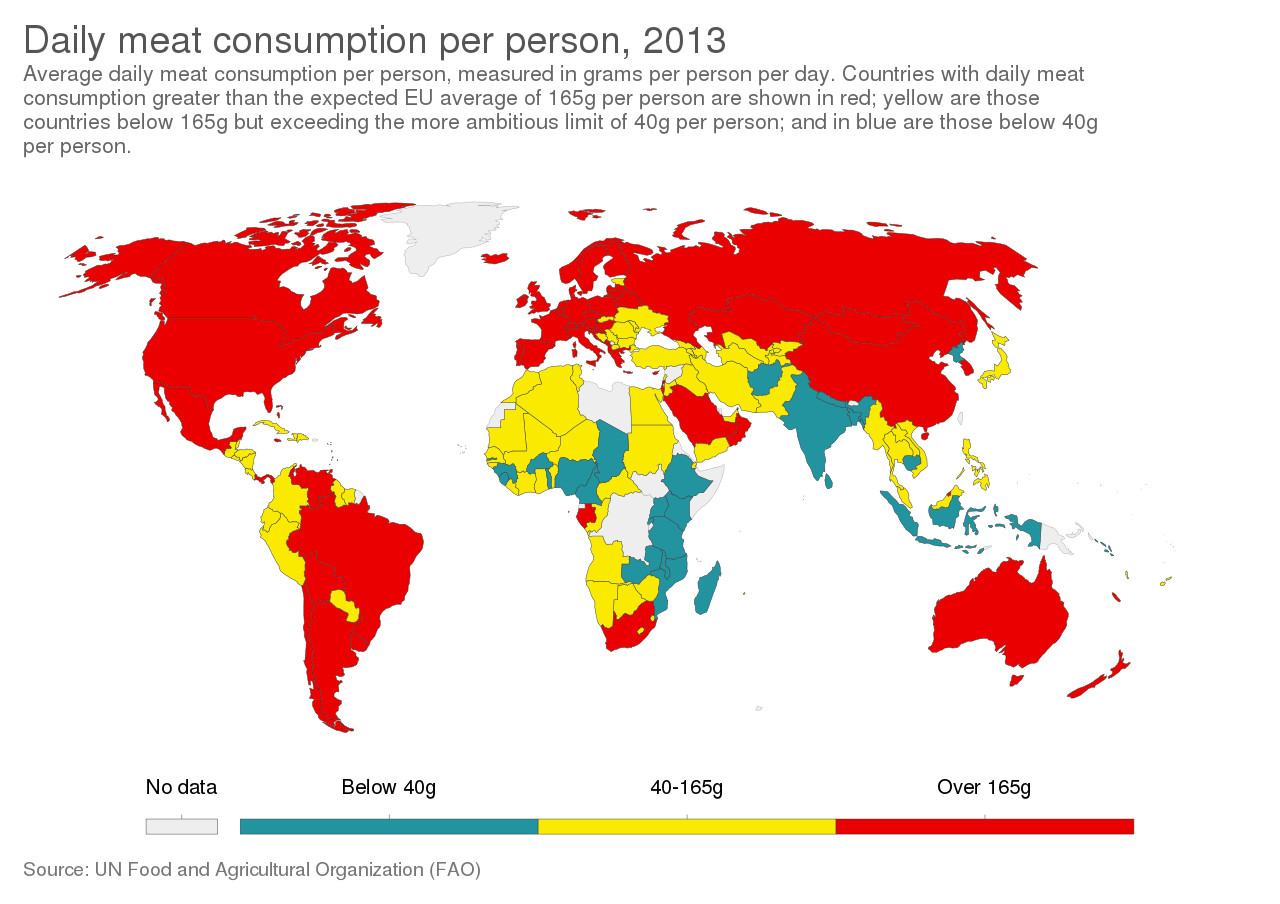
Global map showing meat consumption in 2013
Is meat consumption at this level sustainable? Our World In Data, CC BY 3.0.

We humans, like some of our fellow great ape cousins, are omnivores. We can eat anything, even if we might not always want to eat some things twice. As such, the diets of individual populations would in the past have varied hugely depending on the conditions that existed wherever they lived, giving us the ability to spread to almost anywhere on the planet — and we have.

Over the past few hundred years this need to subsist only on foods locally available has been marginalized by advances in agriculture. For those of us in developed countries, any foodstuff that takes our fancy can be ours for a trivial effort. This has meant an explosion of meat consumption as what was once a luxury food has become affordable to the masses, and in turn a corresponding agricultural expansion to meet demand that has placed intolerable stresses on ecosystems and is contributing significantly to global warming. It’s very clear that a mass conversion to veganism is unlikely to take place, so could farmed insects be the answer to our cravings for meat protein? It’s likely to be a tough sell to consumers, but it’s a subject that bears more examination. Continue reading “Would You Like Fries With Your Insect Burger, Ma’am?”

These Plastic Pavers Are Earth Savers

Plastic waste is everywhere you look, and there’s seemingly no end in sight for both the demand and production of plastic goods. So isn’t it time to try putting all that waste from the plastic industry to good use? [Nzambi Matee], a materials engineer in Kenya, thinks so. She was tired of seeing plastic littering the streets of Nairobi, and saw an opportunity to solve two problems at once — cleaning up the streets and paving them with plastic.

Three years ago, [Nzambi] quit her job as an oil industry data analyst and used all her savings to pursue a solution for the pesky plastic problem. She built a lab in her mother’s backyard and begin experimenting with plastics and sand, melding them together to make blocks.

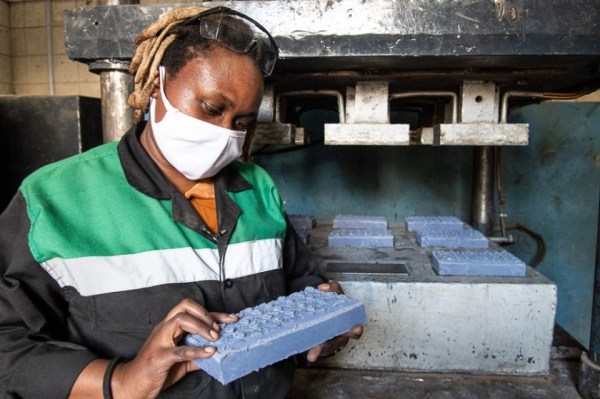
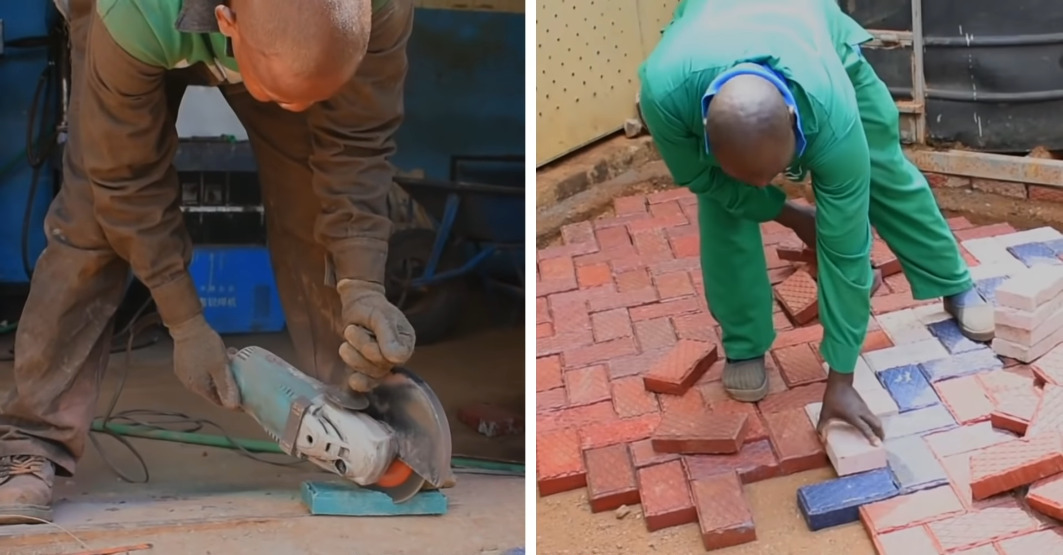
After about a year of trial and error, she had discovered which plastics worked and which didn’t. Then she developed machinery to churn out the sand-plastic paste and stamp it into sturdy paving bricks. Her company Gjenge Makers gets most of their plastic free from factories that would otherwise have to pay to dispose of it. The bricks are strong, lightweight, and nearly indestructible compared to concrete pavers. In the video after the break, there’s a shot of [Nzambi] spiking one on the ground to demonstrate its toughness.

Now, her company produces about 1,500 of these pavers each day. [Nzambi] and her team are planning to start making building blocks as well. With a melting point somewhere above 350° C, the material seems pretty well-suited for that purpose.

Want to do more than just recycle your plastic, but don’t know how? You could start by turning plastic bottles into rope, and then use the rope to make things like brooms and brushes.

Continue reading “These Plastic Pavers Are Earth Savers”

The Future Of Hydrogen Power… Is Paste?

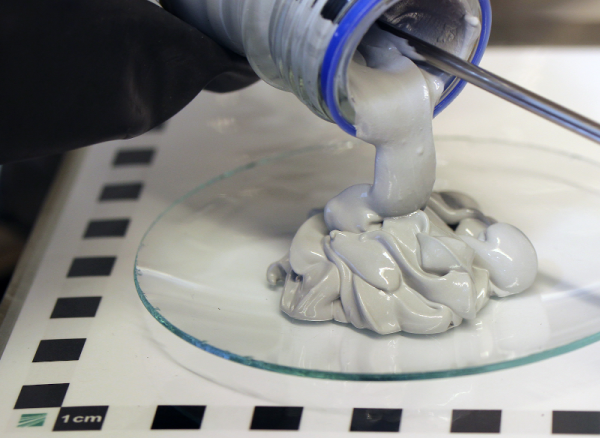
We’ve been promised hydrogen-powered engines for some time now. One downside though is the need for hydrogen vehicles to have heavy high-pressure tanks. While a 700 bar tank and the accompanying fuel cell is acceptable for a city bus or a truck, it becomes problematic with smaller vehicles, especially ones such as scooters or even full-sized motorcycles. The Fraunhofer Institute wants to run smaller vehicles on magnesium hydride in a paste form that they call POWERPASTE.

The idea is that the paste effectively stores hydrogen at normal temperature and pressure, where it stays chemically locked until mixed with water. The researchers note that it will decompose around 250 °C, but while your motorcycle may seem hot when parked in the sun, it isn’t getting quite to 250C.

Continue reading “The Future Of Hydrogen Power… Is Paste?”

A Four-Year-Old Event Badge Makes An Environmental Sensor

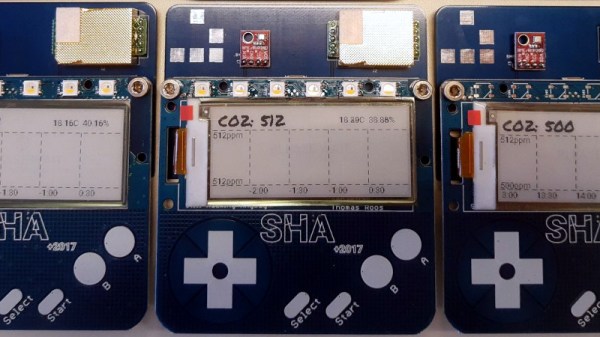
By now we’re all used to the requirements imposed by the pandemic, of social distancing and wearing masks indoors. But as [polyfloyd] and the rest of the board at Bitlair hackerspace in Amersfoort in the Netherlands were concerned, there are still risk factors to consider when inside a building.  Without fresh air the concentration of virus-bearing droplets can increase, and the best way they could think of to monitor this was to install a set of CO2 sensors. To run them they didn’t need to buy any new hardware, instead they turned to a set of event badges, from 2017s SHA hacker camp.

This badge sported an ESP32 module with an e-ink screen, and of most interest for this project it still has a supported software platform and comes with a handy expansion connector on the rear. The commonly-available MH-Z19 infra-red CO2 sensor and BME280 humidity sensor fit on a PCB that follows the shape of the badge with a protrusion at the top on which they appear as an integrated unit. Processing those readings is a MicroPython badge app that issues warnings via MQTT and plots a CO2 graph on the screen. Everything is available, both the hardware in a GitHub repository and the software as a badge.team app.

We applaud anyone who makes use of an event badge for a project, and especially so for using one years after the event. The SHA badge and its descendants are uniquely suited to this through their well-supported platform, so if you have one in a drawer we’d urge you to pull it out and give it a try.

OpenCV And Depth Camera Spots Weeds

Using vision technology to identify weeds in agriculture is an area of active development, and a team of researchers recently shared their method of using a combination of machine vision plus depth information to identify and map weeds with the help of OpenCV, the open-source computer vision library. Agriculture is how people get fed, and improving weed management is one of its most important challenges.

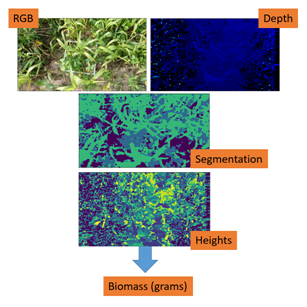
Many current efforts at weed detection and classification use fancy (and expensive) multispectral cameras, but PhenoCV-WeedCam relies primarily on an OAK-D stereo depth camera. The system is still being developed, but is somewhat further along than a proof of concept. The portable setups use a Raspberry Pi, stereo camera unit, power banks, an Android tablet for interfacing, and currently require an obedient human to move and point them.

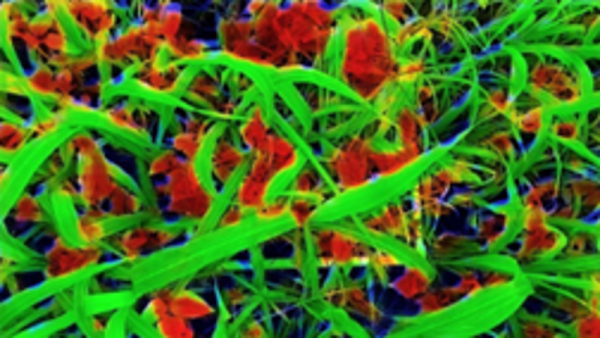
It’s an interesting peek at the kind of hands-on work that goes into data gathering for development. Armed with loads of field data from many different environments, the system can use the data to identify grasses, broad leaf plants, and soil in every image. This alone is useful, but depth information also allows the system to estimate overall plant density as well as try to determine the growth center of any particular plant. Knowing that a weed is present is one thing, but to eliminate it with precision — for example with a laser or mini weed whacker on a robot arm — knowing where the weed is actually growing from is an important detail.

PhenoCV-WeedCam (GitHub repository) is not yet capable of real-time analysis, but the results are promising and that’s the next step. The system currently must be carried by people, but could ultimately be attached to a robotic platform made specifically to traverse fields.