Space-Based Solar Power: Folly Or Stroke Of Genius?

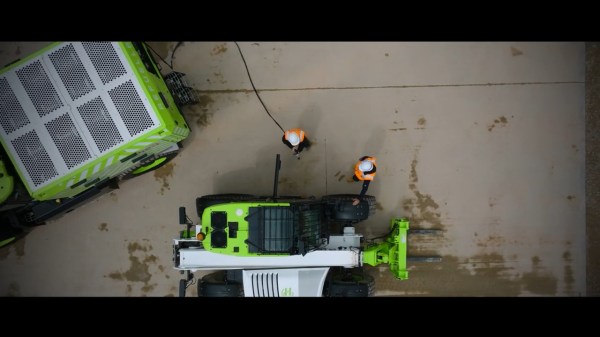
The Sun always shines in space, unless a pesky planet gets in the way. That’s more or less the essential thought behind space-based solar power (SBSP) as newly pitched by ESA’s director general, Josef Aschbacher on Twitter. Rather than putting photovoltatic solar panels on the Earth’s surface which has this annoying property of constantly rotating said panels away from the Sun during what is commonly referred to as ‘night’, the panels would be put stationary in space, unaffected by the Earth’s rotation and weather.

Although a simple idea, it necessitates the solving of a number of problems. The obvious first question is how to get these panels up in space, hundreds of kilometers from the Earth’s surface, to create a structure many times larger than the International Space Station. The next question is how to get the power back to Earth, followed by questions about safety, maintenance, transfer losses and the inevitable economics.

With organizations ranging from NASA to China’s Academy for Space Technology (CAST), to US institutions and others involved in SBSP projects, it would seem that these problems are at the very least deemed to be solvable. This raises the question of how ESA’s most recent proposal fits into this picture. Will Europe soon be powered from orbital solar panel arrays?

Continue reading “Space-Based Solar Power: Folly Or Stroke Of Genius?”

IBM’s Early PC Attracts Time Travelers

It wasn’t long ago I was nostalgic about an old computer I saw back in the 1980s from HP. It was sort of an early attempt at a PC, although price-wise it was only in reach for professionals. HP wasn’t the only one to try such a thing, and one of the more famous attempts was the company that arguably did get the PC world rolling: IBM. Sure, there were other companies that made PCs before the IBM PC, but that was the computer that cemented the idea of a computer on an office desk or at your home more than any computer before it. Even now, our giant supercomputer desktop machines boot as though they were a vintage 1981 PC for a few minutes on each startup. But the PC wasn’t the first personal machine from IBM and, in fact, the IBM 5100 was not only personal, but it was also portable. Well, portable by 1970s standards that also had very heavy video cameras and luggable computers like the Osborne 1.

The IBM 5100 had a brief three-year life from 1975 to 1978. A blistering 1.9 MHz 16-bit CPU drove a 5-inch CRT monitor and you could have between 16K and 64K of RAM along with a fair amount of ROM. In fact, the ROMs were the key feature and a giant switch on the front let you pick between an APL ROM and a BASIC ROM (assuming you had bought both).

Continue reading “IBM’s Early PC Attracts Time Travelers”

A Brief History Of Drywall Or: How Drywall Came To Dominate The World Of Construction

Drywall is common and ubiquitous in commercial and residential buildings today. Many of us barely think about it until we have to repair a hole smashed in it.

However, drywall has not been around forever, and actually took many years to establish itself as a popular building material. Today, we’ll look at how it came about, and why it went on to dominate the world of construction.

Continue reading “A Brief History Of Drywall Or: How Drywall Came To Dominate The World Of Construction”

Superconference 2022 Hack Chat

Join us on Wednesday, August 24 August 31 at noon Pacific for the Superconference 2022 Hack Chat!

[Sorry folks — due to a scheduling snafu, we’ve got to push this off a week. — ed]

To say that a lot of water has passed under the bridge since 2019 is something of an understatement. When last we met as a group, in Pasadena in November of that year, the Covid-19 pandemic and its fallout were ahead of us. Supercon 2019 was a smashing success, a three-day meetup that brought together the best the hacker community has to offer to exchange ideas, share their projects, and meet up IRL rather than reading about everyone’s exploits and adventures online. It was a fantastic time, but how were we to know that it would be the last meatspace meetup for a painfully long time?

join-hack-chatThankfully, that’s all behind us now, and Supercon 2022 is back, live and in person! Everyone in the hacker community is going to want to be in Pasadena, but since it’s been so long since we’ve met up in person, we thought a Hack Chat focusing on Supercon would be a good idea. We’ve invited Majenta Strongheart on to field your questions, plus hopefully we’ll have a few surprise guests too. But this will mainly be your chance to sort of “pre-network” before the con. If you’re a Supercon first-timer, this is a great way to ask questions about how it all works and whether it’s worth it to attend (answer: it is — go buy tickets now!) For vets, this is your chance to share your stories of Supercons past, or perhaps to reconnect with con-buddies you’ve lost touch with. There’ll be something for everyone, both at the Hack Chat and at Supercon, so drop by the chat and find out what all the hype is about.

Our Hack Chats are live community events in the Hackaday.io Hack Chat group messaging. This week we’ll be sitting down on Wednesday, August 31 at 12:00 PM Pacific time. If time zones have you tied up, we have a handy time zone converter.

Hackaday Links Column Banner

Hackaday Links: August 21, 2022

As side-channel attacks go, it’s one of the weirder ones we’ve heard of. But the tech news was filled with stories this week about how Janet Jackson’s “Rhythm Nation” is actually a form of cyberattack. It sounds a little hinky, but apparently this is an old vulnerability, as it was first noticed back in the days when laptops commonly had 5400-RPM hard drives. The vulnerability surfaced when the video for that particular ditty was played on a laptop, which would promptly crash. Nearby laptops of the same kind would also be affected, suggesting that whatever was crashing the machine wasn’t software related. As it turns out, some frequencies in the song were causing resonant vibrations in the drive. It’s not clear if anyone at the time asked the important questions, like exactly which part of the song was responsible or what the failure mode was on the drive. We’ll just take a guess and say that it was the drive heads popping and locking.

Continue reading “Hackaday Links: August 21, 2022”

Dream Projects Face Reality

Do you ever get a project stuck in your mind? An idea so good you just keep thinking about it? Going over iterations and options and pros and cons in the back of your mind, or maybe on paper, but having not yet subjected it to the hard work of pulling it into reality? I’ve had one of those lurking around for the last couple weeks, and it’s time for me to get building.

And I’ve got to get started soon, because it’s rare that any project makes the leap from thought to reality unscathed, and when I hold on to the in-thought project too long, I become far too fond of some of the details and nuances that just might not make the cut, or might get in the way of getting a first pass finished. When I really like a (theoretical) solution to a (theoretical) problem, I’ll try to make it work a lot longer than I should, and I can tell I’m getting attached to this one now.

The only cure to this illness is to get prototyping. When the rubber hits the road, and the bolts are tightened, either the solution is a good one or it’s not, and no amount of dreaming is going to change that. Building is a great antidote to the siren song of a dream project. Although it feels now like I don’t want the fantasy to have to adapt to reality, as it inevitably will, I know that getting something working feels a lot better. And it frees me up to start dreaming on the next project… To the workshop!

Steamy Hack Chat Vents Some High Pressure Wisdom

Ask the average person about steam power and they’ll probably imagine a bygone era, a time when the sky was thick with smoke belched out by coal-burning locomotives and paddle-wheel ships. Steam is ancient technology they’ll say, and has as much to do with modern living as the penny-farthing.

Naturally, the real story is a bit more complex than that. Sure the reciprocating steam engine has fallen out of favor as a means of propulsion, but the concept of running machinery with steam is alive and well. In fact, unless you’re running on wind or solar power, there’s an excellent chance that a steam turbine is responsible for keeping the lights on in your house.

In honor of all things steam, we invited Quinn Dunki to host this week’s Hack Chat. Those who follow her exploits on YouTube will know that over the last several years she’s built a number of steam engines, from miniature scratch-built models to commercial kits that can do useful work. Who better to answer your burning steaming questions?

The first questions in the Chat were logical enough, with several users wanting to know just how hard it is to build a functional steam engine if you don’t have access to a mill or other means of high precision machining. According to Quinn, while better equipment will certainly allow you to build a more powerful and efficient engine, the basic premise is so simple that it doesn’t take much to get one going. If you’ve got a mini lathe and some bar stock, you’re half way there. In fact, they are so forgiving that she opines you’d struggle to build a steam engine that didn’t at least turn over — though that doesn’t mean it will necessarily run well.

Naturally some comparisons were drawn between the complexity of building a steam engine and putting together a small internal combustion engine (ICE). But while they might seem conceptually similar, Quinn cautions that building a working ICE from scratch is far more difficult and dangerous. She explains that steam engines have a tendency to fail gracefully, that is, mistakes in the design or poor tolerances generally result in little worse than wasted steam and extra noise. Comparatively, a faulty ICE design could easily turn into a bomb on your workbench.

Of course, that’s not to say working with steam is without danger. You certainly don’t want to underestimate high pressure steam, which is why boilers that are over 6 in (15 cm) in diameter or that produce more than 100 PSI will often require the operator to be licensed. They may also need to be inspected, though Quinn notes that your local government official probably won’t be able to make heads or tails of your homebrew build — so if you need an official stamp of approval, your best bet is to find a local model engineering club or society that would have the appropriate connections. All that being said, most hobbyists make it a point to try and get their engine running at the lowest pressure possible, so unless you’ve got something really massive in mind, you’ll probably never need to build up more than 60 PSI or so.

A DIY electric boiler and small steam engine.

Another topic of discussion was how to fuel the boiler itself. An electrically powered boiler is perhaps the easiest option, but is somewhat counterproductive if you hope to put your steam engine to useful work. Coal and wood fires are an option, and indeed were commonly used in the old days, but the soot and ash they produce can be a problem.

Quinn also notes that if you’re using such fuels, you need a way to quickly remove the firebox from the boiler in an emergency; something she likens to the starship Enterprise having to eject its warp core before it explodes. For her own projects, Quinn says she uses either an electric element or a camping gas burner.

While most of the questions during this Hack Chat had to do with the work Quinn has already featured on her blog and YouTube channel, naturally there were questions about where things go from here. After she completes the steam engine kit she’s working on currently, she says she’ll likely to back to another scratch-built engine. She also plans on coupling some of her engines to generators, as she’s gotten many requests about seeing these machines put to useful work. Looking further ahead Quinn says she’s interested in casting her own bronze and aluminum components, and specifically wants to work with “lost PLA” casting, which is a variant of lost wax casting that uses a mold based on a 3D printed part.

We’d like to thank Quinn Dunki for stopping by the Hack Chat and sharing some insights into this unique hobby. While a handcrafted boiler or a desktop steam reciprocating engine might not be on the average Hackaday reader’s list of future projects, it’s still fascinating to see how they work. We owe much of our modern life to steam power, so the least we can do is show it some respect.


The Hack Chat is a weekly online chat session hosted by leading experts from all corners of the hardware hacking universe. It’s a great way for hackers connect in a fun and informal way, but if you can’t make it live, these overview posts as well as the transcripts posted to Hackaday.io make sure you don’t miss out.