Hackaday Podcast 002: Curious Gadgets And The FPGA Brain Trust

In this week’s podcast, editors Elliot Williams and Mike Szczys look back on favorite hacks and articles from the week. Highlights include a deep dive in barn-door telescope trackers, listening in on mains power, the backstory of a supercomputer inventor, and crazy test practices with new jet engine designs. We discuss some of our favorite circuit sculptures, and look at a new textile-based computer and an old server-based one.

This week, a round table of who’s-who in the Open Source FPGA movement discusses what’s next in 2019. David Shah, Clifford Wolf, Piotr Esden-Tempski, and Tim Ansell spoke with Elliot at 35C3.

Take a look at the links below if you want to follow along, and as always, tell us what you think about this episode in the comments!

Direct download (60 MB or so.)

Continue reading “Hackaday Podcast 002: Curious Gadgets And The FPGA Brain Trust”

Hack Your Gmail: A Quick Start For Google App Scripting

For many people, Gmail is synonymous with e-mail. Some people like having cloud access to everything and some people hate having any personal data in the cloud. However you feel about it, one thing that was nice about having desktop software is that you could hack it relatively easily. If you didn’t like how your desktop mail client worked, you had a lot of options: use a different program, write your own, hack the executable of your current program, or in the case of open source just fork it and make any changes you are smart enough to make.

Google provides a lot of features with all of its products, but however you slice it, all the code runs on their servers out of your reach. Sort of. If you know JavaScript, you can use Google Apps Script to add features to many Google products including Gmail. If you’ve used Office scripting, the idea is the same, although obviously the implementation is very different.

With scripting you can make sophisticated filters that would be very hard to do otherwise. For example,  monitor for suspicious messages like those with more than 4 attachments, or that appear to come from a contact between the hours of 2AM and 5AM.

For our example today, I’m going to show you something that is easy but also highly useful.

Continue reading “Hack Your Gmail: A Quick Start For Google App Scripting”

Plastics: Acrylic

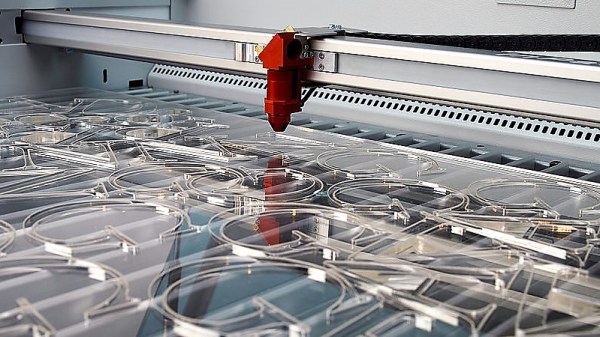
If anything ends up on the beds of hobbyist-grade laser cutters more often than birch plywood, it’s probably sheets of acrylic. There’s something strangely satisfying about watching a laser beam trace over a sheet of the crystal-clear stuff, vaporizing a hairs-breadth line while it goes, and (hopefully) leaving a flame-polished cut in its wake.

Acrylic, more properly known as poly(methyl methacrylate) or PMMA, is a wonder material that helped win a war before being developed for peacetime use. It has some interesting chemistry and properties that position it well for use in the home shop as everything from simple enclosures to laser-cut parts like gears and sprockets.

Continue reading “Plastics: Acrylic”

New Contest: 3D Printed Gears, Pulleys, And Cams

One of the killer apps of 3D printers is the ability to make custom gears, transmissions, and mechanisms. But there’s a learning curve. If you haven’t 3D printed your own gearbox or automaton, here’s a great reason to take the plunge. This morning Hackaday launched the 3D Printed Gears, Pulleys, and Cams contest, a challenge to make stuff move using 3D-printed mechanisms.

Adding movement to a project brings it to life. Often times we see projects where moving parts are connected directly to a servo or other motor, but you can do a lot more interesting things by adding some mechanical advantage between the source of the work, and the moving parts. We don’t care if it’s motorized or hand  cranked, water powered or driven by the wind, we just want to see what neat things you can accomplish by 3D printing some gears, pulleys, or cams!

No mechanism is too small — if you have never printed gears before and manage to get just two meshing with each other, we want to see it! (And of course no gear is literally too small either — who can print the smallest gearbox as their entry?) Automatons, toys, drive trains, string plotters, useless machines, clockworks, and baubles are all fair game. We want to be inspired by the story of how you design your entry, and what it took to get from filament to functional prototype.

Continue reading “New Contest: 3D Printed Gears, Pulleys, And Cams”

New Part Day: SMD Batteries

Here’s a tip for all you retrocomputing enthusiasts or even anyone with an old computer in the garage. Go remove the battery. Yes, that old mid-90s desktop has a battery inside for the real-time clock, and it’s a ticking time bomb. Batteries leak, and they’ll spew goo all over the circuit board, irreparably damaging your piece of electronic nostalgia. This goes for all electronics, too: that badge collection is going to be a pile of broken fiberglass in a decade. Remove your batteries now.

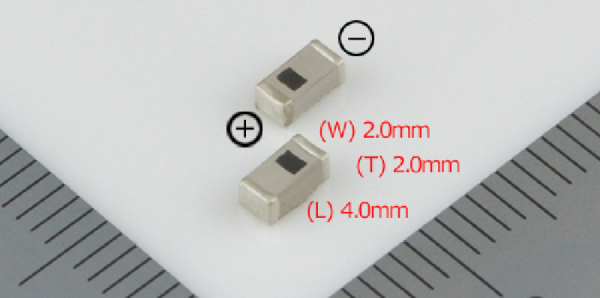
While lithium cells soldered to a motherboard will leak, now there might be a new technology that will allow our modern electronics to last for decades. It’s a solid state battery. The FDK Corporation is now handing out samples of a battery that looks like a large SMD cap. They come on tape and reel, and they’ll never leak.

Thanks to massive investments in battery research, batteries are getting more power-dense, and form factors are getting weird. Your AirPods need a battery somewhere, and manufacturers are figuring out the best way to put a battery into something that can be assembled by a pick and place machine. This battery is the answer to these problems, packing a 3.0 V, 140 μAh lithium cobalt pyrophosphate cell into a package that is just 4 mm by 2 mm by 2 mm. It’s a battery that looks a surface mount component, and it’s installed the same way: this is a pick-and-placeable battery.

While the capacity of this battery is tiny — a 1225 coin cell has a capacity of about 50 mAh, and this battery has a capacity of 140 μAh, three whole orders of magnitude smaller — sometimes that’s all you need. If you need a battery for a RTC, this SMD battery will work.

Seymour Cray, Father Of The Supercomputer

Somewhere in the recesses of my memory there lives a small photograph, from one of the many magazines that fed my young interests in science and electronics – it was probably Popular Science. In my mind I see a man standing before a large machine. The man looks awkward; he clearly didn’t want to pose for the magazine photographer. The machine behind him was an amazing computer, its insides a riot of wires all of the same color; the accompanying text told me each piece was cut to a precise length so that signals could be synchronized to arrive at their destinations at exactly the right time.

My young mind was agog that a machine could be so precisely timed that a few centimeters could make a difference to a signal propagating at the speed of light. As a result, I never forgot the name of the man in the photo – Seymour Cray, the creator of the supercomputer. The machine was his iconic Cray-1, the fastest scientific computer in the world for years, which would go on to design nuclear weapons, model crashes to make cars safer, and help predict the weather.

Very few people get to have their name attached so firmly to a product, let alone have it become a registered trademark. The name Cray became synonymous with performance computing, but Seymour Cray contributed so much more to the computing industry than just the company that bears his name that it’s worth taking a look at his life, and how his machines created the future.

Continue reading “Seymour Cray, Father Of The Supercomputer”

3D Printing An Entire Rocket

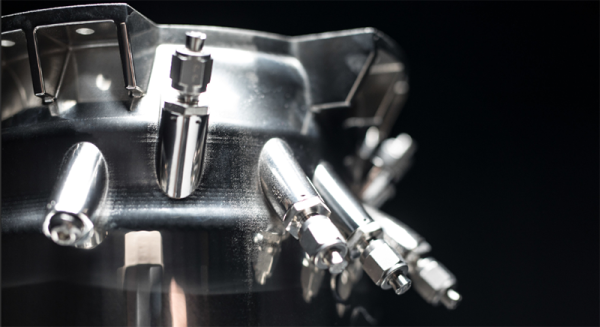
If you’re ever flying into LAX and have the left side window seat, just a few minutes before landing, look out the window. You’ll see a small airport just below you and what appears at first glance to be a smokestack. That’s not a smokestack, though: that’s a rocket, and that’s where SpaceX is building all their rockets. Already SpaceX has revolutionized the aerospace industry, but just down the street there’s another company that’s pushing the manufacturing of rocket engines a bit further. Relativity Space is building rockets. They’re 3D printing rocket engines, and they’re designing what could be the first rocket engine made on Mars.

Bryce Salmi is an avionics hardware engineer at Relatively Space, and he made it out to the 2018 Hackaday Superconference to tell us all about manufacturing rockets. It’s an entirely new approach to manufacturing rockets and rocket engines with a clean-slate design that could eventually be manufactured on Mars.

Continue reading “3D Printing An Entire Rocket”