Hackaday Belgrade 2018 Is Sold Out: We Can’t Wait For Saturday

Greetings from beautiful Belgrade! With the Hackaday crew arriving over the last couple of days, preparations are in full swing, and the excitement is building for Hackaday Belgrade 2018 on Saturday. Here’s all the news you need to know.

If you haven’t gotten tickets yet, you can’t say we didn’t warn you! We’ve sold out. But don’t despair: there’s a waitlist, so get your name in now if you still want to get in.

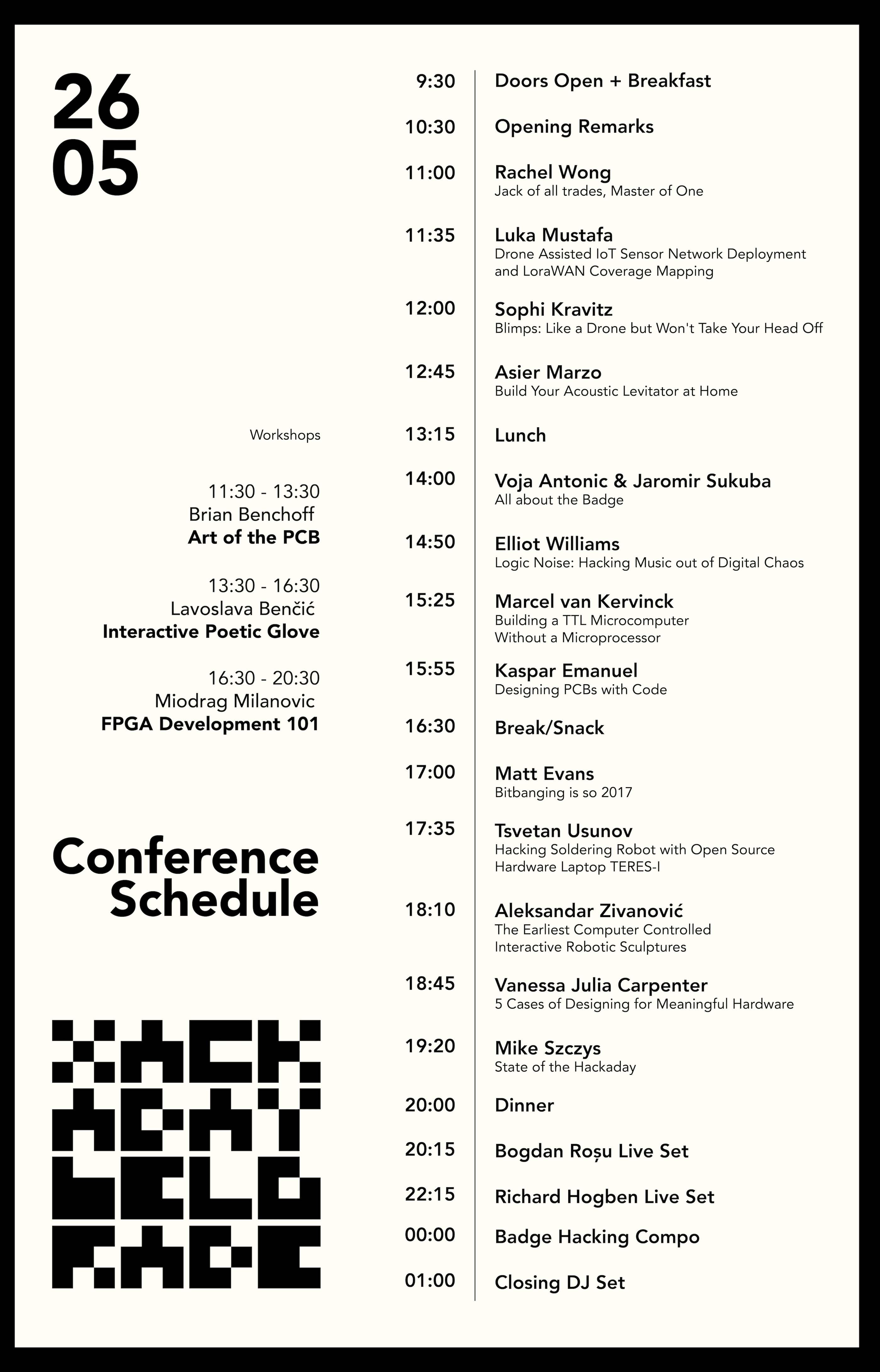
If you’re looking for something to do in town this weekend, don’t miss [Brian Benchoff]’s Ode to Belgrade and especially some great local info in the comments. From which taxis to take, to finding a hardware store, to touring monuments of brutalist architecture, this post has it all.

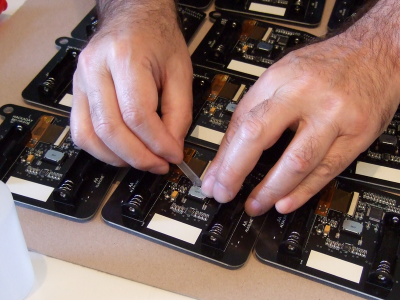
And last but not least, the badges are in the final stages of production.  [Voja] and [Mike] are temporarily distracted by watching themselves on N1, the Serbian CNN affiliate, for which they were interviewed this morning about hacker culture, and about building badge hardware and writing the firmware for it. They’ll get back to epoxying speakers and writing code any time now.

In short, Hackaday Belgrade is a sold-out, unstoppable force of nature. We’re so excited to be here and can’t wait to see you all on Saturday!

 

Ask Hackaday: How Do You DIY A Top-Octave Generator?

One of the great joys of Hackaday are the truly oddball requests that we sometimes get over the tip line. Case in point: [DC Darsen] wrote in with a busted 1970s organ in need of a new top-octave generator, and wondered if we could help. He had found a complicated but promising circuit online, and was wondering if there was anything simpler. I replied “I should be able to get that done with a single Arduino” and proceeded to prove myself entirely wrong in short order.

So we’re passing the buck on to you, dear Hackaday reader. Can you help [DC Darsen] repair his organ with a minimum amount of expenditure and hassle? All we need to do is produce twelve, or maybe thirteen, differently pitched square waves simultaneously.

Continue reading “Ask Hackaday: How Do You DIY A Top-Octave Generator?”

Mechanisms: Solenoids

Since humans first starting playing with electricity, we’ve proven ourselves pretty clever at finding ways to harness that power and turn it into motion. Electric motors of every type move the world, but they are far from the only way to put electricity into motion. When you want continuous rotation, a motor is the way to go. But for simpler on and off applications, where fine control of position is not critical, a solenoid is more like what you need. These electromagnetic devices are found everywhere and they’re next in our series on useful mechanisms.

Continue reading “Mechanisms: Solenoids”

Friday Hack Chat: Making Programming Easier

There is a long history of graphical programming languages. Some people don’t like to code, and for them, graphical programming languages replace semicolons and brackets with easy-to-understand boxes and wires.

This Friday, we’re going to be talking about graphical programming languages with [Boian Mitov]. He’s a software developer, founder of Mitov Software, and the creator of Visuino, a graphical programming language for the embedded domain. He specialized in video, audio, DSP, DAQ, industrial automation, communications, computer vision, artificial intelligence, as well as parallel and distributed computing. [Boian] is the author of the OpenWire open source technology, the IGDI+ open source library, the VideoLab, SignalLab, AudioLab, PlotLab, InstrumentLab, VisionLab, IntelligenceLab, AnimationLab, LogicLab, CommunicationLab, and ControlLab libraries, OpenWire Studio, Visuino, and author of the “VCL for Visual C++” technology.

For this Hack Chat, we’re going to be talking about ways to make programming microcontrollers easier. The focus of this discussion is Visuino, a graphical programming environment. Visuino allows anyone to program an Arduino, Teensy, or an ESP simply by connecting wires and choosing some logic. Think of it as a step above the programming environment that came with the Lego Mindstorms, Scratch, or whatever else MIT was coming out with in the early ‘aughts.

You are, of course, encouraged to add your own questions to the discussion. You can do that by leaving a comment on the Hack Chat Event Page and we’ll put that in the queue for the Hack Chat discussion.join-hack-chat

Our Hack Chats are live community events on the Hackaday.io Hack Chat group messaging. This week is just like any other, and we’ll be gathering ’round our video terminals at noon, Pacific, on Friday, May 25th.  Here’s a clock counting down the time until the Hack Chat starts.

Click that speech bubble to the right, and you’ll be taken directly to the Hack Chat group on Hackaday.io.

You don’t have to wait until Friday; join whenever you want and you can see what the community is talking about.

Robert Hall And The Solid-State Laser

The debt we all owe must be paid someday, and for inventor Robert N. Hall, that debt came due in 2016 at the ripe age of 96. Robert Hall’s passing went all but unnoticed by everyone but his family and a few close colleagues at General Electric’s Schenectady, New York research lab, where Hall spent his remarkable career.

That someone who lives for 96% of a century would outlive most of the people he had ever known is not surprising, but what’s more surprising is that more notice of his life and legacy wasn’t taken. Without his efforts, so many of the tools of modern life that we take for granted would not have come to pass, or would have been delayed. His main contribution started with a simple but seemingly outrageous idea — making a solid-state laser. But he ended up making so many more contributions that it’s worth a look at what he accomplished over his long career.

Continue reading “Robert Hall And The Solid-State Laser”

Hands-On: Flying Drones With Scratch

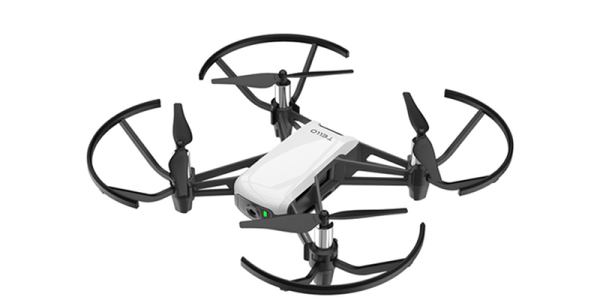
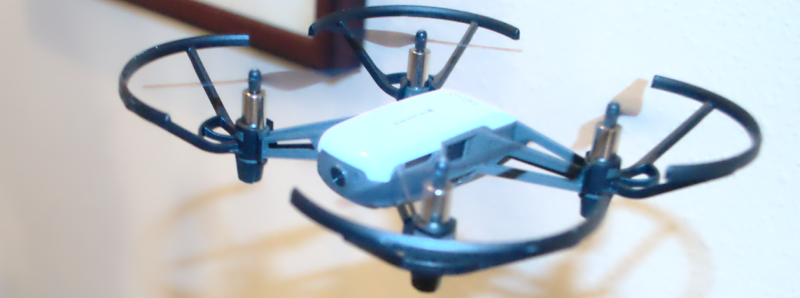
I’ll admit it. I have a lot of drones. Sitting at my desk I can count no fewer than ten in various states of flight readiness. There are probably another half dozen in the garage. Some of them cost almost nothing. Some cost the better part of a thousand bucks. But I recently bought a drone for $100 that is both technically interesting and has great potential for motivating kids to learn about programming. The Tello is a small drone from a company you’ve never heard of (Ryze Tech), but it has DJI flight technology onboard and you can program it via an API. What’s more exciting for someone learning to program than using it to fly a quadcopter?

For $100, the Tello drone is a great little flyer. I’d go as far as saying it is the best $100 drone I’ve ever seen. Normally I don’t suggest getting a drone with no GPS since the price on those has come down. But the Tello optical sensor does a great job of keeping the craft stable as long as there is enough light for it to see. In addition, the optical sensor works indoors unlike GPS.

But if that was all there was to it, it probably wouldn’t warrant a Hackaday post. What piqued my interest was that you can program the thing using a PC. In particular, they use Scratch — the language built at MIT for young students. However, the API is usable from other languages with some work.

Information about the programming environment is rather sparse, so I dug in to find out how it all worked.

Continue reading “Hands-On: Flying Drones With Scratch”

Fail Of The Week: The Semiconductor Lapping Machine That Can’t Lap Straight

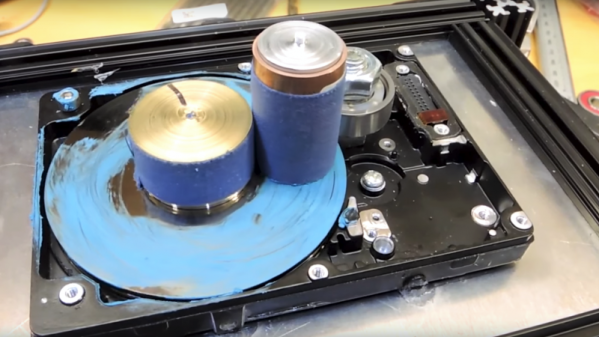
It seemed like a good idea to build a semiconductor lapping machine from an old hard drive. But there’s just something a little off about [electronupdate]’s build, and we think the Hackaday community might be able to pitch in to help.

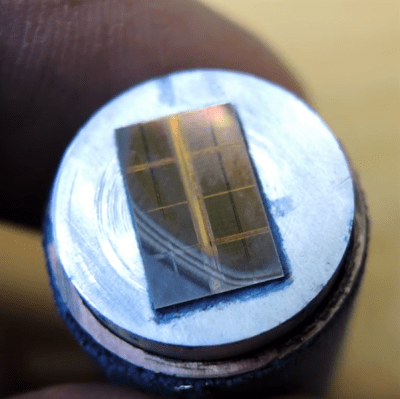
For those not into the anatomy and physiology of semiconductors, getting a look at the inside of the chip can reveal valuable information needed to reverse engineer a device, or it can just scratch the itch of curiosity. Lapping (the gentle grinding away of material) is one way to see the layers that make up the silicon die that lies beneath the epoxy. Hard drives designed to spin at 7200 rpm or more hardly seem a suitable spinning surface for a gentle lapping, but [electronupdate] just wanted the platter for its ultra-smooth, ultra-flat surface.



He removed the heads and replaced the original motor with a gear motor and controller to spin the platter at less than 5 rpm. A small holder for the decapped die was fashioned, and pinched between the platter hub and an idler. It gently rotates the die against the abrasive-covered platter as it slowly revolves. But the die wasn’t abrading evenly. He tried a number of different fixtures for the die, but never got to the degree of precision needed to see through the die layer by layer. We wonder if the weight of the die fixture is deflecting the platter a bit?

Failure is a great way to learn, if you can actually figure out where you went wrong. We look to the Hackaday community for some insight. Check out the video below and sound off in the comments if you’ve got any ideas.

Continue reading “Fail Of The Week: The Semiconductor Lapping Machine That Can’t Lap Straight”