Hackaday Superconference Talk: Cory Grosser

When we look at a product or project here at Hackaday it is likely that our interest has been caught by its internal technology, or perhaps by its functionality. It is easy to forget that there is another angle to each and every item that graces these pages, and it is every bit as important as those we have already mentioned. Aesthetic design, the look and feel of a product, is something that is so often overlooked.

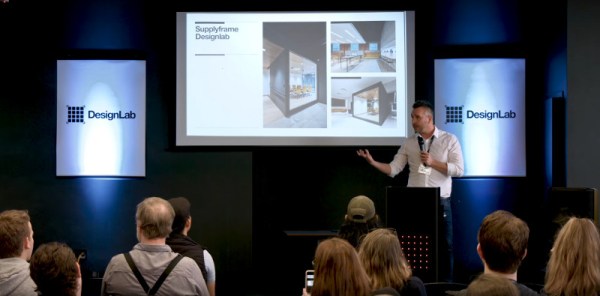
One of the speakers at the Hackaday Superconference was [Cory Grosser], one of America’s leading independent product designers, and the designer of the Supplyframe Design Lab in which the Superconference was being held. In his talk he covered some of the principles of design, touching on its psychology and its purpose in creating a successful product. In doing so he delivered a fascinating talk full of insights into the design of products both famous and somewhat obscure.

Continue reading “Hackaday Superconference Talk: Cory Grosser”

Barbara McClintock: Against The Genetic Grain

The tale of much of Barbara McClintock’s life is that of the scientist working long hours with a microscope seeking to solve mysteries. The mystery she spent most of her career trying to solve was how all cells in an organism can contain the same DNA, and yet divide to produce cells serving different functions; basically how cells differentiate. And for that, she got a Nobel prize all to herself, which is no small feat either.

Becoming a Scientist

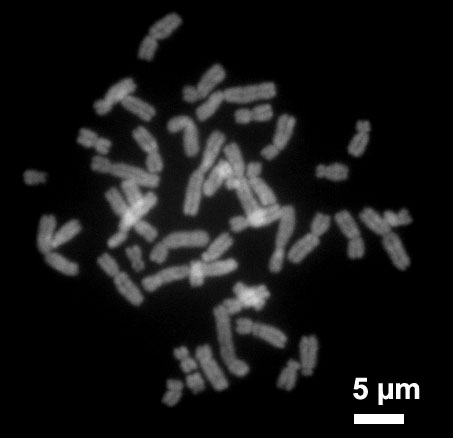
Human chromosomes, long strands of DNA
Human chromosomes, long strands of DNA by Steffen Dietzel CC BY-SA 3.0

McClintock was born on June 16, 1902, in Hartford, Connecticut, USA. From age three until beginning school, she lived with her aunt in Brooklyn, New York while her father strove financially to start up a medical practice. She was a solitary and independent-minded child, a trait she later called her “capacity to be alone”.

In 1919, she began her studies at Cornell’s College of Agriculture and took her first course in genetics in 1921. A year later, due to the interest she showed in genetics, she was invited to take the graduate genetics course at Cornell. It was here that she became interested in the new field of cytogenetics, specifically of maize or corn. Cytogenetics studies how the chromosomes relate to cell behavior, particularly during cell division. Chromosomes are the long strands of DNA within the nucleus of every cell and shown here in the photo at a time when they are condensed, or coiled up.

While still at Cornell she developed a number of methods for visualizing and characterizing maize which ended up in textbooks. She also became the first to describe the morphology of the ten maize chromosomes, basically their form and structural relationships, which then allowed her to discover more about the chromosomes. One of her colleagues observed that ten of the seventeen significant advances made in the field at Cornell between 1929 and 1935 were hers. This was only the first step in what would be the remarkable career of a very well respected scientist.

Continue reading “Barbara McClintock: Against The Genetic Grain”

JST Is Not A Connector

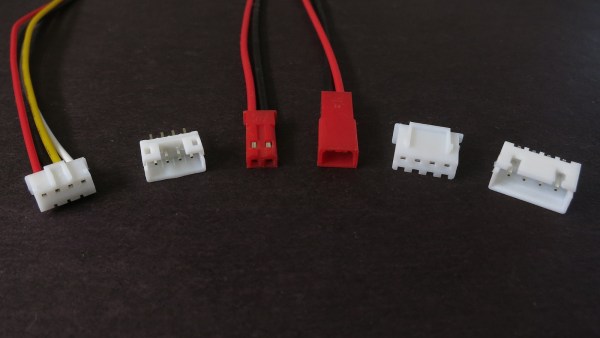
When reading about cool projects and products, it’s common to see wiring plugs labelled “JST connector.” This looks fine until we start getting hands-on and begin hacking things together. Inevitably we find the JST connector from one part fails to fit in the JST connector of another. This is the moment we learn “JST” is not a connector specification. It is short for Japan Solderless Terminals Manufacturing Company, Ltd. A company whose history goes back to 1957 and their website (styled in 1999) lists hundreds of different types.

We can simplify to “JST connector” when chit-chatting about projects. But when it comes to actual hardware specification, that’s not good enough. Which JST connector?

Continue reading “JST Is Not A Connector”

Hackaday Links Column Banner

Hackaday Links: Not A Creature Was Stirring, Except For A Trackball

Hey, did you know Hackaday is starting an Open Access, peer-reviewed journal? The Hackaday Journal of What You Don’t Know (HJWYDK) is looking for submissions detailing the tools, techniques, and skills that we don’t know, but should. Want to teach everyone how to make sand think? Write a paper and tell us about it! Send in your submissions here.

Have you noticed OSH Park updated their website?

The MSP430 line of microcontrollers are super cool, low power, and cheap. Occasionally, TI pumps out a few MSP430 dev boards and sells them for the rock-bottom price of $4.30. Here ya go, fam. This one is loaded up with the MSP430FR2433.

lol, Bitcoin this week.

Noisebridge, the San Francisco hackerspace and one of the first hackerspaces in the US, is now looking for a new place. Why, you may ask? Because San Francisco real estate. The current price per square foot is triple what their current lease provides. While we hope Noisebridge will find a new home, we’re really looking forward to the hipster restaurant that’s only open for brunch that will take its place.

The coolest soundcards, filled with DOS blips and bloops, were based on the OPL2 and OPL3 sound chips. If you want one of these things, you’re probably going to be digging up an old ISA SoundBlaster soundcard. The OPL2LPT is the classic sound card for computers that don’t have an easily-accessible ISA bus, like those cool vintage laptops. The 8-Bit Guy recently took a look at this at this neat piece of hardware, and apart from requiring a driver to work with any OPL2-compatible game, this thing actually works.

NVIDIA just did something amazing. They created a piece of hardware that everyone wants but isn’t used to turn electricity into heat and Bitcoin. This fantastic device, that is completely original and not at all derivative, is sold in the NVIDIA company store for under five dollars. Actually, the green logo silk/art on this PCB ruler is kinda cool, and I’d like to know how they did that. Also, and completely unrelated: does anyone want ten pounds of Digikey PCB rulers?

Art, Craft, Make, Hack, Whatever

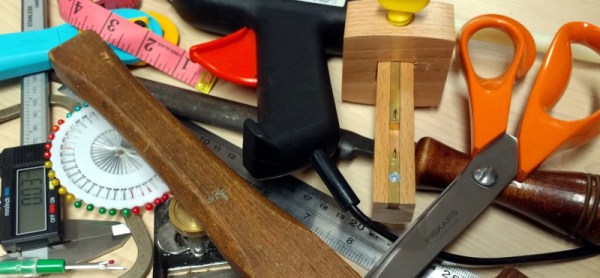
Anyone who has spent much time reading Hackaday, or in the real world in or around a few hackspaces, will know that ours is a community of diverse interests. In the same place you will find a breathtaking range of skills and interests, people working with software, electronics, textiles, and all conceivable materials and media. And oftentimes in the same person: a bare-metal kernel guru might spend their time in a hackspace making tables from freight pallets rather than coding.

Through it all run a variety of threads, identities if you will, through which the differing flavours of our wider community define themselves. Words like “Hacker” and “Maker” you may identify with, but when I mention words like “Crafter” or “Artist”, perhaps they might meet with some resistance. After all, artists paint things, don’t they, and crafters? They make wooly hats and corn dollies! Continue reading “Art, Craft, Make, Hack, Whatever”

Retrotechtacular: Field Assembling Airplanes Like Wartime “Ikea”

Imagine it’s 1943, and you have to transport 1,000 P-47 fighter planes from your factory in the United States to the front lines in Europe, roughly 5,000 miles over the open ocean. Flying them isn’t an option, the P-47 has a maximum range of only 1,800 miles, and the technology for air-to-air refueling of fighter planes is still a few years off. The Essex class aircraft carriers in use at this time could carry P-47s in a pinch, but the plane isn’t designed for carrier use and realistically you wouldn’t be able to fit many on anyway. So what does that leave?

It turns out, the easiest way is to simply ship them as freight. But you can’t exactly wrap a fighter plane up in brown paper and stick a stamp on it; the planes would need to be specially prepared and packed for their journey across the Atlantic. To get the P-47 inside of a reasonably shaped shipping crate, the wings, propeller, and tail had to come off and be put into a separate crate. But as any reader of Hackaday knows, getting something apart is rarely the problem, it’s getting the thing back together that’s usually the tricky part.

So begins the 1943 film “Uncrating and Assembly of the P-47 Thunderbolt Airplane which has been digitally restored and uploaded to YouTube by [Zeno’s Warbirds]. In this fascinating 40 minute video produced by the “Army Air Forces School of Applied Tactics”, the viewer is shown how the two crates containing the P-47 are to be unpacked and assembled into a ready-to-fly airplane with nothing more than manpower and standard mechanic’s tools. No cranes, no welders, not even a hanger: just a well-designed aircraft and wartime ingenuity.

Continue reading “Retrotechtacular: Field Assembling Airplanes Like Wartime “Ikea””

Ask Hackaday: Preserving Electronic Devices

Conventional wisdom holds that we no longer make things to last for the long haul, and that we live in a disposable world. It’s understandable — after all, most of us have a cell phone in our pocket that’s no more than a year or two old, and it’s often cheaper to buy a new printer than replace the ink cartridges. But most of that disposability is driven by market forces, like new software that makes a device obsolete long before it breaks down, or the razor and blades model that makes you pay through the nose for ink. It turns out that most electronic devices are actually pretty well engineered, and as long as they’re not abused can still be operating decades down the road.

But what happens when you want to put an electromechanical device away and preserve it for a rainy day? What can you do to make sure the device will operate again a few years down the road? Are there steps one can take beyond the typical “keep it in a cool, dry place” advice? In short, how do you preserve electronic devices?

Continue reading “Ask Hackaday: Preserving Electronic Devices”