Pulling Music Out Of The Airwaves

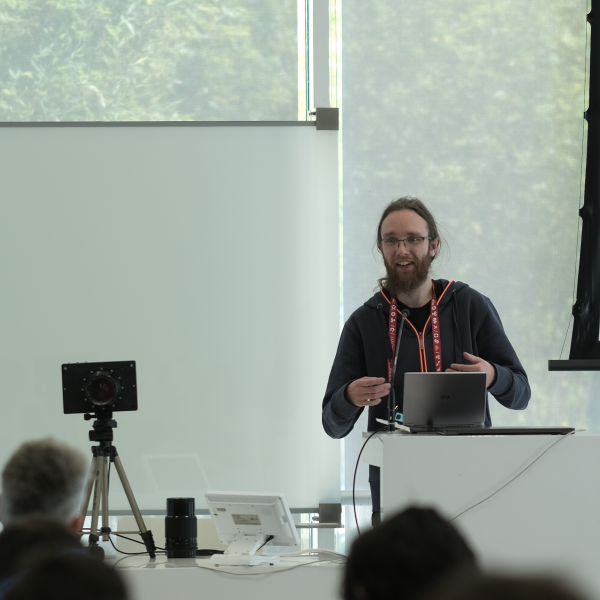
RADIO WONDERLAND is a one-man band with many famous unintentional collaborators. [Joshua Fried]’s shows start off with him walking in carrying a boombox playing FM radio. He plugs it into his sound rig, tunes around a while, and collects some samples. Magic happens, he turns an ancient Buick steering wheel, and music emerges from the resampled radio cacophony.

It’s experimental music, which is secret art-scene-insider code for “you might not like it”, but we love the hacking. In addition to the above-mentioned steering wheel, he also plays a rack of shoes with drumsticks. If we had to guess, we’d say rotary encoders and piezos. All of this is just input for his computer programs which take care of the sampling, chopping, and slicing of live radio into dance music. It’s good enough that he’s opened for [They Might Be Giants].

Check out the videos (embedded below) for a taste of what a live show was like. There are definitely parts where the show is a little slow, but they make it seem cooler when a beat comes together out of found Huey Lewis. We especially like the “re-esser” routine that hones in on the hissier parts of speech to turn them into cymbals. And if you scan the crowd in the beginning, you can find a ten-years-younger [Limor Fried] and [Phil Torrone].

Continue reading “Pulling Music Out Of The Airwaves”

DIY KVM Switch Lets You Use One Keyboard And Mouse With Multiple Computers

Here’s a quick DIY hack if you happen to have multiple computers at home or at the office and are tired of juggling mice and keyboards. [Kedar Nimbalkar] — striving for a solution — put together a keyboard, video and mouse switcher that allows one set to control two computers.

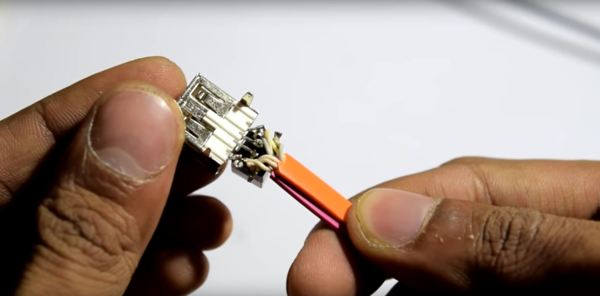
A DPDT switch is connected to a female USB port, and two male USB cables — with the ground and 5V wires twisted together and connected to the switch — each running to a PC. [Nimbalkar] suggests ensuring that the data lines are correctly wired, and testing that the 5V and ground are connected properly. He then covered the connections with some hot glue to make it a little more robust since it’s about to see a lot of use.

Now all that’s needed is a quick press of the button to change which PC you are working on, streamlining what can be a tedious changeover — especially useful if you have a custom keyboard you want to use all the time.

Continue reading “DIY KVM Switch Lets You Use One Keyboard And Mouse With Multiple Computers”

Transparent Rocket Engine

Rocket engines are undeniably cool. Experiencing the roar, seeing the fire, and watching the rocket blast off into the sky… what else can you ask for? Well, for [NightHawkInLight], a transparent rocket body is the answer.

Based on previous work by [Applied Science], he uses an acrylic rod as the rocket body and as the fuel. Bring a flame into the acrylic, apply oxygen from a canister at the other end of the body and voilà! The rocket engine starts nicely, and even better, the intensity of the burn can be controlled via the amount of oxygen provided.
Continue reading “Transparent Rocket Engine”

Vote With Your Feet

Gamifying life is silly, fun, and a great way to interact with those strangers who you pass everyday. Here’s one example that might just pop up along your next walk to work. It’s a way to take a very unscientific straw poll on any topic — you won’t even have to use your hands to cast a ballot.

A group called [Vote With Your Feet] has come up with a novel way of casting ballots. Simply walk down the sidewalk and through one of two doorways, each labeled with either side of a dichotomy. Each doorway is able to count the number of people that pass through it, so any issue imaginable can be polled. They already did vim vs emacs (59 to 27),  and we’d like to see Keynes vs Hayek, or even Ovaltine vs Nesquik. Users can send the machine new issues for the masses to vote on, so the entertainment is quite literally limited only by your imagination.

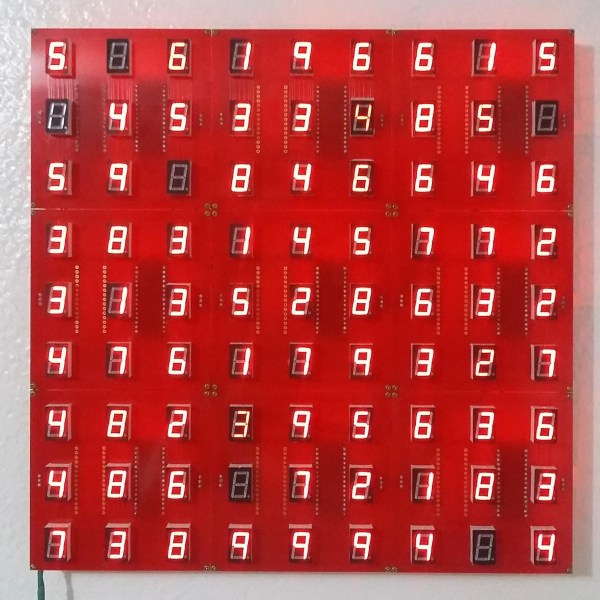
thumbThe physical build is well documented. Since this is used outside, the choice of a flipdot display (of course always fun to play with) is perfect for this high-contrast in any level of light. Each doorway has a break-beam sensor which is monitored by the Raspberry Pi driving the overhead display (here’s code for it all if you want to dig in).

The point of this art installation like this is to get people to interact with their environment in a novel way, which this project has accomplished exceptionally well. In 3 days, they registered over 10,000 votes which are viewable on their website. If you have a project in mind that calls for data visualization you might want to keep this in your back pocket.

We have also seen other ways that doorways can count people outside of voting, if you’re looking for any inspiration yourself.

A Trove Of Arcade Projects

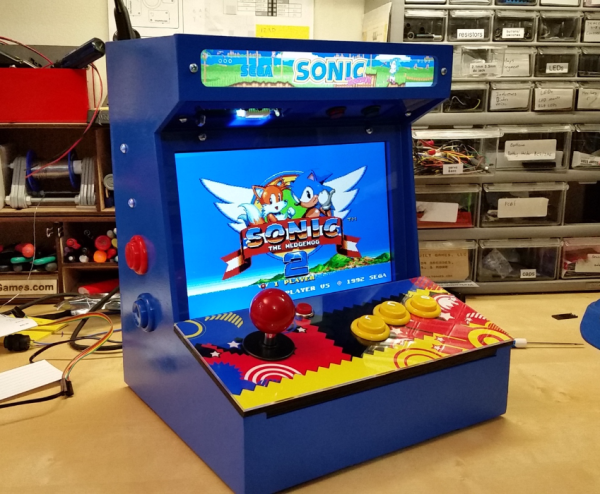
[Ryan Bates] loves arcade games, any arcade games. Which is why you can find claw machines, coin pushers, video games, and more on his website.

We’ve covered his work before with his Venduino project. We also really enjoyed his 3D printed arcade joystick based off the design of a commercial variant. His coin pushing machine could help some us finally live our dream of getting a big win out of the most insidious gambling machine at arcades meant for children.

Speaking of frustrating gambling machines for children, he also built his own claw machine. Nothing like enabling test mode and winning a fluffy teddy bear or an Arduino!

It’s quite a large site and there’s good content hidden in nooks and crannys, so explore. He also sells kits, but it’s well balanced against a lot of open source files if you’d like to do it yourself. If you’re wondering how he gets it all done, his energy drink review might provide a clue.

Print Directly On Fabric With An Inkjet Printer

[fungus amungus] was reading online about printing directly on fabrics with a home printer. He’d read a few hopeful tutorials about printing on them with a laser printer, but he didn’t own one.

Considering that you can occasionally buy an inkjet for less than the ink, he decided to take the plunge and see if he could print on a swatch of fabric with his inkjet. The technique requires a printer, some wax paper, scissors, and an iron.

By adhering the wax paper to the fabric properly, it’s possible to run it through the printer without tears. (We’ll let you pick the heteronym.) The final step is to let the ink sit for an hour before running the iron over it again. This seems to cure the ink and it can even survive a few washings.

Being able to make any pattern of cloth on demand seems like a useful thing to keep in the toolbox!

Simple Hearing Amplifier

Hearing aids are probably more high-tech than you think. They are tiny. They have to go through a lot of trouble to prevent feedback. They need a long battery life. The good ones match their amplification to the inverse of your hearing loss (amplifying only the bands where you don’t hear as well).

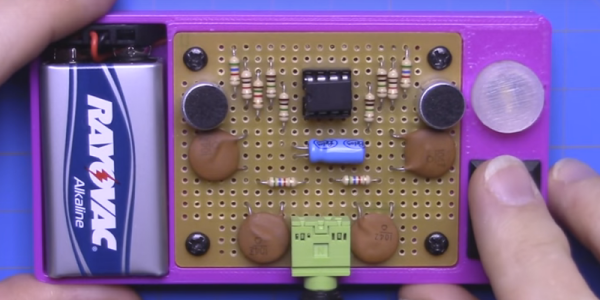
[NotionSunday] put together a hearing amplifier project that probably doesn’t hit many of those design criteria. However, thanks to a 3D printed case, it looks pretty good. The device uses a dual opamp to boost the output from two microphones and feeds it to a conventional headphone.

Continue reading “Simple Hearing Amplifier”