Emmanuelle Charpentier And Jennifer Doudna Sharpened Mother Nature’s Genetic Scissors And Won The Nobel For It

It sounds like science fiction — and until 2012, the ability to cheaply and easily edit strings of DNA was exactly that. But as it turns out, CRISPR/Cas9 gene editing is a completely natural function in which bacteria catalogs its interactions with viruses by taking a snippet of the virus’ genetic material and filing it away for later.

Now, two women have won the 2020 Nobel Prize in Chemistry “for developing a method for genome editing”. Emmanuelle Charpentier and Jennifer Doudna leveraged CRISPR into a pair of genetic scissors and showed how sharp they are by proving that they can edit any string of DNA this way. Since Emmanuelle and Jennifer published their 2012 paper on CRISPR/Cas9, researchers have used these genetic scissors to create drought-resistant plants and look for new gene-based cancer therapies. Researchers are also hoping to use CRISPR/Cas9 to cure inherited diseases like Huntington’s and sickle cell anemia.

The discovery started with Emmanuelle Charpentier’s investigation of the Streptococcus pyogenes bacterium. She was trying to understand how its genes are regulated and was hoping to make an antibiotic. Once she teamed up with Jennifer Doudna, they found a scientific breakthrough instead.

Dr. Emmanuelle Charpentier via Wikimedia Commons

Emmanuelle Charpentier Fights Flesh-Eating Bacteria

Emmanuelle Charpentier was born December 11th, 1968 in Juvisy-sur-Orge, France. She studied biochemistry, microbiology, and genetics at the Pierre and Marie Curie University, which is now known as Sorbonne University. Then she received a research doctorate from Institut Pasteur and worked as a university teaching assistant and research scientist. Dr. Charpentier is currently a director at the Max Planck Institute for Infection Biology in Berlin, and in 2018, she founded an independent research unit.

Upon completion of her doctorate, Dr. Charpentier spent a few years working in the States before winding up at the University of Vienna where she started a research group. Her focus was still on the bacteria Streptococcus pyogenes, which causes millions of people to suffer through infections like tonsillitis and impetigo each year. It also causes sepsis, which officially makes it a flesh-eating bacterium.
Continue reading “Emmanuelle Charpentier And Jennifer Doudna Sharpened Mother Nature’s Genetic Scissors And Won The Nobel For It”

Using Open Source To Train Your Dog

An open-source canine training research tool was just been released by [Walker Arce] and [Jeffrey Stevens] at the University of Nebraska — Lincoln’s Canine Cognition and Human Interaction Lab (C-CHIL).

We didn’t realize that dog training research techniques were so high-tech. Operant conditioning, as opposed to Pavlovian, gives a positive reward, in this case dog treats, to reinforce a desired behavior. Traditionally operant conditioning involved dispensing the treat manually and some devices do exist using wireless remote controls, but they are still manually operated and can give inconsistent results (too many or too few treats). There weren’t any existing methods available to automate this process, so this team decided to rectify the situation.

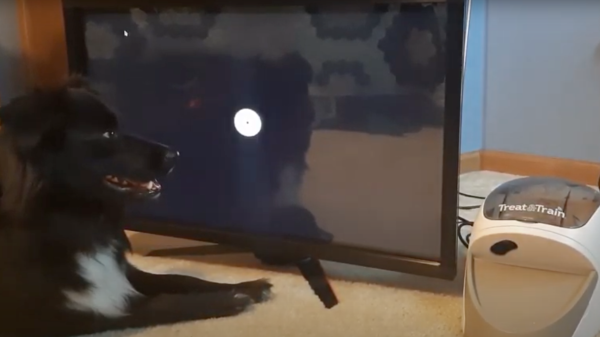
They took a commercial treat dispenser and retro-fitted it with an interface board that taps into the dispenser’s IR sensors to detect that the hopper is moving and treats were actually dispensed. The interface board connects to a Raspberry Pi which serves as a full-featured platform to run the tests. In this demonstration it connects to an HDMI monitor, detecting touches from the dog’s nose to correlate with events onscreen. Future researchers won’t have to reinvent the wheel, just redesign the test itself, because [Walker] and [Jeffrey] have released all the firmware and hardware as open-source on the lab’s GitHub repository.

In the short video clip below, watch the dog as he gets a treat when he taps the white dot with his snout. If you look closely, at one point the dog briefly moves the mouse pointer as well. We predict by next year the C-CHIL researchers will have this fellow drawing pictures and playing checkers.

Continue reading “Using Open Source To Train Your Dog”

The 10,000 Pixel Per Inch Display Is Now Possible

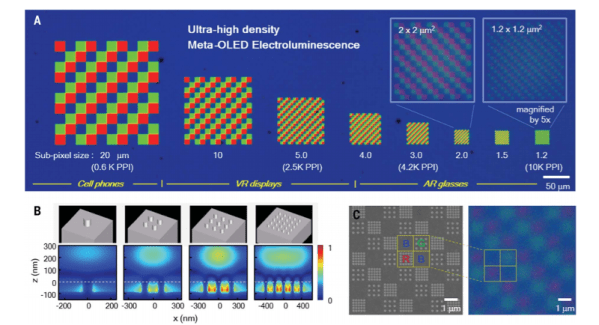
A good smartphone now will have about 500 pixels per inch (PPI) on its screen. Even the best phones we could find clock in at just over 800 PPI. But Stanford researchers have a way to make displays with more than 10,000 pixels per inch using technology borrowed from solar panel research.

Of course, that might be overkill on a six-inch phone screen, but for larger displays and close up displays like those used for virtual reality, it could be a game-changer. Your brain is good at editing it out, but in a typical VR headset, you can easily see the pixels from the display even at the highest PPI resolutions available. Worse, you can see the gaps between pixels which give a screen door-like effect. But with a density of 10,000 PPI it would be very difficult to see individual pixels, assuming you can drive that many dots.

Continue reading “The 10,000 Pixel Per Inch Display Is Now Possible”

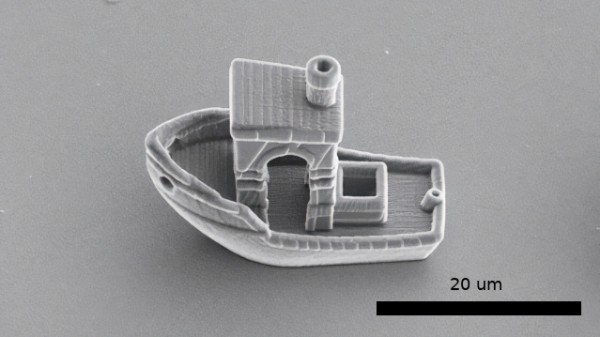
World’s Smallest Benchy Shows Off What 3D-Printing Can Do For “Microswimmers”

We’ve said it before, but we cast a wary eye at any superlative claims that come our way. “World’s fastest” or “world’s first” claims always seem to be quickly debunked, but when the claim of “World’s Smallest Benchy” is backed up by a tugboat that two dozen E. coli would have a hard time finding space on, we’re pretty comfortable with it.

Of course the diminutive benchmark was not printed just for the sake of it, but rather as part of a demonstration of what’s possible with “microswimmers”, synthetic particles which are designed to move about freely in microscopic regimes. As described in a paper by [Rachel P. Doherty] et al from the Soft Matter Physics lab at Leiden University, microswimmers with sizes on the order of 10 to 20 μm can be constructed repeatably, and can include a small area of platinum catalyst. The catalyst is the engine of the microswimmer; hydrogen peroxide in the environment decomposes on the catalyst surface and provides a propulsive force.

Artificial microswimmers have been around for a while, but most are made with chemical or evaporative methods which result in simple shapes like rods and spheres. The current work describes much more complex shapes — the Benchy was a bit of a flex, since the more useful microswimmers were simple helices, which essentially screw themselves into the surrounding fluid. The printing method was based on two-photon polymerization (2PP), a non-linear optical process that polymerizes a resin when two photons are simultaneously absorbed.

The idea that a powered machine so small could be designed and manufactured is pretty cool. We’d love to see how control mechanisms could be added to the prints — microfluidics, perhaps?

Correlated Electron Memory… Coming Soon?

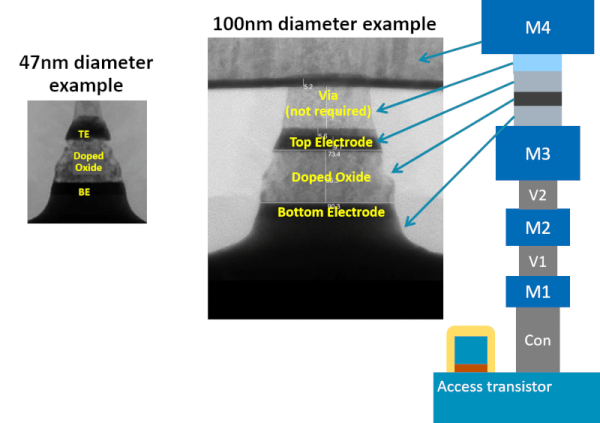
We often see press releases and announcements about the next big technology in batteries, memory, displays, capacitors, or any of a number of other things. Usually we are suspicious since we typically don’t see any of this new technology in the marketplace over any reasonable timescale. So when we read about correlated-electron memory Cerfe Labs, we had to wonder if it would be more of the same. IOur suspicions may be justified of course, but it is telling that the company is a spin-off from ARM, so that gives them some real-world credibility.

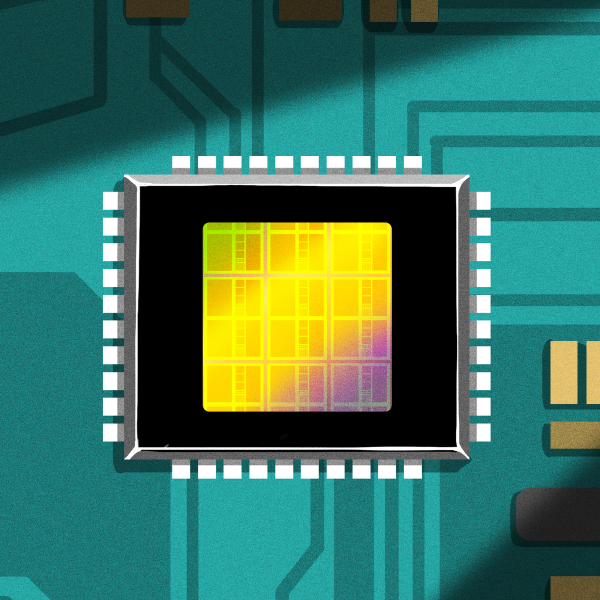
Correlated-electron RAM or CeRAM is the usual press release material. Nonvolatile, smaller than SRAM, and fast. It sounds as though it could replace the SRAM in PC caches, for example, and take up less die space on the CPU chip. The principle is a bit odd. When electrons are forced together in certain materials, the properties of the material can change. This Mott transition (named after the inventor [Neville Mott]) can take carbon-doped nickel oxide and switch it from its natural electrical insulating state to a conducting state and back again.

Continue reading “Correlated Electron Memory… Coming Soon?”

OSIRIS-REx Reaches Out And Touches Asteroid Bennu

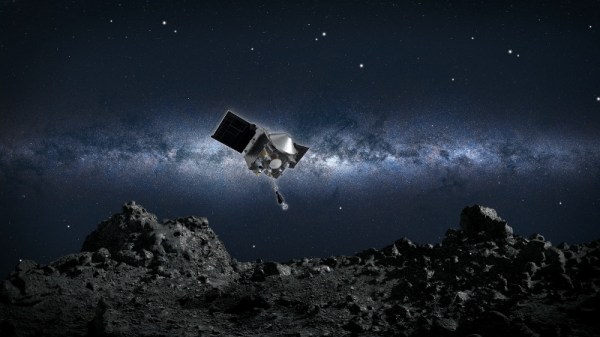
After a four year trek through deep space, OSIRIS-REx made history this evening as it became the first NASA spacecraft to try and collect a surface sample from an asteroid (Editor’s note: servers may be down due to the breaking news). Once sensors verify the collected material is safely onboard, the vehicle will begin drifting away from the 490 meter wide Bennu in preparation of its eventual departure and return to Earth. If all goes according to plan, the craft’s conical Sample Return Capsule carrying its precious cargo will renter the atmosphere and land at the Utah Test and Training Range in September of 2023.

OSIRIS-REx with solar panels in “Y-Wing” configuration.

Due to its extremely low gravity and rocky surface, a traditional landing on Bennu was deemed impractical. Instead, OSIRIS-REx performed a daring touch and go maneuver that brought the spacecraft into contact with the surface for just a few seconds.

A camera on the bottom of the vehicle took images every few minutes during the descent and ran them through an onboard system called Natural Feature Tracking (NFT) that autonomously steered it away from dangerous surface features. As a precaution, the solar panels on the OSIRIS-REx were angled backwards in a “Y-Wing” configuration shortly before the descent to help protect them from striking the surface or being damaged by ejected material.

Once the colander-like Touch-And-Go Sample Acquisition Mechanism (TAGSAM) mounted to the end of the spacecraft’s 3.35 meter (11 foot) articulated robotic arm arm made contact with the regolith, pressurized nitrogen was used to kick up material and push it towards storage caches built into the mechanism. With so much riding on the successful collection of surface material, this largely passive system was selected to minimize the possible failures in the critical few seconds that OSIRIS-REx would be in contact with Bennu. Mission planners say it might take until Saturday to determine if a sample was successfully collected, and that the spacecraft has the ability to perform two more attempts if needed.

After its discovery in September 1999, both the Arecibo Observatory and the Goldstone Deep Space Network were used to make radar observations of Bennu to study its shape and size. Calculations have shown it has a cumulative 1 in 2,700 chance of striking the Earth by the year 2199. By mapping the asteroid, studying it at close range, and bringing a geological sample back home, NASA hopes to gain valuable insight on how similar near-Earth objects can be detected and ultimately diverted if needed.

This (mostly) Transparent Tesla Coil Shows It All

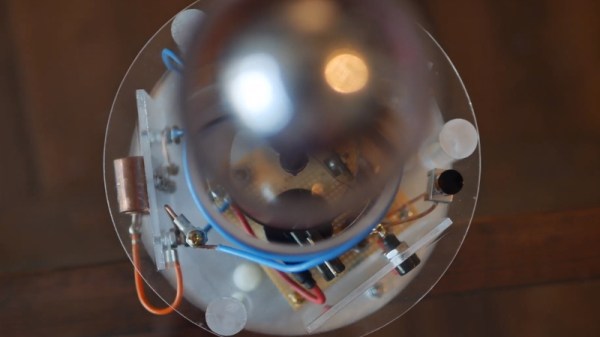
You’d be forgiven for assuming that a Tesla coil is some absurdly complex piece of high-voltage trickery. Clarke’s third law states that “any sufficiently advanced technology is indistinguishable from magic”, and lighting up a neon tube from across the room sure looks a lot like magic. But in his latest Plasma Channel video, [Jay Bowles] tries to set the record straight by demonstrating a see-through Tesla coil that leaves nothing to the imagination.

Of course, we haven’t yet mastered the technology required to produce transparent copper wire, so you can’t actually see through the primary and secondary coils themselves. But [Jay] did wind them on acrylic tubes to prove there aren’t any pixies hiding in there. The base of the coil is also made out of acrylic, which lets everyone see just how straightforward the whole thing is.

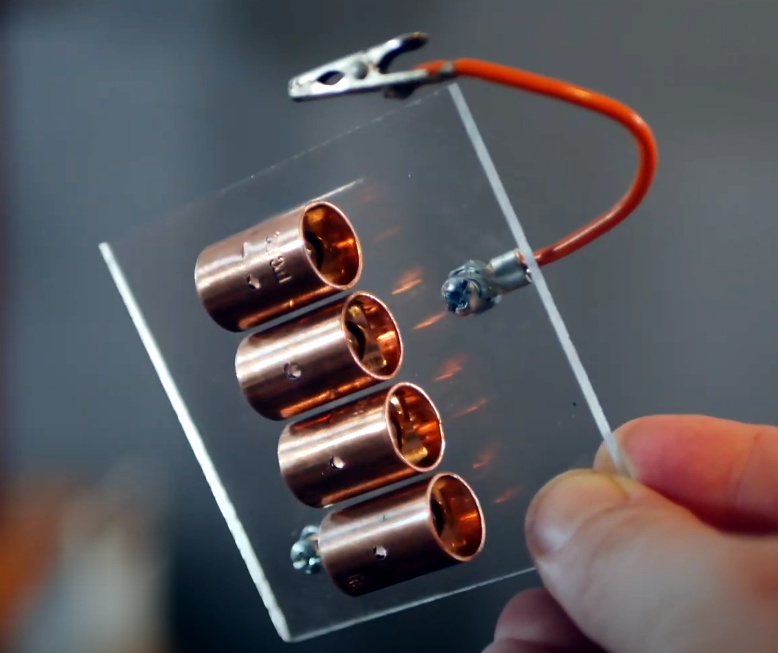
Beyond the coils, this build utilizes the DIY high-voltage power supply that [Jay] detailed a few months back. There’s also a bank of capacitors mounted to a small piece of acrylic, and a clever adjustable spark gap that’s made of little more than a few strategically placed pieces of copper pipe and an alligator clip. Beyond a few little details that might not be obvious at first glance, such as grounding the secondary coil to a layer of aluminum tape on the bottom of the base, it’s all right there in the open. No magic, just science.

[Jay] estimates this beauty can produce voltages in excess of 100,000 volts, and provides a demonstration of its capabilities in the video after the break. Unfortunately, before he could really put the new see-through coil through its paces, it took a tumble and was destroyed. A reminder that acrylic enclosures may be pretty, but they certainly aren’t invulnerable. With the value of hindsight, we’re sure the rebuilt version will be even better than the original.

If you’d rather not have your illusions shattered, we’ve seen plenty of complex Tesla coils to balance this one out. With witchcraft like PCB coils and SMD components, some of them still seem pretty magical.

Continue reading “This (mostly) Transparent Tesla Coil Shows It All”