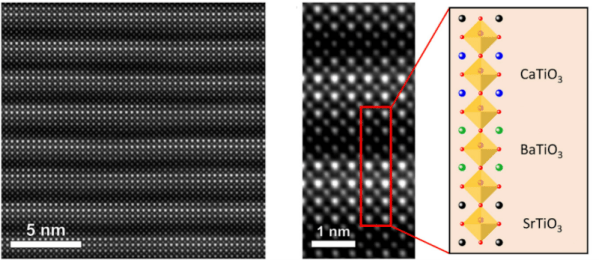
Researchers claim that using several very thin layers of ferroelectric crystals can lead to significantly better ferroelectric solar cell efficiency. But don’t pull the panels off your roof yet. Conventional cells are still much more efficient than ferroelectric devices — at least, for now.
Unlike conventional silicon-based solar cells, ferroelectric cells don’t depend on a PN junction and — in theory — can be cheaper and easier to produce. However, they typically don’t absorb as much sunlight as other materials.
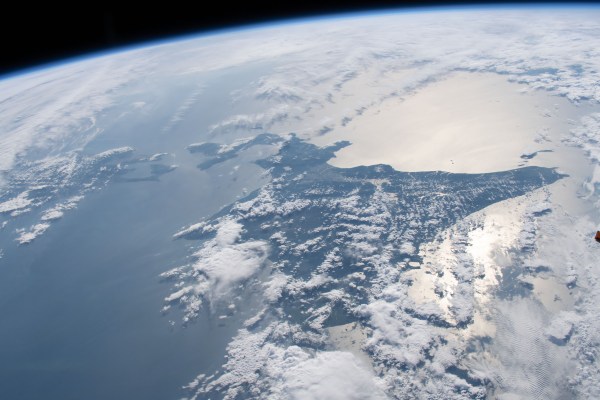
Roughly 4.6 billion years ago, Earth would gain its first atmosphere, yet this was an atmosphere that was completely unlike the atmosphere we know today. Today’s oxygen-rich atmosphere we’re familiar with didn’t form until the Proterozoic, between 2,500 and 541 million years ago, when oxygen-producing bacteria killed off much of the previously thriving life from the preceding Archean.
This, along with studies of massive insects such as the 75 cm wingspan Meganeuropsis permiana dragonflies from the Permian, and reconstructed temperature, oxygen, and carbon dioxide levels via paleoclimatology show periods during which Earth’s atmosphere and accompanying climate would be unrecognizable to us humans.
Human history covers only a minuscule fraction of Earth’s history during arguably one of the latter’s coolest, least eventful periods, and yet anthropogenic (man-made) climate change now threatens to rapidly change this. But wait, how do we know what the climate was like over such vast time scales? Let’s take a look into how we managed to reconstruct the Earth’s ancient climate, and what these findings mean for our prospects as a species today.
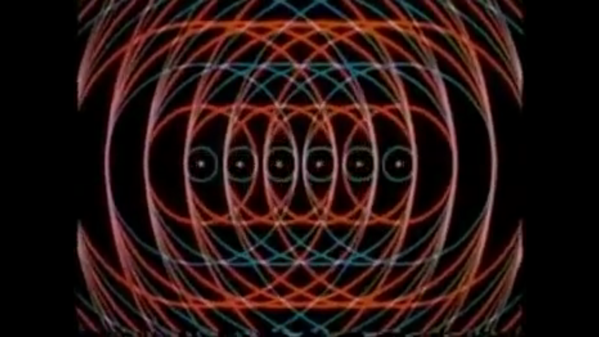
Back before the days of computers, animation was drawn by hand. We typically think of cartoons and animated feature films, but there were other genres as well. For example, animation was also used in educational and training films. [Javier Anderson] has tracked down a series of antenna and RF training videos from the Royal Canadian Air Force in the 1950s and 60s and posted them on his YouTube channel.
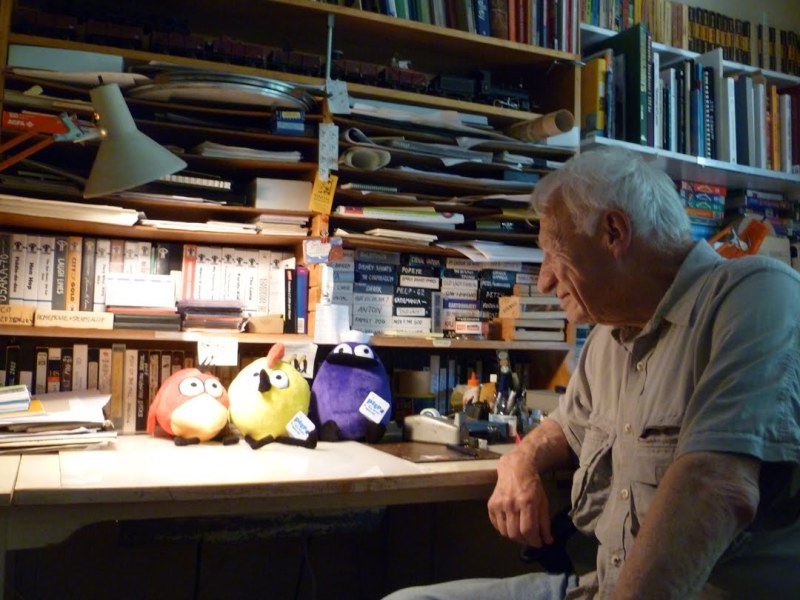
He has found three of these gems, all on the topic of antenna fundamentals: propagation, directivity, and bandwidth (the film on propagation is linked below the break). Casually searching for the names listed in the film’s credits will lead you down an endless and fascinating rabbit hole about the history of Canadian animation and the formation of the Canadian National Film Board and its Studio A group of pioneering young artists (one can easily lose a couple of hours doing said searches, so be forewarned). For these films that [Javier] located, the animator is [Kaj Pindal]. [Kaj] (1927-2019) was a Dane who learned his craft as a teenager, drawing underground anti-Hitler comics in Copenhagen until fleeing for his life. He later emigrated to Canada, where he had a successful career as an artist and educator.
Animator [Kaj Pindal] at his desk, c.2012Anyone who has tried to really grasp the physical connection between currents flowing in an antenna wire and the resultant radiated signal described by the second-order partial differential electromagnetic wave equation, all while using only a textbook, will certainly agree — unarguably this is a topic whose teaching can be significantly improved by animations such as [Kaj]’s. And if you’d like to sprinkle more phrases like “… in time-phase and space-quadrature …” into your conversations, then this film series is definitely for you.
Have you encountered any particularly helpful or well-made animated educational videos in your education and/or career? Are there any examples of similar but modern films made using computer generated images? Thanks to reader [Michael Murillo] for tipping us off to these old films.
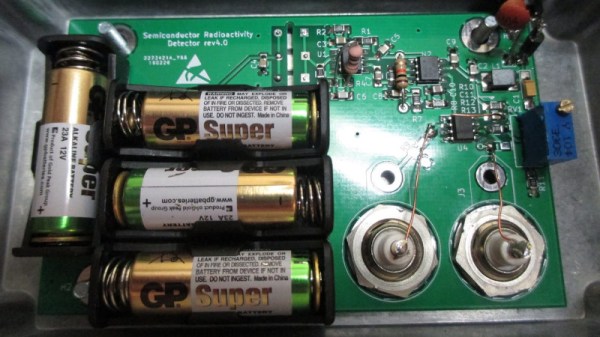
The instinctive reaction when measuring nuclear radiation is to think of a Geiger counter, as the low-pressure gas tube detectors have entered our popular culture through the Cold War. A G-M tube is not the only game in town though, and even the humble photodiode can be pressed into service. [Robert] gives us a good example, with a self-contained radiation detector head that uses a trio of BPW34s to do the job.
At its heart is a transimpedance amplifier, a not-often-seen op-amp configuration that serves as a very high gain current-to-voltage converter. This produces a spike for every radiation event detected by the diodes, which is fed to a comparator to produce a logic pulse. The diodes require a significant bias voltage, for which he’s used 48 V from a stack of 12 V photographic dry cells rather than a boost converter or other potentially noisy power supply. Such a sensitive high-gain device needs to be appropriately shielded, so the whole circuit is contained in a diecast box with a foil window to allow radiation to reach the diodes.
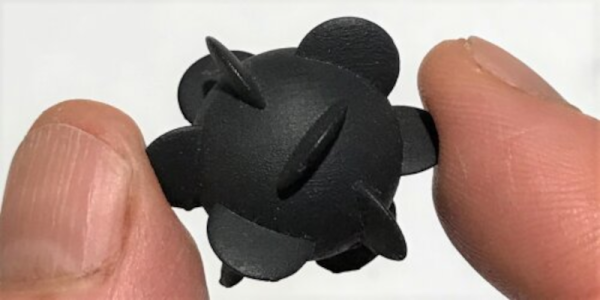
If you think 3D printing is only good for benchies, key chains, and printer parts, you might enjoy the paper by two physicists from Wesleyan University and the University of Gothenburg. Lord Kelvin — also known as William Thomson — hypothesized a shape known as an isotropic helicoid. As its name implies, the shape would look the same from any angle. Kelvin predicted that such a shape would spin as it sank in a liquid. Turns out, 3D printing proves it wrong. (The actual paywalled paper is available.)
It might seem strange that scientists are only now getting around to disproving a 150-year old hypothesis. However, the paper’s authors think Kelvin may have built the structures — he provided precise instructions — and simply dropped it when it proved incorrect.
Levitating things with magnets is no great feat these days. We don’t see as many projects with sonic levitation. However, Japanese engineers have a new method to lift objects using sound. The process isn’t totally reliable yet, but it may lead to better methods in the future. You can see a video about the work below.
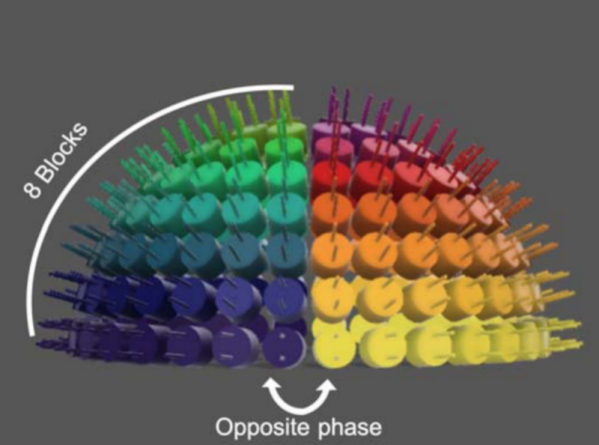
Manipulating very small items via laser or acoustics isn’t new. However, there are significant limitations to current methods. This new approach uses an array of hemispherical ultrasound transducers. By controlling the amplitude and phase of each transducer, an acoustic trap forms and can pick up a 3 mm polystyrene ball without direct contact.
Manipulating objects without contact interests us for a few reasons, not the least of which is circuit assembly. Robust technology of this type could also add new dimensions to additive manufacturing. Of course, it is a long way from a 3 mm polystyrene ball to a surface mount component. However, you have to admit watching components just float through the air to their final resting places would be something to see.
Prior to 1970, bulletproof vests were pretty iffy, with a history extending as far as the 1500s when there were attempts to make metal armor that was bulletproof. By the 20th century there was ballistic nylon, but it took kevlar to produce garments with real protection against projectile impact. Now a 3D printed nanomaterial might replace kevlar.
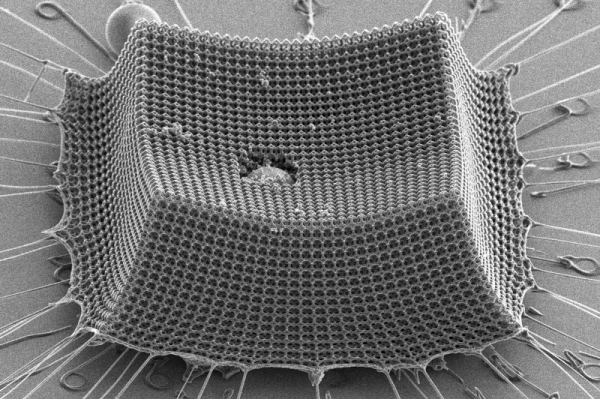
A group of scientists have published a paper that interconnected tetrakaidecahedrons made up of carbon struts that are arranged via two-photon lithography.
We know that tetrakaidecahedrons sound like a modern invention, but, in fact, they were proposed by Lord Kelvin in the 19th century as a shape that would allow things to be packed together with minimum surface area. Sometimes known as a Kelvin cell, the shape is used to model foam, among other things.
The 3D printing, in this case, is a form of lithography using precise lasers, so you probably won’t be making any of this on your Ender 3. However, the shape might have some other uses when applied to conventional 3D printing methods.