Casually Chirping Into The World Of LoRaWAN

While wireless communications are unquestionably useful in projects, common wireless protocols such as WiFi and Bluetooth peter out after only a number of meters, which is annoying when your project is installed in the middle of nowhere. Moving to an LTE-based or similar mobile solution can help with the range, but this does not help when there’s poor cell coverage, and it tends to use more power. Fortunately, for low-bitrate, low-power wide-area networks (LPWAN) like e.g. sensor networks, there’s a common solution in the form of LoRaWAN, as in long-range wide area network (WAN).

The proprietary LoRa RF modulation technique that underlies LoRaWAN is based on Chirp Spread Spectrum (CSS). This modulation technique is highly resistant to channel noise and fading as well as Doppler shift, enabling it to transmit using relatively low power for long distances. LoRaWAN builds on top of the physical layer provided by LoRa to then create the protocol that devices can then use to communicate with other LoRa devices.

Courtesy of global LoRaWAN gateway and software providers such as The Things Industries and ThingSpeak, it’s possible even as a hobbyist to set up a LoRaWAN-powered sensor network with minimal cost. Let’s take take a look at exactly what is involved in setting up LoRaWAN devices, and what possible alternatives to LoRaWAN might be considered. Continue reading “Casually Chirping Into The World Of LoRaWAN”


Hackaday Podcast 152: 555 Timer Extravaganza, EMF Chip Glitching 3 Ways, A Magnetic Mechanical Keyboard, And The Best Tricorder Ever

Join Hackaday Editor-in-Chief Elliot Williams and Managing Editor Tom Nardi as they bring you up to speed on the best stories and projects from the week. There’s some pretty unfortunate news for the physical media aficionados in the audience, but if you’re particularly keen on 50 year old integrated circuits, you’ll love hearing about the winners of the 555 Timer Contest. We’ll take a look at a singing circuit sculpture powered by the ESP32, extol the virtues of 3D printed switches, follow one hacker’s dream of building the ultimate Star Trek tricorder prop, and try to wrap our heads around how electronic devices can be jolted into submission. Stick around to the end as we take a close look at some extraordinary claims about sniffing out computer viruses, and wrap things up by wondering why everyone is trying to drive so far.

Take a look at the links below if you want to follow along, and as always, tell us what you think about this episode in the comments!

Direct Download (65 MB)

Continue reading “Hackaday Podcast 152: 555 Timer Extravaganza, EMF Chip Glitching 3 Ways, A Magnetic Mechanical Keyboard, And The Best Tricorder Ever”

This Week In Security: NetUSB, HTTP.sys, And 2013’s CVE Is Back

Let’s imagine a worst case situation for home routers. It would have to start with a port unintentionally opened to the internet, ideally in a popular brand, like Netgear. For fun, let’s say it’s actually a third-party kernel module, that is in multiple router brands. This module would then need a trivial vulnerability, say an integer overflow on the buffer size for incoming packets. This flaw would mean that the incoming data would write past the end of the buffer, overwriting whatever kernel data is there. So far, this exactly describes the NetUSB flaw, CVE-2021-45608.

Because red teams don’t get their every wish, there is a catch. While the overflow is exceptionally easy to pull off, there isn’t much wiggle room on where the data gets written. There’s no remote code execution Proof of Concept (PoC) yet, and [Max Van Amerongen], who discovered the flaw, says it would be difficult but probably not impossible to pull off. All of this said, it’s a good idea to check your router for open ports, particularly non-standard port numbers. If you have a USB port on your router, check for updates.

Windows HTTP.sys Problem

A serious problem has been announced in Windows Server 2019 and Windows 10, with some versions vulnerable in their default configurations. The problem is in how Windows handles HTTP Trailer packets, which contain extra information at the end of normal HTTP transfers. There is a PoC available that demonstrates a crash. It appears that an additional information leak vulnerability would have to be combined with this one to produce a true exploit. This seems to be a different take on CVE-2021-31166, essentially exploiting the same weakness, and working around the incomplete fix. This issue was fixed in the January patch set for Windows, so make sure you’re covered. Continue reading “This Week In Security: NetUSB, HTTP.sys, And 2013’s CVE Is Back”

Remoticon 2021 // Debra Ansell Connects PCB In Ways You Didn’t Expect

“LEDs improve everything.” Words to live by. Most everything that Debra Ansell of [GeekMomProjects] makes is bright, bold, and blinky. But if you’re looking for a simple string of WS2812s, you’re barking up the wrong tree. In the last few years, Debra has been making larger and more complicated assemblies, and that has meant diving into the mechanical design of modular PCBs. In the process Debra has come up with some great techniques that you’ll be able to use in your own builds, which she shared with us in a presentation during the 2021 Hackaday Remoticon.

She starts off with a quick overview of the state of play in PCB art, specifically of the style that she’s into these days: three dimensional constructions where the physical PCB itself is a sculptural element of the project. She’s crossing that with the popular triangle-style wall hanging sculpture, and her own fascination with “inner glow” — side-illuminated acrylic diffusers. Then she starts taking us down the path of creating her own wall art in detail, and this is where you need to listen up. Continue reading “Remoticon 2021 // Debra Ansell Connects PCB In Ways You Didn’t Expect”

Congratulations Winners Of The 555 Timer Contest!

Sometimes the best inspiration is limitation. The 555 timer does “one thing” — compares a voltage to a couple thresholds and outputs a signal accordingly. It’s two comparators, a voltage ladder, and a flip-flop. And yet, it’s the most sold single chip of all time, celebrating its 50th birthday this year! So when Hackaday runs a 555 Timer Contest, hackers of all stripes come out with their best work to show their love for the Little DIP That Could.

The Winners

Far and away the favorite entry was the Giant 555 Timer by [Rudraksha Vegad]. Every one of our judges rated it in the top five, and it took top honors twice. On its face, this is a simple “giant 555 in a box” build, but have a look under the hood. Each sub-module that makes up the 555 — comparators, flip-flop, and amplifier — are made from salvaged discrete parts in actual breadboard fashion, soldered to brass nails hammered into wood. As an end product, it’s a nice piece of woodworking, but as a process of creation, it’s a masterwork in understanding the 555 at its deepest level. We should all make one!

The Menorah555 is a simple design with some very nice tricks up its sleeve. Perhaps the cutest of which is pulling the central candle out and lighting the others with it — a trick that involves a supercapacitor and reed switches. Each of the candle lighting circuits, however, use a 555 timer both for its intended purpose of providing a timed power-on reset pulse, and another 555 is used as a simple flip-flop. It’s a slick design, and a great user interaction.

The Cyclotone Mechanical Punk Console Sequencer is a rotating tower of circuit sculpture and noisemakers. This one looks great, is amazingly well documented in the video series, and uses a billion clever little tricks along the way. The 555’s role? Each of the four levels is the classic Atari Punk Console circuit.

All three of these projects win a $150 shopping spree at Digi-Key. That’s a lot of timers!

Continue reading “Congratulations Winners Of The 555 Timer Contest!”

Unpicking The Hype Around Web 3, What’s The Tech?

The buzzword of the moment in the frothier portions of the technology press is inescapable: “Web 3”. This is a collective word for a new generation of decentralised online applications using blockchain technologies, and it follows on from a similar excitement in the mid-2000s surrounding so-called “Web 2” websites that broke away from the static pages of the early Internet.

It’s very evident reading up on Web 3, that there is a huge quantity of hype involved in talking about this Next Big Thing. If this were April 1st it would be tempting to pen a lengthy piece sending up the coverage, but here in January that just won’t do. Instead it’s time to peer under the hype and attempt to discern what Web 3 really is from a technology standpoint. Sure, a Web 3 application uses blockchain technology, often reported breathlessly as “the Blockchain” as though there were only one, but how? What is the real technology beneath it all?

Where Did All This Web 3 Stuff Come From Anyway?

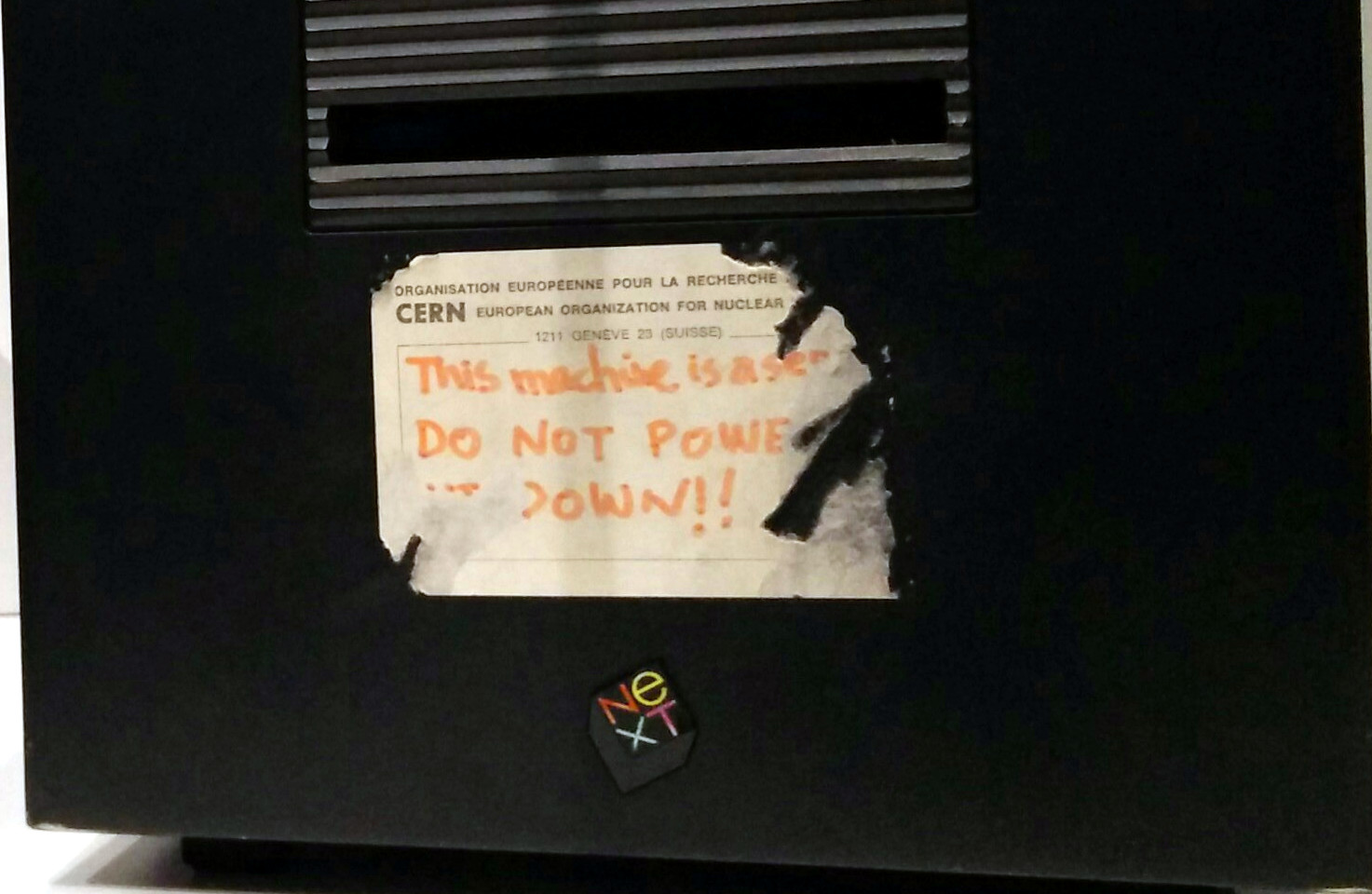
"This machine is a server. DO NOT POWER IT DOWN!!" Tim Berners-Lee's famous sticker on the front of his NeXTcube, the first web server.
“This machine is a server. DO NOT POWER IT DOWN!!” Tim Berners-Lee’s famous sticker on the front of his NeXTcube, the first web server. Binary Koala CC BY-SA 2.0.

In its earliest days, the web could be found only in academia, from Tim Berners-Lee at CERN, and then from others such as the National Center For Supercomputing Applications at the University of Illinois. In the mid-1990s the vast majority of web sites were served by the NCSA’s HTTPD server software, which served as the basis for the later hugely popular Apache project. Sites from this era were later dubbed Web 1.0, and operated as static HTML pages which could be refreshed only by reloading a page.

The millennium brought us Web 2.0. This is generally taken to refer to a much slicker generation of sites that made use of user-generated content. Behind every such generational shift lies a fresh technology, and if it was the HTTP server for Web 1.0, it was the use of Javascript in the browser to refresh page content on the fly for Web 2.0. This was dubbed AJAX, for Asynchronous Javascript And XML, and though the data transfer is now much more likely to be JSON than XML it remains the way that today’s web sites blur the line between a web page and an app. Continue reading “Unpicking The Hype Around Web 3, What’s The Tech?”

Longer Range EVs Are On The Horizon

When electric cars first started hitting the mainstream just over a decade ago, most criticism focused on the limited range available and the long recharge times required. Since then, automakers have been chipping away, improving efficiency here and adding capacity there, slowly pushing the numbers up year after year.

Models are now on the market offering in excess of 400 miles between charges, but lurking on the horizon are cars with ever-greater range. The technology stands at a tipping point where a electric car will easily be able to go further on a charge than the average driver can reasonably drive in a day. Let’s explore what’s just around the corner.

Continue reading “Longer Range EVs Are On The Horizon”