For most of us, electronic technology comes in the form of solid state devices. Transistors, integrated circuits, microcontrollers. But for the first sixty years or so of the field existing, these devices either hadn’t been invented yet or were at too early a stage in their development to be either cost-effective, or of much use. Instead a very different type of electronic component ruled the roost, the vaccum tube.
A set of electrodes in an evacuated glass envelope whose electrical properties depended on the modulation of the flow of electrons through them, these were ubiquitous in consumer electronics up until the 1960s, and clung on in a few mass-market applications even as far as the mid 1970s. As cheaper and more versatile semiconductors superseded them they faded from electronic parts catalogues, and the industry that had once produced them in such numbers disappeared in favour of plants producing the new devices. Consumer products no longer contained them, and entire generations of engineers grew up never having worked with them at all. If you were building a tube amplifier in the early 1990s, you were a significant outlier. Continue reading “Just Who Makes Tubes These Days?”→
How cool would it be if there was a material that couldn’t be cut or drilled into? You could make the baddest bike lock, the toughest-toed work boots, or the most secure door. Really, the list of possibilities just goes on and on.
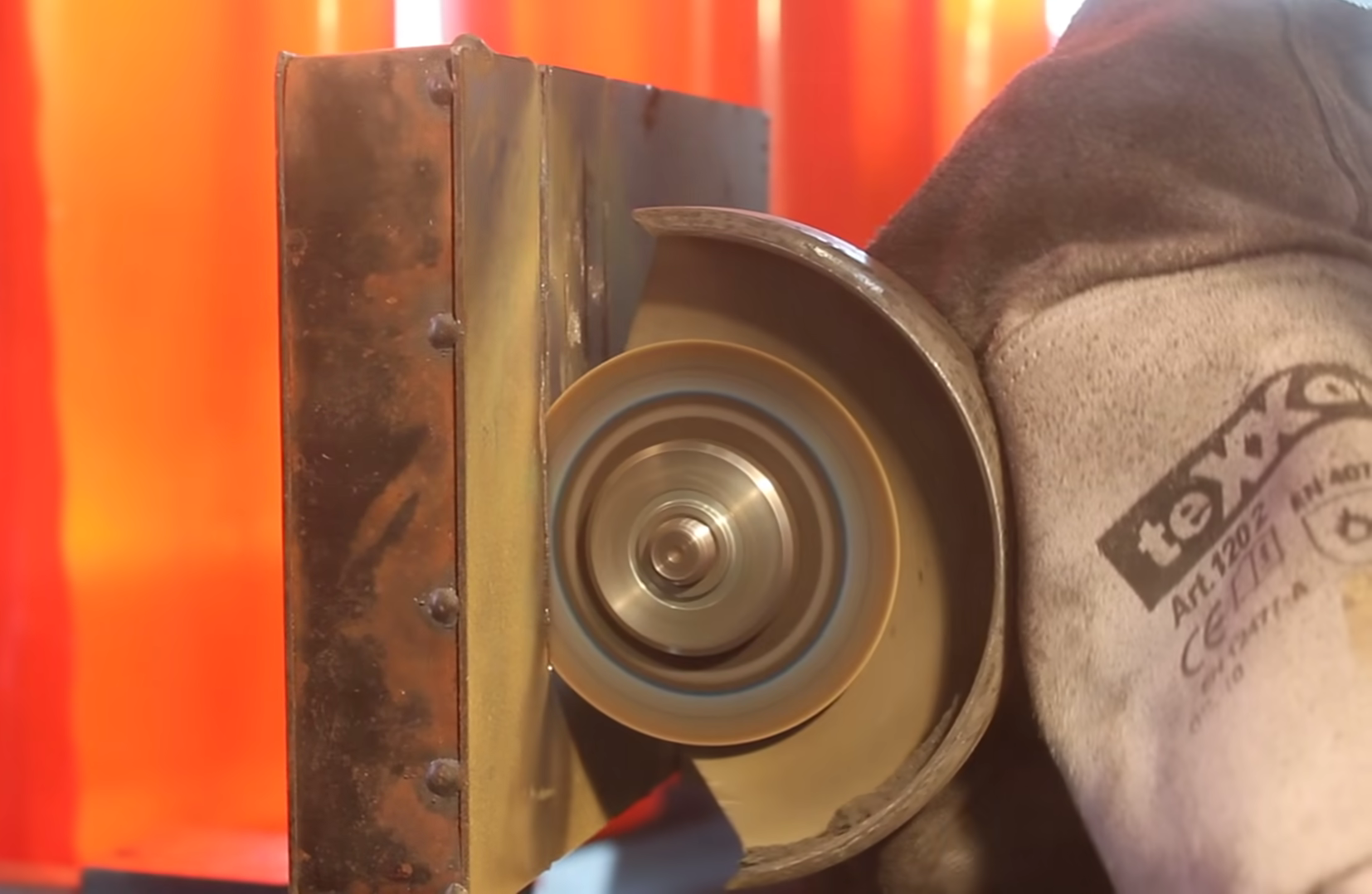
Proteus chews through an angle grinder disc in seconds.
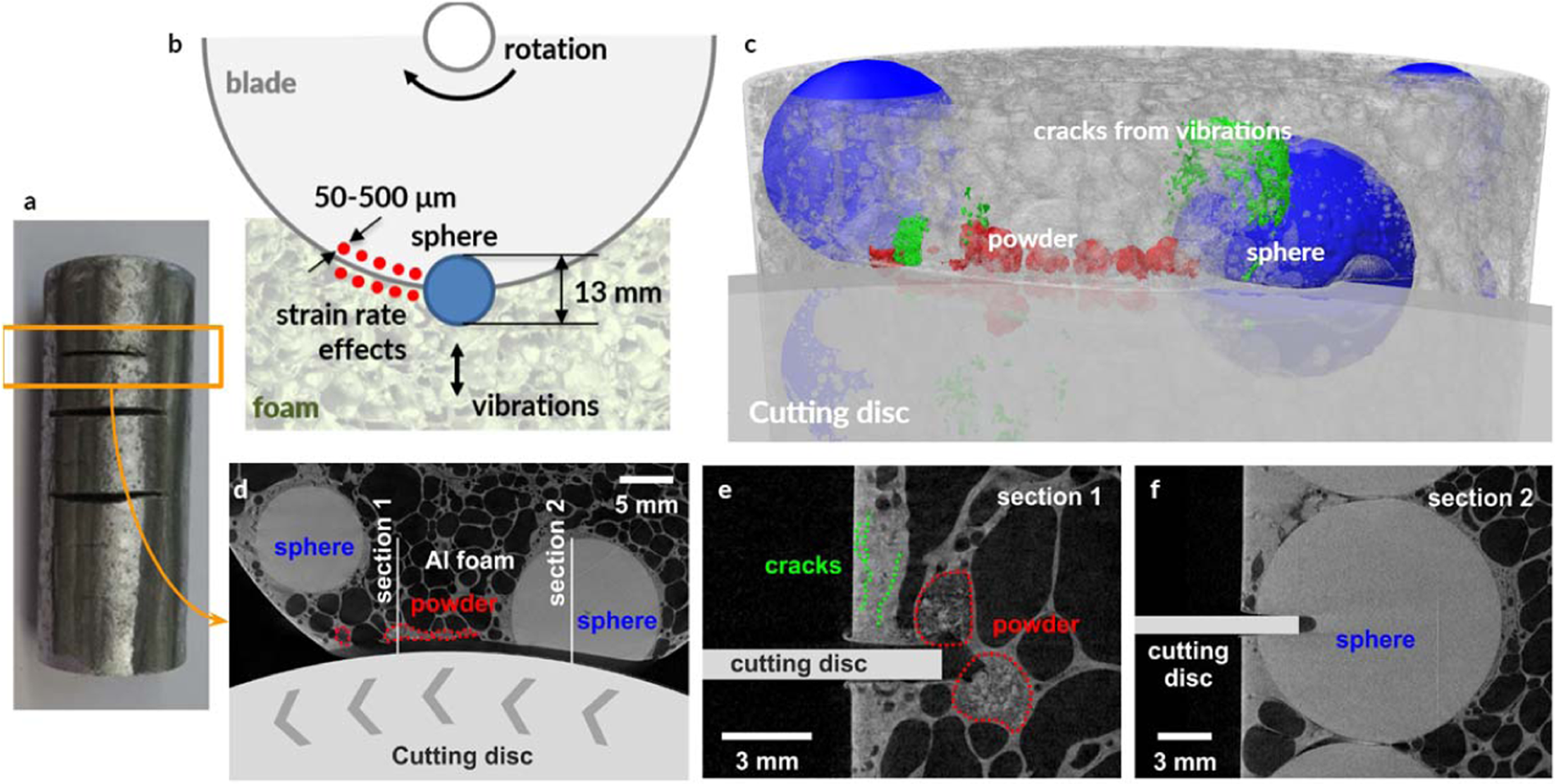
The material is made of aluminium foam that’s embedded with a bunch of small ceramic spheres. It works by inducing retaliatory vibrations into the cutting tools, which turns the tools’ force back on themselves and quickly dulls their edges.
The creators have named the material Proteus after the elusive and shape-shifting prophet of Greek mythology who would only share his visions of the future with those who could get their arms around him and keep him still. It sounds like this material could give Proteus a run for his money.
The ceramic spheres themselves aren’t indestructible, but they’re not supposed to be. Abrading the spheres only makes Proteus stronger. As the cutting tool contacts them, they’re crushed into dust that fills the voids in the aluminium foam, strengthening the material’s destructive vibratory effect. The physical inspiration for Proteus comes from protective hierarchical structures in nature, like the impact-resistant rind of grapefruit and the tendency of abalone shells to resist fracture under the impact of shark teeth.
How It’s Made
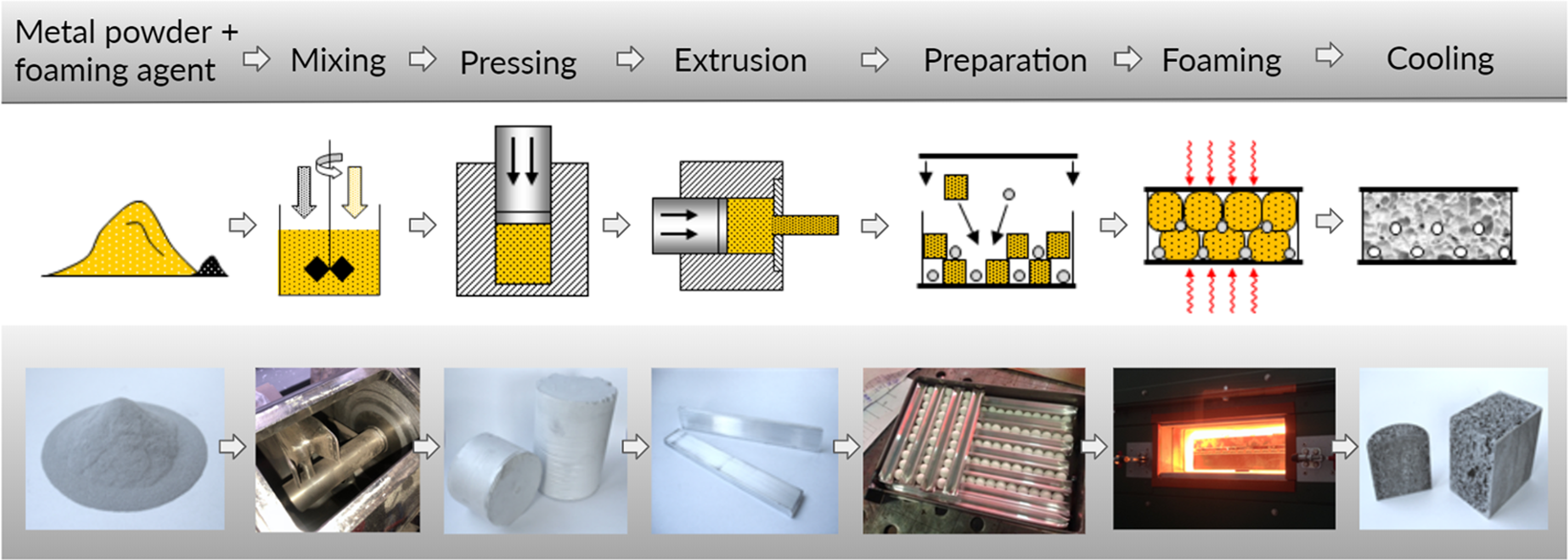
Proteus recipe in pictures.
At this point, Proteus is a proof of concept. Adjustments would likely have to be made before it can be produced at any type of scale. Even so, the recipe seems pretty straightforward. First, an aluminium alloy powder is mixed with a foaming agent. Then the mixture is cold compacted in a compressor and extruded in dense rods. The rods are cut down to size and then arranged along with the ceramic spheres in a layered grid, like a metallurgical lasagna.
The grid is spot-welded into a steel box and then put into a furnace for 15-20 minutes. Inside the furnace, the foaming agent releases hydrogen gas, which introduces voids into the aluminium foam and gives it a cellular structure.
Effects of cutting into a cylinder of Proteus with an angle grinder.
According to their paper, the researchers tried to penetrate the material with an angle grinder, a water jet cutter, and a drill. Of these, the drill has the best chance of getting through because the small point of contact can find gaps more easily, so it’s less likely to hit a ceramic sphere. The researchers also made cylindrical samples without steel cladding which they used to test the compressive strength and prove Proteus’ utility as a structural material for beams and columns. It didn’t fare well initially, but became less compressible as the foam matrix collapsed.
The creation process lends some leeway for customization, because the porosity of the aluminium foam can be varied by changing the bake time. As for the drill bit problem, tightening up security is as easy as adjusting the size and/or density of the ceramic spheres.
In the video after the break, you can watch a chunk of Proteus eat up an angle grinder disc in under a minute. Some may argue about the tool wielder’s technique, but we think there’s something to be said for any material that can destroy a cutting disc that fast. They don’t claim that Proteus is completely impenetrable, but it does look impressive. We wish they would have tried more cutting tools like a gas torch, or experimented with other destructive techniques, like plastic explosives, but we suppose that research budgets only go so far.
In space, so the Alien tagline goes, nobody can hear you scream. One of the most memorable pieces of movie promotion ever, it refers to the effect of the vacuum of space on the things human senses require an atmosphere to experience. It’s a lesson that Joss Whedon used to great effect with the Serenity‘s silent engine light-ups in Firefly, while Star Wars ignored it completely to give us improbable weapon noises in space battles.
Sound may not pass through the vacuum of space, but that’s not to say there are not things other than light for the senses. The Apollo astronauts reported that moon dust released a smell they described as akin to burnt gunpowder once it was exposed to the atmosphere inside their lander, and by now you may have heard that there is a Kickstarter that aims to recreate the smell as a fragrance. Will it replace the cloying wall of Axe or Lynx Africa body spray that pervades high-school boys’ changing rooms, or is it a mere novelty?
If you’ve ever had a particularly nasty fracture, your doctor may have prescribed the use of an electronic bone growth stimulator. These wearable devices produce a pulsed electromagnetic field (PEMF) around the bone, which has been shown to speed up the natural healing process in a statistically significant number of patients. That’s not to say there isn’t a debate about how effective they actually are, but studies haven’t shown any downsides to the therapy, so it’s worth trying at least.
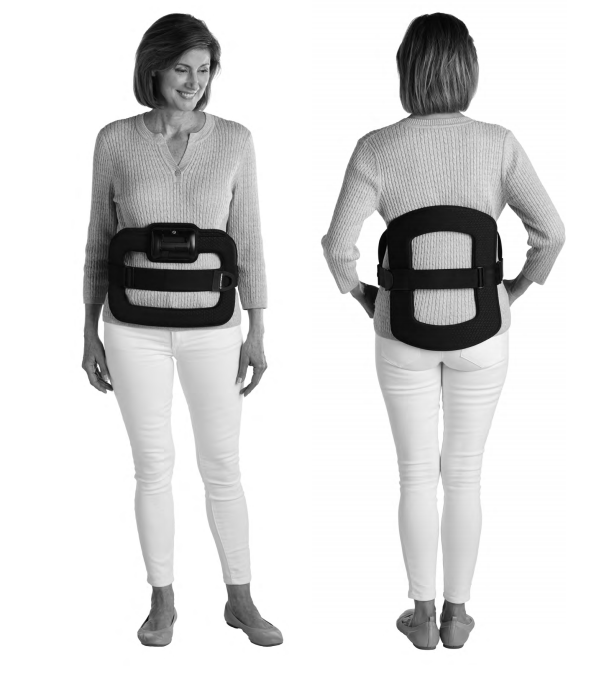
Image from SpinalStim manual.
When you receive one of these devices, it will be programmed to only operate for a certain amount of time or number of sessions. Once you’ve “used up” the bone stimulator, it’s functionally worthless. As you might imagine, there’s no technical reason this has to be the case. The cynic would say the only reason these devices have an expiration date on them is because the manufacturer wants to keep them from hitting the second hand market, but such a debate is perhaps outside the scope of these pages.
The Orthofix SpinalStim you’re seeing here was given to me by a friend after their doctor said the therapy could be cut short. This provided a somewhat rare opportunity to observe the device before it deactivated itself, which I’d hoped would let me take a closer look at how it actually operated.
As you’ll soon see, things unfortunately didn’t work out that way. But that doesn’t mean the effort was fruitless, and there may yet be hope for hacking these devices should anyone feel like taking up the challenge.
When you’re a kid, one of the surest signs of summer is hearing the happy sound of the ice cream truck crawling through the neighborhood. You don’t worry about how that magical truck is keeping the ice cream cold, only that it rolls down your street, and that the stars align and your parents give you money for a giant ice cream-cookie sandwich with the edge rolled in tiny chocolate chips.
In the early days of mobile refrigeration, ice cream trucks and other food delivery vehicles relied first on ice, and then dry ice to keep perishables cold. Someone eventually invented an electric cooling system, but those had to be recharged periodically at power stations. There was also a short-lived mechanical system, but it was highly susceptible to road vibrations.
Until Frederick McKinley Jones came along, mobile refrigeration was fledgling, and sources of perishable food were extremely localized and limited. In the early 1940s, Frederick patented the first practical automated refrigeration system for trucks, and it revolutionized the shipping and storage of food and medicine.
Most of the processor architectures which we come into contact with today are little-endian systems, meaning that they store and address bytes in a least-significant byte (LSB) order. Unlike in the past, when big-endian architectures, including the Motorola 68000 and PowerPC, were more common, one can often just assume that all of the binary data one reads from files and via communication protocols are in little-endian order. This will often work fine.
The problem comes with for example image formats that use big-endian formatted integers, including TIFF and PNG. When dealing directly with protocols in so-called ‘network order’, one also deals with big-endian data. Trying to use these formats and protocol data verbatim on a little-endian system will obviously not work.
Imagine that you want to output multiple lines of text in Bash, or any shell script. Maybe it’s for a help string for a particularly convoluted shell script you’re writing. You could have a separate echo command for each line. Or you could use the “here document“.
The “here document” construction takes the text between two delimiters and passes it, as if it were piped, to a command.
if [[$# == 0 ]] || [[ "$1" == "-h" ]]; then
cat << EOF
This is my help message. There are many like it but this one is mine.
My help message is my best friend.
EOF
All of the text, as written, with line breaks and spaces and all, get passed to cat and your helpful formatted message is printed to the user.