Linux On Your NES Classic Edition

Nintendo look as though they may have something of a hit on their hands with their latest console offering. It’s not the next in the line of high-end consoles with immersive VR or silicon that wouldn’t have looked out of place in last year’s supercomputer, instead it’s an homage to one of their past greats. The NES Classic Edition is a reboot of the 1980s console with the familiar styling albeit a bit smaller, and 30 of the best NES games included.

You do not, however, get an original NES with a 6502 derived processor, and a stack of game cartridges. In the Classic Edition is a modern emulator, running on very modern hardware. We’re told it contains an Allwinner R16 quad-core Cortex A7 SoC, 256Mb of RAM, and 512Mb of Flash. That’s a capable system, and unsurprisingly any hacking potential it may have has attracted some interest. Reddit user [freenesclassic] for example has been investigating its potential as a Linux machine, and has put up a post showing the progress so far. It is known that there is already some form of Linux underpinning the console because Nintendo have released a set of sources as part of their compliance with the terms of the relevant open-source licences. That and the availability of a serial port via pads on the PCB gives hope that a more open distro can be installed on it.

We’re taken through the process of starting the machine up with the serial port connected to a PC, and getting it into the Allwinner FEL mode for low-level flashing work. Then we’re shown the process of loading a custom U-Boot, from which in theory a kernel of your choice can be loaded.

Of course, it’s not quite that simple. There is still some way to go before the device’s Flash can be accessed so for now, all that is possible is to use the RAM, and the current state of play has a kernel panic as it is unable to mount a filesystem. However this is a new piece of hardware in its first few days after launch, so this is very much a work in progress. We are sure that this device will in time be opened up as a fully hackable piece of hardware, and we look forward to covering the interesting things people do with it when that has happened.

If you are interested in the NES Classic, take a look at it on Nintendo’s web site. Meanwhile, here at Hackaday as a quick look at our past stories tagged “nes” shows, we’ve covered a huge number of projects involving the platform in the past.

Thanks [Doc Oct] for the tip.

Original NES console header image: Evan-Amos [Public domain], via Wikimedia Commons.

Transparent Rocket Engine

Rocket engines are undeniably cool. Experiencing the roar, seeing the fire, and watching the rocket blast off into the sky… what else can you ask for? Well, for [NightHawkInLight], a transparent rocket body is the answer.

Based on previous work by [Applied Science], he uses an acrylic rod as the rocket body and as the fuel. Bring a flame into the acrylic, apply oxygen from a canister at the other end of the body and voilà! The rocket engine starts nicely, and even better, the intensity of the burn can be controlled via the amount of oxygen provided.
Continue reading “Transparent Rocket Engine”

ArduWorm: A Malware For Your Arduino Yun

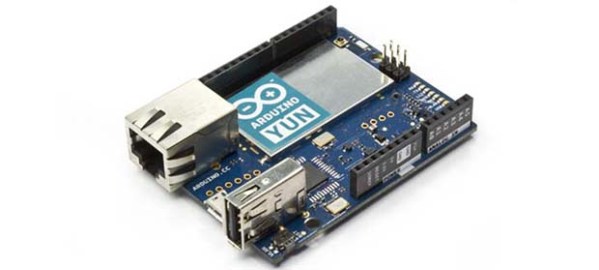
We’ve been waiting for this one. A worm was written for the Internet-connected Arduino Yun that gets in through a memory corruption exploit in the ATmega32u4 that’s used as the serial bridge. The paper (as PDF) is a bit technical, but if you’re interested, it’s a great read. (Edit: The link went dead. Here is our local copy.)

The crux of the hack is getting the AVR to run out of RAM, which more than a few of us have done accidentally from time to time. Here, the hackers write more and more data into memory until they end up writing into the heap, where data that’s used to control the program lives. Writing a worm for the AVR isn’t as easy as it was in the 1990’s on PCs, because a lot of the code that you’d like to run is in flash, and thus immutable. However, if you know where enough functions are located in flash, you can just use what’s there. These kind of return-oriented programming (ROP) tricks were enough for the researchers to write a worm.

In the end, the worm is persistent, can spread from Yun to Yun, and can do most everything that you’d love/hate a worm to do. In security, we all know that a chain is only as strong as its weakest link, and here the attack isn’t against the OpenWRT Linux system running on the big chip, but rather against the small AVR chip playing a support role. Because the AVR is completely trusted by the Linux system, once you’ve got that, you’ve won.

Will this amount to anything in practice? Probably not. There are tons of systems out there with much more easily accessed vulnerabilities: hard-coded passwords and poor encryption protocols. Attacking all the Yuns in the world wouldn’t be worth one’s time. It’s a very cool proof of concept, and in our opinion, that’s even better.

Thanks [Dave] for the great tip!

Listening To Jupiter On A DIY Radio

By Jove, he built a radio!

If you want to get started with radio astronomy, Jupiter is one of the easiest celestial objects to hear from Earth. [Vasily Ivanenko] wanted to listen, and decided to build a modular radio receiver for the task. So far he’s written up six of the eight planned blog posts.

The system uses an LNA, a direct conversion receiver block, and provides audio output to a speaker, output to a PC soundcard, and a processed connection for an analog to digital converter. The modules are well-documented and would be moderately challenging to reproduce.

Continue reading “Listening To Jupiter On A DIY Radio”

Drone Snags A Snag, Pilot Faces Fine

If you hail from somewhere to which Australian beers have been exported, you could be forgiven for forming a view of the country based solely on TV adverts for Foster’s, or Castlemaine XXXX. Entertaining 30-second stories of wily young Aussies, and their inventive schemes to get their hands on a cool glass of the Amber Nectar.

Whether it’s an accurate depiction or not is something you’d have to ask an Australian, but it seems to provide a blueprint for at least some real-life stories. An Australian man in Sunbury, west of Melbourne, is to face a fine of up to A$9000 for using his multirotor to pick up a sausage in a bun from a stall in a superstore car park, and deliver it to him relaxing in his hot tub.

From one perspective the video of the event which we’ve posted below the break is a very entertaining film. We see the flight over houses and a main road to a local branch of Bunnings, an Australian hardware store chain. Their sausage sizzle is a weekly institution in which local non-profit groups sell barbecued sausages from a stall in the car park as a fundraiser. The drone lowers a bag on a string over people queuing, with a note saying “Please buy snag(Aussie slang for sausage) and put in bag, here’s $10”. Someone complies, and the tasty treat is flown back over suburbia to our hero in his tub. It’s fairly obviously a production with many takes and supporting actors rather than a real continuous flight, but the Australian Civil Aviation Safety Authority is nevertheless investigating it. Breaches of the rules are reported as being use of a drone within 30 metres of people, as well as flight beyond the line of sight and over a populated area. The original video has been taken down, but it lives on courtesy of Australian tech site EFTM.

Aside from providing our readership with entertainment courtesy of our Australian friends there is an important message to take away from this story. It’s likely that if they can adequately prove that their flight was never out of the line of sight they can escape some of the charges, but even so they have strayed into difficult territory. We’ve written about drone hysteria on the part of authorities before, and we are living in an age during which twitchy agencies have shown themselves willing to view what we know to be little more than grown-up toys as something akin to terror weapons. Of course people who use multirotors for wilful endangerment should be brought to book in no uncertain terms, but the line between that and innocuous use feels sometimes to have been shifted in an alarming direction. Please keep entertaining us with your multirotor exploits and hacks, but never take your eye off how what you are doing could be misconstrued by those in authority. We’d prefer not to be writing up drone stories involving fines.

Continue reading “Drone Snags A Snag, Pilot Faces Fine”

One Hundred Weeks Of Legal Car Hacking

There is a scene in the movie “Magic Mike” where the lead character — a male stripper — explains to a room of women the laws against having physical contact with a performer. Then he intones, “… but I see a lot of lawbreakers up in this house.”

We know if we could look out through the Web browser, we could say the same thing. There’s a lot of gray zone activities considered commonplace. Have you ever ripped a CD or DVD to take with your on your phone? Gray; we won’t judge. A lot of the legal issues involved are thorny (and I should point out, I’m not a lawyer, so take what I say with a grain of salt).

Do you own your car? Well, probably you and the bank, but certainly the deal you made involves the idea that you own the car. If it is paid off, you can do what you like with it, including — if you wanted to — stripping it bare for parts. Back in the day, your car was some wheels and some mechanical devices. These days, it is a computer (actually, a few computers) and some I/O devices that process gasoline into rotary motion. Computers have software. Do you own that software?

The answer has, legally, been no. However, a recent decision by the US Copyright office allows car owners to legally analyze and modify their vehicle software (with some limitations) for the next two years. After that? We’ll see.

Continue reading “One Hundred Weeks Of Legal Car Hacking”

DIY Coprocessors For The Game Boy Color

Back in the olden days, when video games still came on cartridges, the engineers and programmers making these carts had a lot of options. One of the most inventive, brilliant, and interesting cartridges to come out of the 90s was Star Fox for the Super Nintendo. Star Fox featured a coprocessor chip, the Super FX, that was effectively a GPU used to draw polygons in the frame buffer. Without this, Star Fox wouldn’t be 3D, Yoshi’s Island wouldn’t be as cute, and there wouldn’t be an always-on processor in your computer with the potential to spy on everything you do.

gameboy-coprocessor-cartridgeThe Super FX chip, the Capcom-developed Cx4 coprocessor, and the Nintendo DSP all lived in a cartridge, but the technology to put a better computer in a cartridge never made it to Nintendo’s handheld devices. Cheap, powerful microcontrollers are everywhere now, and it’s not that hard to make a board with card edge connectors, leading [Anders] to build a Super FX for the Game Boy Color.

Game Boy cartridges are simple — just a memory controller and some memory is all you need. Drop in a microcontroller, and you have a Game Boy coprocessor. This cartridge features the MBC1 memory bank controller, 512kB of Flash, and 8KB SRAM. These are fairly standard parts, but there’s one last trick up the sleeve of this board: a KE04 from NXP, an ARM Cortex-M0+ microcontroller running at 48MHz . This microcontroller is, effectively, the GPU for the Game Boy.

This ARM-powered coprocessor is able to convert the framebuffer into tiles in just 2ms, giving the system plenty of time for image processing and rendering. Due to the limitations of the Game Boy, the best resolution offered by this coprocessor is either 160×96 or 128×128 pixels, short of the complete 160×144 pixel display in the Game Boy Color.

Even though [Anders] is still working on programming this thing to show off the power of his Game Boy coprocessor, he has a few demos to show off. The most impressive is a Wolfenstein-like clone. That’s extremely impressive and categorically impossible on a stock Game Boy Color.

Continue reading “DIY Coprocessors For The Game Boy Color”