HP Inkjet Printer Trains For Space

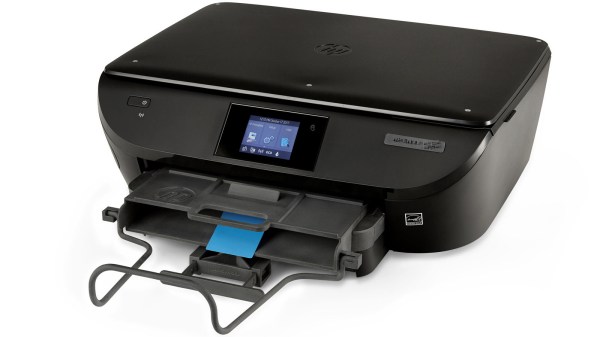
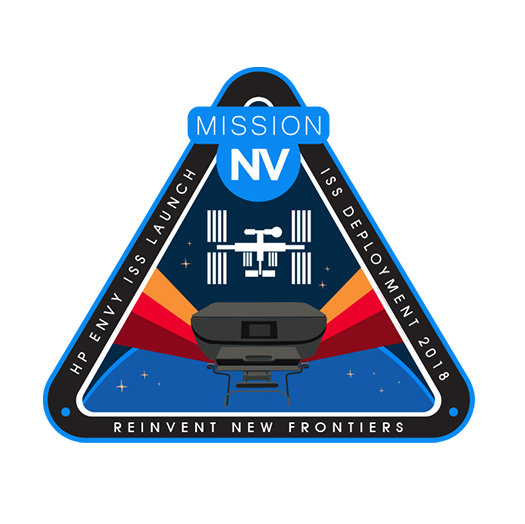
The International Space Station is one of our leading frontiers of science and engineering, but it’s easy to forget that an exotic orbiting laboratory has basic needs shared with every terrestrial workplace. This includes humble office equipment like a printer. (The ink-on-paper kind.) And if you thought your office IT is slow to update their list of approved equipment, consider the standard issue NASA space printer draws from a stock of modified Epson Stylus 800s first flown on a space shuttle almost twenty years ago. HP signed on to provide a replacement, partnering with Simplexity who outlined their work as a case study upgrading HP’s OfficeJet 5740 design into the HP Envy ISS.

Simplexity provided more engineering detail than HP’s less technical page. Core parts of inkjet printing are already well suited for space and required no modification. Their low power consumption is valued when all power comes from solar panels, and ink flow is already controlled via methods independent of gravity. Most of the engineering work focused on paper handling in zero gravity, similar to the work necessary for its Epson predecessor. To verify gravity-independent operation on earth, Simplexity started by mounting their test units upside-down and worked their way up to testing in the cabin of an aircraft in free fall.

CollectSpace has a writeup with details outside Simplexity’s scope, covering why ISS needs a printer plus additional modifications made in the interest of crew safety. Standard injection-molded plastic parts were remade with an even more fire-resistant formulation of plastic. The fax/scanner portion of the device was removed due to concerns around its glass bed. Absorbent mats were attached inside the printer to catch any stray ink droplets.

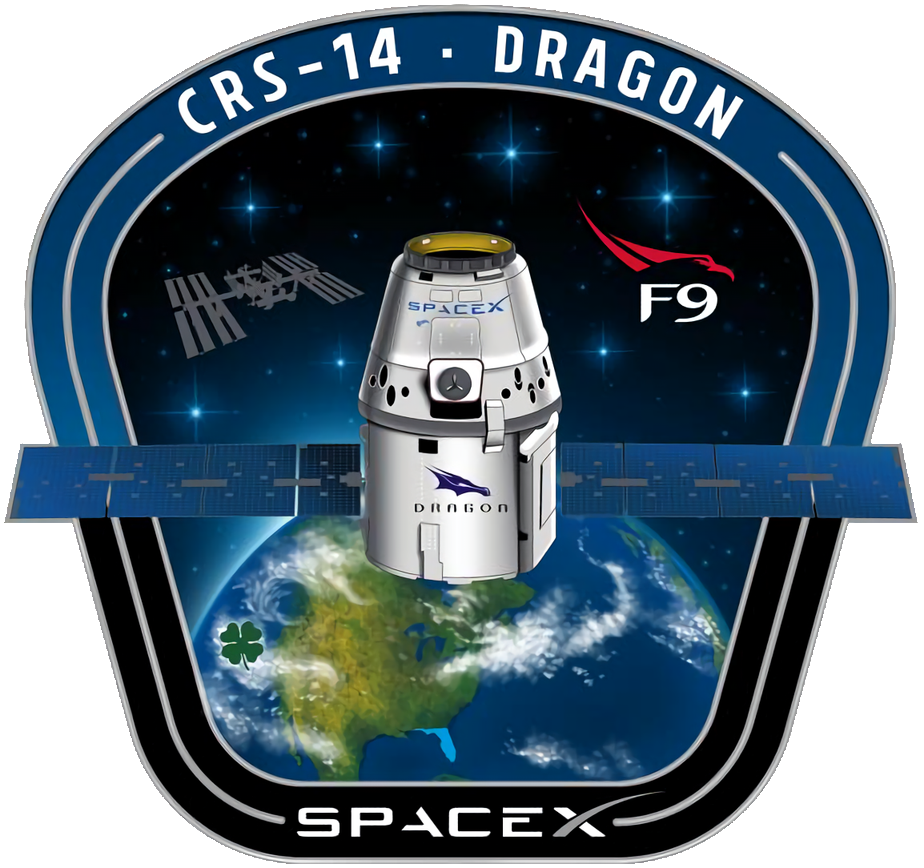
NASA commissioned a production run for 50 printers, the first of which was delivered by SpaceX last week on board their CRS-14 mission. When it wears out, a future resupply mission will deliver its replacement drawn from this stock of space printers. Maybe a new inkjet printer isn’t as exciting as 3D printing in space or exploring space debris cleanup, but it’s still a part of keeping our orbital laboratory running.

[via Engadget]


Get Your Name On The Hottest List In The Solar System

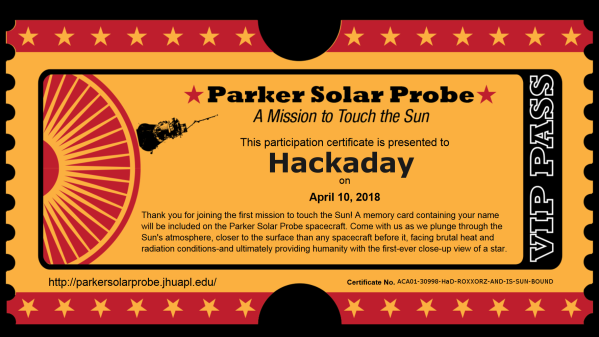
How often does NASA name a spacecraft after a living person? How often do you get to launch your name into a star? How often does NASA send probes to explore the sun? If your answer to all these questions is NEVER, then you win the honor of adding your name to an SD card bound for the center of our solar system. We’re already on the list with [William Shatner] so we’ll see you there. Submissions for the hot list aboard the Parker Solar Probe close on April 27th, 2018 and it launches in May.

The Parker Solar probe honors living astrophysicist [Eugene Parker] who theorized a great deal about how the sun, and other stars, emit energy. His work has rightly earned him the honor of seeing his name on a sun-bound probe. We even owe the term, “solar wind” to [Parker].

To draw more attention, you can have a few bits aboard this probe dedicated to you or someone you care about by adding your name to their list. Or you can send the name of your greatest enemy into the hottest furnace for millions of miles. Your call.

Even though our sun is the most prominent heavenly body, NASA hasn’t sent a probe to explore it before. They are good about sharing their models and they really know how to write standards for workmanship.

Continue reading “Get Your Name On The Hottest List In The Solar System”

Space Garbage Truck Takes Out The Trash

On April 2nd, 2018 a Falcon 9 rocketed skywards towards the International Space Station. The launch itself went off without a hitch, and the Dragon spacecraft delivered its payload of supplies and spare parts. But alongside the usual deliveries, CRS-14 brought a particularly interesting experiment to the International Space Station.

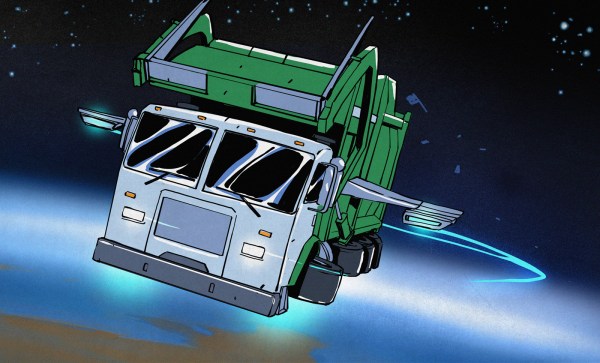
Developed by the University of Surrey, RemoveDEBRIS is a demonstration mission that aims to test a number of techniques for tackling the increasingly serious problem of “space junk”. Earth orbit is filled with old spacecraft and bits of various man-made hardware that have turned some areas of space into a literal minefield. While there have been plenty of ideas floated as to how to handle this growing issue, RemoveDEBRIS will be testing some of these methods under real-world conditions.

The RemoveDEBRIS spacecraft will do this by launching two CubeSats as test targets, which it will then (hopefully) eliminate in a practical demonstration of what’s known as Active Debris Removal (ADR) technology. If successful, these techniques could eventually become standard operating procedure on future missions.

Continue reading “Space Garbage Truck Takes Out The Trash”

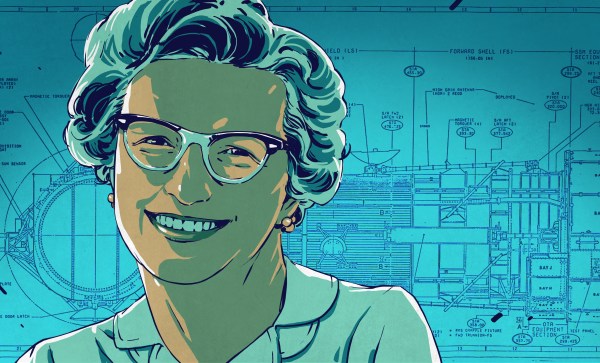
Nancy Grace Roman, Mother Of The Hubble

When she was four years old, Nancy Grace Roman loved drawing pictures of the Moon. By the time she was forty, she was in charge of convincing the U.S. government to fund a space telescope that would give us the clearest, sharpest pictures of the Moon that anyone had ever seen. Her interest in astronomy was always academic, and she herself never owned a telescope. But without Nancy, there would be no Hubble.

Goodnight, Moon

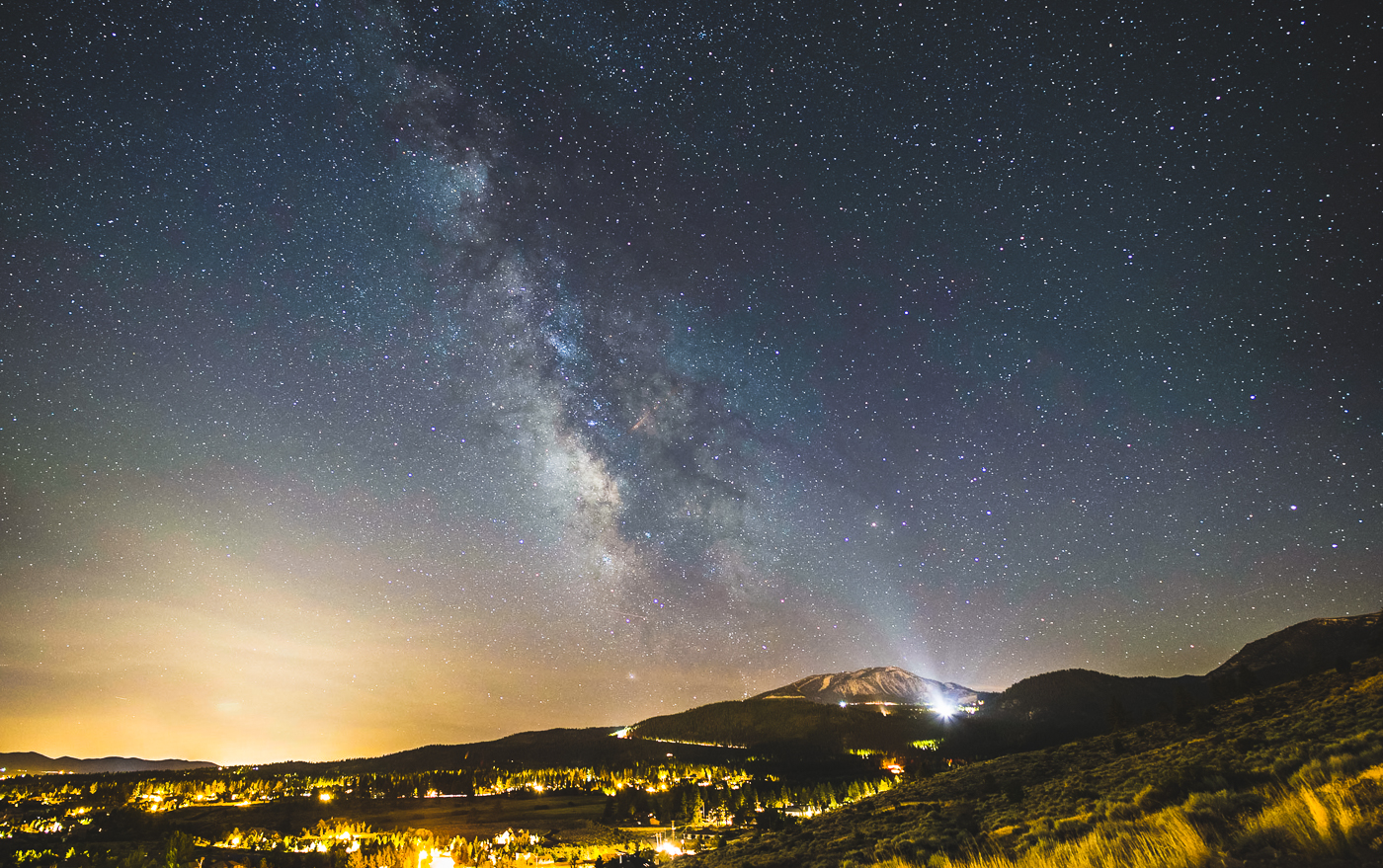
A view of the Milky Way from Reno, Nevada. Via Lonely Speck

Nancy was born May 16, 1925 in Nashville, Tennessee. Her father was a geophysicist, and the family moved around often. Nancy’s parents influenced her scientific curiosities, but they also satisfied them. Her father handled the hard science questions, and Nancy’s mother, who was quite interested in the natural world, would point out birds, plants, and constellations to her.

For two years, the family lived on the outskirts of Reno, Nevada. The wide expanse of desert and low levels of light pollution made stargazing easy, and Nancy was hooked. She formed an astronomy club with some neighborhood girls, and they met once a week in the Romans’ backyard to study constellations. Nancy would later reminisce that her experience in Reno was the single greatest influence on her future career.

By the time Nancy was ready for high school, she was dead-set on becoming an astronomer despite a near-complete lack of support from her teachers. When she asked her guidance counselor for permission to take a second semester of Algebra instead of a fifth semester of Latin, the counselor was appalled. She looked down her nose at Nancy and sneered, “What lady would take mathematics instead of Latin?”

Continue reading “Nancy Grace Roman, Mother Of The Hubble”

It’s Raining Chinese Space Stations: Tiangong-1

China’s first space station, Tiangong-1, is expected to do an uncontrolled re-entry on April 1st, +/- 4 days, though the error bars vary depending on the source. And no, it’s not the grandest of all April fools jokes. Tiangong means “heavenly palace”, and this portion of the palace is just one step of a larger, permanent installation.

But before detailing just who’ll have to duck when the time comes, as well as how to find it in the night sky while you still can, let’s catch up on China’s space station program and Tiangong-1 in particular.

Continue reading “It’s Raining Chinese Space Stations: Tiangong-1”

Lockheed Shares Satellite Connectivity Options

In an unusual turn of events, Lockheed Martin has released technical “payload accommodation information” for three of their satellite busses. In layperson’s terms, if you wanted to build a satellite and weren’t sure what guidelines to follow these documents may help you learn if Lockheed Martin has a platform to help you build it.

An opportunity to check out once-confidential information about satellites sounds like a perfect excuse to dig through some juicy documentation, though unfortunately this may not be the bonanza of technical tidbits the Hackaday reader is looking for. Past the slick diagrams of typical satellites in rocket fairings, the three documents in question primarily provide broad guidance. There are notes about maximum power ratings, mass and volume guidelines, available orbits, and the like. Communication bus options are varied; there aren’t 1000BASE-T Ethernet drops but multiply redundant MIL-STD-1553B might come standard, plus telemetry options for analog, serial, and other data sources up to 100 Mbps. Somewhat more usual (compared to your average PIC32 datasheet) are specifications for radiation shielding and it’s effectiveness.

In the press release EVP [Rick Ambrose] says “we’re sharing details about the kinds of payloads we can fly…” and that’s exactly what these documents give us. Physical ballpark and general guidelines about what general types of thing Lockheed has capability to build launch. Hopefully the spirit of openness will lead to the hoped-for increase in space utilization.

If you take Lockheed up on their offer of satellite development, don’t forget to drop us a tip!

[Via the Washington Post]

DIY Planetarium Built From PVC Pipes And Cardboard

When you think about DIY projects, you probably don’t consider building your own planetarium. Why would you? Building the thing is surely outside the capabilities of the individual, and even if you could figure it out, the materials would be far too expensive. There’s a limit to DIY projects, and obviously building a planetarium is on the wrong side of the line. Right?

Well, apparently not. [Gabby LeBeau] has documented the planetarium she built as her senior project, and if you’ll forgive the pun, it’s absolutely out of this world. Using readily available parts and the help of family and friends, she built a fully functional planetarium big enough to seat the Physics Department. No word on what grade she got, but it’s a safe bet she screwed the curve up for the rest of the class.

After two months of research and a couple of smaller proof of concept builds, she was able to find a business who graciously allowed her to construct the full scale planetarium in their warehouse. The frame is made of PVC pipes held together with zip ties. The big advantage to using the PVC pipes (beyond being cheap and easy to works with) is that they will automatically find a hemispherical shape when bent; saving the time and trouble it would take to create the shape with more rigid building materials.

Once the PVC frame was up, white cardboard panels were cut to shape and attached to the inside. The panels were lined up as closely as possible, but gaps were covered with white tape so the fit didn’t need to be perfect. When the dome was finished, it was lifted and placed on metal trusses to get some room underneath, and finally covered with a black tarp and stage curtain to block out all light.

Of course, she didn’t go through all this trouble to just stick some glow in the dark stars on the inside of this thing. The image from a standard projector is directed at a flat mirror, which then bounces off of a convex mirror. Driving the projector is a laptop running Stellarium. While there were some imperfections she couldn’t get polished or cleaned off of the mirrors, the end result was still very impressive.

Unfortunately, you can’t really do a planetarium justice with a camera, so we aren’t able to see what the final image looked like. But judging by the slack-jawed faces of those who are pictured inside of it, we’re going to go out on a limb and say it was awesome.

We might suggest trying to quiet down the projector or adding some lasers to the mix, but overall this is a truly exceptional project, and we’re jealous of everyone who got to experience it first hand.