SparkFun Stencil And Solder Paste Class Notes

stencil

Hobby electronics manufacturer SparkFun has started offering various classes at their Boulder, CO facility. [Landon] has been attending as many as possible and posted about his experience during their Stencil and Solder Paste class. Solder paste is used when manufacturing boards with a reflow oven. He took quite a few pictures of the process and posted notes and audio. He says it’s definitely something you’d have to learn hands-on, but his numerous photos give you an idea of what’s involved. Below, you can watch a video of the paste clean-up pass and stencil removal.

Continue reading “SparkFun Stencil And Solder Paste Class Notes”

Solar Batteries

solarbatt

[Knut Karlsen] put together a prototype set of solar rechargeable batteries. He always seemed to have batteries laying around on his worktable and figured they might as well be charging. The flexible solar cells were given to him by researchers at the IFE and are rated at 1.8V. He used superglue to secure them to the C cells. A silver conductive pen plus flat wires from a Canon lens connect the solar cells to the battery terminals. The batteries just trickle charge for now, but he’s going to try to build cells with built in charge controllers in the future.

BackTrack 4 Beta Released

backtrack

The Remote Exploit Development Team has just announced BackTrack 4 Beta. BackTrack is a Linux based LiveCD intended for security testing and we’ve been watching the project since the very early days. They say this new beta is both stable and usable. They’ve moved towards behaving like an actual distribution: it’s based on Debian core, they use Ubuntu software, and they’re running their own BackTrack repositories for future updates. There are a lot of new features, but the one we’re most interested in is the built in Pico card support. You can use the FPGAs to generate rainbow tables and do lookups for things like WPA, GSM, and Bluetooth cracking. BackTrack ISO and VMWare images are available here.

Parts: LTC2631A I2C Digital To Analog Converter

ltc2640

Linear Technology’s LTC2631A-LZ8 is an 8bit digital to analog converter (DAC) with an I2C interface. This DAC can output 255 different voltages, spaced evenly between 0 and 2.5volts. We previously demonstrated the LTC2640 with a three-wire SPI interface, but this version is controlled with only two signal wires.

Continue reading “Parts: LTC2631A I2C Digital To Analog Converter”

Desulfator In An Altoids Tin

desulfator

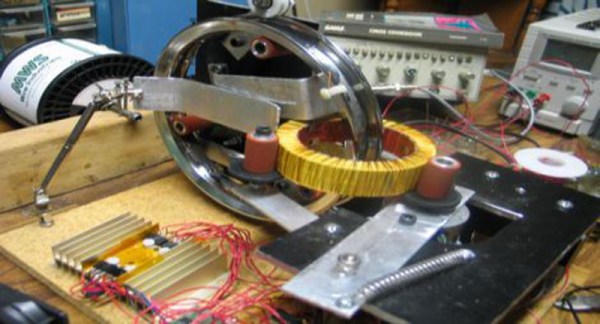
If you’ve ever let a car sit for a period of time and returned to find that the battery was mysteriously “dead”, you were probably experiencing a sulfate crystal build up. Often, people just buy a new battery and plop it in, but that isn’t absolutely necessary. [Kmpres] takes us through the process of building a desulfator. A desulfator works by putting high voltage pulses into the battery forcing the sulfate crystals to dissolve back into the electrolyte. From what [Kmpres] says, you can find “bad” batteries in all kinds of places, use the desulfator on them and have perfectly fine batteries when you’re done. You may recall doing something similar with a disposable camera.

Generating G-code With Common Lisp

gcode

Ruin & Wesen are a two person shop creating specialized music gear. As part of their recent MIDI Command development, they got into case manufacturing. They purchased a mini CNC mill to cut the aluminum cases. Unhappy with the software options provide [Wesen] decided to write his own G-code generator. G-code is part of the numerical control used to command CNC machines. He implemented his interpreter using the language he’s most familiar with: Common Lisp (not surprising if you notice the website’s backend). The post covers the design philosophy used and some of the problems that came up. We look forward to future releases since the interpreter can generate milling code using processing.org sketches and cut PCBs directly from Eagle.

You may remember Ruin & Wesen from when they shared their Eagle layout videos.

[Thanks fbz]

Surface Mount Soldering In Depth

smd

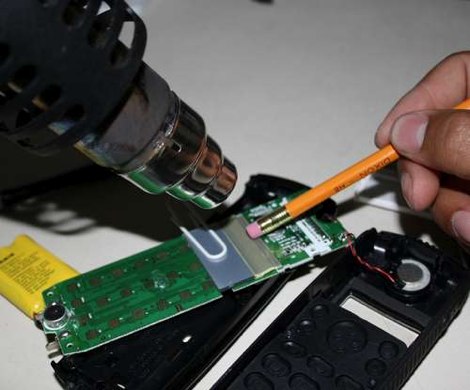
[doctek] wants to help ease any fear you may have of surface mount design. He has written this extremely in depth explanation of how to design and build an LED driver composed of surface mount parts. While there has been plenty of surface mount instruction floating around for a while, he feels that they skimp on the details, especially when it comes to really tiny parts who’s pads are unreachable with a soldering iron.  The method he uses is the “hot plate” method we’ve seen before. There’s enough information to build your own tiny LED driver with pulse width modulation, as well as tons of references to explain how and why he does things the way he does. Great job [doctek].

If you’re going to be doing a lot of soldering, you should check out our soldering station how to.