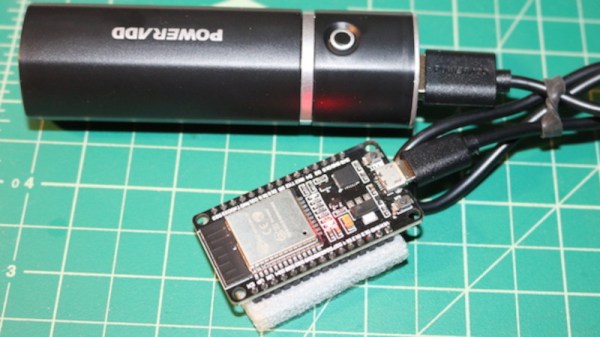
ESP32 Turned Open Source COVID-19 Contact Tracer

Over the past few months we’ve heard a lot about contact tracers which are designed to inform users if they’ve potentially come into close proximity with someone who has the virus. Generally these systems have been based on smartphone applications, but there are also hardware solutions that can operate independently for those who are unable or unwilling to install the software. Which is precisely what [Tom Bensky] has implemented using an ESP32 and a USB battery bank.

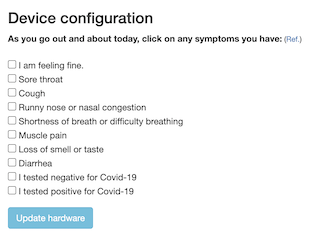
The idea is simple: the software generates a unique ID which is broadcast out by the ESP32 over Bluetooth Low Energy. Appended to that ID is a code that indicates the person’s current physical condition. There’s no centralized database, each user is expected to update their device daily with any symptoms they may be experiencing. If your tracker is blinking, that means somebody has come in close enough proximity that you should look at the collected data and see how they were feeling at the time.
It’s not a perfect system, of course, as for one thing the number of people that are willing and able to flash this firmware onto a spare ESP32 and carry the thing around with them all day is going to be extremely small. This might have filled an interesting niche if we were still going to hacker and maker cons this summer, but all of those have gone virtual anyway. That said, it’s an interesting look at how a decentralized contact tracing system can be implemented cheaply and quickly.

Another detail worth taking a look at is how [Tom] handled the user experience in his firmware. In an effort to make the tracer as easy as possible to configure, he’s using the Web Bluetooth capability of Google Chrome. Just open up the local web page in your browser, and it will handle talking to the hardware for you. Even if you’re not in the market for a contract tracer, we think this is a great example for how to handle end-user configuration on the ESP32.

We’ve already looked at contact tracer APIs from Google and Apple, dedicated COVID-19 hardware tokens, and even other open source attempts at decentralized proximity tracking. It’s a lot to process, and everyone seems to have their own idea on how it should be done. In the end, the most practical solution is probably to just stay at home as much as possible.
ESP8266 Makes A Wireless Card Reader

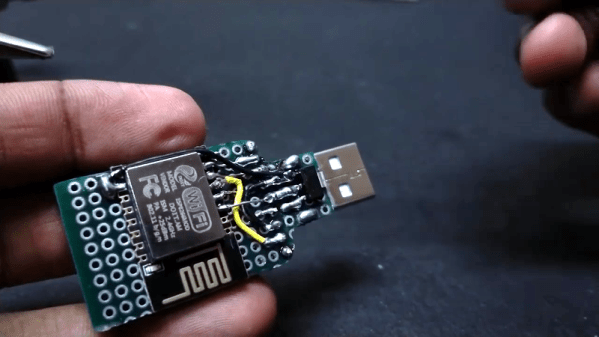
You can find commercial USB sticks that can also connect via WiFi. But [Neutrino] made his own using an ESP8266 married to a card reader. It all starts with the old trick of soldering a header to an SD card adapter. The USB port is still there, but it is only for power. A 3.3 V regulator and an ESP12E board round out the hardware.

Of course, the trick is the software. Starting from a few examples, he wound up providing an FTP server that you can connect to and send or receive files using that protocol.

Continue reading “ESP8266 Makes A Wireless Card Reader” →

Ham Radio Mobile Operations Circa 1919

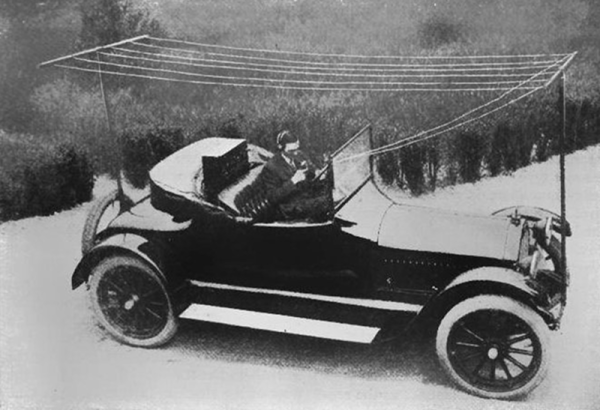
You used to be able to tell a die-hard ham radio operator on the road by the number and length of antennas protruding porcupine-like from their vehicle. There are still some mobile high frequency operators that have respectable car-mounted antenna farms, but they have nothing on Alfred H. Grebe. In 1919, he fitted a medium wave transmitter in his car that operated around 2 MHz. Since it needed a very large antenna, Grebe rigged a wire antenna that looked like a clothesline between the two bumpers. Obviously, you had to stop, set up your antenna, and then operate — you couldn’t talk and drive. But this may have been the world’s first automotive radio setup for voice communication.

The car had a separate battery for the radio and a dynamotor to generate high voltage for the tubes. Although many radio enthusiasts found ways to add receivers to their cars in the 1920s, it would be 1930 before Motorola made radios especially for cars in production quantities.

Continue reading “Ham Radio Mobile Operations Circa 1919” →

Bubbles, The People-Pleasing Pandemic Panda

This year, [Thomas]’ neighborhood has gone from a quiet burg to a bustling lane full of families and children who go out walking for exercise and a change of scenery. Early on, a game emerged to distract children from the pandemic by turning these walks into bear hunts — that is, looking for stuffed bears sitting in the windows of houses and keeping count of them.

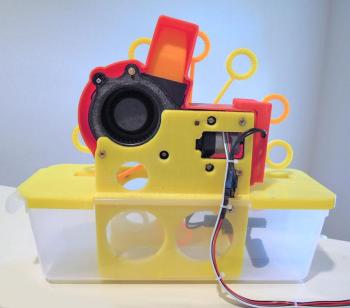
With no stuffed bears in the house, he decided to join in the fun by pasting up a 2D panda bear in the window that’s cute enough to calm anyone’s nerves. That was fun for a while, but then he turned it up to eleven by making an interactive 3D version named Bubbles the Bear that blows bubbles and speaks in a friendly voice.

Bubbles sits in a second-story window and waits for passers-by to press one of the buttons mounted on the utility pole below. Both buttons are wired to a 433MHz remote that sends a signal to an ESP32 in Bubbles’ habitat that says it’s time to perform.

We particularly like the bubble maker that [Thomas] designed, which aims a blower fan with an air concentrator at a carousel of 3D printed bubble wands. Both the fan and the carousel can be controlled with a custom web app, and he gets an email every time Bubbles has a visitor that tells him how much bubble liquid is left. Check out the fun-size demo after the break.

Bubbles are fun, especially if you can make them in extremely large quantities. Bubbles can also do work — remember this next time you need a random number generator.

Continue reading “Bubbles, The People-Pleasing Pandemic Panda” →

An Off-The-Grid Instant Messaging Plattform

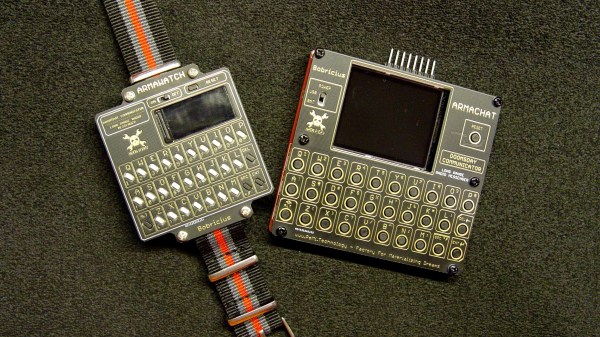
Having an open-source communication device that is independent of any network and works without fees sounds like a hacker’s dream come true. Well, this is exactly what [bobricius]’ is aiming at with his Armawatch and Armachat devices.

Recently, [bobricius] built a LoRa based instant messaging device named Armachat. The gadget is controlled by a SAMD21 MCU with native USB and includes a QWERTY keyboard and an LCD display. Communication is based on an RFM95 LoRa transceiver which can reach a range of up to 2 km under ideal conditions. [bobricius] is a wiz when it comes to PCB design and one thing that makes his projects look so good is how he often uses PCBs as enclosures.

Armachat came in two form factors a large desktop and a smaller pocket version. The new Armawatch is another downsized version that perfectly fits on your arm by using a smaller display and keyboard. [bobricius] also did a lot of work on the firmware which now features a message delivery confirmation and the possibility to automatically resend undelivered messages. Future improvements will include message encryption, a store-and-forward function, and GPS position parsing. [bobricius] is also working on completing his portfolio of communicators with a credit-card-sized version.

LoRa is the go-to technology for off-the-grid communication devices and there are already other ongoing projects for using it to construct a mesh network.

OTA ESP32 GUI Makes Updates Simple

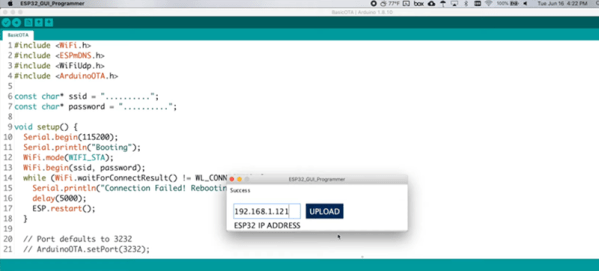
One of the disadvantages of having cheap WiFi-capable boards like those based on the ESP32 is that you have to update them. If you have even a few in every room of your house, it can be a pain to pull them out and connect them to a cable for programming. Over the air programming is a great answer, and [Kevin] shows how you can control the update via a simple GUI. You can see a video demonstration of how it works below.

[Kevin] uses a ready-made OTA library to do the work, but creates a GUI configuration and downloader tool. There is a manual step to force the board into the OTA mode, which might be a mild inconvenience, but it improves security since you need physical access to the device to do an update.

Continue reading “OTA ESP32 GUI Makes Updates Simple” →

WiFi Networks Turned Targets In This Pocket Game

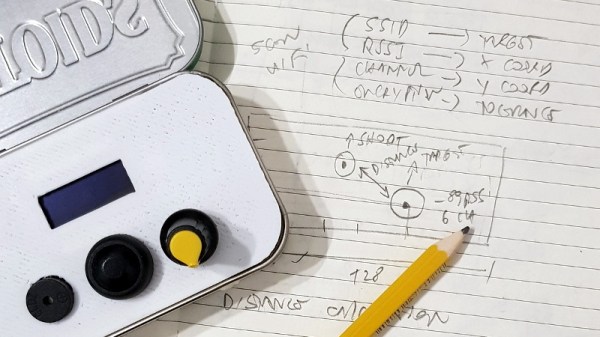
Looking for a way to make his warwalking sessions a bit more interactive, [Roni Bandini] has come up with an interesting way to gamify the discovery of new WiFi networks. Using a Heltec WiFi Kit 8, which integrates an OLED screen and ESP8266, this pocket-sized device picks up wireless networks and uses their signal strength and encryption type as elements of the game.

After selecting which network they want to play against, a target is placed on the screen. The distance between the target and the player is determined by signal strength, and how much damage the target can take correlates to how strong its encryption is. As you can see in the video after the break, gameplay is a bit reminiscent of Scorched Earth, where the player needs to adjust the angle of their artillery to hit distant targets.

The Heltec board is attached to a 3D printed front panel, which fits neatly into an Altoids tin. The controls consist of a button and a potentiometer, and with the addition of a battery pack salvaged from an old cell phone, this little device is ready to do battle wherever you roam.

While this is just a fun diversion for the time being, [Roni] says it wouldn’t take much to actual log networks to a file and generate some statistics about their strength and encryption type. If the idea of a portable WiFi scanning companion seems interesting, you should definitely check out the Pwnagotchi project.

Continue reading “WiFi Networks Turned Targets In This Pocket Game” →