ESP32 Internet Radio Is No Game

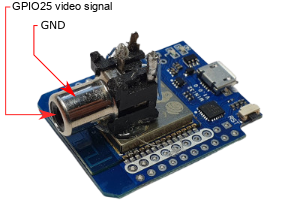
More than once, we’ve looked at a cool board like the TTGO T-Display and thought, “What can we build with this?” If you’re [Danko Bertović], the answer is the tiny Internet radio you can see in the Volos Projects video below.

Of course, the core Internet streaming code would be useful with any ESP32, but the display makes for a good-looking unit. The code is available on GitHub. With judicious use of network and audio libraries, the player only takes a few hundred lines of code. Pretty impressive considering it even shows a visualization on the tiny display screen.

What we’d really like to see is a nice case, power supply, and speaker option to make a tiny and portable unit. With a 3D printer, it is easy to make very professional-looking projects, as we often see. On the other hand, it does look better than the breadboard version you can see towards the end of the video. It is, though, a neatly done breadboard.

If you want a larger screen, you might enjoy the ESP32 internet radio we looked at before. Probably our favorite case for an Internet radio was this globe.

Continue reading “ESP32 Internet Radio Is No Game”

An animated newspaper image from Harry Potter

Muggle Uses E-Paper For Daily Prophet Replica

News from the wizarding world is a little hard to come by for common muggles, but [Deep Tronix] has brought us one step closer to our magical counterparts with their electronic replica of the Daily Prophet newspaper.

Those familiar with the Harry Potter series will no doubt be familiar with the Daily Prophet. In the films, the newspaper is especially eye-catching with its spooky animated images, a reflection of the magic present throughout the wizarding world. This was achieved with post-production special effects for the films, but this fan-made front page of the Prophet brings the concept to life using e-paper technology and a few other interesting gadgets, all hidden away in a picture frame.

As mentioned, the heart of this project is the e-paper display and a Teensy microcontroller. While e-paper displays are excellent for displaying static text and simple graphics, they are usually not suitable for moving images due to suffering from a form of ‘burn in’, which can leave errant pixels on the screen. This means that e-paper technology typically has a relatively low frame rate for video. [Deep Tronix] has used a custom dithering library to somewhat mitigate this issue, and the results are impressive. Moving images are loaded from an external SD card, processed, and then displayed on the e-paper display, which is almost indistinguishable from the newspaper print that surrounds it.

The seemingly magical newspaper also has a face detection feature, which is enabled by a hidden camera and the venerable ESP32 microcontroller. This system integrates with the Teensy to record and then display the reader’s face on the e-paper display. A neat trick, which is made all the more eerie when these faces are later displayed at random.

We’ve seen Daily Prophet replicas before using more traditional display technology, however the move to an e-paper display goes a long way to improving the overall aesthetics, despite the lower frame rates. With Halloween just around the corner, you might just end up tricking a few people with this clever prop – check out all the build details here.

Continue reading “Muggle Uses E-Paper For Daily Prophet Replica”

Soil Sensor Shows Flip-Dots Aren’t Just For Signs

Soil sensors are handy things, but while sensing moisture is what they do, how they handle that data is what makes them useful. Ensuring usefulness is what led [Maakbaas] to design and create an ESP32-based soil moisture sensor with wireless connectivity, deep sleep, data logging, and the ability to indicate that the host plant needs watering both visually, and with a push notification to a mobile phone.

A small flip-dot indicator makes a nifty one-dot display that requires no power when idle.

The visual notification part is pretty nifty, because [Maakbaas] uses a small flip-dot indicator made by Alfa-Zeta. This electromechanical indicator works by using two small coils to flip a colored disk between red or green. It uses no power when idle, which is a useful feature for a device that spends most of its time in a power-saving deep sleep. When all is well the indicator is green, but when the plant needs water, the indicator flips to red.

The sensor itself wakes itself up once per hour to take a sensor measurement, which it then stores in a local buffer for uploading to a database every 24 measurements. This reduces the number of times the device needs to power up and connect via WiFi, but if the sensor ever determines that the plant requires water, that gets handled immediately.

The sensor looks great, and a 3D-printed enclosure helps keep it clean while giving the device a bit of personality. Interested in rolling your own sensor? The project also has a page on Hackaday.io and we’ve previously covered in-depth details about how these devices work. Whether you are designing your own solution or using existing hardware, just remember to stay away from cheap probes that aren’t worth their weight in potting soil.

A tiny bedside clock that's packed with features.

ESP32 Clock Takes Time To Give Weather Info, Too

It’s fall in the northern hemisphere, so [Mike Rankin]’s kids are back in school and have returned to consulting him every morning about the weather and what they should wear. Since he’s no meteorologist, [Mike] built a beautifully dim and diminutive clock that does all the work for him, plus much more. It glows a lovely dark orange that’s perfect for the nightstand and those early morning interrogations.

In default mode, this clock displays the time, CO2 level, room temperature, and humidity in that eye-friendly orange. But wave your hand in front of the time of flight sensor, and it goes external, displaying the low and high temperatures for the day, plus the weather conditions forecast. After a few seconds of that, it goes back to default mode. The ESP fetches the time from an NTP server, then gets the weather from the OpenWeather API. The indoor weather comes from a combination sensor on the board.

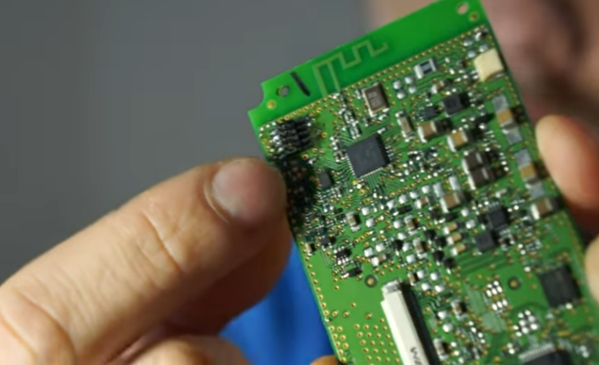
Diagram of the components on the circuit boardInside this tiny package is a beautifully-spun board with an ESP32 Pico D4 for a brain. In addition to the climate sensors there is a combination CO2/TVOC sensor (that’s total volatile organic compounds) to sniff out danger. There is also a pair of push buttons on the back and an ambient light sensor, but [Mike] isn’t using those just yet. Add in the Qwiic connector for future doo-dads, and you have quite the little gadget. Although the pictures make it look kind of big, you can see exactly how small it is in the demo video after the break.

[Mike] seems to like things tiny, and we admire that in a big way. Check out his positively Lilliputian ESP32 dev board.

Continue reading “ESP32 Clock Takes Time To Give Weather Info, Too”

Add Mycelium To Your Mesh Networks

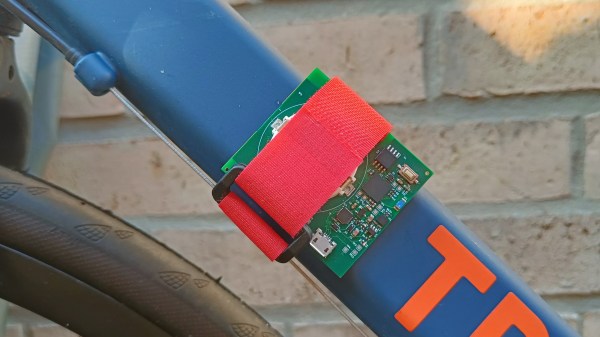
In many parts of the world, days after a good rainfall, it’s fairly common to see various species of mushrooms popping up out of the ground. These mysterious organisms aren’t the whole story, though. The living being is a vast network of hidden fibers, called mycelium, spreading through the ground and into any other organic material it can colonize. Its air of mystery and its vast reach are the inspiration for entire Star Trek shows and, of course, projects like this LoRa-based mesh network called Mycelium.

Mycelium is the invention of [Catamine] and includes many novel features compared to more typical mesh networks. For one, it is intended to be used in low power applications to give users the ability to send messages over a distributed network rather than a centralized network like a cell phone service provider. For another, the messages are able to be encrypted and authenticated, which is not currently possible with other mesh networks such as APRS. The idea is that a large network of people with nothing more complicated than an ESP32, an antenna, and this software would be able to communicate securely in situations where a centralized network is not available, whether that is from something like a natural disaster or from a governmental organization disabling the Internet during a political upheval.

The mesh network is currently in active development, and while messages can not yet be sent, the network is able to recognize nodes and maintain a keybase. There are certainly plenty of instances where something like this would be useful as we’ve seen before from other (non-encrypted) LoRa-based network solutions which are built around similar principles.

Thanks to [dearuserhron] for the tip!

Bring That Old Hi-Fi Into The 2020s

It’s a distressing moment for some of us, when a formerly prized piece of electronic equipment reaches a point of obsolescence that we consider jettisoning it. [Jon Robinson] ran into this dilemma by finding the Kenwood Hi-Fi amplifier his 17-year-old self had spent his savings on. It was a very good amp back in the day, but over two decades later, it’s no longer an object of desire in a world of soundbars and streaming music boxes. After a earlier upgrade involving an Arduino to auto-power it he’s now given it an ESP32 and an i2S codec which performs the task of digital audio streaming as well as a better job than the Arduino of controlling the power.

Inside the case is a piece of stripboard with the ESP and codec modules, but there was still the problem of seamlessly integrating it with the amp’s distinctly analogue-era controls. The output from the codec is wired into an audio input – quaintly labelled for a DAT player – and a simple cam on the input selector switch operates a microswitch to select the ESP32.

If you’re dipping your toe in decent audio then an old amp from decades past can make an excellent purchase, but you might wish to educate yourself through our Know Audio series.

ESP32-Cam Makes A Dandy Motion Detector

Halloween is right around the corner and just about every Halloween project needs some kind of motion sensor. Historically, we’ve used IR and ultrasonic sensors but [Makers Mashup] decided to use an ESP32-Cam as a motion sensor in his latest animatronic creation. You can see a video of the device and how it works below.

The project is a skull that follows you around with a few degrees of motion on a stepper motor. There’s a 3D-printed enclosure to make the hardware assembly easy. The base software was borrowed from [Eloquent Arduino].

Continue reading “ESP32-Cam Makes A Dandy Motion Detector”