Hackaday Links Column Banner

Hackaday Links: March 31, 2024

Battlelines are being drawn in Canada over the lowly Flipper Zero, a device seen by some as an existential threat to motor vehicle owners across the Great White North. The story started a month or so ago, when someone in the government floated the idea of banning devices that could be “used to steal vehicles by copying the wireless signals for remote keyless entry.” The Flipper Zero was singled out as an example of such a nefarious device, even though relatively few vehicles on the road today can be boosted using the simple replay attack that a Flipper is capable of, and the ones that are vulnerable to this attack aren’t all that desirable — apologies to the 1993 Camry, of course. With that threat hanging in the air, the folks over at Flipper Devices started a Change.org petition to educate people about the misperceptions surrounding the Flipper Zero’s capabilities, and to urge the Canadian government to reconsider their position on devices intended to explore the RF spectrum. That last bit is important, since transmit-capable SDR devices like the HackRF could fall afoul of a broad interpretation of the proposed ban; heck, even a receive-only SDR dongle might be construed as a restricted device. We’re generally not much for petitions, but this case might represent an exception. “First they came for the Flipper Zero, but I did nothing because I don’t have a Flipper Zero…”

Continue reading “Hackaday Links: March 31, 2024”

A Practical Guide To Understanding How Radios Work

How may radios do you own? Forget the AM/FM, GMRS/FRS radios you listen to or communicate with. We’re talking about the multiple radios and antennas in your phone, your TV, your car, your garage door opener, every computing device you own- you get the idea. It’s doubtful that you can accurately count them even in your own home. But what principles of the electromagnetic spectrum allow radio to work, and how do antenna design, modulation, and mixing affect it? [MichaÅ‚ Zalewski] aka [lcamtuf] aims to inform you with his excellent article Radios, how do they work?

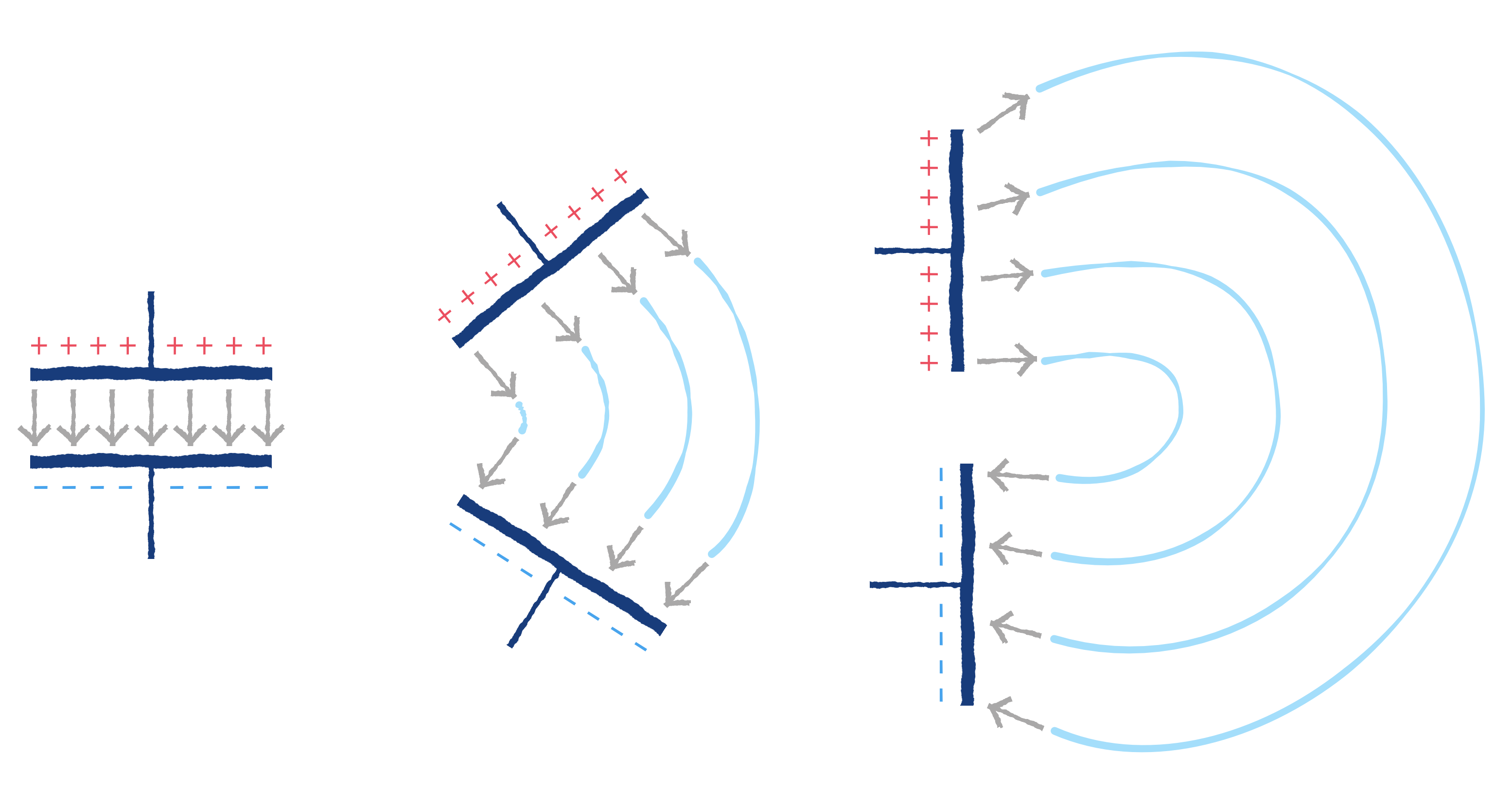
A simple illustration compares a capacitor to a dipole antenna.

For those of you with a penchant for difficult maths, there’s some good old formulae published in the article that’ll help you understand the physics of radio. For the rest of us, there are a plethora of fantastic illustrations showing some of the less obvious principals, such as why a longer diploe is more directional than a shorter dipole.

The article opens with a thought experiment, explaining how two dipole antennas are like capacitors, but then also explains how they are different, and why a 1/4 wave dipole saves the day. Of course it doesn’t stop there. [lcamtuf]’s animations show the action of a sine wave on a 1/4 wave dipole, bringing a nearly imaginary concept right into the real world, helping us visualize one of the most basic concepts of radio.

Now that you’re got a basic understanding of how radios work, why not Listen to Jupiter with your own homebrew receiver?

Hackaday Links Column Banner

Hackaday Links: February 11, 2024

Apple’s Vision Pro augmented reality goggles made a big splash in the news this week, and try as we might to resist the urge to dunk on them, early adopters spotted in the wild are making it way too easy. Granted, we’re not sure how many of these people are actually early adopters as opposed to paid influencers, but there was still quite a bit of silliness to be had, most of it on X/Twitter. We’d love to say that peak idiocy was achieved by those who showed themselves behind the wheels of their Teslas while wearing their goggles, with one aiming for an early adopter perfecta, but alas, most of these stories appear to be at least partially contrived. Some people were spotted doing their best to get themselves killed, others were content to just look foolish, especially since we’ve heard that the virtual keyboard is currently too slow for anything but hunt-and-peck typing, which Casey Niestat seemed to confirm with his field testing. After seeing all this, we’re still unsure why someone would strap $4,000 worth of peripheral-vision-restricting and easily fenced hardware to their heads, but hey — different strokes. And for those of you wondering why these things are so expensive, we’ve got you covered.

Continue reading “Hackaday Links: February 11, 2024”

HF In Small Spaces

Generally, the biggest problem a new ham radio operator will come across when starting out on the high frequency (HF) bands is finding physical space for the antennas. For a quick example, a dipole antenna for the 20 m band will need around 10 m of wire, and the lower frequencies like 80 m need about four times as much linear space. But if you’re willing to trade a large space requirement for a high voltage hazard instead, a magnetic loop antenna might be just the ticket.

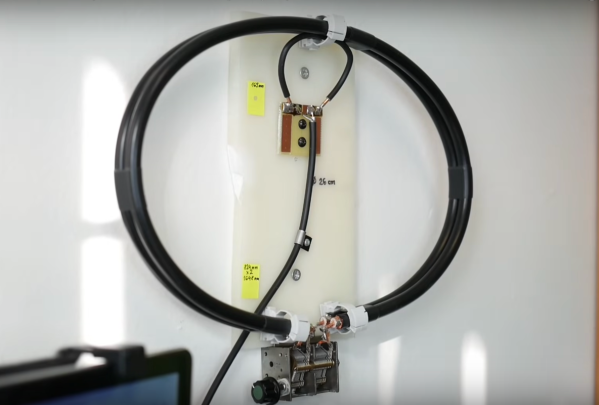
Loop antennas like these are typically used only for receiving, but in a pinch they can be used to transmit as well. To tune the antennas, which are much shorter than a standard vertical or dipole, a capacitor is soldered onto the ends, which electrically lengthens the antenna. [OM0ET] is using two loops of coax cable for the antenna, with each end soldered to one half of a dual variable capacitor which allows this antenna to tune from the 30 m bands to the 10 m bands, although he is using it mostly for WSPR on 20 m. His project also includes the use of an openWSPR module, meaning that he doesn’t have to dedicate an entire computer to run this mode.

The main downsides of antennas like these is that they are not omnidirectional, are not particularly good at transmitting, and develop a significantly high voltage across the capacitor as this similar mag loop antenna project demonstrated. But for those with extreme limitations on space or who, like [OM0ET] want a simple, small setup for running low-power applications like WSPR they can really excel. In fact, WSPR is a great mode for getting on the air at an absolute minimum of cost.

Continue reading “HF In Small Spaces”

No Dish? Try A Portable Weave Helix Antenna

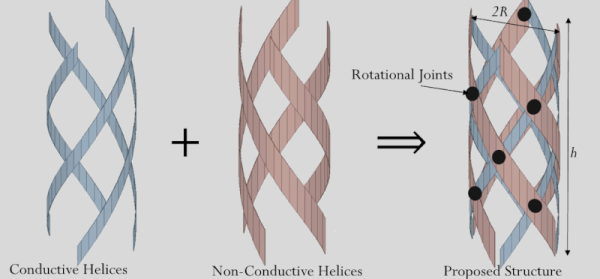
When you think of satellite communications, you probably think of a dish. But that’s not the only option — a new device from the American University of Beruit and Stanford created a portable antenna made of woven materials that packs easily, weighs little, and can reconfigure for ground-to-space or ground-to-ground communications. The antenna reminded us of a finger trap and you can see it for yourself in the video below.

Because of the antenna’s construction, it can fold up and also adjust to different lengths for different purposes. The antenna collapses to a ring that is five inches across and 1 inch tall. The weight? Under two ounces. The actual paper in Nature Communications is available to read online.

Stretched out to about a foot, the antenna is omnidirectional. The size, of course, also changes the resonant frequency. Tuning is no problem, though, since you can easily change the size as needed. The antenna may also find use on satellites where it’s low weight, and compact storage would be a definite advantage.

The antenna’s weave is actually two separate helixes, one conductive and the other insulating. The antenna normally operates in a vertical configuration. It looks like it might be simple to make some version of this without anything exotic. Let us know if you try!

Helical antennas aren’t new, but this is an unusual construction. They are popular as satellite antennas because of their polarization characteristics among other things.

Continue reading “No Dish? Try A Portable Weave Helix Antenna”

Building A GPS Receiver From The Ground Up

One of the more interesting facets of GPS is that, at least from the receiver’s point-of-view, it’s a fairly passive system. All of the information beamed down from the satellites is out in the ether, all the time, free for anyone on the planet to receive and use as they see fit. Of course you need to go out and buy a receiver or, alternatively, possess a certain amount of knowledge to build a circuit that can take those signals and convert them into something usable. Luckily, [leaning_tower] has the required knowledge and demonstrates it with this DIY GPS receiver.

This receiver consists of five separate circuit boards, all performing their own function. The first, a mixer board, receives the signal via an active antenna and converts it to a lower frequency. From there it goes to a second mixer and correlation board to compare the signal to a local reference, then a signal processing board that looks at this intermediate frequency signal to make sense of the data its seeing. Finally, an FPGA interfacing board ties everything together and decodes the information into a usable form.

Dealing with weak signals like this has its own set of challenges, as [leaning_tower] found out. The crystal oscillator had to be decapped and modified to keep from interfering with the GPS radio since they operated on similar frequencies. Even after ironing out all the kinks, the circuit takes a little bit of time to lock on to a specific satellite but with a second GPS unit for checking and a few weeks of troubleshooting, the homebrew receiver is up and running. It’s an impressive and incredibly detailed piece of work which is usually the case with sensitive radio equipment like GPS. Here’s another one built on a Raspberry Pi with 12 channels and a pretty high accuracy.

Directional Antenna Stands Tall

When you think of directional ham radio antennas, you probably think of a Yagi, cubical quad, or a log-periodic antenna. These antennas usually are in a horizontal configuration up on a high tower. However, it is possible to build beams with a vertical orientation and, for some lower frequencies, it is far more practical than mounting the elements on a boom. [DXCommander] shows us his 40 meter two-element vertical antenna build in the video below.

A typical Yagi is just a dipole with some slightly longer or shorter elements to direct or reflect the signal. A normal vertical, however, is nothing more than half of a dipole that uses the ground as the other half. So it is possible to create reflectors and directors with a vertical-driven element.

Continue reading “Directional Antenna Stands Tall”